Italian-Style Olive Oil Cake: Simple & Ultra-Moist
Published: January 2026
In Italian kitchens, desserts are often simple by design, allowing quality ingredients to shine. Olive oil cake is a perfect example: no frosting, no elaborate layers, just a soft, golden crumb infused with fragrant olive oil. This cake is slightly sweet, deeply moist, and versatile enough to be enjoyed from breakfast to dessert.
Our olive oil cake recipe proves that elegance often lives in simplicity. It is easy to make, and quietly impressive in both taste and nutrition, thanks to its healthy fats. Made with pantry staples and extra virgin olive oil, this recipe delivers a cake of delicate texture and a refined flavor that improves with time. It's a minimalist dessert with maximum payoff, perfect for both casual gatherings and slow mornings with coffee or tea.

What is olive oil?
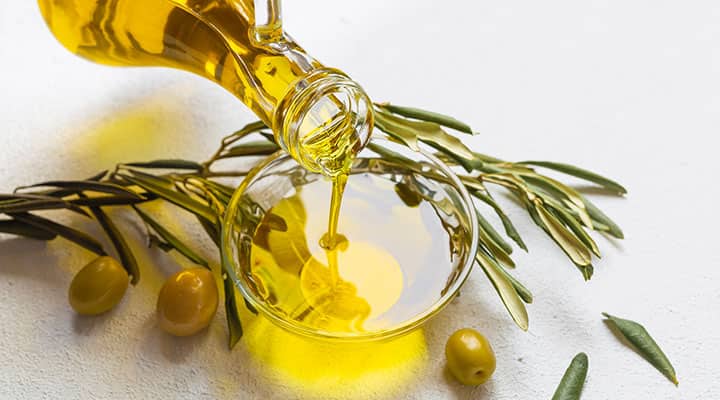
Olive oil is a natural fat extracted from olives, which have been a staple ingredient in Mediterranean cuisine for thousands of years. It is made by pressing whole olives, separating the oil from the pulp. Extra virgin olive oil (EVOO) is the least processed form. It is cold-pressed, produced without the use of heat or chemicals, which helps it retain the antioxidant polyphenols and healthy monounsaturated fats that make extra virgin olive oil such a supporter of heart health.
Not only has extra virgin olive oil been studied to support healthy cholesterol within normal range, it also promotes a healthy inflammatory response and helps fight the free radicals that cause oxidative stress in the body.
And it tastes delicious. Unlike refined oils, olive oil has a distinct flavor profile that can range from mild and fruity to peppery and robust. In baking recipes, this translates into a cake that tastes rich yet light, with subtle complexity rather than heaviness.
Why do olive oil and cake go together?
Olive oil and cake are a perfect match for several reasons:
Moisture retention.
Olive oil remains liquid at room temperature, which creates a softer, more tender crumb and helps the cake retain moisture long after baking.Flavor depth.
A mild, good-quality olive oil adds subtle fruity notes that complement sweetness rather than overpower it, giving the cake depth and balance that pair nicely with ingredients like citrus, vanilla, and almonds. This flavor also lends itself to other recipes, such as olive oil coffee.Consistency.
Olive oil blends easily into batters, limiting gluten development, which results in a light, delicate texture.
How much olive oil is in an olive oil cake?

An olive oil cake is designed to use just enough olive oil to transform the texture without making the cake feel heavy or oily. A classic olive oil cake recipe typically uses 1/3 to 3/4 cup of olive oil, depending on the desired richness and whether other moist ingredients, such as yogurt or milk, are included. This amount allows the olive oil to provide the necessary fat, delivering a soft, moist crumb while keeping the cake light, airy, and well-balanced in flavor.
In this recipe, we use ⅓ cup olive oil and ¼ cup Greek yogurt, which strikes the ideal balance between moisture and lightness.
How can I ensure my olive oil cake stays moist?
To guarantee an ultra-moist cake:
- Use a good-quality extra virgin olive oil with a mild flavor, which helps the cake stay tender without being heavy.
- Don't overmix the cake batter; overworking the batter can dry out the crumb. Gently fold the dry ingredients into the wet just until combined to avoid overdeveloping the gluten.
- Avoid overbaking. Remove the cake as soon as the center is set to prevent it from drying out.
- Store properly. Wrap tightly or store in an airtight container.
One of the biggest advantages of olive oil cake is that it actually improves in texture after a day, making it perfect for make-ahead baking.
Olive oil cake recipe

This recipe makes eight servings.
Ingredients
- ½ cup + 2 tbsp flour
- ⅓ cup granulated sugar
- ¼ tsp baking powder
- ⅛ tsp baking soda
- ⅛ tsp salt
- ⅓ cup olive oil
- ¼ cup Greek yogurt
- 1 whole egg
- 2 tbsp lemon juice or orange juice
- Powdered sugar for topping
Preparation
- Preheat the oven to 350 degrees F. Grease a 6-inch round pan (preferably a pan that has a removable bottom).
- In a medium-size mixing bowl, combine the dry ingredients: flour, sugar, baking powder, baking soda and salt.
- Make a well in the center of the dry ingredients and pour in the olive oil, yogurt, egg, and the lemon or orange juice.
- Try to combine the wet ingredients before folding into the outer flour layer.
- Mix everything gently with a spatula until it is just mixed. Do not over-mix.
- Pour the cake batter into the prepared pan and bake for 30-32 minutes.
- Remove the cake from the oven. Place it on your kitchen counter or stove and allow it to cool at least 15 minutes.
- Unmold the cake from the pan and add the topping by dusting powdered sugar on top. Enjoy!
Nutritional values per serving
- Calories: 155
- Fat: 9.4 g
- Protein: 2.2 g
- Carbohydrates: 15 g
- Fiber: 0.3 g
- Sugar: 8.4 g
- Sodium: 0.5 g
All nutritional information is based on third-party calculations and is only an estimate. Each recipe and nutritional value will vary depending on the brands you use, measuring methods and portion sizes.

Explore Our Best Heart Health Supplements
Tips for Success
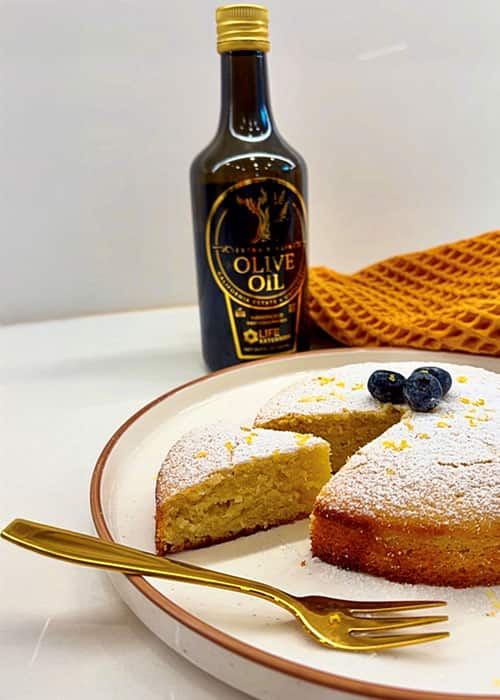
This cake recipe can be personalized to your tastes.
- Top the cake with some slivered almonds before baking for a delicious, nutty flavor.
- Incorporate some chocolate chips into the batter before baking or add melted chocolate drizzle as a topping if you are a chocolate lover.
- Serve with fresh berries, whipped cream, or Greek yogurt.
- The cake can be stored covered at room temperature for up to 2 days, and refrigerated for up to 4 days.
- Wrap this cake tightly and freeze up to two months. Defrost in the refrigerator.
Does olive oil cake get you enough olive oil?
This olive oil cake recipe contains a meaningful amount of olive oil per serving, making it a healthy way to occasionally enjoy a sweet treat. For best results, enjoy olive oil daily with healthy, no-sugar-added recipes. Olive oil can be used throughout your meals, from a drizzle on salad to the base of heartier meat-based recipes.
When selecting an olive oil, it is important to understand the source of the oil. Select one that is cold-pressed, which preserves its nutrient value. The best choice is an unfiltered and cold-pressed olive oil that provides over 800 mg/kg of naturally occurring olive polyphenols. These compounds help promote cardiovascular health and a healthy inflammatory response, and they help maintain already-healthy blood pressure and cholesterol levels.
Want to nourish a healthy heart? Our health needs quiz can help you find the right nutritional support for your lifestyle.

About the Author: Helen Rodriguez is the plant-based pastry chef behind Helen's Cakes, a boutique studio specializing in handcrafted desserts with wholesome ingredients and free from most common allergens. It is Helen's mission to transform the script from traditional desserts and provide a guilt-free experience through creations that will elevate your wellness journey!
Website: www.cakebyhelen.com
References
- Correia M, et al. "Unraveling the Extra Virgin Olive Oil Effect on Inflammation and on Gut and Saliva Microbiota." Biomolecules. February 2025. https://pmc.ncbi.nlm.nih.gov/articles/PMC11940808/
- Isaakidis A, et al. "Is There More to Olive Oil than Healthy Lipids?" Nutrients. August 2023. https://pmc.ncbi.nlm.nih.gov/articles/PMC10459315/
- Kourek C, et al. "Effects of High-Phenolic Extra Virgin Olive Oil (EVOO) on the Lipid Profile of Patients with Hyperlipidemia: A Randomized Clinical Trial." Nutrients. August 2025. https://pmc.ncbi.nlm.nih.gov/articles/PMC12348208/


Always be in the know!
Access the latest deals, wellness news, expert health tips & more!
Vascular Support Favorite