CoQ10 Benefits for Women in Their 40s and Beyond
Published: January 2023 | Updated: July 2026
At a Glance
- Women in their 40s, 50s, 60s and beyond may benefit from CoQ10 supplementation.
- Coenzyme Q10 is vital for supporting energy-demanding organs, including the heart, kidneys, liver and even muscles.
- CoQ10 production declines as we age, reaching a 50% drop between ages 60 and 65.
- Supplementing with CoQ10 can help combat fatigue, support heart health, and provide antioxidant protection for women as they navigate the aging process.
Ladies, is coenzyme Q10 (CoQ10) in your supplement stack? It probably should be, and here's why. CoQ10 is a compound that our bodies naturally produce and is present in nearly every cell. The body needs this coenzyme to support:
- ATP energy production
- Heart, kidney and liver health
- Muscle function
- Oxidative stress protection
However, our ability to produce CoQ10 declines precipitously from early childhood to old age. Since our levels drop over time, there's a good reason why CoQ10 supplements are an integral part of women's (and men's) wellness-focused regimens.
In addition, there are other reasons, such as hormonal shifts, why women may want to take CoQ10 at various life stages, especially in their 40s and beyond. Let's go over what the science says about these benefits, plus how to choose the right CoQ10 supplement.
Women in their 40s: CoQ10 for general fatigue

Ah, the 40s, a pivotal decade for your career, family life and friendships. While this decade can bring with it maturity and confidence, many women may feel off-kilter as life's demands take their toll and they notice age-related physical changes.
General fatigue is a chief complaint among women in their 40s. And it makes sense! By the time we reach this milestone, many of us have approached the perimenopause threshold—the transition between childbearing years and menopause—where changes in estrogen levels may lead to menstrual cycle shifts, hot flashes, and, of course, a dip in energy levels.
So, how does CoQ10 support women at this life phase? Coenzyme Q10 plays a crucial role in the electron transport chain, which produces ATP (adenosine triphosphate), the cells' preferred form of energy. CoQ10 behaves like a "taxi," and helps transfer electrons into the mitochondria, tiny powerhouses in your cells that make energy from food.
What's more, coenzyme Q10 has been clinically studied to help relieve occasional general fatigue in healthy adults. In a 12-week study, subjects who reported general daily fatigue experienced both subjective improvements in fatigue-related measures and increased CoQ10 levels after oral CoQ10 supplementation.
Adding a CoQ10 supplement to your daily regimen helps keep your cells energized, so you can keep on keeping on, no matter what life throws your way.
Women in their 50s: CoQ10 for cardiovascular health

As a quinquagenarian woman who's navigated the ups and downs of life, you're wiser, more empathetic and resilient in midlife. You're likely still balancing career and family life as you learn to prioritize sleep, protein- and fiber-rich meals, and daily movement—all key to healthy aging.
If you never thought about heart health before, it's likely that you're starting to think about it now. As you navigate changing estrogen levels during your body's transition into menopause—marked by a complete 12-month absence of the menstrual cycle—discussions about keeping your ticker in good shape are likely on the doctor's agenda at your annual checkups. That's because estrogen plays a pivotal role in cardiovascular health, including regulating HDL (high density lipoprotein) and LDL (low density lipoprotein) levels and keeping blood vessels relaxed, smooth and flexible for blood circulation.
CoQ10 is a smart addition to your preventative routine. That's because coenzyme Q10 provides cardiovascular protection by supporting:
Heart muscle health:
Your hard-working pump is one of the highest energy-demanding organs. CoQ10 supplementation helps shield heart cells from the effects of free radical activity.Healthy circulation:
CoQ10 also supports overall cardiovascular health by protecting endothelial cells, the delicate inner lining of blood vessels and arteries, against oxidative stress, so your blood reaches all the areas of your body, from head to toe.Already-healthy cholesterol levels:
Emerging research suggests that CoQ10 supplementation may help maintain cholesterol levels already within a normal range.
Over 60 million women (44%) in the US alone experience some form of heart health challenge. Staying active, eating a heart-healthy diet and heeding your doctor's advice are the most important ways to keep your heart healthy, and supplements like CoQ10 can complement those efforts.
"CoQ10 is helpful at so many different age ranges. It really can be a go-to supplement for nearly all women."
Women in their 60s and beyond: CoQ10 for antioxidant protection
The throes of menopause are in your rear-view window and you may be rediscovering favorite activities and forming new friendships as you head into retirement. Or maybe you're coming into your own as the matriarch of the family, with grandbabies to chase and recipes to pass along.
There's just one catch, though: emerging on the other side of menopause comes with its own health challenges. Postmenopausal levels of estrogen and other hormones pave the way for women to experience changes in how their body processes sugar and in their healthy inflammatory response, which can impact overall health.
Supplementing with CoQ10 can help women in their 60s and beyond by quenching free radical activity and protecting cells from oxidative stress. Furthermore, the antioxidant properties of CoQ10 help replenish other antioxidants in the body, such as vitamins E and C and SOD (superoxide dismutase), while also inhibiting inflammatory factors to support whole-body health. What's more, clinical research has shown that CoQ10 can help maintain already-healthy glucose metabolism.
CoQ10 Benefits for Women by Decade
Here's a quick chart summarizing the benefits of supplementing with CoQ10 for women at different ages and life phases.
| Women's Age | Life Phase | Health Goals | How CoQ10 May Help |
|---|---|---|---|
| 40s | Perimenopause; demanding career and/or home life | Support mitochondrial energy production |
|
| 50s | Menopause; may still face intense work/family demands | Increased focus on heart health |
|
| 60s & beyond | Postmenopause; age-related health and lifestyle changes | Age-related decline in CoQ10 levels |
|
Coenzyme Q10 is helpful in so many different age ranges that it really can be a go-to supplement for nearly all women. The only thing that's left is choosing the right CoQ10 supplement for you.

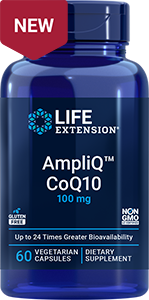
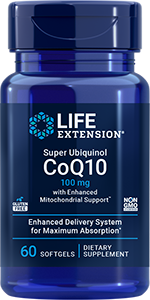
Explore Our Best CoQ10 Supplements
Women's guide to choosing CoQ10
Ubiquinol vs. Ubiquinone: which one is better for women?
Choosing between ubiquinol and ubiquinone comes down to preference. Ubiquinone must be converted to ubiquinol before cells and mitochondria can use it. That's why some women prefer the active form, ubiquinol, because it skips the conversion step, and cells can use it directly. Nonetheless, both forms of CoQ10 will have a positive effect on women if the body can use them. The trick to an efficient CoQ10 supplement is bioavailability, or how long it stays in the body, so you can use it. Choose formulations with delivery systems that help make CoQ10 more bioavailable to the body, such as fenugreek seed fibers.Should women take CoQ10 in the morning or at night for better absorption?
Either is fine, but the most important factor is how you take them: generally, CoQ10 supplements should be taken with food for better absorption. The key is to be consistent with your intake to get the best results.Can I take a CoQ10 supplement if I'm pregnant?
You should consult with your obstetrician before adding any supplements to your routine. In general, though, taking CoQ10 during pregnancy is well tolerated. If given the green light, always follow the instructions on the label unless your doctor has specific dosing instructions.How do I know if I need CoQ10?
If you're not feeling like your normal self, maybe you notice frequent head discomfort, or you feel sluggish in the afternoons, a CoQ10 blood test can let you know if insufficient levels of this coenzyme might be the culprit.
Remember, getting older is inevitable, but growing old is a choice. CoQ10 supplements can help safeguard your health, so you can live every decade as your healthiest self!
Key Takeaways
- CoQ10 may be helpful for women in various life stages because of its role in cellular energy, heart health and healthy aging.
- CoQ10 supplements are best absorbed when taken with food.
- Be consistent with your CoQ10 supplement intake for best results.


References
- El Khoudary SR, et al. "The menopause transition and women's health at midlife: a progress report from the Study of Women's Health Across the Nation (SWAN)." Menopause. September 2019. https://pmc.ncbi.nlm.nih.gov/articles/PMC6784846/
- Gao L, et al. "Effects of coenzyme Q10 on vascular endothelial function in humans: a meta-analysis of randomized controlled trials." Atherosclerosis. April 2012. https://pubmed.ncbi.nlm.nih.gov/22088605/
- Hou S, et al. "Efficacy and Optimal Dose of Coenzyme Q10 Supplementation on Inflammation-Related Biomarkers: A GRADE-Assessed Systematic Review and Updated Meta-Analysis of Randomized Controlled Trials." Mol Nutr Food Res. July 2023. https://pubmed.ncbi.nlm.nih.gov/37118903/
- Huang D, et al. "Nutritional supplements to improve esports player performance: a systematic review of randomized controlled trials." J Int Soc Sports Nutr. December 2026. https://pmc.ncbi.nlm.nih.gov/articles/PMC12724221/
- Kalén A, et al. "Age-related changes in the lipid compositions of rat and human tissues." Lipids. July 1989. https://pubmed.ncbi.nlm.nih.gov/2779364/
- Liang Y, et al. "Effects of coenzyme Q10 supplementation on glycemic control: A GRADE-assessed systematic review and dose-response meta-analysis of randomized controlled trials." EClinicalMedicine. August 2022. https://pubmed.ncbi.nlm.nih.gov/35958521/
- Liu Z, et al. "Effects of Coenzyme Q10 Supplementation on Lipid Profiles in Adults: A Meta-analysis of Randomized Controlled Trials." J Clin Endocrinol Metab. December 2022. https://pubmed.ncbi.nlm.nih.gov/36337001/
- Mizuno K, et al. "Ubiquinol-10 Intake Is Effective in Relieving Mild Fatigue in Healthy Individuals." Nutrients. June 2020. https://www.mdpi.com/2072-6643/12/6/1640
- Mumford SL, et al. "A longitudinal study of serum lipoproteins in relation to endogenous reproductive hormones during the menstrual cycle: findings from the BioCycle study." J Clin Endocrinol Metab. September 2010. https://pubmed.ncbi.nlm.nih.gov/20534764/
- Nappi RE, et al. "Global cross-sectional survey of women with vasomotor symptoms associated with menopause: prevalence and quality of life burden." Menopause. May 2021. https://pubmed.ncbi.nlm.nih.gov/34033602/
- Novella S, et al. "Mechanisms underlying the influence of oestrogen on cardiovascular physiology in women." The Journal of Physiology. August 2019. https://physoc.onlinelibrary.wiley.com/doi/10.1113/JP278063
- Stringham NT, et al. "Effects of macular xanthophyll supplementation on brain-derived neurotrophic factor, pro-inflammatory cytokines, and cognitive performance." Physiology & Behavior. 2019. https://psycnet.apa.org/record/2019-64397-001

Always be in the know!
Access the latest deals, wellness news, expert health tips & more!
Popular Supplement