12 Proactive Breast Health Tips from a GYN
Published: November 2026
At a Glance
- The foundation of proactive breast health is learning your body and what's normal for you, starting with monthly self-exams.
- Knowing whether you have dense breast tissue is important.
- Habits like exercise and healthy weight management can lower your breast cancer risk.
I'm a gynecologist, and breast cancer prevention is one of the topics my patients ask me about most. After 30 years of practice, I've learned that women don't want to feel anxious about it—they want to feel empowered. So here's what I tell them: Being proactive about your breast health isn't about fear. It's about a handful of simple, consistent habits that support your body year after year.
The good news? Most of these habits are already within your control—how you move, what you eat, how you manage stress, and how well you know your own body—through both self-examination and through lab testing.
Below is what I advise my patients to do so they can stay in the driver's seat of their health and well-being.
Know your body: Awareness and screening

The foundation of proactive breast health is simply knowing what's normal for you. That means getting to know your body, getting comfortable with your doctors and never skipping a screening.
Practice regular breast self-awareness.
Breast self-awareness is knowing how your breasts normally look and feel, so you can recognize changes and discuss findings with your healthcare provider. With every patient I examine, I give instructions for a breast self-exam. For women who are still having cycles, I recommend doing the breast self-exam during the week after the period has finished. This avoids any menstrual cycle tenderness or premenstrual tenderness. For post-menopausal women who do not have cycles anymore, they can just pick a date each month that they will remember.
Here's the best way to do a self-exam:
- First, put your hands behind your head and look in the mirror. This is an opportunity to look at the breast tissue visually. Breast cancers can occur on the skin and aren't always a "lump" that is felt. They should evaluate any changes in skin texture and look at the nipples and how they present, whether inverted (tucked in) or everted. Even something as small as a mosquito bite should heal on its own, and if it lingers, it needs to be addressed. It is not common, but inflammatory breast cancer can literally show as a skin alteration. I instruct them to look for any retractions of the tissue, dimpling or puckering.
- Next, examine your breast in the shower. During this time, the opposite hand is used to examine the breast with soapy water. Move your hand around the breast tissue to try to notice any changes. I recommend extending the exam into the armpit area, known as the axillary area, and to check the nipples for any nipple discharge. We are not looking for a needle in a haystack, but we are looking for changes. If we do not examine our breasts each month, we don't know what normal is for us, and therefore may think that any little irregularity feels abnormal.
- You should also examine your breasts while lying in bed, using the same manner as in the shower, because when we lie down, the breast tissue does spread across our chest a bit, and this may uncover a notable change.
Stay on schedule with mammograms and screenings.
The American College of Obstetricians and Gynecologists recommends that a female of average risk for breast cancer begin scheduling mammogram screenings at age 40 and repeat every one to two years.
I recommend an every-year schedule. If a patient has a first-degree relative, such as a mother or a sister, who has had breast cancer, we recommend that the patient start screening 10 years before the age of that relative. For example, if a patient's mother was diagnosed with breast cancer at age 40, then this patient would be recommended to have her initial screening at age 30.
Know your breast density status.
Breast density is a confusing term for many patients. The breast tissue is mainly made up of fatty tissue and fibroglandular tissue, which includes milk ducts. Each individual will have a different proportion of fatty tissue to fibroglandular tissue.
As we get older, we have more fatty tissue, and when we are younger, we have more glandular tissue, which is considered dense.
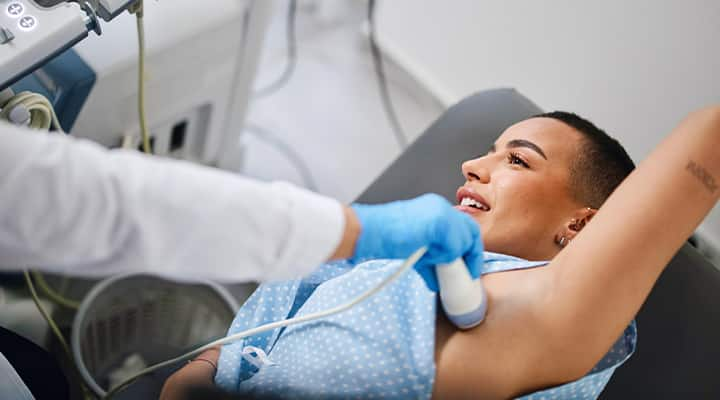
Dense tissue can make mammograms more difficult to interpret. Depending on your overall risk profile, your healthcare provider may discuss whether additional imaging is appropriate. An ultrasound, however, is not a substitute for a mammogram.
Learn your family history—including the paternal side.
I normally get a full history when I meet a patient. As we are all made up of DNA from both our parents, it is important to know the history of both sides of the family.
Breast cancer is not just a female problem. Not only can genetic changes come from our father's side, but men can also develop breast cancer. Genetic testing and sex hormone binding globulin (SHBG) testing may be beneficial in some cases.
Make lifestyle choices that support breast health

Your everyday choices can influence your hormone balance and overall breast wellness. Not only will these habits help protect breast health, but they also support your whole body—and promote healthy aging.
Move your body most days of the week.
The World Health Organization and the U.S. Department of Health have determined that 150 minutes per week of moderate activity has been found to decrease chronic illness, including high blood pressure, diabetes and cancer. The American Cancer Society recommends 150-300 minutes of moderate intensity or 75-150 minutes of vigorous intensity activity each week (or a combination of these).
All individuals should try to reach these physical movement recommendations to help reduce the risk of long-term diseases, including breast cancer.
Maintain a healthy weight.
The enzyme aromatase is expressed in several tissues, including fat tissue. It converts androgens like testosterone, which is made by the adrenal glands in women, into corresponding estrogens. After menopause, fat tissue becomes the main source of estrogen production, and research has shown women with more fat tissue store more estrogen hormones than those who are leaner. Greater obesity is also associated with changes in insulin signaling and inflammation that may contribute to breast-cancer risk.
Maintaining a healthy weight supports metabolic health, helps minimize aromatase activity and is associated with lower postmenopausal breast-cancer risk.
Rethink alcohol and smoking.
Alcohol can change the way that our bodies manage estrogens, and research shows that women who drink alcohol have higher hormone levels (and greater risk of breast cancer) compared with non-drinkers.
Why is this? Our liver is the primary organ responsible for breaking down and clearing hormones from our body. When we ingest alcohol, a known toxin, it has to be processed through the liver, and it gets priority.
Limiting alcohol is an evidence-based step for reducing breast cancer risk.
As far as smoking goes, it isn't just bad for your lungs. There is consistent evidence that breast cancer risk increases in women who smoke tobacco. Research shows that even second-hand smoke may raise a woman's risk.
Manage stress and cortisol.
Your body produces cortisol continuously, even at rest, and levels fluctuate naturally during the day. Physical or emotional challenges such as stress cause temporary spikes in cortisol, which helps to rev up your body's energy and sharpen your focus. Then cortisol levels decrease again.
Stress-managing activities such as meditation, yoga, a simple walk and adequate sleep support our body's cortisol response and healthy cortisol levels.
Notice we say "healthy" cortisol and not "no" cortisol. Cortisol is often cast as the villain, but this hormone isn't harmful. It helps you respond in high-pressure situations, whether navigating daily demands or handling a crisis.
Problems arise only when cortisol levels remain chronically too high. That disruption affects nearly every system in your body—including immune function, metabolism, digestion, mood, and sleep—and can contribute to inflammation and long-term health risks.
Practicing mindfulness, tai chi, and other stress management supports not just healthy cortisol levels, but whole-body health and wellness.

Protect your skin, including your chest and décolletage areas.
Sunscreen/UV protection for your skin is a simple, often-overlooked habit. Applying a broad-spectrum sunscreen daily is one of the most effective habits to lower the risk of skin cancers and prevent premature skin aging. Harmful UV rays alter the DNA in our skin cells and harm the proteins in our skin, such as collagen and elastin, and create fine lines and wrinkles.
Sunscreen protection is not just for a pool or beach day. We are exposed to the sun even when we aren't thinking about it, merely by walking to our car, going outside to get the mail or driving. Protecting your face, neck, chest and arms keeps the skin in those areas healthy, and applying sunscreen daily also helps you familiarize yourself with your normal skin so you can notice changes.

Target your nutrition for breast health

Eating a high-quality diet isn't just good for your heart, bones and immune function; it also supports breast health. Specific foods and nutrients can support the body's processing of estrogen and help to manage inflammation—all of which are key to breast cancer prevention.
Prioritize a plant-rich diet.
Studies have shown that diets rich in fruits and vegetables are associated with a lower breast-cancer risk. Diets high in certain ultra-processed foods and unhealthy fats, meanwhile, have been associated with an increased risk. Experts recommend eating a variety of fruits and vegetables, whole grains, legumes, fatty fish and poultry—with less red and processed meat—for maintaining overall health.
Beyond breast health, too much sugar and ultra-processed foods have been associated with poorer metabolic health and may contribute to chronic inflammation and long-term disease.
Promote healthy estrogen metabolism with targeted phytonutrients.
In addition to eating healthy foods, your diet should include "breast-friendly" foods. These include cruciferous vegetables, soy and flaxseed and fiber-rich foods, which have specific benefits for breast health. Here's what the science says:
- Cruciferous vegetables like broccoli, Brussels sprouts, cabbage, cauliflower, kale, bok choy, and collards contain indole-3-carbinol (I3C), which is converted into diindolylmethane (DIM) in your body. Research has shown that dietary I3C intake may support healthy estrogen metabolism.
- Foods like soy (isoflavones), flaxseed and sesame (lignans), and legumes (coumestans) contain phytoestrogens (or estrogen from plants). Phytoestrogens are plant-derived compounds that can interact with estrogen receptors, gently modulating estrogen in the body.
Support overall health with key micronutrients.
Overall nutrition and wellness is foundational for preventing chronic disease. That means making sure you're getting enough key nutrients like:
- Vitamin D: Low vitamin D status is associated with reduced bone mass, poor immune function, inflammation, and metabolic syndrome.
- Omega-3: These healthy fatty acids are also tied to improvements in inflammation and metabolic health.
- Calcium, magnesium and vitamin C: These important nutrients support health and function throughout your body.
The best way to optimize your nutrition is through whole foods, such as fruits, vegetables, healthy dairy products, fish and lean proteins. Legumes are not only full of vitamins, but can provide important fiber, which supports gut health and helps our colon move regularly. This helps our body eliminate toxins, excess hormones and more.

"Everyday habits can influence how the body produces and metabolizes estrogens. Maintaining a healthy weight, staying active, eating a fiber-rich diet, limiting alcohol and managing stress can all play a role in healthy estrogen metabolism."
How to support your breast health by decade
Breast health habits are important at every age, but as you get older, some priorities may shift.
| Decade | Lifestyle focus | Screening & awareness | Nutrition focus |
|---|---|---|---|
| 20s |
|
|
|
| 30s |
|
|
|
| 40s |
|
|
|
| 50s+ |
|
|
|
No matter your age, maintaining a healthy weight, eating a balanced diet and engaging in exercise are most influential in long-term illness prevention and breast health. Having awareness, performing breast self-exams, and following screening protocols is vital, as well.
While there's no guaranteed way to prevent breast cancer, being proactive can go a long way—not only for breast health, but for your whole body and quality of life.
Key Takeaways
- Studies have shown that eating plenty of fruits and vegetables is associated with a lower breast cancer risk.
- Alcohol can change the way that our bodies manage estrogens, leading to higher hormone concentrations.
- A healthy weight, balanced diet and exercise are priorities in long-term illness prevention and breast health.


References
- Alotiby A. "Immunology of Stress: A Review Article." J Clin Med. October 2024. https://pubmed.ncbi.nlm.nih.gov/39518533/
- Anagnostis P, et al. "EMAS position statement: Vitamin D and menopausal health." Maturitas. 2023 Mar;169:2-9.
- Fortner RT, et al. "Recreational physical activity and breast cancer risk by menopausal status and tumor hormone receptor status: results from the Nurses' Health Studies." Breast Cancer Res Treat. July 2024. https://pubmed.ncbi.nlm.nih.gov/38592542/
- Hvidtfeldt UA, et al. "Quantifying mediating effects of endogenous estrogen and insulin in the relation between obesity, alcohol consumption, and breast cancer." Cancer Epidemiol Biomarkers Prev. July 2012. https://pubmed.ncbi.nlm.nih.gov/22564867/
- Jang H, Park K. "Omega-3 and omega-6 polyunsaturated fatty acids and metabolic syndrome: A systematic review and meta-analysis." Clin Nutr. 2020 Mar;39(3):765-73.
- Jeenduang N, et al. "Association of 25-hydroxyvitamin D levels and metabolic syndrome in Thai postmenopausal women." Diabetes Metab Syndr. 2020 Nov-Dec;14(6):1585-90.
- Key T, et al. "Endogenous sex hormones and breast cancer in postmenopausal women: reanalysis of nine prospective studies." J Natl Cancer Inst. April 2002. https://pubmed.ncbi.nlm.nih.gov/11959894/
- Khalili L, et al. "Effect of n-3 (Omega-3) Polyunsaturated Fatty Acid Supplementation on Metabolic and Inflammatory Biomarkers and Body Weight in Patients with Type 2 Diabetes Mellitus: A Systematic Review and Meta-Analysis of RCTs." Metabolites. 2021 Oct 28;11(11).
- Konieczna J, et al. "Adulthood dietary and lifestyle patterns and risk of breast cancer: Global Cancer Update Programme (CUP Global) systematic literature review." Am J Clin Nutr. January 2025. https://pmc.ncbi.nlm.nih.gov/articles/PMC11747198/
- Laird E, et al. "Vitamin D deficiency is associated with inflammation in older Irish adults." J Clin Endocrinol Metab. 2014 May;99(5):1807-15.
- Macacu A, et al. "Active and passive smoking and risk of breast cancer: a meta-analysis." Breast Cancer Res Treat. November 2015. https://pubmed.ncbi.nlm.nih.gov/26546245/
- Michnovicz JJ, et al. "Changes in levels of urinary estrogen metabolites after oral indole-3-carbinol treatment in humans." J Natl Cancer Inst. May 1997. https://pubmed.ncbi.nlm.nih.gov/9168187/
- Riazati N, et al. "Association of Vitamin D Status with Immune Markers in a Cohort of Healthy Adults." J Nutr. 2025 Feb;155(2):621-33.
- Ring M. "An Integrative Approach to HPA Axis Dysfunction: From Recognition to Recovery." The American Journal of Medicine. October 2025. https://www.amjmed.com/article/S0002-9343(25)00353-5/fulltext
- Timmins IR, et al. "International Pooled Analysis of Leisure-Time Physical Activity and Premenopausal Breast Cancer in Women From 19 Cohorts." J Clin Oncol. March 2024. https://pubmed.ncbi.nlm.nih.gov/38079601/
- Tin Tin S, et al. "Alcohol intake and endogenous sex hormones in women: Meta-analysis of cohort studies and Mendelian randomization." Cancer. October 2024. https://pubmed.ncbi.nlm.nih.gov/38824654/
- "3 Diet Changes That Can Help Lower Your Breast Cancer Risk." American Cancer Society. October 2024. https://www.cancer.org/cancer/latest-news/3-diet-changes-that-can-help-lower-your-breast-cancer-risk.html
- "ACOG Updates Recommendation on When to Begin Breast Cancer Screening Mammography." American College of Obstetricians & Gynecologists. October 2024. https://www.acog.org/news/2024/10/acog-updates-recommendation-when-to-begin-breast-cancer-screening-mammography/
- "American Cancer Society Guideline for Diet and Physical Activity for Cancer Prevention." American Cancer Society. October 2025. https://www.cancer.org/cancer/risk-prevention/diet-physical-activity/acs-guidelines-nutrition-physical-activity-cancer-prevention.html
- "Breast Cancer Screening." National Breast Cancer Foundation, Inc. March 2026. https://www.nationalbreastcancer.org/breast-cancer-screening/
- "Breast Cancer: Screening." U.S. Preventive Services Task Force. April 2024. https://www.uspreventiveservicestaskforce.org/uspstf/recommendation/breast-cancer-screening
- "Breast Density and Your Mammogram Report." American Cancer Society. September 2024. https://www.cancer.org/cancer/types/breast-cancer/screening-tests-and-early-detection/mammograms/breast-density-and-your-mammogram-report.html
- "Breast Self-Awareness." Johns Hopkins Medicine. https://www.hopkinsmedicine.org/health/wellness-and-prevention/breast-self-awareness
- "Cardio Exercise." American Cancer Society. October 2025. https://www.cancer.org/cancer/risk-prevention/diet-physical-activity/get-active/cardio-exercise.html
- "Mammography and Other Screening Tests for Breast Problems." American College of Obstetricians & Gynecologists. May 2026. https://www.acog.org/womens-health/faqs/mammography-and-other-screening-tests-for-breast-problems
- "Risk Assessment, Genetic Counseling, and Genetic Testing for BRCA-Related Cancer." JAMA. August 2019. https://jamanetwork.com/journals/jama/fullarticle/2748515

Always be in the know!
Access the latest deals, wellness news, expert health tips & more!
Popular Blood Test