How Does Melatonin Work? A Guide to Your Body’s Sleep Hormone
Published: March 2021 | Updated: January 2026
At a Glance
- Melatonin is a hormone your brain produces naturally to support sleep-wake cycles.
- Levels rise in the evening in response to darkness and drop in the morning with exposure to sunlight.
- Melatonin supplements can help when natural production declines with age or when your sleep schedule gets disrupted.
Tossing and turning all night is never fun. And the annoyance doesn't end there: Not getting a proper night's rest leaves you lethargic and groggy all day long. Sleep is essential to start your day on the right foot and support your physical and mental health and wellness.
Luckily, a popular supplement can help you get a good night's rest. It is time for you to meet your bedside buddy, melatonin.
What is melatonin, and where is it made in the body?
Melatonin is a hormone naturally produced in the brain's pineal gland, which is smaller than a pea and shaped like a pinecone (which is how it got its name). Melatonin helps support your sleep-wake cycle, also known as your circadian rhythm.
Your melatonin production levels fluctuate depending on the time of day. As the sun sets and daylight diminishes, your body produces more melatonin to signal that it's time for sleep. During sleep, your body rests and recharges your vital organs and systems; it also secretes melatonin to keep you asleep. Then, your levels drop when the sun comes up, helping you wake up and seize the day.
How does melatonin work in the brain to support sleep?

Melatonin works by binding to MT1 and MT2 receptors, receptors in the brain which help regulate your internal circadian rhythm (the natural cycle of your body's physical and mental changes throughout the day). As melatonin levels rise in the evening and bind to these receptors, they signal to the brain that it's time to prepare for sleep.
Each receptor plays a somewhat different role. MT1's job is to quiet the firing neurons in the brain and calm down the nervous system. MT2 is more important for adjusting your internal clock when things are thrown off-kilter (like when you're traveling through time zones or shifting sleep schedules).
How does supplemental melatonin differ from the melatonin your body makes?
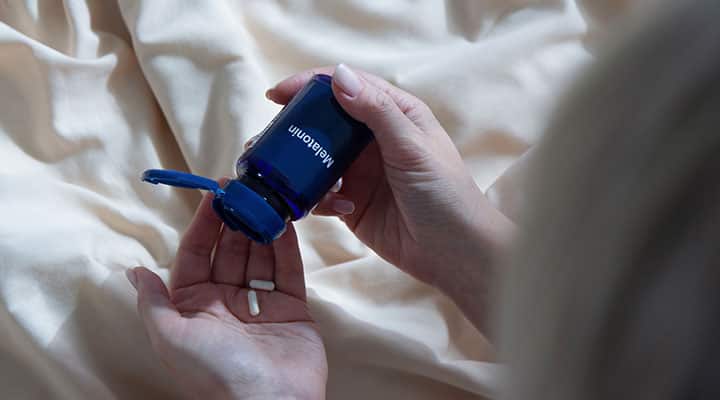
Supplemental melatonin and the melatonin your body makes are structurally the same, but the ways they react with your body can differ.
- Your body releases melatonin gradually in response to darkness, while supplements provide a single dose that can spike blood levels quickly. Some sleep supplements have been formulated to give a boost of melatonin and then a sustained-release melatonin that more closely mimics the body's gradual release.
- Supplements often give higher or more concentrated doses than your body produces on its own.
- Natural melatonin is handled by your brain's circadian clock, whereas supplements bypass this, almost "hacking" the system. Most supplements recommend taking melatonin around your usual bedtime to help you fall asleep. You might also gradually move your melatonin intake to shift to the time you want to go to sleep, such as when you're traveling or adjusting to daylight savings time.
What triggers melatonin release, and what suppresses it?

For the most part, melatonin production is triggered by darkness, which signals the pineal gland that it's time to prepare the body for sleep. Meanwhile, light quashes melatonin production and encourages alertness. This is why a dark room is so important for a good night's sleep, and sunlight exposure upon waking gets you ready for the day ahead.
But other factors can affect regular melatonin cycles and levels—and this can throw a wrench into your slumber party. These factors include:
Blue light exposure.
This means TV time (sorry, late-night reality show bingers) and cell phone scrolling. Turning off screens an hour before bedtime helps support your natural melatonin production and signals your brain that it's time to hit the hay.Travel.
When you're traveling through time zones, your body and brain need to sync up when you arrive at your destination. Your physical body might have traveled to the tropical islands of Thailand, but your brain is still on California time, which can mess with your circadian rhythms.Shift work.
Like travel, shifting your sleep-wake schedule because of work demands, or even the change between daylight savings time and standard time, can alter melatonin levels and the timing of its release.Diet.
Those late-night cravings and refrigerator runs aren't good for your waistline, and they could be hindering your sleeping habits, too. By the time night rolls around, your systems are starting to wind down for the night. By introducing food, your body and brain are forced to "restart" to create the energy needed to digest your delectable dish.Lifestyle.
Certain choices, like caffeine, alcohol and nicotine intake, can affect melatonin production and delay the release that helps you wind down.Stress management and mood.
Those continuous replays of your day's challenges can make it harder for your nervous system to power down.Age.
Over time, melatonin levels in the body naturally decrease. This can affect your ability to fall asleep and stay asleep throughout the night.
Pro tip: A regular sleep schedule can influence the timing of melatonin production, helping your body know when to feel sleepy or awake.

Explore Our Best Melatonin Supplements
How to encourage melatonin production
Although you can't control all the factors that contribute to a good night's rest, making healthy choices will get you much closer to enjoying the sleep you've been dreaming of—and the health benefits that come with it.
| Factor | How It Affects Melatonin | How To Help |
|---|---|---|
| Light exposure | Light, especially blue light, suppresses the natural release of melatonin | Begin dimming lights and avoid screens at least an hour before bedtime |
| Sleep schedule | An irregular schedule disrupts your normal sleep cycle | Go to sleep and wake up around the same time each day |
| Diet | Ingesting caffeine or eating a heavy meal close to bedtime can delay melatonin release | Skip the evening coffee and don't eat close to bedtime |
| Lifestyle choices | Nicotine and alcohol can decrease melatonin levels and disrupt your normal sleep cycle | Avoid in the hours before bed |
| Stress management | Unmanaged stress can disrupt your normal sleep cycle | Try mindfulness and exercises such as yoga or stretching |
| Travel | Moving between time zones can cause a shift in melatonin timing and alter your circadian rhythm | Consider a melatonin supplement to encourage your body's transition into the correct time zone |
How does melatonin affect your circadian rhythm?

Melatonin acts as a timing cue for your body's internal 24-hour clock. This hormone basically helps you feel wakeful or sleepy, aligning with the time of day and how dark it is outside.
Many aspects of bodily functions are timed according to your internal circadian cycles, including sleep-wake, hunger cues, hormones and more. The cycle is controlled by a cluster of nerve cells in the brain called the suprachiasmatic nucleus (SCN), which acts as the master clock, coordinating rhythms throughout the body.
Here's what a healthy sleep-wake circadian cycle looks like in practice.
- First, the light-sensitive receptors in your eyes sense either light or darkness.
- This triggers a message sent to the SCN, which is located in the hypothalamus in the brain. So if your environment is dark, the signal is "Let's get ready for sleep!" If it's light, the signal is "Let's get ready to be alert!"
- A message is then sent to the pineal gland to either increase melatonin production (in response to darkness) or decrease melatonin production (in response to light).
- When melatonin increases, it binds to its receptors, prompting your body to prepare to sleep. That means less neural firing, lowering your core body temperature, and feeling sleepy.
- When your sleep hormone decreases (ideally in response to light), your body prepares for wakefulness.
This all happens on a pretty reliable 24-hour cycle in a healthy circadian rhythm.
Which lifestyle habits help melatonin work more effectively?

Your daily habits are sending either helpful or not-so-helpful signals to the system controlling your melatonin levels. That's why it's so important to make lifestyle choices that support restful sleep.
Take your evening routine offline.
All that scrolling before bed is working against you. The blue light from phones, tablets, and TVs tells your brain it's still daytime, which quells your natural melatonin production. Try powering down at least an hour before you want to sleep.Dim your lighting in the evening.
Bright overhead lights send the same stay-awake signals as screens. Your body takes these light cues seriously when deciding whether it's time to wind down.Avoid stimulation.
Skip the intense workouts, stressful work emails, and heavy meals in the hours before bed. These activities rev up your system when you're trying to do the opposite.Calm yourself.
Give yourself a proper runway to sleep with a calming bedtime routine that signals to your body it's time to shift gears—whether that's reading, light stretching, or a warm bath. Targeted nutrition, like ashwagandha and GABA, can also help relax your mind and body in preparation for sleep.Sleep consistently.
Going to bed and waking up at roughly the same time every day (yes, even on weekends!) helps your body's melatonin cycle.Start with the sun.
When you wake up, expose yourself to bright daylight as soon as you can to reinforce your circadian rhythm and help you feel more alert during the day and sleepier at night. A quick morning walk with the dog or coffee by a sunny window can make a real difference.
How fast does melatonin work once released or taken as a supplement?

Generally, endogenous melatonin levels (the natural melatonin released from the pineal gland) begin to gradually rise one to two hours before bedtime. Supplemental melatonin is quicker—it usually begins to affect the body within 30 minutes to an hour.
Everyone is unique, so melatonin may affect people differently. Some may feel sleepy very quickly, while others take a bit more time to feel the effects of melatonin. Most supplement labels recommend taking melatonin roughly 30 minutes before bedtime.
Why do melatonin levels decrease with age?
There are several reasons why the body naturally makes less melatonin as we age. Pineal gland output of melatonin declines over time. The suprachiasmatic nucleus (SCN), your body's master clock, and the neuronal pathways connecting it with the pineal gland can also change over time. All of these contribute to lower melatonin levels in older adults. Lower melatonin levels may also be connected to broader neurological aging processes.
Looking for more restful sleep? Our health needs quiz delivers a personalized nutrient recommendation tailored to your lifestyle and concerns.
Key Takeaways
- Melatonin helps you sleep by binding to brain receptors that diminish alertness and signal it's time to rest.
- Light exposure, irregular sleep schedules, caffeine, alcohol, stress and aging can interfere with melatonin production.
- Reduced light exposure and a calming bedtime routine help your body produce melatonin on its own. Melatonin supplements and even melatonin mocktails may help.


References
- Anghel L, et al. "Benefits and adverse events of melatonin use in the elderly (Review)." Exp Ther Med. March 2022. https://pmc.ncbi.nlm.nih.gov/articles/PMC8796282/
- Arendt J, Aulinas A. Physiology of the Pineal Gland and Melatonin. October 2022. https://www.ncbi.nlm.nih.gov/books/NBK550972/
- Cruz-Sanabria F, et al. "Melatonin as a Chronobiotic with Sleep-promoting Properties." Curr Neuropharmacol. 2023. https://pubmed.ncbi.nlm.nih.gov/35176989/
- Cruz-Sanabria F, et al. "Optimizing the Time and Dose of Melatonin as a Sleep-Promoting Drug: A Systematic Review of Randomized Controlled Trials and Dose-Response Meta-Analysis." J Pineal Res. August 2024. https://pubmed.ncbi.nlm.nih.gov/38888087/
- de Lima Menezes G, et al. "Quantum mechanics insights into melatonin and analogs binding to melatonin MT1 and MT2 receptors." Nature. May 2024. https://www.nature.com/articles/s41598-024-59786-x
- Okamoto HH, et al. "Melatonin receptor structure and signaling." J Pineal Res. April 2024. https://pubmed.ncbi.nlm.nih.gov/38587234/
- Tomatsu S, et al. "Clinical Chronobiology: Circadian Rhythms in Health and Disease." Semin Neurol. May 2025. https://pubmed.ncbi.nlm.nih.gov/39961369/
- "Pineal Gland." Cleveland Clinic. June 2022. https://my.clevelandclinic.org/health/body/23334-pineal-gland

Always be in the know!
Access the latest deals, wellness news, expert health tips & more!
Sleep Favorite