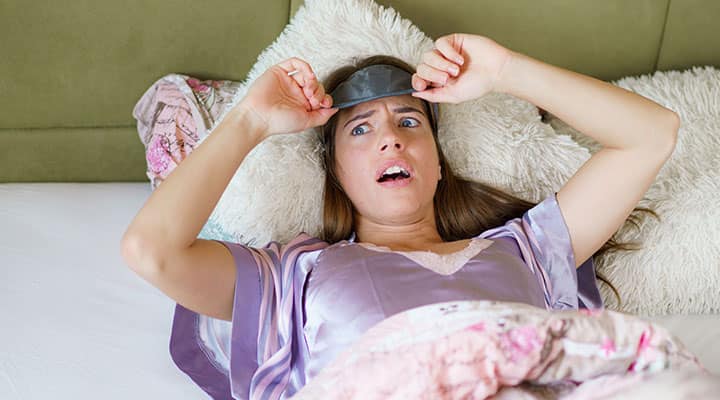
20 Causes of Fatigue: Why Am I Always Tired?
Published: May 2026
At a Glance
- Always feel tired? We break down 20 different reasons why you're so exhausted.
- Causes of fatigue include lifestyle habits, nutritional deficiencies and medical conditions.
- Lab tests can identify underlying medical conditions causing your fatigue.
- Sleep is a pillar of good health, so it's important to address causes of exhaustion.
Do you feel like the 2 PM slump is hitting you all day long? And no matter what you do, you just can't shake it? When Mr. Sandman is playing his tune nonstop and you can't seem to put him on mute, it's time to make a change.
And this isn't just because feeling like you're running on empty all the time isn't fun. For one thing, sleep isn't just downtime—it's an important part of your biology and a pillar of a healthy life. While you snooze, your brain and body take time to renew themselves, remove waste, consolidate memories and more. Not getting enough restful sleep each night can put you at risk for a wide array of illnesses.
For another, the reason why you're always tired matters. Best case scenario, it's something you can fix, like skipping that PM coffee break or getting blackout curtains.
More seriously, there are medical reasons that could be disrupting with your sleep, so you'll want to do lab work to understand the cause of your fatigue so you can work with a physician to get treatment.
Here are 20 lifestyle, nutritional, and medical reasons why you're always feeling tired.
Lifestyle reasons why you’re always tired

Ready for some good news? Many times, the cause of your exhaustion is not a medical emergency. Lifestyle changes are the first thing you can do to improve your sleep. See if you're guilty of any of the following bad sleep habits:
1. Poor sleep schedule
This is one of the biggest contributors to chronic fatigue and tiredness. Be honest: how many nights do you procrastinate bedtime and then the morning alarm is waking you up before you got any quality shuteye? If you can't find 7-9 hours for yourself every night, you're shortchanging yourself on the sleep your body needs.
2. Your bedroom is loud, hot, or bright, or your partner snores
How are you supposed to get quality sleep in a space that's more conducive to a rave than slumber? Practice healthy sleep habits to encourage high-quality sleep and invest in things like earplugs, blackout curtains and a fan or a higher AC bill so you can sleep more soundly.
3. Diet
It's no surprise that diet contributes to overall fatigue and energy. Consider a healthy diet plan like the Mediterranean diet, which includes minimally processed foods like healthy proteins and fats, whole grains, fruits, and vegetables. This has so many benefits, including sleep quality. And no matter what's on the menu, avoid eating close to bedtime.
4. Dehydration
Ever wake up in the middle of the night craving a cold glass of water? Dehydration can shorten your sleep duration and disrupt your sleep-wake cycle. That's why staying hydrated is crucial for promoting healthy sleep. (But don't drink too close to bedtime—then you'll be waking up to use the bathroom!)
5. Caffeine use
Limit that coffee to morning or midday. Caffeine is a stimulant, and even though you might not notice the effect, it can keep you awake at night.
6. Chronic stress
If you are chronically stressed, the long-term change in your cortisol levels can leave you feeling tired despite a night of sleep. Focus on ways to help reduce stress, like breathing exercises, meditation and other healthy outlets like spending time in nature or playing sports.

7. Exercising late
Speaking of sports, we often associate exercise with promoting sleep. A warm, cozy bed after a long run outside sounds like a delight. But just like with everything in life, there is a fine balance. While regular daytime exercise has been shown to improve subjective sleep quality, exercise too close to bedtime can reduce REM sleep. Try to limit your exercise to the daytime, or at least two to four hours before sleep.
8. Alcohol use before bed
Alcohol and late nights go hand in hand like the subsequent hangover and hearty breakfast. While alcohol can make you feel drowsy, consumption can disrupt healthy sleep patterns and affect your sleep. There's a reason we say people "pass out" instead of "go to sleep," so do yourself a favor and skip the nightcap.
9. Screen time
Let me guess: you like to unwind before bed with an evening scroll through social media or catch up with your friends over text. (Who doesn't?) But even a small screen like your cell phone can disrupt sleep patterns. Screens emit blue light, which stimulates retinal cells to signal that your sleep-wake cycle should be in "wake" mode. It's best to avoid screen time at and before bedtime. The same goes for TV. Trust me, I also like a comforting bedtime show as I fall asleep. I don't like it as much when I wake up feeling groggy.
While changing some of these habits might not immediately solve the problem, it's definitely a good start. And healthy lifestyle changes to support restful sleep are going to be your first line of defense.
Nutritional deficiencies that can make you tired

Nutrients nourish the body—they are the foundation of bodily processes, so it is important to ensure you are getting an adequate intake. If your diet is lacking, your sleep can suffer. The following deficiencies are well-known to have a link to chronic fatigue:
10. Iron
One of the most established causes of fatigue is iron-deficiency anemia, which can be caused by a number of medical conditions as well as poor diet. Iron is required for the formation of red blood cells that carry oxygen throughout the body. Low levels of iron can decrease red blood cell count, which impairs their ability to carry oxygen to tissues, leading to chronic fatigue. After confirming iron status with an iron blood panel, your doctor may prescribe iron infusions or suggest increasing your iron intake through diet or supplements.
11. Minerals
Iron isn't the only mineral you need to keep your reserves up! Deficiencies in other minerals, like magnesium and zinc, have also been associated with chronic fatigue.
12. Vitamins
Nutrients like vitamin D, folate, and vitamin B12 are involved in various metabolic processes that affect energy. Deficiencies in these can cause fatigue.
13. Protein
Need yet another reason to get enough protein in your diet? Insufficient protein intake is linked to increased fatigue and frailty in older adults, particularly due to muscle loss, slow metabolism and an overall imbalance in the body.
The good news is that similar to lifestyle causes of exhaustion, improving your nutrition can help you reclaim your energy levels. Of course, if the nutrient deficiency is caused by an underlying medical condition, you'll want to reach out to your doctor for a diagnosis and treatment plan.
Medical conditions that cause chronic fatigue

Ongoing fatigue might not always be a lifestyle factor and could be due to underlying medical conditions—some of them serious. It is important to always talk with your doctor if you are experiencing chronic fatigue to rule these out, or begin treatment if you get a positive diagnosis.
A few medical conditions that can cause ongoing fatigue are:
14. Narcolepsy
Narcolepsy is a disorder characterized by excessive daytime sleepiness and episodes of suddenly falling asleep ("sleep attacks"). It is primarily caused by a deficiency in the hormone called orexin (AKA hypocretin), which regulates your wakefulness.
15. Insomnia
Insomnia is a clinical diagnosis that is defined by its symptoms, which include difficulty falling and staying asleep, fatigue and cognitive impairment.16. Non-24-hour sleep-wake disorder
Your circadian rhythm is key to healthy sleep patterns. Non-24-hour sleep-wake disorder causes constant changes to your circadian rhythm and disrupts sleep patterns, which can leave you feeling tired.
17. Sleep apnea
Sleep apnea is when your breathing is interrupted during sleep, and this is one of the more serious causes of fatigue. There are two types of sleep apnea: obstructive and central. Obstructive sleep apnea is more common and occurs when the throat narrows, blocking airflow into the lungs. Central sleep apnea is more complicated, and happens when the brain doesn't send signals to the muscles that breathe—essentially causing brief, involuntary pauses in breath.
18. Chronic fatigue syndrome (CFS)
CFS is a complicated condition that is characterized by excessive fatigue persisting for more than six months. This can also impact your attention, memory, mood, sleep, and more. While there is no specific single treatment, interventions like mind-body or exercise-based therapies may improve symptoms.
19. Anemia
Anemia has other causes besides nutrient deficiencies like iron. Other causes of anemia can include thalassemia, sickle cell disease, and blood loss. Anemia can be confirmed with an anemia profile blood test.
20. Hormone imbalances
Hormone imbalances might be part of why you feel tired all the time. There's an interesting relationship between the hormones melatonin, which plays a central role in your circadian rhythm, and cortisol, the body's primary stress hormone, which spikes in the morning and plays a role in wakefulness. These need to be in balance for healthy sleep patterns.
Lifestyle fatigue vs. medical fatigue
If your fatigue is caused by your lifestyle and/or diet, that's actually good news! You can change your habits and see real changes. If the cause is medical, work with your physician to get the treatment you need to address the underlying cause.
| Factor | Lifestyle-Related Fatigue | Medical-Related Fatigue |
|---|---|---|
Sleep |
Inconsistent bedtime, bright lights, noisy sleep environment |
Sleep apnea, insomnia, narcolepsy |
Nutrition |
Unhealthy diet and eating close to bedtime |
Deficiencies in iron, vitamin D, magnesium, protein, vitamin B12, folate, etc. |
Stress |
Heavy workload, hectic personal life, ongoing stressors |
Medical-related stressors, medical conditions, chronic stress |
Next Step |
Lifestyle and dietary approaches |
Medical intervention, sleep study |
How to determine the cause of your fatigue
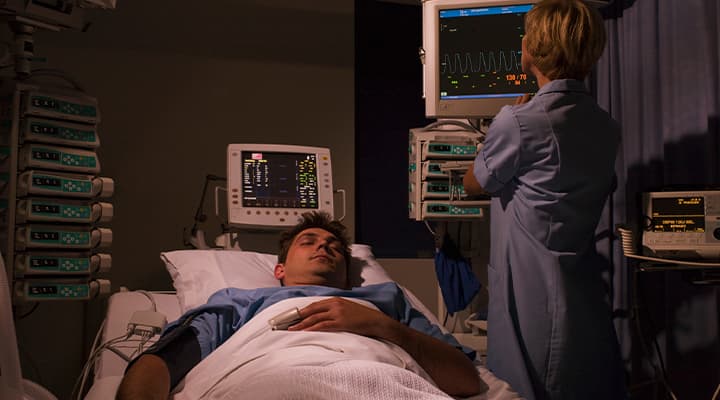
Figuring out what is causing ongoing fatigue and lethargy can be confusing and frustrating. Checking overall blood chemistry and cortisol and melatonin levels is a good place to start, so look into these tests:
-
Sleep hormone test
– Measures cortisol and melatonin levels; an imbalance can explain why you're not sleeping well. Chronic fatigue profile
– Assesses for anemia, vitamin deficiencies, diseases like Epstein-Barr and other causes.Complete blood count/lipid panel
– Assess overall cardiovascular health to discover if underlying conditions are impacting your sleep quality.Sleep study
– Your doctor may refer you to a sleep specialist who will run a sleep study to determine what's going on when you're actually asleep—for example, whether you have sleep apnea.
These tests are just one piece of the puzzle! Talk to your healthcare provider to determine your next steps, and also make sure you're maintaining healthy sleep hygiene to rule out lifestyle habits that are keeping you from being well-rested.
Why do I sleep all night and still feel tired?

Feel exhausted all day even though you're clocking in plenty of time in bed? Here are a few possible reasons why:
Poor sleep quality
Sleep quantity is key, but so is sleep quality. If you're tossing and turning all night long, you may not be getting enough time in each of the two distinct stages of sleep which occur in cycles and are marked by different brain activity:
Non-rapid eye movement (NREM):
This accounts for the majority of total sleep time and is marked by slower brain activity and reduced responsiveness to internal and external stimuli.Rapid eye movement (REM):
Characterized by involuntary, rapid eye movements and vivid dreaming, this phase is important for intellectual and emotional processing.
A typical night of sleep will contain about three to six cycles, with each one lasting about 90-120 minutes. Both types are vital for restful sleep.
Oversleeping
Sleeping more doesn't always mean sleeping better. In fact, sleeping more than nine hours or less than seven is linked to fatigue and an increased risk of various diseases. You want to aim for seven to nine hours of quality sleep each night, the "just right" amount. Oversleeping can lead to a phenomenon known as "sleep inertia," which causes grogginess upon waking that takes some time to fade away. Oversleeping can also affect your circadian rhythms, hence the importance of a well-maintained sleep schedule.
“Sleep is a complex, yet delicate process. Don’t be discouraged if one specific approach doesn’t work! Oftentimes, the most effective strategy is a personalized plan that blends several key elements.”
Frequently asked questions about fatigue
How do I know if it’s fatigue or sleepiness?

You'll notice we use the word "fatigue" a lot when referring to chronic exhaustion, and perhaps you're wondering if that's what you're feeling, or if it's just feeling "sleepy." These terms are often thrown around interchangeably, but they actually mean different things, and they are handled differently by healthcare providers.
Fatigue
is defined as a subjective feeling of physical or mental exhaustion. It is characterized by difficulty doing activities and could be related to a wide range of things. Sometimes, even after sleep, we might still feel this sense of fatigue. In fact, fatigue is reported by 5-10% of patients and is one of the top 10 reasons for visits to a primary care physician.Sleepiness
, on the other hand, is the inability to stay awake and alert during normal wake periods, like cooking, working, gardening or any other activity that requires attention. When sleepiness takes over, it can lead to unintended naps or drowsiness.
Can poor sleep make you sick?
Yes. Getting proper sleep is a pillar of good health, and when you're deficient, you may leave yourself vulnerable to a number of illnesses and even a shortened lifespan. In fact, poor sleep has also been linked to a variety of diseases:
- Obesity
- Type 2 diabetes mellitus
- Hypertension
- Cardiovascular disease
- All-cause mortality
Indeed, it's a vicious cycle: medical conditions can cause poor sleep, and poor sleep itself is associated with medical conditions. All the more reason to figure out what's causing your fatigue and resolving to address it, once and for all.
When should you be concerned about constant fatigue?
If you have unsuccessfully tried multiple methods to combat constant fatigue and it lasts longer than a week or two—especially if accompanied by other red flags such as dizziness, lightheadedness or changes in mood—it might be time to see your doctor.
Also keep in mind that sleep is a complex, yet delicate process. Don't be discouraged if one specific approach doesn't work! Oftentimes, the most effective strategy is a personalized plan that blends several key elements.
Key Takeaways
- Poor sleep schedule and quality is one of the biggest contributors to chronic fatigue.
- Assessing blood chemistry and cortisol and melatonin levels is a good first step in identifying the causes of your fatigue.
- If your fatigue lasts longer than a week or two, it may be time to speak with your doctor.


References
- Allen LH. "Micronutrients — Assessment, Requirements, Deficiencies, and Interventions." The New England Journal of Medicine. March 2025. https://www.nejm.org/doi/full/10.1056/NEJMra2314150
- Auerbach M, et al. "Iron Deficiency in Adults." JAMA. March 2025. https://jamanetwork.com/journals/jama/article-abstract/2832131
- Ausserhofer D, et al. "Sleep Problems and Sleep Quality in the General Adult Population Living in South Tyrol (Italy): A Cross-Sectional Survey Study." Clocks Sleep. May 2025. https://pubmed.ncbi.nlm.nih.gov/40407629/
- Ayas FY, Özcebe LH. "The relationship between fatigue, sleep quality, and sleep deprivation." Sleep Breath. January 2025. https://pubmed.ncbi.nlm.nih.gov/39804542/
- Azzolino D, et al. "Fatigue in older persons: the role of nutrition." Proc Nutr Soc. February 2023. https://pubmed.ncbi.nlm.nih.gov/36111418/
- Bjørklund G, et al. "Chronic fatigue syndrome (CFS): Suggestions for a nutritional treatment in the therapeutic approach." Biomed Pharmacother. January 2019. https://pubmed.ncbi.nlm.nih.gov/30551349/
- Bryan L. "Surprising Ways Hydration Affects Your Sleep." Sleep Foundation. July 2025. https://www.sleepfoundation.org/nutrition/hydration-and-sleep
- Chen L, et al. "Association between nutritional risk and fatigue in frailty conditions for older adult patients: a multicentre cross-sectional survey study." BMJ Open. June 2024. https://pubmed.ncbi.nlm.nih.gov/38851231/
- Direksunthorn T. "Sleep and Cardiometabolic Health: A Narrative Review of Epidemiological Evidence, Mechanisms, and Interventions." Int J Gen Med. September 2025. https://pubmed.ncbi.nlm.nih.gov/41035532/
- Gardiner C, et al. "The effect of alcohol on subsequent sleep in healthy adults: A systematic review and meta-analysis." Sleep Med Rev. April 2025. https://pubmed.ncbi.nlm.nih.gov/39631226/
- Hassan S, et al. "Association Between Sleep Quality and Academic Performance Among Undergraduate Medical Health Sciences Students: A Cross-Sectional Study." Cureus. September 2025. https://pubmed.ncbi.nlm.nih.gov/41049972/
- Heffron TM, et al. "Clinical significance of sleepiness: an American Academy of Sleep Medicine position statement." J Clin Sleep Med. June 2025. https://pubmed.ncbi.nlm.nih.gov/40078104/
- Jiyeon S, et al. "Lifestyle and Behavioral Enhancements of Sleep: A Review." Am J Lifestyle Med. January 2026. https://pubmed.ncbi.nlm.nih.gov/41523151/
- Junna MR, et al. "Approach to Insomnia." Mayo Clin Proc. February 2026. https://pubmed.ncbi.nlm.nih.gov/41627273/
- Latimer KM, et al. "Fatigue in Adults: Evaluation and Management." American Family Physician. June 2023. https://www.aafp.org/pubs/afp/issues/2023/0700/fatigue-adults.html
- Miyata S, et al. "Impact of irregular sleep patterns on mental health and sleep quality assessed by home-based EEG monitoring." Chronobiol Int. April 2026. https://pubmed.ncbi.nlm.nih.gov/41459686/
- Pérez-Carbonell L, et al. "Understanding and approaching excessive daytime sleepiness." Lancet. September 2022. https://pubmed.ncbi.nlm.nih.gov/36115367/
- Shah AS, et al. "Effects of Sleep Deprivation on Physical and Mental Health Outcomes: An Umbrella Review." Am J Lifestyle Med. May 2025. https://pubmed.ncbi.nlm.nih.gov/40443808/
- Strüven A, et al. "The Impact of Alcohol on Sleep Physiology: A Prospective Observational Study on Nocturnal Resting Heart Rate Using Smartwatch Technology." Nutrients. April 2025. https://pubmed.ncbi.nlm.nih.gov/40362779/
- Suhardita K, et al. "Sleep difficulties as a reflection of cumulative stress: A critical analysis of the allostatic load concept." J Psychosom Res. December 2025. https://pubmed.ncbi.nlm.nih.gov/41192017/
- Szataniak I, Packi K. "Melatonin as the Missing Link Between Sleep Deprivation and Immune Dysregulation: A Narrative Review." Int J Mol Sci. July 2025. https://pubmed.ncbi.nlm.nih.gov/40724980/
- "Sleep apnea." Mayo Clinic. December 2025. https://www.mayoclinic.org/diseases-conditions/sleep-apnea/symptoms-causes/syc-20377631
- "Sleep disorders." Cleveland Clinic. June 2023. https://my.clevelandclinic.org/health/diseases/11429-sleep-disorders

Always be in the know!
Access the latest deals, wellness news, expert health tips & more!
Popular Lab Test