Collagen Capsules vs. Powder: Which Form Is Better?
Published: July 2024 | Updated: June 2026

At a Glance
- Collagen supplements come in two main formats: powders that mix into drinks and recipes and capsules.
- Collagen supplements support healthy skin, joints, bones, and connective tissue.
- Hydrolyzed collagen peptides are broken down for easy absorption and deliver the same benefits in powder and capsule form.
- Choose collagen powder or capsules based on your lifestyle, dosing preferences and daily routine.
Glossy magazine pages have probably told you that you need collagen for smooth skin, strong nails and healthy hair. We've also been told that our bodies produce less collagen as we age, which makes preserving the collagen we already have that much more important. All of this is true.
Collagen is a protein—the most abundant protein you've got—and it's a vital support system for many of the tissues in your body. So while it's great for your skin, hair and nails, it serves other important purposes as well, both inside and out.
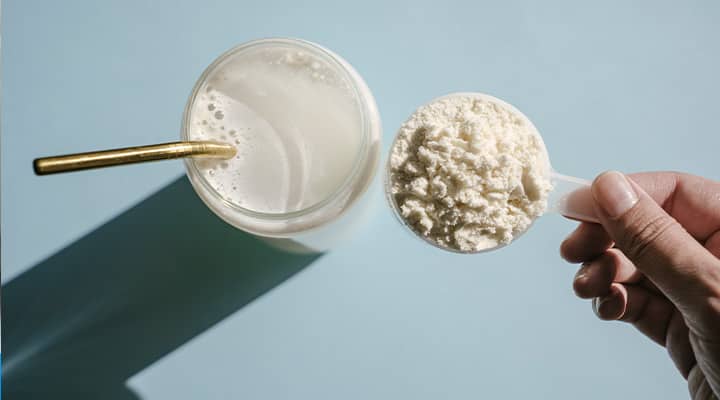
Many use collagen powder as a frequent toss-in to smoothies, coffee and even recipes, but taking it can also be as simple as swallowing a pill. So which should you choose?
"It's personal preference and someone should decide what fits best into their lifestyle. A high-quality collagen supplement will be clinically supported regardless of capsule or powder form," said Dr. Michael A. Smith, MD, the Director of Education for Life Extension.
With that in mind, let's go over the pros and cons of collagen capsules vs. powder so you can decide which collagen supplement is right for you.

Which is better to take, collagen powder or capsules?
In terms of effectiveness, there's no meaningful difference in how well your body absorbs collagen from a capsule vs. a powder, assuming both use hydrolyzed collagen (collagen peptides). So which is better depends on how and when you want to take your collagen.
Convenience
- Collagen powder is a good choice if you want skin and joint support but don't like swallowing pills or prefer not to add more capsules or tablets to your routine.
- If you enjoy building daily rituals around your nutrition, a powder supplement gives you more options. You can stir collagen powder into smoothies, oatmeal, soup, baked goods, coffee, juice—pretty much anything.
- If you prefer to take something quickly, pick collagen capsules or tablets. This doesn't require the time to measure out a scoop and stir it into something (or wash the shaker bottle afterward).
- Capsules are also a good choice if you don't like the taste of collagen in your coffee or juice and want a completely tasteless option.
- Taking your supplements on the go? Capsules are much more convenient to pop into your bag than a powder supplement.
Dosage
- A single scoop of powder can deliver around 11 grams of hydrolyzed collagen. This is a well-researched amount, and you can get your full dose in one scoop, as opposed to multiple capsules.
- Capsules tend to provide smaller doses, but these are also effective doses and have been studied to support specific benefits. (For example, 2500 mg of bioactive collagen peptides promote skin health.) Choose a quality collagen product with clinical support at the dose provided.
Cost
- Your cost will depend not so much on the form as the formula. Your 30-day supply costs for collagen powder vs. capsules tend to be in the same ballpark within a brand.
- The difference in formula prices usually depends on the ingredients, such as the types of collagen they contain, as well as additions such as keratin and biotin or glucosamine and boron.
The bottom line: Choose the format you'll actually stick with. The longer and more consistently you use collagen, the more results you'll see.
| Factor | Collagen Capsules | Collagen Powder |
|---|---|---|
| Health benefits | Supports joint health & comfort and/or skin health & appearance, depending on the type of collagen included. | Supports joint health & comfort and/or skin health & appearance, depending on the type of collagen included. |
| Dosage | Typically lower (up to 2500 mg) | Typically higher (11 g) |
| Type of collagen included | Varies, but usually type II or a combination of types I & III. | Varies, but usually a mix of all three types. |
| Absorption and effectiveness | No difference | No difference |
| Instructions for taking | Follow the product label; consumed orally, usually as multiple capsules. Some products may suggest taking on an empty stomach. | Follow the product label; often a scoop that can be mixed into your drink of choice or incorporated into a food recipe. |
| Convenience considerations | Discreet, tasteless capsules are easy to take on the go. | Offers flexibility with intake in liquid or food; powder may be susceptible to clumping. |

Explore Our Best Collagen Supplements

What are the benefits of collagen?
Your body contains different types of collagen:
- Type I collagen is the most abundant form of collagen in the human body and the structural backbone of our connective tissues, such as tendons and ligaments. It makes up more than 90 percent of your bone mass and 80 percent of your skin.
- If type I builds your skin and skeleton, think of type II as the builder of the support structure between them. About 80 percent of your body's cartilage is made up of type II collagen.
- Type III collagen often works alongside type I, particularly in the skin. About 15 percent of your total skin is made up of type III collagen, and it plays a significant role in the structure of younger skin, in particular.
Collagen supplements can be type I, type II, type III or a combination. They offer the following benefits:
Support joint health, cartilage health and joint comfort.
As you age (or if you're hard on your joints), the cartilage that cushions your bones can wear down, which may lead to stiffness and discomfort. Collagen makes up the bulk of that cartilage, and supplementing with hydrolyzed collagen helps give your joint tissues the raw material they need to stay healthy.In a six-month randomized, controlled trial, those who took 10 grams of collagen hydrolysate daily reported a meaningful improvement in knee joint comfort compared with those who took a placebo. Also, those with the lowest dietary intake of meat protein saw the biggest improvements. This suggests that collagen peptides may help fill in the gaps when your body isn't getting enough collagen-building amino acids from protein foods alone.
Supports skin health, elasticity and moisture.
Skin elasticity, which is basically how well your skin snaps back after being stretched, tends to decline with age. But healthy collagen formation promotes healthy skin elasticity. In a double-blind, placebo-controlled study, women took either 2.5 grams or 5 grams of collagen peptides daily or a placebo for eight weeks. Both collagen groups reported improvement in skin elasticity compared with placebo. The benefits were especially noticeable in older women, who maintained higher elasticity even four weeks after they stopped supplementation.Oral collagen's benefits are well-studied. A 2023 meta-analysis of 26 randomized controlled trials found that hydrolyzed collagen supplementation significantly promoted both skin hydration and skin elasticity compared with placebo.
Helps smooth the appearance of wrinkles.
The collagen in our skin starts to break down over time, which can leave the surface less supported and result in the appearance of wrinkles. Several clinical trials have shown that hydrolyzed collagen can help inhibit collagen breakdown and encourage skin suppleness and structure.A 2022 randomized, controlled study showed improvements in skin moisture, skin elasticity, and the appearance of wrinkles in those taking supplemental collagen compared with placebo. A dermatologist also rated their skin as visibly softer, firmer and smoother, with the appearance of fewer visible wrinkles.
Supports a healthy inflammatory response.
Collagen can be especially great for promoting a healthy inflammatory response. Research suggests that taking undenatured collagen every day helps inhibit inflammation to support joint health.
"A high-quality collagen supplement will be clinically supported regardless of capsule or powder form."

What are the benefits of collagen powder?
The hydrolyzed collagen in collagen capsules is no different from the hydrolyzed collagen in collagen powder, but collagen powder offers the following conveniences:
Contains all three types of collagen in an easy-to-absorb formula.
A powder supplement formulated with collagen types I, II, and III together offers the benefits of all three. So instead of choosing between a product aimed at your skin and a product aimed at your joints, you get ingredients that target both at the same time. This is particularly useful as you age, since collagen production naturally slows down across all tissues starting in your mid-20s and accelerates in women after menopause.It mixes easily with water, coffee or your favorite drink.
Looking for an easy way to fold collagen into your daily skin care routine? Try an unflavored powder supplement. It doesn't have a heavy fruit, vanilla or chocolate flavor to compete with whatever you're already drinking. You can stir a scoop of collagen powder into a glass of juice first thing in the morning, blend it into your post-workout smoothie, whisk it into your coffee or matcha, or add it to oatmeal or yogurt for a convenient collagen boost. Having collagen as part of your daily routine will help you be consistent about taking it.It allows for a larger dose.
Collagen powder isn't limited by the size of a capsule, so a single scoop can deliver a larger dose than one or two capsules. Powder is easy to dose, so you can take a full scoop and get around 11 grams of collagen. You would have to take a bunch of capsules to get the same amount. That said, quality capsules are based on researched doses for skin and joint benefits. Always follow the directions on whatever product you're using.
Does collagen powder work faster than collagen capsules?

There's no scientific evidence that collagen powders and collagen capsules differ in how quickly they are digested or put to use by the body. What actually matters is the kind of collagen inside, not the format it comes in.
Both collagen powders and capsules typically contain hydrolyzed collagen, which is collagen that's been broken down into smaller peptides before it ever reaches you. That pre-digestion (done with enzymes during manufacturing) is what makes collagen easy for your body to absorb. Collagen peptides are very different from the intact, full-length collagen molecules you'd get from food sources like meat and fish, which your body has to work to break down on its own.
Among supplements, there's no type of collagen that works faster. Speed sometimes gets confused with study timelines. For instance, if one study measures results at four weeks and another at eight weeks, the shorter one might seem faster, but that's just when researchers chose to look; it's not how quickly the collagen actually started working. Powders and capsules deliver the same hydrolyzed collagen at the same speed.
What is the best way to take collagen?

The best way to take collagen is in the form you'll be consistent about taking. Still, there are a few ground rules worth keeping in mind no matter if you choose a powder or capsule.
Always follow the directions on the product label.
Dosing on a product that's clinically backed will reflect the amounts used in the clinical studies behind the product.Take it consistently, every day.
Collagen isn't a quick fix, and changes happen gradually as your body uses those amino acids and peptides to support skin, joints and connective tissue. That means you'll need to build it into a routine you can realistically maintain (such as mixing it in your morning coffee, overnight oats or protein shake).Talk to your doctor before starting any new supplement.
Your healthcare provider can help you choose what nutrients you need and which ones fit your lifestyle, especially if you're pregnant, nursing or managing another aspect of your health.

Common collagen supplement questions
Get the most out of your supplement routine.
How do you choose a quality collagen product?
When choosing a collagen supplement, look for a reputable brand that backs its products with clinical research and is up-front about what's actually in the bottle. Stick with brands that provide Certificates of Analysis (COAs) on request and use third-party testing, so you know exactly what you're getting. Transparency around sourcing, ingredient quality, and manufacturing standards is a strong sign you're buying from a quality brand.
Does the temperature of your drink affect collagen powder absorption compared to capsules?
The temperature of your drink doesn't matter when it comes to how well your body absorbs collagen powder or capsules. The hydrolyzed collagen in supplements is already broken down into small, easy-to-absorb peptides. Temperature mostly affects intact, full-length collagen (the kind you'd get from foods like meat), not the collagen peptides in your supplement. So go ahead and stir it into hot coffee or ice water.
Looking to support your skin from within? Our health needs quiz can give you a personal recommendation on nutrients that fit your lifestyle.
Key Takeaways
- Both collagen powder and collagen capsules typically contain hydrolyzed collagen peptides, which are easier to absorb.
- Collagen powder delivers a bigger dose per scoop than capsules and is easy to use in drink and food recipes.
- Collagen capsules offer clinically studied doses with grab-and-go convenience for busy routines.
- Taking your collagen supplement every day matters much more than which form you pick.
- Look for brands that back their products with clinical research and share their quality testing.

References
- Al Hajj W, et al. "Hydrolyzed collagen: Exploring its applications in the food and beverage industries and assessing its impact on human health - A comprehensive review." Heliyon. August 2024. https://pubmed.ncbi.nlm.nih.gov/39253251/
- Benito-Ruiz P, et al. "A randomized controlled trial on the efficacy and safety of a food ingredient, collagen hydrolysate, for improving joint comfort." Int J Food Sci Nutr. 2009. https://pubmed.ncbi.nlm.nih.gov/19212858/
- Bianchi FM, et al. "Evaluation of the Efficacy of a Hydrolyzed Collagen Supplement for Improving Skin Moisturization, Smoothness, and Wrinkles." J Clin Aesthet Dermatol. March 2022. https://pubmed.ncbi.nlm.nih.gov/35342502/
- Gregersen PA, Savarirayan R. "Type II Collagen Disorders Overview." GeneReviews. October 2024. https://www.ncbi.nlm.nih.gov/books/NBK540447/
- Proksch E, et al. "Oral Supplementation of Specific Collagen Peptides Has Beneficial Effects on Human Skin Physiology: A Double-Blind, Placebo-Controlled Study." Skin Pharmacol Physiol. August 2013. https://karger.com/spp/article-abstract/27/1/47/295741/Oral-Supplementation-of-Specific-Collagen-Peptides
- Pu SY, et al. "Effects of Oral Collagen for Skin Anti-Aging: A Systematic Review and Meta-Analysis." Nutrients. April 2023. https://pubmed.ncbi.nlm.nih.gov/37432180/
- Selvaraj V, et al. "Type 1 collagen: Synthesis, structure and key functions in bone mineralization." Differentiation. April-March 2024. https://pubmed.ncbi.nlm.nih.gov/38437764/

Always be in the know!
Access the latest deals, wellness news, expert health tips & more!
Popular Supplement