5 Nutrients for Lower Back Comfort
Published: June 2026
At a Glance
- Strong muscles, good posture and a healthy inflammatory response play a large role in lower back comfort.
- Chaste tree and ginger extracts can help inhibit inflammation to support back health and comfort.
- The fatty acid PEA and vitamin D also support lower back comfort, especially for specific groups.
- Collagen and calcium support bone health but have not been clinically studied for lower back comfort.
When your lower back feels great, it's easy to take that for granted. But those mornings when you wake up feeling stiff, you might find yourself wondering: What is going on back there?
A comfortable back requires good posture, strong glutes and hips, and solid core and back muscles. Proper strength training is also important.
What many people overlook, though, is the role of a healthy inflammatory response in back comfort. And because of this, certain nutritional supplements can offer support.
The latest science has identified specific nutrients that help with lower back comfort. In this article, we'll talk about the role of nutrition in lower back discomfort relief, so you can put those occasional aches and twinges behind you.
"Lower back discomfort can sometimes be difficult to solve, but supplements may help," said Dr. Michael A. Smith, MD, the Director of Education for Life Extension. Those supplements include the following:
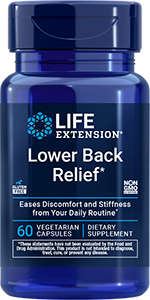
1. Five-leaf chaste tree

Wouldn't it be cool if you could press pause on uncomfortable feelings? When it comes to emotions, we are usually advised to just feel the feelings. But that isn't always the case physically, and an extract from the five-leaf chaste tree may be able to help.
The five-leaf chaste tree, a shrub native to China and India, is rich in polyphenols, a type of antioxidant that also supports a healthy inflammatory response. Five-leaf chaste tree extract is believed to work by inhibiting prostaglandins, the chemical messengers involved in discomfort.
You could think of prostaglandins like temporary text messages inside your body telling it things like "turn up the heat!" Those messages are great when they help your body feel all warm and fuzzy inside, but not so great when dealing with occasional lower back discomfort. Five-leaf chaste tree is like that spam text blocker you install to stop annoying messages from repeatedly buzzing your phone.
2. Ginger
Ginger is a more well-known nutrient that helps with a number of temporary discomforts, not just the lower back variety. In fact, ginger is known primarily for its digestive health support and its calming effects for occasional stomach upset.
But ginger also helps inhibit inflammation to support back health and comfort. Extracts from ginger have been shown to help maintain joint health and healthy vertebrae by encouraging a healthy inflammatory response and supporting healthy levels of C-reactive protein.
Better together.
While ginger may support back comfort on its own, combining extracts of ginger and five-leaf chaste tree has been clinically studied to support back health and comfort. Researchers conducted a 30-day randomized, placebo-controlled trial of the nutrient combination with adults ages 18 to 60. Compared with the placebo group, those receiving the ginger and five-leaf chaste tree combination reported significant improvement in lower back function, bending flexibility and comfort.
"Lower back discomfort can sometimes be difficult to solve, but supplements may help."
3. White willow bark
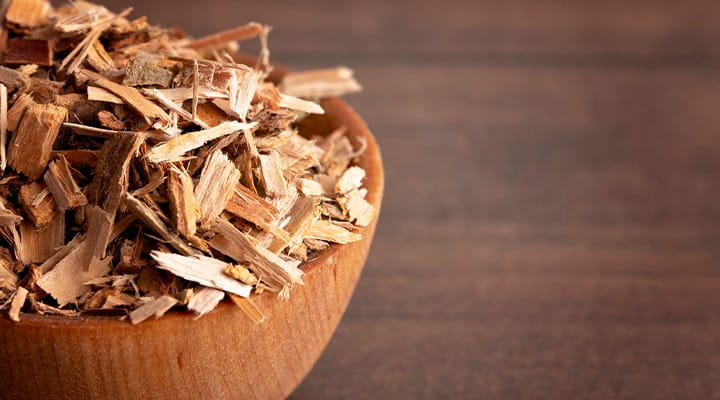
White willow bark may sound obscure, but you are likely familiar with this nutrient. After all, aspirin (which has been around for more than a century) was originally made from white willow bark.
White willow bark is high in salicin, a compound that inhibits inflammatory markers related to discomfort. It has been used for its health benefits for more than 3,500 years and is widely used in Europe today for lower back comfort.
Although white willow bark shares a history with aspirin, they are different. Modern aspirin works in part by thinning the blood (through inhibiting platelet aggregation), but white willow bark does not. It works primarily by inhibiting inflammatory markers to help ease occasional discomfort in the lower back.
A clinical study tested the effects of white willow bark with adults randomized to receive 120 mg or 240 mg of salicin from white willow bark, or placebo, daily for four weeks. Only 6% of those in the placebo group reported improved comfort, but 39% in the high-dose group and 21% in the low-dose group reported no discomfort at the end of the trial.
4. Palmitoylethanolamide (PEA)

A healthy inflammatory response plays a large role in lower back health and comfort, and that healthy response is supported by PEA, a naturally occurring fatty acid within your body. PEA is also naturally present in foods like egg yolks, peanuts, soybeans and walnuts.
PEA promotes a healthy inflammatory response, and it may be particularly beneficial for those seeking support for nerve comfort in the lower back and legs. An analysis of a large clinical study found that adults who needed nerve support in the lower back and legs reported a significant improvement in comfort from taking 600 mg of PEA daily.
Another large study involved people with nerve discomfort in the lower back and legs who were randomized to receive PEA at 300 mg or 600 mg, or a placebo, daily for 21 days. The results showed that both groups who received PEA reported better comfort and quality of life compared with placebo, and the group receiving the 600 mg dose improved the most.
5. Vitamin D3

Vitamin D3 is widely known as the sunshine vitamin, and it is well-loved for many reasons, including its support for a healthy inflammatory response and bone health. We get some vitamin D3 through diet, primarily from meat and fish such as salmon, but we can also synthesize it in response to the sun (hence the nickname).
While the evidence for its support for back comfort is mixed, some noteworthy studies suggest it may play a role in comfort for some groups of people. A genetic study found that those with higher serum vitamin D levels have a lower chance of experiencing lower back discomfort.
Additionally, research shows excess body fat may negatively affect vitamin D blood levels. A clinical study among overweight adults with lower back discomfort found that those with low levels of vitamin D reported significant improvement in lower back comfort after 16 weeks of vitamin D3 supplements.
| Nutrient | Benefit for lower back comfort |
|---|---|
| Five-leaf chaste tree | Inhibits chemical messengers of lower back discomfort |
| Ginger | Helps inhibit inflammation to support back comfort |
| Chaste tree & ginger combined | Supports back function, flexibility and comfort |
| White willow bark | Promotes overall lower back comfort |
| PEA | Encourages comfort for those with nerve discomfort in the lower back and legs |
| Vitamin D | Supports back comfort in those with low vitamin D levels |

Explore Our Best Inflammation Health Support Supplements
Other ways to support lower back comfort

While specific nutrients have been studied to support lower back health and comfort, other lifestyle choices (such as resistance training) can help as well.
Do collagen and calcium help with lower back discomfort?
You might have heard that low collagen and calcium levels can affect back comfort. After all, 90-95 percent of your organic bone matrix is made up of type I collagen, and calcium is instrumental for maintaining bone strength. These supplements have a wealth of clinical evidence for supporting bone and joint health. But research has not linked non-specific lower back discomfort to low collagen and calcium levels, nor to cartilage health or bone mineral density. Also, no high-quality studies have been published that show collagen and calcium supplements improve back discomfort.
Can BCAAs and creatine help with lower back health?
Creatine and BCAAs are well-known for supporting muscle health and recovery, and they are popular fitness supplements. However, as is the case with calcium and collagen, no randomized-controlled trials have been published on the direct effects of creatine and BCAA supplements on lower back discomfort. That said, creatine supplementation does support lean muscle mass and strength, and maintaining those aspects of health can promote lower back comfort and function.
Lower back comfort and easy movement are vital to quality of life, and targeted nutrition can help. Take our health needs quiz for a personalized nutrient recommendation that fits your lifestyle.
Key Takeaways
- While specific nutrients have been studied to support lower back comfort, strength training is key.
- Training should focus on core lower back-supporting muscles like glutes, hips and back extensors.
- A healthy inflammatory response can help with many aspects of health, including lower back comfort.


References
- Boisson M, et al. "Serum biomarkers in people with chronic low back pain and Modic 1 changes: a case-control study." Sci Rep. July 2019. https://pubmed.ncbi.nlm.nih.gov/31292506/
- Brady SRE, et al. "Vitamin D supplementation may improve back pain disability in vitamin D deficient and overweight or obese adults." J Steroid Biochem Mol Biol. January 2019. https://pubmed.ncbi.nlm.nih.gov/30201225/
- Chrubasik S, et al. "Treatment of low back pain exacerbations with willow bark extract: a randomized double-blind study." The American Journal of Medicine. July 2000. https://www.amjmed.com/article/S0002-9343(00)00442-3/fulltext
- Desai I, et al. "The Effect of Creatine Supplementation on Resistance Training-Based Changes to Body Composition: A Systematic Review and Meta-analysis." J Strength Cond Res. October 2024. https://pubmed.ncbi.nlm.nih.gov/39074168/
- Iwata S, et al. "Osteoporosis, spinal degenerative disorders, and their association with low back pain, activities of daily living, and physical performance in a general population." Sci Rep. July 2024. https://pubmed.ncbi.nlm.nih.gov/38982114/
- Jiang X, et al. "Causal effect of serum 25-hydroxyvitamin D levels on low back pain: A two-sample mendelian randomization study." Front Genet. September 2022. https://pubmed.ncbi.nlm.nih.gov/36212121/
- Montinari MR, et al. "The first 3500 years of aspirin history from its roots - A concise summary." Vascul Pharmacol. February 2019. https://pubmed.ncbi.nlm.nih.gov/30391545/
- Rodríguez-Domínguez ÁJ, et al. "Does resistance training improve pain intensity, quality of life, and disability in people with chronic nonspecific low back pain? A systematic review and meta-analysis." Disabil Rehabil. March 2026. https://pubmed.ncbi.nlm.nih.gov/41065407/
- Srivastava S, et al. "Effect of E-PR-01 on non-specific low back pain in the adult population: A randomized, double-blind, placebo-controlled, parallel-group trial." J Back Musculoskelet Rehabil. 2024. https://pubmed.ncbi.nlm.nih.gov/38073372/
- Zammel N, et al. "Proficiencies of Zingiber officinale against spine curve and vertebral damage induced by corticosteroid therapy associated with gonadal hormone deficiency in a rat model of osteoporosis." Biomed Pharmacother. July 2018. https://pubmed.ncbi.nlm.nih.gov/29864927/

Always be in the know!
Access the latest deals, wellness news, expert health tips & more!
Popular Supplement