DHEA for Women: The Hormone Hack You Didn’t Know You Needed
Published: August 2025
You've probably heard buzz around dehydroepiandrosterone (DHEA) as a go-to supplement for promoting healthy aging, sexual health in women, and other benefits. But what is it exactly, and how can it help you feel your best at all stages of your life, including during and after menopause?
Dehydroepiandrosterone (DHEA) is the most abundant circulating hormone in the body and is produced by your adrenal glands. Think of DHEA as a behind-the-scenes player that helps your body produce androgen and estrogen, the male and female hormones that we rely on for our health.
But, as DHEA levels naturally decline as you age, so do these hormones, leading to potential changes in bone density, sexual arousal and more.
That's why some women are turning to DHEA supplements to maintain hormonal balance as they age. Better yet, some research even suggests that supplementing with DHEA may also promote healthy cognitive function, memory, muscle mass and strength and bone support. Let's go into a little more detail about what exactly makes this hormone so special.
Why do DHEA levels drop in women?

For both women and men, DHEA levels naturally decline as they age because of changes in adrenal hormone production. DHEA production increases as you start puberty, reaches a peak in your 20s or 30s, then declines steadily over time, independent of menopausal status and changes.
Unlike estrogen, which is produced by the ovaries and sharply declines during menopause and perimenopause, DHEA declines more steadily because it's primarily produced by the adrenal glands—although smaller amounts are synthesized in the ovaries and the brain. This can have far-reaching effects, leading some women to try DHEA supplements.
While supplementation can support overall hormonal balance and vitality during these unavoidable transitions, keep in mind that DHEA levels are highly variable throughout your lifespan, so be sure to regularly test your levels to help guide dosing.
What are women using DHEA for?

Declining levels of DHEA are a natural and normal part of aging, but unfortunately the impact to overall health can be far-reaching. This is why many women are turning to DHEA for its multiple health benefits. Here are just a few ways women are using this supplement:
1. Maintaining healthy hormone balance
DHEA is a precursor hormone that plays a major role in the production of testosterone and estrogen. For older women, these hormones decline with age.
When you think of testosterone, you probably think of a male hormone. However, it actually plays a role in women's health, as women have small amounts of it in their bodies. Unlike men, who produce it mainly in the testicles, it's primarily produced in the ovaries and adrenal glands in women.
Maintaining healthy testosterone levels is important for libido, and DHEA only converts to testosterone in some regions of your body, producing this hormone when and where it's needed.
Gentle hormone support with DHEA has been shown to maintain a healthy hormone balance in aging women.
2. Promoting memory and cognitive health
Aging women may experience changes in their cognition—particularly changes in focus and productivity, along with mental fatigue. That's where DHEA comes in.
One study explored how supplementing with DHEA affects visual-spatial performance in postmenopausal women aged 55 to 80. The results revealed that women performed better on five out of six visual-spatial tasks when taking DHEA.
This suggests that supplementing can help maintain spatial thinking, working memory and cognitive processing in postmenopausal women.
3. Encouraging healthy sexual function
Postmenopausal women often struggle with changes to their libido or sexual arousal as their hormone levels change.
Randomized controlled clinical trials have demonstrated that taking DHEA can support libido and maintain sexual wellness and hormone health.
4. Supporting bone health
As estrogen levels naturally decline as you age, so does bone density. And as you age, it's essential to maximize bone mineral density in the hips and spine to help maintain strong bones.
Supplementing with DHEA may support bone strength. In fact, studies have shown benefits with DHEA supplementation along with other nutrients. For example, one study found that DHEA supplementation in older women, but not men, helped improve spinal bone mineral density when combined with vitamin D and calcium.
Yet another study found that hip bone mineral density also increased in older women who had a low level of DHEA-S in their blood and took 50 grams of supplementary DHEA for 12 months.
5. Promoting muscle strength
Another telltale sign of time are changes in muscle mass. Muscle strength can naturally decline with age, making daily activities more challenging. DHEA may help women maintain lean muscle mass.
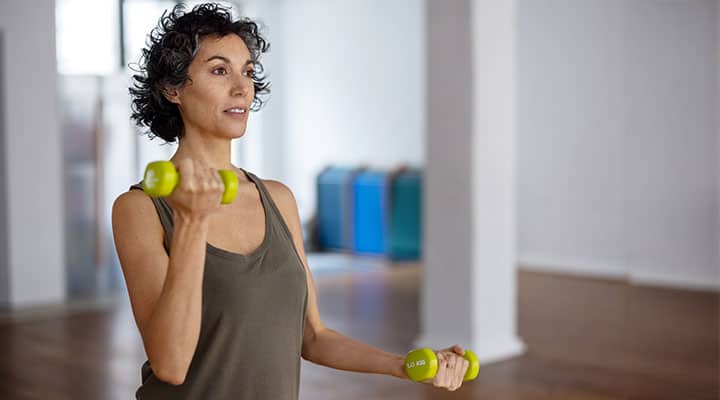
In fact, DHEA supplementation has the beneficial effect of enhancing the increases in muscle mass and strength induced by heavy resistance exercise in older individuals.

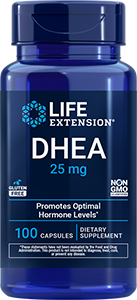
Explore Our Best DHEA Supplements
Risks and considerations of DHEA supplements

While most studies do not show severe adverse effects from taking DHEA, it would be helpful to have your blood tested for DHEA before starting supplementation to determine your current levels and assess whether you actually need it.
Monitoring your levels of DHEA-S under the guidance of your healthcare provider is especially important if you are addressing healthy hormone balance. Some women may already have sufficient levels, while others may benefit from additional support.
When it comes to supplements, make sure you follow the instructions on the label and take only the recommended amount for your individual needs.
What to know before buying DHEA

If you're thinking about which DHEA supplement to buy, focus on products that are backed by research, made with high-quality ingredients, and aligned with your personal goals and health history. Here are a few tips.
Prioritize ingredient transparency
—Some supplements contain added ingredients or are unclear about the amount of DHEA in their product. Prioritize supplements that state the amount of DHEA they contain and do not include fillers or additives. You should know precisely what you are putting in your body.Choose a brand that is third-party tested with clinically studied ingredients
—Ensure that you choose supplements committed to providing clinically studied ingredients and routinely test for potency. Third-party testing ensures the supplement contains the listed ingredients and is formulated with the correct amounts.
Selecting a DHEA supplement backed by scientific research and high-quality ingredients can help you better achieve your health goals.
Achieving a healthy balance with DHEA
Let's recap: DHEA is the most abundant circulating steroid hormone in the body and plays a key role in estrogen and testosterone levels. As DHEA naturally declines with age, some women turn to supplementing to help support healthy hormone balance, cognitive clarity, sexual wellness, and bone and muscle strength.
If you're thinking about trying DHEA supplements, make sure to consult your healthcare professional for guidance on blood testing and selecting a dosage that meets your individual needs. And if you're looking for additional guidance, try our supplement quiz to see which supplements can help best support your hormones.

About the Author: Erin Gillespie, MD, is a physician specializing in Internal Medicine, Integrative Medicine, and Obesity Medicine, with advanced certifications in nutrition, supplements, and herbal therapies. Erin is passionate about helping people understand how evidence-based nutrition, fitness, and supplementation can support optimal health at every stage of life. She has a certification from the Institute for Integrative Nutrition, and she studied Integrative Medicine and Nutrition with Dr. Andrew Weil.
References
- Bloch M, et al. "The use of dehydroepiandrosterone in the treatment of hypoactive sexual desire disorder: a report of gender differences." Eur Neuropsychopharmacol. August 2013. https://pubmed.ncbi.nlm.nih.gov/23084789/
- Jankowski CM, et al. "Effects of dehydroepiandrosterone replacement therapy on bone mineral density in older adults: a randomized, controlled trial." J Clin Endocrinol Metab. August 2006. https://pubmed.ncbi.nlm.nih.gov/16735495/
- Klinge CM, et al. "Dehydroepiandrosterone Research: Past, Current, and Future." Vitam Horm. 2018. https://pubmed.ncbi.nlm.nih.gov/30029723/
- Merritt P, et al. "Administration of dehydroepiandrosterone (DHEA) increases serum levels of androgens and estrogens but does not enhance short-term memory in post-menopausal women." Brain Res. November 2012. https://pubmed.ncbi.nlm.nih.gov/22985672/
- Nenezic N, et al. "Dehydroepiandrosterone (DHEA): Pharmacological Effects and Potential Therapeutic Application." Mini Rev Med Chem. 2023. https://pubmed.ncbi.nlm.nih.gov/36121077/
- Stangl B, et al. "Administration of dehydroepiandrosterone (DHEA) enhances visual-spatial performance in postmenopausal women." Behav Neurosci. October 2011. https://pubmed.ncbi.nlm.nih.gov/21942436/
- Tang J, et al. "The Utilization of Dehydroepiandrosterone as a Sexual Hormone Precursor in Premenopausal and Postmenopausal Women: An Overview." Pharmaceuticals (Basel). December 2021. https://pubmed.ncbi.nlm.nih.gov/35056103/
- Villareal DT, Holloszy JO. "DHEA enhances effects of weight training on muscle mass and strength in elderly women and men." Am J Physiol Endocrinol Metab. November 2006. https://pubmed.ncbi.nlm.nih.gov/16787962/
- Weiss EP, et al. "Dehydroepiandrosterone replacement therapy in older adults: 1- and 2-y effects on bone." Am J Clin Nutr. May 2009. https://pubmed.ncbi.nlm.nih.gov/19321570/
- Wierman ME, Kiseljak-Vassiliades K. "Should Dehydroepiandrosterone Be Administered to Women?" J Clin Endocrinol Metab. May 2022. https://pubmed.ncbi.nlm.nih.gov/35254428/

Always be in the know!
Access the latest deals, wellness news, expert health tips & more!
Bone Health Favorite