What Are the Benefits of Vitamin K Supplements?
Published: March 2021 | Updated: October 2025
At a Glance
Top 3 benefits of vitamin K
- Supports necessary blood clotting: Important for this vital process.
- Strengthens bones: Directs calcium into bones, supporting bone health.
- Protects heart health: Keeps calcium out of arteries to support cardiovascular health.
Getting enough vitamin K through the diet can be tricky
- Vitamin K1 is found in high quantities in green, leafy vegetables
- Vitamin K2 is in high-fat dairy foods, which people may avoid for health reasons
- Supplements are a good way to get enough vitamin K
Vitamin K doesn't get as much attention as its friends, vitamin D or calcium, but it plays a powerful role in your health. Vitamin K1 is best known for its primary role in the body: blood clotting. But there is another form, vitamin K2, that doesn't get as much attention, and has major benefits especially when it comes to bone and heart health.
Here's why you should make room in your supplement routine for this important, if underrated, vitamin.

5 benefits of vitamin K supplements

From how well you heal to bone strength, the different forms of vitamin K support many bodily processes. If you're not eating enough in your diet, you might need to supplement to support your health.
Supports vital blood clotting
One of vitamin K's most important jobs is helping your blood clot appropriately. Without vitamin K, even a small cut could be a big deal. Vitamin K1, the form found mainly in leafy greens, is essential for making clotting factors in the liver, proteins that stop the bleeding.
Research has shown that people with low intake of this vitamin may have a harder time recovering from injuries. In fact, babies are given vitamin K at birth since they have very low levels at birth and this nutrient is so important.
This is why it's so important to get enough vitamin K, and a supplement helps increase your intake. Supplementation helps ensure your body has enough vitamin K stores available to keep this system working smoothly, especially if you aren't someone who eats many leafy green vegetables.
Strengthens bones
Vitamin K doesn't just play a role in clotting; it also plays a big role in building and maintaining strong bones. Vitamin K2, in particular, activates proteins, like osteocalcin, that deposits calcium into bone tissue. This process supports healthy bone density, which is important especially as we age.
Research shows that vitamin K2 works best alongside vitamin D and calcium. Think of it as part of a team: calcium provides the raw material for bone, vitamin D helps your body absorb calcium, and vitamin K2 makes sure that calcium is delivered to the right place—your bones, not your arteries. Studies have found an association between higher vitamin K intake and bone health in older adults for this reason.
Benefits postmenopausal women
It's important for postmenopausal women to focus on maintaining healthy bones. Studies of postmenopausal women showed that taking 45000 mcg (45 mg) vitamin K2 as menaquinone-4 (MK-4) and 180 mcg Vitamin K2 as menaquinone-7 (MK-7) helped maintain bone mineral density. Our bones change with age, and if you're not getting enough K2, osteocalcin doesn't undergo carboxylation and remains in its inactive form, which means it cannot bind to calcium and play its role in bone formation.
Supports arterial health

One of the most exciting benefits of vitamin K2 is its role in keeping your heart and blood vessels healthy. Arteries include a system of blood vessels that supply blood to the heart and body.
Vitamin K2 works by activating proteins that move calcium out of the bloodstream and into your bones, where it belongs. While calcium is absolutely essential for strong bones, if it ends up in the wrong place, like your arteries, it can contribute to arterial stiffness. Research backs this up. The Rotterdam Study, which followed more than 4,800 adults over seven years, found that people who consumed more dietary vitamin K2 had healthier cardiovascular systems compared to those who consumed less.
Pro tip: Vitamin K2 appears to work best in combination with both vitamin D and calcium, creating a protective trio that strengthens bones while reducing the risk of arterial calcification.
Promotes heart health
While heart and arterial health are connected, they are also distinct. Studies have found associations between vitamin K intake and heart health. The irony, however, is that dietary sources of vitamin K2 include high-fat dairy products like cheese. While eating (many) pounds of cheese to meet your vitamin K2 needs may sound appealing, you likely wouldn't be doing your heart health any favors due to the high amount of saturated fat that you would also consume.
Fortunately, this isn't the only way to get this nutrient through food. It's also in fermented foods like natto (a traditional dish made from soy). You can also get K2 from liver, meats, and eggs—although in lower amounts. And of course, there are supplements.

Explore Our Best Bone Health Supplements
Vitamin K1 vs. K2: What's the difference?
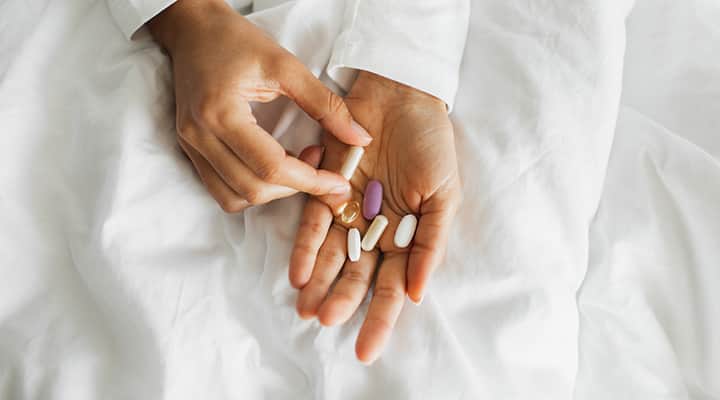
Vitamin K isn't just one nutrient—it's a family of compounds that work in slightly different ways in your body. The two main forms are:
- Vitamin K1 (Phylloquinone): Found in leafy greens like spinach, kale, and broccoli. This is the form you get most often from your diet, and it plays a key role in blood clotting.
- Vitamin K2 (Menaquinones): Found in fermented foods (like natto and some cheeses) and in small amounts in animal products like meat, eggs, and dairy. Your gut bacteria can also make small amounts.
Vitamin K2 has several subtypes, called menaquinones (MK-4 through MK-13):
- MK-4: Found in animal foods and also formed in your body from K1. It has a shorter half-life, meaning it doesn't stay in your body very long.
- MK-7 and beyond: Found mainly in fermented foods. MK-7, in particular, sticks around longer in the bloodstream and is considered more bioavailable, which may make it more effective for supporting bone and heart health.
Big picture: K1 helps with necessary clotting, while K2 is key for bone and cardiovascular health. Both work best alongside vitamin D and calcium, which together guide calcium into bones and keep it out of arteries.
K1 vs. MK-4 vs. MK-7: Which form of vitamin K should you take?
Because food sources vary, and different forms of vitamin K have different benefits, supplements can help fill the gaps. Super K is a vitamin K supplement that combines vitamin K1 with two forms of vitamin K2 in a once-daily formula that helps support heart health.
| Form | Best Known For | Supplement Range | Food Source |
|---|---|---|---|
| K1 | Blood clotting | Dose varies | Leafy greens |
| MK-4 | Bone health (less bioavailable than MK-7) | 1–45 mg | Meat, eggs, dairy |
| MK-7 | Bone and heart support | 45–200 mcg | Fermented foods (natto) |
What makes vitamin K supplements special?
They provide a concentrated form of vitamin K2, which is harder to get from diet alone. Remember, K2 helps support both bone and heart health.
Who should consider taking a vitamin K supplement?
People with low dietary intake of greens or fermented foods, postmenopausal women, or individuals looking to support cardiovascular health may benefit most.

What supplements should you stack with vitamin K?
Vitamin K works best when combined with vitamin D and essential minerals such as magnesium and calcium, since together they help facilitate the transport of calcium into the bone matrix for strong, healthy bones.
How much vitamin K should you take daily?
Most vitamin K supplement dosages provide 45–200 mcg of K2 (MK-7), which research suggests is effective. Always follow product labels and consult your healthcare provider.
Who should use caution when taking a vitamin K supplement?
Individuals taking a vitamin K antagonist (e.g., warfarin) should consult their healthcare practitioner first.
Key Takeaways
Ultimately, vitamin K is a small nutrient with a big role in overall health. Vitamin K supplements offer a range of science-backed benefits, strengthening bones, protecting the heart, and supporting postmenopausal women. The form you choose will have its own unique benefits: MK-4 supports bone mineral density, and MK-7 is helpful for both bone and cardiovascular health.
Remember, pairing vitamin K with vitamin D and calcium maximizes its impact, and for many people, supplements can help fill dietary gaps if you're not getting what you need from your diet.


References
- Aaseth JO, Finnes TE, Askim M, Alexander J. The Importance of Vitamin K and the Combination of Vitamins K and D for Calcium Metabolism and Bone Health: A Review. Nutrients. 2024 Jul 25;16(15):2420.
- Dupuy M, Bondonno NP, Pokharel P, Linneberg A, Levinger I, Schultz C, Hodgson JM, Sim M. Vitamin K: Metabolism, Genetic Influences, and Chronic Disease Outcomes. Food Sci Nutr. 2025 Jun 17;13(6):e70431.
- Geleijnse JM, Vermeer C, Grobbee DE, Schurgers LJ, Knapen MH, van der Meer IM, Hofman A, Witteman JC. Dietary intake of menaquinone is associated with a reduced risk of coronary heart disease: the Rotterdam Study. J Nutr. 2004 Nov;134(11):3100-5.
- Ho HJ, Komai M, Shirakawa H. Beneficial Effects of Vitamin K Status on Glycemic Regulation and Diabetes Mellitus: A Mini-Review. Nutrients. 2020 Aug 18;12(8):2485.
- Luo W, Ye D, Zhao K, Zhou L, Wu Y, Ge Q. Associations between vitamin K and systemic immune and inflammation biomarkers: a population-based study from the NHANES (2007-2020). Front Nutr. 2025 Jul 11;12:1625209.
- Shea MK, Booth SL, Massaro JM, Jacques PF, D'Agostino RB Sr, Dawson-Hughes B, Ordovas JM, O'Donnell CJ, Kathiresan S, Keaney JF Jr, Vasan RS, Benjamin EJ. Vitamin K and vitamin D status: associations with inflammatory markers in the Framingham Offspring Study. Am J Epidemiol. 2008 Feb 1;167(3):313-20.
- Van Ballegooijen AJ, Pilz S, Tomaschitz A, Grübler MR, Verheyen N. The Synergistic Interplay between Vitamins D and K for Bone and Cardiovascular Health: A Narrative Review. Int J Endocrinol. 2017;2017:7454376.
- Wen L, Chen J, Duan L, Li S. Vitamin K‑dependent proteins involved in bone and cardiovascular health (Review). Mol Med Rep. 2018 Jul;18(1):3-15.
- Vitamin K. Health Professionals Fact Sheet. Accessed September 16, 2025.

Always be in the know!
Access the latest deals, wellness news, expert health tips & more!
Popular Supplement