6 Liposomal Vitamin C Benefits
Published: April 2022 | Updated: May 2026
At a Glance
- Vitamin C is an essential nutrient that provides antioxidant, immune, and collagen support.
- Not all vitamin C formulas are equally absorbable.
- Liposomal hydrogel delivery systems protect vitamin C during digestion and support absorption.
- Compared with those taking traditional vitamin C supplements, in clinical studies those taking liposomal hydrogel vitamin C had 7 times greater plasma levels of vitamin C.
- Vitamin C also supports healthy lung function and iron uptake.
If you're just getting into the world of vitamin C supplements, you may have come across an option for "liposomal vitamin C." This might be a strange word to see on a vitamin bottle (we'll explain the origin of it later on), but it's actually a good one to look for when vitamin C shopping. Taking a liposomal vitamin C supplement helps your body better absorb this essential vitamin for immune health, collagen production and more.
In our daily lives, we get vitamin C from food, beverages and supplements. But your body can only absorb so much at a time. Anything "extra" gets flushed (literally)! Liposomal vitamin C, on the other hand, is created in a way that tells the vitamin C you're taking to "stick around for a while." It wraps vitamin C in a phospholipid liposome that mimics the structure of cell membranes, then infuses it into a hydrogel to support vitamin C absorption.
That means you get more vitamin C to benefit your body than you do with traditional vitamin C supplements.
Let's explore what liposomal hydrogel vitamin C does for your body.
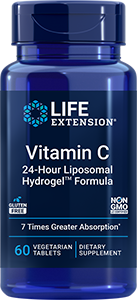
1. More absorbable vitamin C

Liposomal hydrogel vitamin C's bioavailability is the reason why it is superior: it makes the supplement easier for your body to absorb.
To understand why, let's look at the name itself. If the word "liposomal" makes you think of "lipids" or fats, you're not imagining it: Liposomes are made up of lipids, a class of compounds including fats and fat-like substances (such as phospholipids). The outer membrane of our cells is also made up of phospholipids—allowing the nutrient within the liposome to pass through the cell membrane with ease, since it's the same type of substance.
Some liposomal supplements get an even bigger bioavailability boost by adding galactomannan fibers to the formula. These clump the vitamin C-encased liposomes together into a hydrogel. The gel protects vitamin C from stomach acid during digestion, so it is released into your body at a steady rate over a 24-hour period, instead of all at once. This helps keep vitamin C's health benefits in your body—not down the toilet.
“It all comes down to how well—and how consistently—the hydrogel formula delivers vitamin C into your bloodstream.”
2. Immune health helper

Vitamin C's reputation for immune support is legendary. Research shows that vitamin C helps encourage a healthy immune response, and getting enough of this vitamin may help you have more days feeling well. So well-known is vitamin C's importance for immune health that many people load up on citrus fruits (like oranges and kiwifruits) at the first hint of being under the weather—although cramming C-rich foods isn't likely to make the difference many of us wish for. (However, a diet that includes these foods comes with many benefits!)
Like vitamin C in all forms, liposomal vitamin C supports the function of neutrophils, which are immune cells in your body's first line of defense. It also encourages the proliferation of your immune system's T cells, which are part of your body's last line of defense against immune challenges.
And thanks to its hydrogel delivery format, our liposomal supplement is designed for enhanced absorption, making it a great way to "C" the immune health benefits of this important nutrient!
3. Powerful antioxidant defense

Another well-known benefit of vitamin C is in its role as a free radical fighter, and the liposomal hydrogel formula turns vitamin C into a champion at this! Vitamin C is a powerful antioxidant, helping to protect a myriad of cells in your body from the oxidative stress caused by free radicals, which occur when there is an unstable atom or molecule with at least one unpaired electron.
Not only does vitamin C boost direct free radical scavenging, but it also activates intracellular (within the cell) antioxidant systems by stimulating the creation and activation of antioxidant enzymes.
Unfortunately, a number of things in everyday life can contribute to oxidative stress, from a high-intensity workout to a tough day at the office, or even just aging naturally. Getting enough vitamin C, especially from a liposomal hydrogel vitamin C formula, can help you keep your free radicals in check and encourage whole-body health and wellness.
4. Boosts collagen synthesis

You've probably heard of collagen, especially in recent years. Collagen accounts for about 25-30% of the total protein in the human body, making it your most abundant protein. It has gotten a lot of attention thanks to its support for skin health and elasticity (which may explain why so many skin care products include collagen claims on the label!), but it also plays an imperative role in the structure and function of muscles, bones, tendons and ligaments.
Collagen naturally declines with age, but you can encourage collagen production with vitamin C, which is naturally present in the skin for this purpose (and to provide antioxidant protection).
Research has discovered that vitamin C levels in the skin closely correlate with levels in the blood. This is good news as our bodies can't produce vitamin C naturally, unlike most other animals. So the vitamin C you obtain from diet or supplementation correlates with skin levels, further strengthening the evidence that vitamin C intake helps benefit skin health and healthy collagen production.
5. Healthy iron uptake
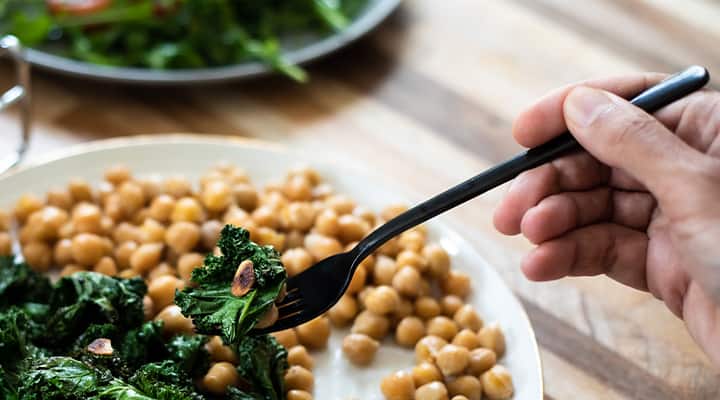
Vitamins play many independent roles in your body, but they also play some dependent roles—meaning they work together with other nutrients, such as iron.
Iron is essential for transporting oxygen because it is a critical component of hemoglobin, the protein in red blood cells that carries oxygen from the lungs to tissues throughout the body. Iron is also a critical component of myoglobin, which stores and delivers oxygen to muscles.
Like a bodyguard that protects a celebrity from getting mobbed by overexcited fans and paparazzi, vitamin C forms a bond with non-heme iron (iron that comes from non-animal sources) that keeps it absorbable within the body. If vitamin C levels are too low, then the non-heme iron binds to other molecules that put iron into an inactive state where it can't do its job until more vitamin C is present.
This bodyguard role is especially important with meatless meals, as non-heme iron comes from primarily plant-based foods, such as beans, spinach and nuts, but also from eggs and dairy.
6. Supports healthy lung function

Although your lungs may not be the first thing that comes to mind when you think of vitamin C, research shows that indeed, it plays multiple roles in promoting respiratory health.
A meta-analysis of 10 clinical trials that evaluated daily vitamin C supplementation showed it encouraged healthy lung function. Vitamin C was found to support:
- The ratio of the volume of air you can forcibly exhale in one second to your total forced vital capacity.
- The ratio of volume exhaled in the first second to the total forced vital capacity.
- One clinical study found that daily vitamin C encouraged breathing quality after exercise.
- Another study found that vitamin C helped maintain healthy breathing when experiencing an immune response to a respiratory challenge.
In these studies, the benefits were best in those who received greater than 400 mg a day of vitamin C. However, with a more absorbable/longer lasting vitamin C like liposomal hydrogel vitamin C, these higher dosages likely are not necessary.
Why do liposomes and vitamin C work together?

Liposomes and vitamin C make a great pair because while vitamin C has great health benefits—like antioxidant properties and immune system and collagen support—it isn't easily absorbed by your cells.
Liposomes wrap around vitamin C in a protective phospholipid (fat) shell that mimics your cell membranes—and makes it easier to slip in. Plus, liposomes keep more vitamin C intact as it passes through the harsh digestive tract.
Think of it this way: to benefit the body, vitamin C needs to wait in line to "get into the club" (aka, the cell). When the vitamin is enclosed in a liposome, it's treated like a VIP member and can easily pass through the entrance, or membrane, without a problem.
And because it gets in so quickly and efficiently, you'll actually need less vitamin C from a liposomal form than you will from a conventional vitamin C supplement.
In addition, vitamin C is water-soluble, so it doesn't stay in the body as long as fat-soluble vitamins. Liposomal hydrogel vitamin C is formulated to allow 24-hour sustained vitamin C levels for enhanced antioxidant activity and immune system and collagen production support.
How is liposomal hydrogel vitamin C different from regular vitamin C?
There is a key difference between how your body uses liposomal hydrogel vitamin C compared with traditional vitamin C. "It all comes down to how well—and how consistently—the hydrogel formula delivers vitamin C into your bloodstream," said Dr. Michael A. Smith, MD, the Director of Education for Life Extension.
Liposomes are like express-pass vehicles for nutrients, but liposomes are susceptible to chemical changes and instability in both storage and your stomach. In the hydrogel formula, the galactomannans swell in water, forming a protective barrier for the liposomal vitamin C, shielding it from stomach acid and various enzymes (like lipase) as it moves through the GI tract. This protection allows for a longer, steady rate of release over 24 hours, so your body has constant access to the vitamin C in your liposomal hydrogel supplement.
In fact, research has found the hydrogel formula allows more vitamin C to enter circulation, achieving about seven times greater total plasma vitamin C levels than unformulated vitamin C.
Feature |
Liposomal hydrogel vitamin C |
Standard (unformulated) vitamin C |
|---|---|---|
Absorption |
Liposomes provide a marginal enhancement in absorption; the hydrogel takes it a big step further |
Absorption decreases as doses increase, therefore limited at higher doses |
Digestive tolerance |
Hydrogel protects the liposomes from digestion in the stomach |
Higher oral dosages may cause GI discomfort |
Time spent in your system |
24 hours |
Dose dependent; typically 8-14 hours |

Explore Our Best Immune Support Supplements
How is liposomal vitamin C typically taken and who may benefit most?

Anyone who wants the immune, antioxidant and collagen support of vitamin C would benefit from a liposomal hydrogel vitamin C, especially if they want higher absorption without the higher doses.
A formula that promotes higher plasma rates of vitamin C at lower doses would be especially beneficial for those sensitive to occasional GI discomfort with traditional vitamin C.
As with any nutritional supplement, liposomal hydrogel vitamin C should be taken according to the product directions or the advice of a healthcare provider. Consistency with supplements matters more than timing if the product label does not specify taking them with a meal or a specific time of day in the directions.
Remember, few things in life fall outside of the rule that "too much of a good thing can be a bad thing." Higher doses of vitamin C may cause occasional digestive discomfort—and your body will simply excrete what it can't use, so anything over 2,000 mg/day for most adults is likely to go right down the drain.
A number of nutrients can help support your immune health. Our health needs quiz delivers a personalized recommendation based on your health concerns and lifestyle.
Key Takeaways
- Anyone who wants immune, antioxidant and collagen support would benefit from a liposomal hydrogel vitamin C.
- Liposomes are like express-pass vehicles for nutrients like vitamin C.
- Liposomal-hydrogel formulas require smaller vitamin C doses to achieve higher blood levels.


References
- Gęgotek A, Skrzydlewska E. "Ascorbic acid as antioxidant." Vitam Horm. 2023. https://pubmed.ncbi.nlm.nih.gov/36707136/
- Gęgotek A, Skrzydlewska E. "Antioxidative and Anti-Inflammatory Activity of Ascorbic Acid." Antioxidants (Basel). October 2022. https://pubmed.ncbi.nlm.nih.gov/36290716/
- Joseph A, et al. "Surface-engineered liposomal particles of calcium ascorbate with fenugreek galactomannan enhanced the oral bioavailability of ascorbic acid: a randomized, double-blinded, 3-sequence, crossover study." RSC Adv. November 2021. https://pmc.ncbi.nlm.nih.gov/articles/PMC9044018/
- Kanniyappan H, et al. "The role of collagen and collagen I/III ratio in pathological conditions: insights into molecular mechanisms and therapeutic approaches." Front Bioeng Biotechnol. October 2025. https://pubmed.ncbi.nlm.nih.gov/41141281/
- Lei T, et al. "Efficacy of Vitamin C Supplementation on Chronic Obstructive Pulmonary Disease (COPD): A Systematic Review and Meta-Analysis." Int J Chron Obstruct Pulmon Dis. September 2022. https://pubmed.ncbi.nlm.nih.gov/36118282/
- Levine M, et al. "Vitamin C pharmacokinetics in healthy volunteers: evidence for a recommended dietary allowance." Proc Natl Acad Sci U S A. April 1996. https://pubmed.ncbi.nlm.nih.gov/8623000/
- Padayatty SJ, et al. "Vitamin C pharmacokinetics: implications for oral and intravenous use." Ann Intern Med. April 2004. https://pubmed.ncbi.nlm.nih.gov/15068981/
- Zhigaltsev IV, Cullis PR. "Morphological Behavior of Liposomes and Lipid Nanoparticles." Langmuir. March 2023. https://pubmed.ncbi.nlm.nih.gov/36812413/
- "Vitamin C." National Institutes of Health. July 2025. https://ods.od.nih.gov/factsheets/VitaminC-HealthProfessional/

Always be in the know!
Access the latest deals, wellness news, expert health tips & more!
Immune Support Favorite