Fisetin vs. Quercetin: Which Senolytic Supplement Should I Take?
Published: September 2025
Decluttering isn't just for that messy drawer in your kitchen. Fisetin and quercetin are two naturally occurring flavonoids that support your body's natural pathways for clearing out senescent cells—cells that no longer function at their best and that accumulate with age, affecting the function of surrounding cells.
Compounds like fisetin and quercetin that promote the body's natural processes for clearing senescent cells are called senolytics, and both quercetin and fisetin are available in supplement form. That's not all they have in common: Both fisetin and quercetin also act as antioxidants, helping to fight the effects of free radicals and maintain a healthy inflammatory response. While they share structural similarities and are found in fruits and vegetables, their mechanisms and benefits differ in meaningful ways.
So if you're shopping for a senolytic supplement, should you choose quercetin or fisetin?
This largely depends on your health goals:
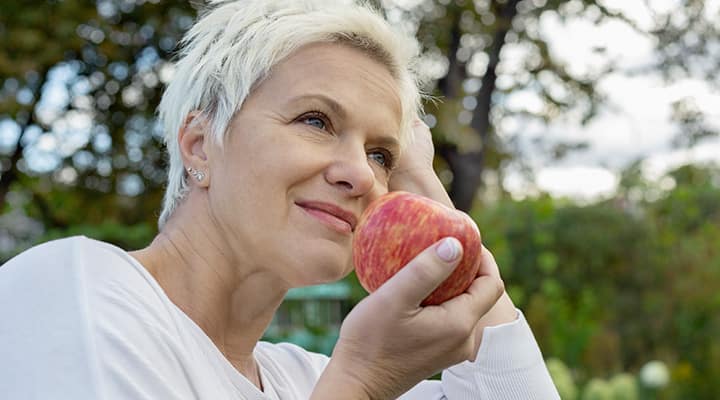
- Quercetin is widely consumed through foods like apples, dark berries, broccoli, kale and capers, and it is known for supporting the body's natural defenses and cardiovascular health.
- Fisetin is emerging as a promising nutrient for maintaining cellular health and healthy aging. Recent studies suggest that fisetin has powerful senolytic activity.
This means a quercetin supplement may be better for heart health and fisetin better for general healthy aging support—although there is some overlap. And some experts see benefits in taking both.
We'll break down the distinctions between these two flavonoids and explore how to optimize their health benefits.
What are fisetin and quercetin?
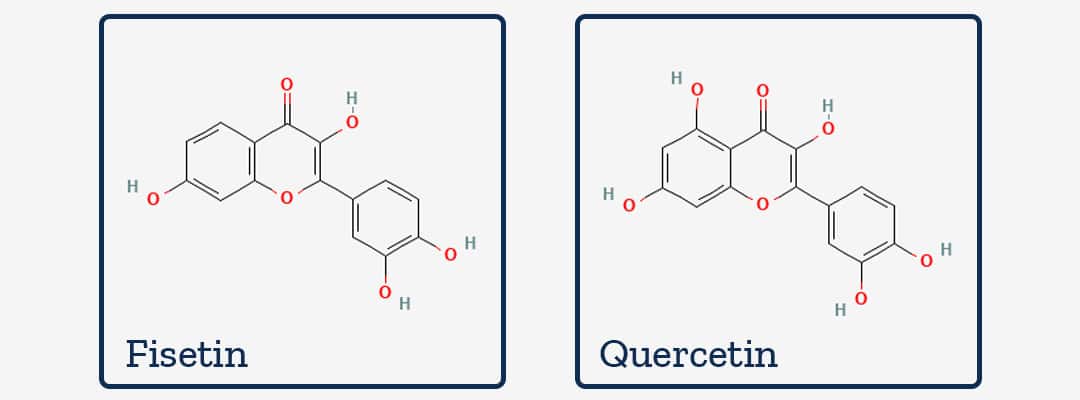
As you can see from their molecular structures, quercetin and fisetin are very similar. These plant-based compounds are found in many fruits and vegetables, especially those with vibrant colors like strawberries, apples, onions, and kale. They belong to a group of nutrients called flavonoids, which are known for their antioxidant properties and may promote a healthy inflammatory response.
You naturally get small doses of these compounds through your diet:
- Quercetin is more common, with an estimated daily intake of 10 to 30 mg.
- Fisetin is much rarer, with an average intake of 0.4 to 0.8 mg per day. That's one reason why fisetin is gaining attention in supplement form—it's harder to get enough of it from food alone.
Flavonoids as a class generally help your body manage oxidative stress and help inhibit inflammation to support whole-body health. But quercetin and fisetin stand out because they help promote the body's natural processes for clearing senescent cells. Senolytics like these help your body respond to the buildup of old, senescent cells that happens over time, affecting the healthy function of cells around them.
Although quercetin and fisetin work in similar ways, each brings distinct benefits to the table:
- Quercetin is often praised for its support of immune system function and heart health. It's easy to get your daily doses in foods and quercetin supplements.
- Fisetin is being studied for its potential to support healthy cellular function and healthy aging.
Key benefits of fisetin vs. quercetin
Quercetin
- Supports immune system function and resilience
- Promotes cardiovascular and endothelial health
- Helps protect cells from oxidative stress
- Encourages a healthy inflammatory response
- Helps support the body's natural process for clearing senescent cells
- Found naturally in apples, onions, berries and leafy greens
- Widely studied and commonly included in wellness routines
Fisetin
- Supports cellular health
- Helps the body address the gradual buildup of senescent cells over time
- Contributes to healthy aging
- Found in smaller amounts in strawberries, apples and persimmons
- A promising addition to aging-support regimens, though clinical research is still developing
While quercetin is well-established in the wellness world, fisetin is gaining momentum as a gentle yet powerful ally for long-term vitality.
Which One Should You Take: Fisetin or Quercetin?
Want to see how fisetin compares with quercetin? This is how they stack up:
| Attribute | Fisetin | Quercetin |
|---|---|---|
| Senolytic activity | Yes | Yes |
| Key benefits | Healthy aging, cellular health | Immune health, cardiovascular health |
| Mechanism | Antioxidant flavonoid | Antioxidant flavonoid |
| Main food source | Strawberries, apples, persimmons, onions | Onions, apples, cranberries, kale |
| Who should take it? | Someone looking for healthy aging support | Someone looking to support their immune health and/or heart |

How do quercetin and fisetin work in the body?
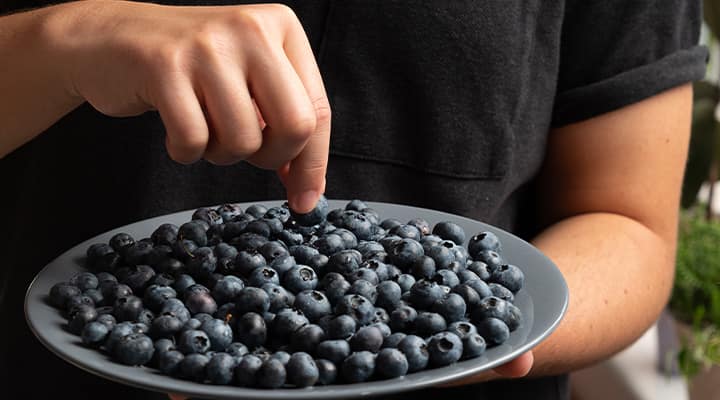
Quercetin and fisetin work in your body by tapping into the natural power of flavonoids, plant compounds that help protect your cells from oxidative stress. Think of flavonoids like fisetin and quercetin as supporting your body's internal cleanup crew. When you eat fruits and vegetables, you're not just getting doses of vitamins and fiber—you're also getting these tiny defenders that help neutralize free radicals that cause oxidative stress in your body and can affect your cellular DNA over time.
By reducing oxidative stress and supporting a healthy inflammatory response, flavonoids like fisetin and quercetin support everything from your immune system to your heart, brain, and skin health. It's one of the reasons a colorful plate of produce is such a cornerstone of health and wellness.
But quercetin and fisetin don't stop at general antioxidant support—they also support cellular processes associated with healthy aging. As you get older, your body accumulates senescent cells, which are cells that no longer function optimally. These cells can interfere with healthy cellular function around them. Fisetin and quercetin have been studied for their ability to act as senolytics, meaning they help your body address senescent cells. This process supports healthy aging and resilience across your body's systems.
How much fisetin or quercetin should I take?

When deciding how much fisetin or how much quercetin to take, it's best to follow the dosage instructions on your supplement label or the advice of a healthcare provider. While the doses on some products may appear lower than those used in clinical studies, innovative formulas are specially designed to maximize bioavailability, meaning your body absorbs and utilizes more of the active compound.
For example, quercetin's natural form is poorly absorbed, but a recent study showed a formulation using fenugreek galactomannans significantly enhanced quercetin's bioavailability, making it far more accessible to the body at lower doses.
Fisetin also benefits from advanced formulation techniques. In its raw form, fisetin has low water solubility and limited absorption, but a randomized, double-blind study found that supplementing with a fisetin-and-fenugreek formulation led to significantly higher plasma concentrations compared with standard fisetin, without requiring high doses.
Can I take fisetin and quercetin together?

Yes, you absolutely can take fisetin and quercetin together. Since both have senolytic properties, combining them can help your body address senescent cells, which are like worn-out batteries that can slow down your system. Quercetin maintains cardiovascular health and immune system function, while fisetin focuses more on cellular health and aging. Together, they offer a well-rounded approach to supporting whole-body wellness.
A dual-compound senolytic formula is a convenient way to get both flavonoids in a way that's easy for your body to absorb, giving you comprehensive support for maintaining cellular health. Whether you're just starting to explore senolytic supplements or looking to upgrade your current routine, a combination formula makes it simple to maintain your health from the inside out.
Which is better for longevity: fisetin or quercetin?

When it comes to promoting healthy aging, both fisetin and quercetin have earned their place in the spotlight. Fisetin has been studied for its role in helping the body clear senescent cells and encouraging cellular renewal, which may help your body stay more resilient over time. Quercetin, on the other hand, offers broader antioxidant and healthy inflammatory response benefits.
Rather than choosing one over the other, it's worth considering how they complement each other. Combining these nutrients can encourage your body's healthy aging process. And if you're curious about how they fit into a broader wellness strategy, you'll find them featured among the best healthy aging supplements recommended for aging well.
It's not about picking a winner—it's about building a toolkit that helps you feel vibrant and strong for years to come.
Explore more nutrients that support healthy aging. Take our longevity quiz for instant recommendations based on your lifestyle and health goals!


About the Author: Carlie Bell, ND, is a licensed Naturopathic Physician and adjunct medical instructor at Saint Louis University. Dr. Bell is also the program director of the American College of Acupuncture and Oriental Medicine.
References
- Gökbilen SÖ, et al. "Senescence-mediated anticancer effects of quercetin." Nutrition Research. August 2022. https://www.sciencedirect.com/science/article/abs/pii/S0271531722000434
- Joseph A, et al. "Enhanced Bioavailability and Pharmacokinetics of a Natural Self-Emulsifying Reversible Hybrid-Hydrogel System of Quercetin: A Randomized Double-Blinded Comparative Crossover Study." ACS Omega. December 2022. https://pubs.acs.org/doi/10.1021/acsomega.2c05929
- Krishnakumar IM, et al. "Enhanced bioavailability and pharmacokinetics of a novel hybrid-hydrogel formulation of fisetin orally administered in healthy individuals: a randomised double-blinded comparative crossover study." Journal of Nutritional Science. September 2022. https://www.cambridge.org/core/journals/journal-of-nutritional-science/article/enhanced-bioavailability-and-pharmacokinetics-of-a-novel-hybridhydrogel-formulation-of-fisetin-orally-administered-in-healthy-individuals-a-randomised-doubleblinded-comparative-crossover-study/2F3E81ABEDFEE18913D52A0FE050B1E6
- Nishimuro H, et al. "Estimated daily intake and seasonal food sources of quercetin in Japan." Nutrients. April 2015. https://pmc.ncbi.nlm.nih.gov/articles/PMC4425148/
- Popiolek-Kalisz J, Professor EF. "The Effects of Quercetin Supplementation on Blood Pressure – Meta-Analysis." Current Problems in Cardiology. November 2022. https://www.sciencedirect.com/science/article/abs/pii/S014628062200247X
- Sarah E, et al. "Daily Quercetin Supplementation Dose-Dependently Increases Plasma Quercetin Concentrations in Healthy Humans." The Journal of Nutrition. September 2008. https://www.sciencedirect.com/science/article/pii/S0022316622099205
- Tavenier J, et al. "Fisetin as a senotherapeutic agent: Evidence and perspectives for age-related diseases." Mechanisms of Ageing and Development. December 2024. https://www.sciencedirect.com/science/article/pii/S0047637424000952
- Watkins BA, et al. "Dietary flavonoid actions on senescence, aging, and applications for health." J Nutr Biochem. May 2025. https://pubmed.ncbi.nlm.nih.gov/39929283/

Always be in the know!
Access the latest deals, wellness news, expert health tips & more!
Anti-Aging Favorite