Top 10 Fisetin Foods to Add to Your Plate
Published: July 2025
We all know that eating lots of fruits and veggies is key for living a long, healthy life. But did you ever wonder why plants have just so many benefits for health and longevity?
The answer is multifaceted: plants are rich sources of numerous healthful compounds like vitamins, minerals, and fiber. That being said, one thing is clear: the polyphenols contained in plants are absolute powerhouses for our cells, organs, and whole bodies. Polyphenols are plant-based compounds that have strong antioxidant benefits, and include classes such as flavonoids and phenolic acids.
One flavonoid that has garnered significant attention in the anti-aging community is called fisetin. Like most flavonoids, fisetin has antioxidant activity and inhibits inflammation to support whole-body health.
Fisetin has gained extra popularity because not only is it a strong antioxidant, but it is also being investigated for its senolytic properties. We'll explain what this means in more detail momentarily, but essentially, senolytic compounds promote the body's natural processes for clearing out old cells (called "senescent" cells) that no longer function optimally and contribute to the aging process.
So how can you ensure you get enough of this healthy aging flavonoid? Let's discuss the 10 best dietary sources of fisetin, as well as whether you should consider taking fisetin supplements.
1. Strawberries
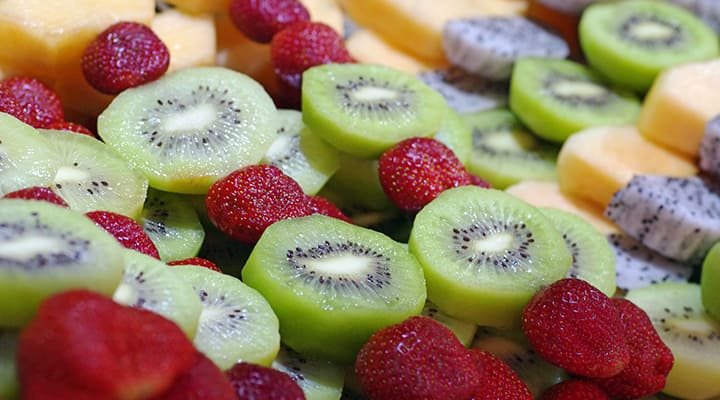
Strawberries have the most fisetin, by a wide margin. Which is great, because they are delicious and can be enjoyed in so many ways! Try some vegan strawberry ice cream, chocolate-covered strawberries, or just enjoy them plain as nature made them.
2. Apples
An apple a day keeps the senescent cells away. They can be enjoyed plain, baked, or even tossed in a salad.
3. Persimmons
This one is a bit more niche (but not quite as niche as #4 on the list!). Persimmons are very sweet and can be enjoyed raw, although the different varieties will need different levels of ripeness. Firm persimmons taste a bit like apples, while soft, ripe ones are kind of "custard-like" in texture. Shop Asian or farmers' markets for this fisetin find!
4. Lotus root
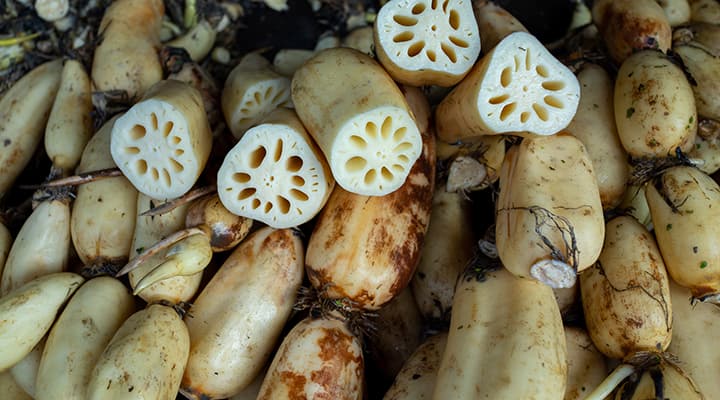
This edible stem of the lotus plant looks absolutely beautiful when cut. It can be enjoyed raw or cooked (it will certainly add interest to your weekend night stir fry!). You may be able to find it in Asian markets.
5. Onions
Onions may not be thought of as particularly nutritious, but they have lots of polyphenols like fisetin, quercetin, and others.
6. Grapes
Grapes are available in numerous tasty varieties. Enjoy them straight from the cluster, frozen, or dried as raisins. Red grapes also contain resveratrol, another healthy aging polyphenol.
7. Kiwi
Both fisetin and vitamin C are found in these fuzzy little fruits.
8. Peaches
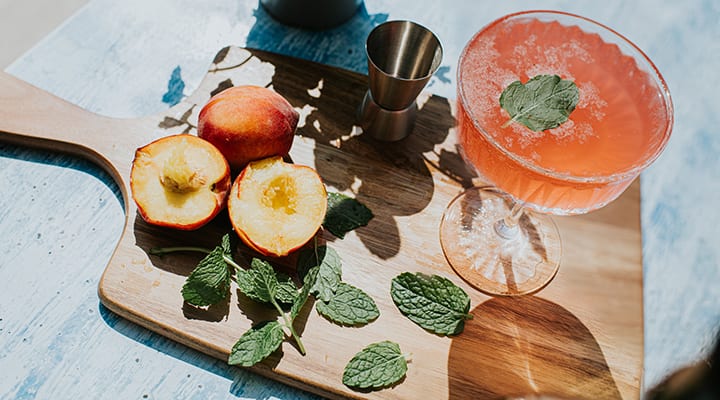
Another fuzzy favorite, peaches are great as a sweet snack, or you can use the juice as a cocktail (or mocktail) base.
9. Cucumbers
Cucumbers are definitely having a moment on social media, and for good reason. They are easy to prepare and the recipe possibilities are endless. (Our pick: this Green Goddess Salad.)
10. Tomatoes
Botanically classified as a fruit, tomatoes can be used in salsas, salads, sauces—you name it! Although commonly known as a great source of lycopene, which supports prostate and heart health, these ruby-red gems are a good food source of fisetin, too.
Can you get enough fisetin from food alone?
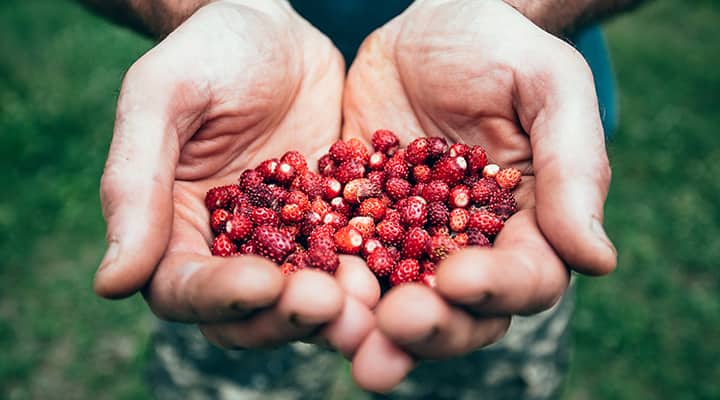
So, good news and bad news: fortunately, fisetin can be found in many plant foods that are tasty and, with the exception of lotus root and persimmons, readily available in the U.S. The bad news is, if you want a solid dose of fisetin, foods alone may not be enough.
Let's put on our math hats for just a moment to explain (I promise I'll make it quick):
- Strawberries contain the highest amount of fisetin—160 micrograms for every gram of dry weight.
- If you ate a thousand grams of freeze-dried strawberries, you could get about 160,000 micrograms (or 160 milligrams) of fisetin; that's roughly 30 bags of those freeze-dried strawberry slices you can find at supermarkets to get a dose of fisetin comparable to what's used in many supplements.
- And that's if you ate them dried. Considering that strawberries are about 90% water, you'd need to eat a lot more than that to get the same amount of fisetin from fresh strawberries. That's quite a bit of strawberries.
Other dietary sources of fisetin contain even lower amounts, so it's not quite reasonable to assume that you could ever eat enough onions, peaches, tomatoes, etc. to match a fisetin supplement. The average dietary intake of fisetin is somewhere around 0.4 milligrams per day. This is why many people turn to fisetin supplements.

Explore Our Best Anti-Aging & Longevity Supplements
Fisetin foods vs. supplements: What's the difference?
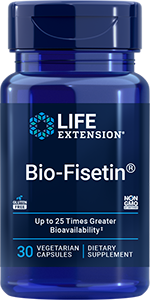
One other key point about fisetin: even if you did spend your days (and nights) devouring strawberries, they likely would not offer the same benefits as a fisetin supplement. This is because fisetin is a flavonoid, and flavonoids, in general, are not very bioavailable, which means that not much of the ingested flavonoid can actually be absorbed and then circulated throughout the body.
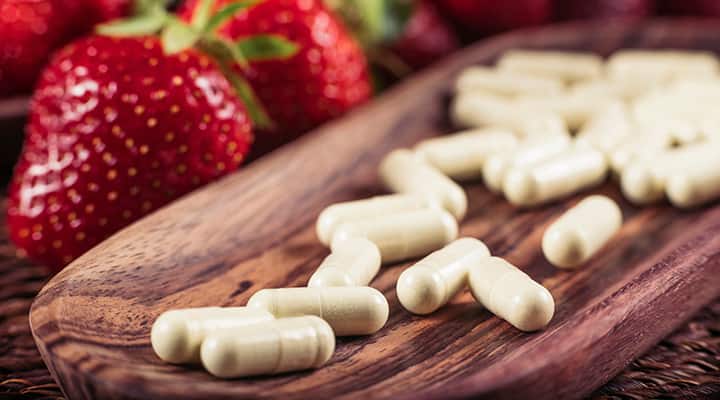
Fisetin undergoes rapid biotransformation when it's ingested, so its bioavailability is very low. Scientists have tried many different ways to improve the bioavailability of flavonoid supplements, including fisetin, to get more out of supplementation.
One way that various flavonoids' bioavailability has been improved is by encapsulating micelles of the flavonoid (basically tiny little balls of the compounds) into a hydrogel scaffolding made from galactomannan (a type of fiber) from fenugreek. This protects the flavonoid from being metabolized or digested too quickly, so it can circulate longer and have greater bioavailability. Studies have shown that flavonoids such as quercetin, resveratrol, and curcumin all have improved bioavailability when prepared in this way.
When fisetin was encapsulated in this manner and compared to unformulated fisetin, it was up to 25 times more bioavailable and circulated for significantly longer in the body.
All that being said, fisetin foods are nutritious not only because of this flavonoid, but because they contain fiber, antioxidants and other nutrients. And many of them are delicious. So sip that strawberry smoothie, toss some juicy grapes in a Waldorf salad, and enjoy some fresh peaches for dessert. Just be sure that you supplement with fisetin, too!
Why Is Fisetin Good for Healthy Aging?
So what makes fisetin such a champion of healthy aging? We touched upon the fact that it's considered a senolytic compound: this means it helps get rid of senescent (or old) cells. Here's why that's so important:
- Senescent cells no longer function optimally.
- They can also affect the way the healthy cells around them function.
- The burden of accumulated senescent cells contributes to the aging process.
So think of senescent cells as cellular "garbage." The body needs to be able to "take out the garbage," so to speak, and senolytic compounds like fisetin can potentially aid in this process and contribute to healthy aging and longevity.
6 healthy aging tips

Whether you get your fisetin through supplements or food, or both, you can rest assured your cells will thank you. Healthy aging is more than a supplement routine, though—it's a lifestyle. Here are some tips to support you through your golden years and beyond:
Stay active!
Aim for at least 150 minutes of moderate-intensity exercise or 75 minutes of vigorous-intensity exercise each week. The benefits are enormous, from cardiovascular health to mental health.Eat a balanced diet rich in whole foods
. Fruits, vegetables, legumes, whole grains, and healthy fats (like from fish and olive oil) are a cornerstone to health and longevity.Get enough sleep
. Shoot for 7-9 hours of high-quality sleep every night.Maintain a healthy weight
. Not only will your cardiovascular system thank you, but your joints will, too.Keep up your social life
. It will keep you happier (human interaction is a natural mood booster), and studies show it can help your brain stay sharp.Meet with your doctor regularly
. Also keep up with your bloodwork. This way, you can spot any potential issues early on and stay proactive.
If you're interested in finding the best longevity supplements for you, take our quiz. Healthy aging is within your reach, so get out there and grab it!


References
- Grynkiewicz G, Demchuk OM. "New Perspectives for Fisetin." Frontiers in Chemistry. October 2019. https://www.frontiersin.org/journals/chemistry/articles/10.3389/fchem.2019.00697/full
- Huang W, et al. "Cellular senescence: the good, the bad and the unknown." Nature Reviews Nephrology. August 2022. https://www.nature.com/articles/s41581-022-00601-z
- Joseph A, et al. "Enhanced Bioavailability and Pharmacokinetics of a Natural Self-Emulsifying Reversible Hybrid-Hydrogel System of Quercetin: A Randomized Double-Blinded Comparative Crossover Study." ACS Omega. December 2022. https://pubs.acs.org/doi/10.1021/acsomega.2c05929
- Krishnakumar IM, et al. "Enhanced bioavailability and pharmacokinetics of a novel hybrid-hydrogel formulation of fisetin orally administered in healthy individuals: a randomised double-blinded comparative crossover study." Journal of Nutritional Science. September 2022. https://www.cambridge.org/core/journals/journal-of-nutritional-science/article/enhanced-bioavailability-and-pharmacokinetics-of-a-novel-hybridhydrogel-formulation-of-fisetin-orally-administered-in-healthy-individuals-a-randomised-doubleblinded-comparative-crossover-study/2F3E81ABEDFEE18913D52A0FE050B1E6
- Lall RK, et al. "Dietary flavonoid fisetin for cancer prevention and treatment." Mol Nutr Food Res. June 2016. https://pmc.ncbi.nlm.nih.gov/articles/PMC6261287/
- Samtani S, et al. "Associations between social connections and cognition: a global collaborative individual participant data meta-analysis." Lancet Healthy Longev. November 2022. https://pmc.ncbi.nlm.nih.gov/articles/PMC9750173/
- Tavenier J, et al. "Fisetin as a senotherapeutic agent: Evidence and perspectives for age-related diseases." Mechanisms of Ageing and Development. December 2024. https://www.sciencedirect.com/science/article/pii/S0047637424000952
- Yuan D, et al. "Opportunities and challenges in enhancing the bioavailability and bioactivity of dietary flavonoids: A novel delivery system perspective." Food Chemistry. January 2024. https://www.sciencedirect.com/science/article/abs/pii/S0308814623017338

Always be in the know!
Access the latest deals, wellness news, expert health tips & more!
Popular Supplement