What Does Magnesium Do for Brain Health?
Published: July 2025
Magnesium supplements are getting a lot of buzz lately. This mineral is climbing out of the shadow of its "big brother," calcium, and starting to get the attention for its health effects that it deserves. It is, after all, a partner in over 600 different enzymatic reactions in the body.
Does that sound like a lot? It is a lot! Magnesium is involved in keeping your heart pumping, your bones standing strong, regulating energy and metabolism, and keeping your neurological system in balance. No wonder we take supplements to keep our magnesium levels healthy!
Let's not forget (pun intended) that magnesium is a brain health mineral, too. We all want to avoid those moments where we misplace our glasses or keys, or struggle to find the right word. A special form of this nutrient, magnesium L-threonate, may be just what you need to help remember things, and maintain healthy brain function and cognition.
Let's explore what effects magnesium could have on your brain health.
What does magnesium do in your brain?

Magnesium may give you an edge with quick thinking, cognition, and short-term memory. An umbrella term for these types of cognitive activities is executive function, which has been likened to "air traffic control" for the brain. It's the part of our mind that takes care of planning, decision-making, and information management. We all have an executive function part of our brain, though unfortunately, it tends to work less well as we age. You want to maintain optimal magnesium levels for a wide array of reasons, and your brain is most definitely one of them!
So how exactly does magnesium support cognition? Let's skip the advanced neurological explanation and just say that the brain is literally a huge mass of nerve cells. And all nerves need to transmit electrical signals, which requires minerals including potassium, sodium—and, you guessed it, magnesium. Your brain's activity literally depends upon them—to read, to study, to reason, and to remember. Part of that proper neuronal firing depends on your magnesium intake.
Which magnesium forms are best for brain health?

We hate to complicate things, but when it comes to magnesium supplements, not all types of this essential mineral are known for brain-boosting powers. There are many different magnesium forms you can choose from that are able to boost your magnesium levels, be it oxide, glycinate, or citrate; capsule, tablet, powder, extended-release; you might even find magnesium gummies. That's a lot of choices and potential confusion!
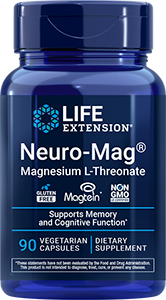
But if you have brain health top of mind (see what we did there?), you are going to want to take magnesium L-threonate to boost your cognitive function and memory power. Unlike other forms, magnesium L-threonate has been specifically studied for overall cognitive health. And it's been shown to boost working (short-term) memory and quick thinking.
Let's dig into the research. One study demonstrated magnesium L-threonate's benefits for how your brain functions. And not just any study: this was a randomized placebo-controlled trial, the gold standard of the scientific method. In that 12-week trial, 51 adults aged 50 to 70 years were enrolled, receiving either magnesium L-threonate or a placebo, and 44 subjects completed the study. The group that consumed a daily dose of 1.5 to 2 grams of magnesium L-threonate exhibited significantly improved cognitive function and executive function.
Fortunately, magnesium L-threonate, available as Neuro-Mag® and sometimes referred to by its proprietary ingredient, Magtein®, is available as a capsule, fruit punch-flavored powder, and gummy. So you certainly can choose the delivery system that works best for your lifestyle!

Explore Our Best Brain Health Supplements
How to choose a magnesium supplement to support brain function
As we've discussed, magnesium L-threonate has a research-based track record of supporting cognition and executive function, so the choice should be obvious enough!
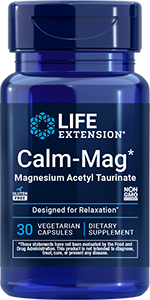
You could also consider using a supplement called magnesium acetyl taurinate. This magnesium form is targeted more towards the effects of stress than outright memory and brain health. But, as you may have noticed, stress and tension don't help your brain operate smoothly. In fact, quite the opposite! Magnesium acetyl taurinate helps support a healthy stress response and promotes calmness and relaxation.
Of course, when you are choosing any supplement, it's important to look for an established, reputable, science-based brand. Look for products from a company that is transparent about its sourcing and manufacturing. Ideally, it will have scientists on staff that assure the safety of the formulation. That's really the only way to be certain you are actually getting the product and the benefits you pay for.
The best supplement sources will provide you with a Certificate of Analysis (COA) for your supplement, on request. A COA means a clinical laboratory tested the supplement for purity and potency. Sure, choosing a high-level, high-quality supplement can take a little extra time, but it's worth it.
Can I get magnesium from diet alone?

While it's possible to get magnesium from dietary magnesium sources, it's pretty difficult to get enough from dietary sources alone. Also, dietary sources haven't been proven to yield a brain benefit the way magnesium L-threonate has. It would take a lot of pumpkin seeds, chia seeds, almonds, spinach, pecans, cashews, peanuts, and soy foods to get your magnesium via the dietary route.
Supplements are an easy way to get the magnesium effects and benefits you're looking for. And magnesium L-threonate is a research-backed way to give those all-important good brain effects.
On the other hand, if you're looking for a magnesium supplement to ensure you're covering your nutritional bases so you can get the full-spectrum of whole-body health benefits, a great option is magnesium glycinate. Incidentally, there's no reason why you can't take multiple magnesium supplements together to ensure proper magnesium intake while also supporting brain health!
What else can I do to support cognitive function?

If the end goal is cognitive function, then supplements and foods that support magnesium levels are only a piece of the puzzle. Your brain health thrives when you take a holistic approach. So a healthy diet and sleep habits, staying active, and managing stress all play a role.
Follow these tips to keep your brain in the game, especially as you age:
Move your body
. Regular physical activity doesn't just benefit your muscles—it also keeps your mind sharp.Get enough sleep
. Sleep gives your brain a chance to "reset" at night so it can keep functioning optimally.Eat brain foods
. In addition to dietary sources of magnesium, all foods that are on the MIND diet (the acronym stands for Mediterranean-DASH Intervention for Neurodegenerative Delay) are well-known noggin nourishers! Berries, fatty fish, whole grains, and extra virgin olive oil are all delicious foods on this list that have beneficial effects on your cognitive health.Learn something new
. You can promote neuroplasticity (and essentially rewire your brain) and acquire new skills in the process—talk about a win-win!
Want help deciding what to take for maximum mental mojo? Take our Brain Quiz.


References
- Chen F, et al. "Magnesium and Cognitive Health in Adults: A Systematic Review and Meta-Analysis." Adv Nutr. July 2024. https://pmc.ncbi.nlm.nih.gov/articles/PMC11362647/
- Kirkland AE, et al. "The Role of Magnesium in Neurological Disorders." Nutrients. June 2018. https://pmc.ncbi.nlm.nih.gov/articles/PMC6024559/
- Liu G, et al. "Efficacy and Safety of MMFS-01, a Synapse Density Enhancer, for Treating Cognitive Impairment in Older Adults: A Randomized, Double-Blind, Placebo-Controlled Trial." J Alzheimers Dis. 2016. https://pubmed.ncbi.nlm.nih.gov/26519439/

Always be in the know!
Access the latest deals, wellness news, expert health tips & more!
Stress Management Favorite