NAD Supplements: How to Increase Levels for Healthy Aging
Published: March 2023 | Updated: May 2026

At a Glance
- NAD+ is a coenzyme that is vital for cellular energy and healthy aging.
- Since levels tend to decline with age, it's important to help your body maintain healthy NAD+ levels.
- You can support NAD+ levels with supplements like NMN and NR, as well as healthy lifestyle choices.

NAD+ supplements are more popular than ever as a healthy aging superstar. But what is NAD+ and why do you find multiple types of supplements with different ingredients claiming to support NAD+ levels?
In a nutshell, NAD+ is a coenzyme that is required for hundreds of vital cellular functions, including generating energy in the form of ATP and supporting cellular metabolism. But levels of this crucial compound tend to decline pretty sharply with age.
Supplements including NMN and NR support NAD+ levels in different but impactful ways. If you're not familiar with cellular biochemistry, all of the information about NAD+ might seem difficult to unpack.
Not to worry, we're here to walk you through what NAD+ is, how different supplements and lifestyle choices support it in different ways, and how to choose the right formula and dosage to keep your cells feeling energetic at any age.

What is NAD+ and how does it work?

Let's start with the most obvious question: what exactly is NAD+?
NAD stands for nicotinamide adenine dinucleotide, which is a bit of a mouthful. (We'll get into what the "+" means in just a moment.) Nicotinamide adenine dinucleotide is a coenzyme, or a helper molecule for enzymatic processes. It is involved in hundreds of reactions in the body.
Some of the processes relying on NAD+ include:
- Generating cellular energy (in the form of ATP)
- Supporting healthy DNA
As a coenzyme, NAD+ is involved in important cellular functions and is required for healthy aging. Because of its indispensable roles, NAD+ is always in high demand and is always being synthesized or recycled in the body.
In the mitochondria (the tiny power plants inside cells that generate valuable cellular energy), NAD+ is part of the Krebs' cycle and electron transport chain that are key to making cellular energy.
ATP is like electricity or fuel for the cell—nothing else can work without it. (And apologies if these terms are giving you middle school science class flashbacks!). In essence, NAD+ acts like a shuttle for electrons.
But, what about the "+"? It means the NAD molecule is oxidized and ready to accept a hydrogen charged with electrons. Once NAD+ accepts these electrons, it becomes reduced and is now in the form of NADH, which brings the electrons to the enzymes required to make ATP.
So, when we say simply "NAD," it just refers to nicotinamide adenine dinucleotide in either the reduced or oxidized form.
What are the benefits of NAD+ supplements?

First, a clarifying statement: NAD supplements are generally not the NAD+ molecule itself. NAD+ is not particularly stable, cannot pass through cell membranes and is poorly absorbed.
So when we talk about NAD supplements, we're typically referring to supplements that can boost NAD+ levels—usually in the form of precursor molecules.
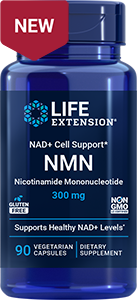
A precursor is a molecule that can be used in the body to build NAD+, like nicotinamide riboside (NR) and nicotinamide mononucleotide (NMN). When you consume NR or NMN, your body uses them to generate more NAD+, the benefits of which include:
Promotes the production of cellular energy in the body:
Adequate NAD+ levels are required in the mitochondria for producing cellular energy in the form of ATP.Essential for normal cellular function:
Aside from its role in energy production, NAD+ is also involved in maintaining normal cellular function like metabolism and healthy DNA.Promotes healthy aging:
As we briefly mentioned, NAD+ is required for healthy aging. Your cells and their mitochondria need NAD+ in order to function at their best.
The good news is, both NMN and NR have been clinically shown to increase blood levels of NAD+, so taking either of these options is a good way to go for all of these NAD+ benefits!
How do NAD+ levels decline with age?

Time comes for us all, and one specific thing time comes for is NAD+. Levels decline for two reasons:
Our bodies are "using up" our NAD+ supply:
With age, NAD+ is increasingly consumed by enzymes involved like sirtuins and PARPs in order to support against all the age-related changes. These enzymes consume NAD+ in order to do their jobs. And as we age, our cells need even more support, which means consuming even more NAD+.Reduced capacity to produce and recycle NAD+:
For a double whammy, the body's ability to create and recycle NAD+ also declines with age.
For these reasons, aging creates a cellular bottleneck, with NAD+ being increasingly in demand and increasingly hard to find. Your cells need NAD+ for their essential functions like generating cellular energy—that's why you want to ensure your body has enough at any age.
Some estimates suggest that by roughly middle age (around age 50), NAD+ levels in certain tissues decline by as much as 50% compared to younger adults. Without sufficient NAD+, the cells and mitochondria cannot continue to maintain the delicate balance necessary for optimal function.
"Aging creates a cellular bottleneck, with NAD+ being increasingly in demand and increasingly hard to find. Your cells need NAD+ for their essential functions like generating cellular energy—that’s why you want to ensure your body has enough at any age."
NR vs. NMN: Which NAD+ precursor is better?

The good news is that both NR and NMN can be good choices to boost NAD+ levels. The choice ultimately comes down to personal preference.
From a science perspective, they're more or less equivalent. NMN is closer structurally to NAD+, but there is still debate over whether it can cross directly through cell membranes or must be converted to NR before entering cells.
NR can pass directly through cell membranes, but it's not a direct precursor and must be converted to NMN inside the cell before it becomes NAD+. Both precursors have other pathways that can also lead to NAD+, and regardless, both reliably raise NAD+ levels when taken orally.
There are other considerations, such as time on the market and cost. NR has been available consistently as a dietary supplement since 2013, while NMN has not been on the market as long. As such, NR is a bit more well-established as a supplement. However, NMN is generally less expensive.
How do you choose the right NAD+ supplement?

There are a few factors you'll want to take into account when choosing an NAD+ supplement:
Dosage:
Most NAD-boosting supplements will provide NR or NMN in doses ranging from 100 milligrams to several hundred milligrams. A good dose to start with is 100-300 mg. Most supplements are recommended to be taken once daily at any time of day.NR versus NMN:
See the considerations above; either is a good choice!Cost:
NMN tends to be less expensive compared to NR.Choosing a reputable brand:
When it comes to choosing any supplement, not just NAD, you want to find a company that is reliable and has a good track record. A reputable company will offer Certificates of Analysis (COA) upon request to ensure purity and safety.Safety:
Both NR and NMN have been shown in clinical studies to be safe and well-tolerated. It's always recommended that you speak with your healthcare practitioner before starting any new supplements, though.
Can you boost NAD+ levels through food and lifestyle?

You absolutely can boost NAD+ levels through healthy diet and lifestyle! Here are a few tips that may help:
Get regular exercise:
Exercise puts a good kind of stress on the body that tells it to make more NAD+. Aim for at least 150 minutes of moderate intensity exercise each week. High-intensity workouts also may be particularly effective at supporting NAD+ levels.Practice intermittent fasting or calorie restriction:
Restricting caloric intake within reason can also put a good kind of stress on the body. Do not restrict caloric intake without the guidance of a healthcare professional. As an alternative or in addition to calorie restriction, consider restricting your eating times to an 8-hour window.Make sleep a priority:
NAD+ levels are modulated by the circadian rhythm. Try to go to bed and wake up at the same time each day and practice sleep hygiene to ensure you are getting the highest quality sleep possible.Choose foods with vitamin B3:
Vitamin B3 can be found in many foods that are higher in protein, including animal-based products (poultry, meat, fish) and plant-based products (legumes, nuts, grains). A well-balanced diet should naturally provide plenty of B3 for your body to use to build NAD+.Manage your stress levels:
It's no secret that stress can do a number on your body, and that includes potentially affecting NAD+ stores. Try journaling, meditation, and/or practicing gratitude, while eliminating unnecessary stressors whenever possible.Avoid damaging lifestyle factors like smoking and excessive alcohol:
This one will also come as no surprise—smoking and alcohol put unhealthy stress on the body and can affect NAD+ levels.Consider practices like sauna and cold plunge:
The data is still emerging on these, but remember the good kind of stress? Some research suggests that heat or cold shock can introduce healthy stress and increase NAD+. Be careful not to overly tax your body, though, and consider seeking the advice of your healthcare provider beforehand.
| Strategy | How it can help |
|---|---|
NR supplements |
|
NMN supplements |
|
Sleep hygiene |
|
High-intensity workouts and other forms of regular exercise |
|
Intermittent fasting and/or caloric restriction |
|
Foods with vitamin B3 (e.g., poultry, fish, legumes, nuts) |
|
Saunas and cold plunge |
|
Managing stress |
|

Explore Our Best NAD+ Supplements
Frequently asked questions about NAD supplements

Are all NAD supplements equally effective?
The most popular NAD-boosting supplements, NR and NMN, are more or less equally effective at raising NAD+ levels. Choose a supplement according to your needs and from a reputable company.
Can you raise NAD+ levels without supplements?
Yes! There are many lifestyle choices that can help your body synthesize and recycle NAD+ to keep levels healthy. Of course, the dream team makes the list: diet and exercise. Other healthy choices like getting good sleep and managing your stress levels can help as well. Other emerging options, like sauna and cold plunge, can be considered under the guidance of a healthcare provider.
How should you store NAD supplements?
As with most advice with supplements, follow what is written on the label. Many NAD-boosting supplements should be stored in a cool, dry place. A cool, dry place means somewhere that is away from moisture, direct sunlight, and heat, such as a cabinet or pantry. If possible, avoid bathrooms (too much humidity), windowsills (too much sunlight), and areas close to appliances (too hot).
Key Takeaways
- Maintaining healthy levels of the coenzyme NAD+ is important at any age, but levels tend to decline with time.
- Both NMN and NR are precursor supplements that can be safely taken to support healthy NAD+ levels.
- You can also boost NAD+ with lifestyle choices like exercise, diet, sleep, and managing stress.

References
- Chubanava S, et al. "Regular exercise effectively protects against the aging-associated decline in skeletal muscle NAD content." Experimental Gerontology. March 2023. https://www.sciencedirect.com/science/article/pii/S053155652300030X
- Gallagher C, et al. "NAD⁺ supplementation for anti-aging and wellness: A PRISMA-guided systematic review of preclinical and clinical evidence." Ageing Research Reviews. April 2026. https://www.sciencedirect.com/science/article/pii/S1568163726000498
- Jahangiri M, et al. "High intensity interval training alters gene expression linked to mitochondrial biogenesis and dynamics in high fat diet fed rats." Scientific Reports. February 2025. https://www.nature.com/articles/s41598-025-86767-5
- Morifuji M, et al. "Ingestion of β-nicotinamide mononucleotide increased blood NAD levels, maintained walking speed, and improved sleep quality in older adults in a double-blind randomized, placebo-controlled study." GeroScience. May 2024. https://pmc.ncbi.nlm.nih.gov/articles/PMC11336149/
- Nakahata Y, et al. "The Circadian NAD+ Metabolism: Impact on Chromatin Remodeling and Aging." Biomed Res Int. December 2016. https://pmc.ncbi.nlm.nih.gov/articles/PMC5165141/
- Poljsak B, et al. "Healthy Lifestyle Recommendations: Do the Beneficial Effects Originate from NAD+ Amount at the Cellular Level?" Oxid Med Cell Longev. December 2020. https://pmc.ncbi.nlm.nih.gov/articles/PMC7752291/
- Zhang J, et al. "Emerging strategies, applications and challenges of targeting NAD+ in the clinic." Nat Aging. September 2025. https://www.nature.com/articles/s43587-025-00947-6

Always be in the know!
Access the latest deals, wellness news, expert health tips & more!
Popular Supplement