How Prebiotics and Probiotics Benefit Your Health
Published: April 2024 | Updated: June 2026

At a Glance
- You can support a healthy gut microbiome by consuming prebiotics and probiotics.
- Prebiotics and probiotics support gut health in different ways.
- When taken together, prebiotics and probiotics may offer even greater benefits for overall health.
- You can also take a combo probiotic and prebiotic formula, called a synbiotic supplement.
If you're supposed to "trust your gut" with life-altering decisions, it must be a pretty important part of you, right? As a matter of fact, it is.
Your gut is a lively community of microorganisms called the gut microbiome. Your gut health, or the integrity of your microbiome, can influence many other aspects of your health—from digestive and immune system function to skin integrity and beyond.
To keep the microbiome in tip-top shape, many people turn to probiotics. This is just part of the equation, though. Prebiotics also have a significant role to play in your health. In fact, one of the most powerful ways to maintain a favorable balance of good microbes is to take prebiotics and probiotics together.
Not sure where to start? Let's explore the difference between prebiotics and probiotics, when you should be taking them and how you can easily incorporate this dynamic duo into your daily routine with a synbiotic formula that includes both.
What are probiotics and how do they support your health?

Probiotics are "good bacteria" found in certain foods and products that contain specific strains proven to provide health benefits. You may be surprised to know probiotics are not only bacteria. Probiotics are live beneficial microorganisms, which includes bacteria, yes, but also yeast. You want to make sure that you're getting the right kinds, because different probiotic strains offer distinct health benefits.
According to the National Institutes of Health, species and strain-specific probiotics benefits may include:
- Supporting the gut barrier
- Vitamin synthesis
- Enzyme activity
All of these are important for maintaining your overall health. Exactly how a probiotic will affect your health, though, is determined by the current mix of microbes in the body, the health of your digestive tract and the specific probiotic strain or species you're consuming. If you're looking for a specific health focus—be it digestion, the heart, healthy aging, immune system or liver—you'll want to seek out probiotics at the strain level.
Now you might be asking: how do I get the probiotics I need? One source is your diet. But it's not necessarily the best source. Many fermented foods (like yogurt) tout their probiotic content, but it can be difficult to assess the exact types and amounts of probiotics that make it to the final product.
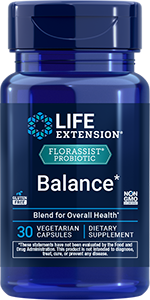
Probiotic supplements offer a more powerful supply of the beneficial microorganisms your body needs. Not to mention, high-quality probiotic supplements are specially formulated with strains that have been well-studied and well-established for their health-promoting properties.
"Prebiotics and probiotics are entirely different, though the ways they benefit our health are very closely related."
What are prebiotics and how do they work?
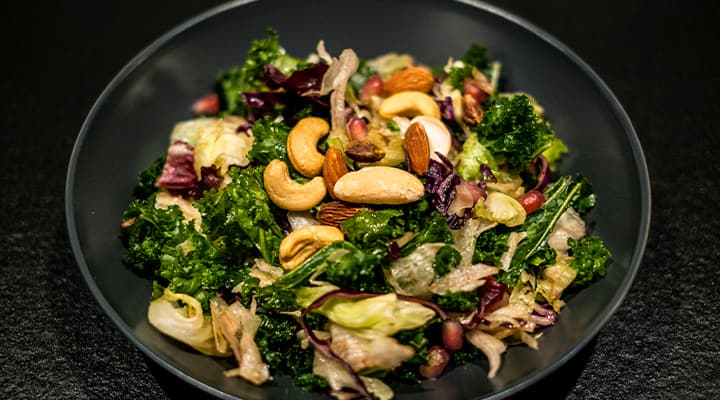
Prebiotics are food components that cannot be broken down by digestive enzymes. Instead of being digested and absorbed in the gastrointestinal tract, prebiotics travel straight to the large intestine (aka your colon).
Prebiotics are then fermented by gut bacteria, serving as food for your microbiome. By feeding good microbes, you allow them to flourish to their full potential. Not to mention, feeding the good microbes means less room for the bad—which is great news for your microbiome.
The fermentation of prebiotics also produces a number of helpful byproducts, including short-chain fatty acids (SCFAs) like butyrate, acetate and propionate, which play an important role in gut health and overall metabolism.
Luckily, it's easy to increase your intake of prebiotics—and unlike probiotics, it's not hard to get them from a healthy diet. Prebiotics are found in a variety of plant foods, such as fruits, vegetables, whole grains and legumes. Some of the best sources of prebiotic foods include the following:
- Asparagus
- Jerusalem artichokes
- Bananas
- Barley
- Beans
- Chicory root
- Flaxseeds
- Garlic
- Leeks
- Oats
- Onions
- Walnuts
Notice a trend among these foods? Many of them are high in fiber. That's not a coincidence. While not all dietary fibers are prebiotics, most prebiotics are, in fact, dietary fibers. Of course, consuming more fiber-rich foods comes with several added benefits, such as bowel regularity, weight management and appetite control.
Prebiotics can also be added to foods and dietary supplements. In fact, increasingly, prebiotics are showing up on food labels as consumers become aware of their great benefits. If you don't see "prebiotic" explicitly spelled out on a food label, check the ingredients instead for any of the following:
- Galacto-oligosaccharides (GOS)
- Fructo-oligosaccharides (FOS)
- Xylo-oligosaccharides (XOS)
- Oligo-fructose (OF)
- Chicory fiber
- Inulin
- Lactulose
- Resistant starch
- Human milk oligosaccharides (HMO)
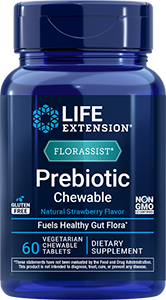
You can also take prebiotic supplements. This is a convenient way to support your intestinal, colon and digestive health—and it ensures you're getting an efficacious amount.
What's the difference between prebiotics and probiotics?
There's no doubt that the words "prebiotics" and "probiotics" look and sound nearly the same. But it would be a mistake to assume these two have the same effect on your health. Remember, probiotics introduce new and different live microorganisms to the body, while prebiotics feed the microbes you already have. In essence, prebiotics are food for your own microbes.
Probiotics' and prebiotics' health benefits aren't exactly the same, although they overlap somewhat. You'll find probiotics and prebiotics that support gut health. Depending on the strain, some probiotics offer additional health benefits, too.
In the words of Dr. Michael A. Smith, MD, "Prebiotics and probiotics are entirely different, though the ways they benefit our health are very closely related." How? Essentially, since the health of our microbiome and our digestive tract are intricately connected with nearly every other aspect of our health, prebiotic and probiotic supplements can have far-reaching benefits. Your body uses both in different ways in order to maintain lasting health.
What are synbiotic supplements?
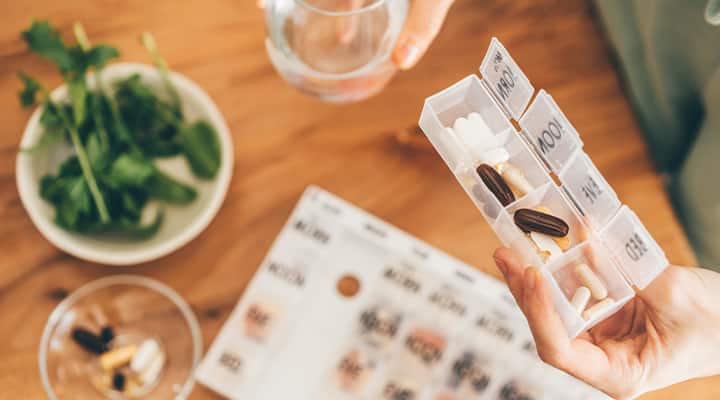
Here's the big question: can you take prebiotics and probiotics together?
Yes, you can—and you probably should. When prebiotic and probiotic microorganisms are combined, they create what's called a synbiotic effect.
Research has found that incorporating prebiotics into probiotic products may promote the growth and viability of probiotics. Prebiotics act as a fuel source for the probiotics, which helps those good microbes survive and function optimally.
You'll find this unique relationship in synbiotic supplements. Synbiotic supplements are specially formulated to provide that synergistic effect directly to your digestive tract.
It's a powerful way to get exactly what your gut needs. And because you're getting two different healthful nutrients in one, synbiotic supplements actually help simplify your daily routine, giving you one less capsule to swallow.
If you’re still trying to put all the pieces together, this table can help you better differentiate the unique benefits of prebiotics, probiotics and synbiotics. Of course, be sure to speak with your healthcare provider before starting or changing your supplement routine.
| Category | What They Are | Primary Role | Why It Matters |
|---|---|---|---|
| Prebiotics | Non-digestible fibers | To feed the good microbes | Promotes beneficial microbes and crowds out the bad |
| Probiotics | Live beneficial bacteria | To introduce the body to more beneficial microbes | Helps create a diverse and robust microbiome |
| Synbiotics | A combination of prebiotics and probiotics | To help your microbiome survive and flourish | Maintains a healthy microbiome |

Explore Our Best Digestive Health Supplements
Pro tip: You can also check out our digestive health quiz to get the right combination of supplements for your gut health and overall well-being.
When is the best time to take prebiotics and probiotics together?

Some supplements are very picky. Fat-soluble vitamins, for instance, should be taken with a meal that includes fat in order to maximize your body's absorption of these nutrients. Thankfully, prebiotics and probiotics are not high maintenance.
You can take probiotic and prebiotic supplements whenever it is most convenient for you. Some people like taking these formulas on an empty stomach, while others feel better taking them with food. This is more of a personal choice. Whether you choose morning, noon or night, with or without food, their effectiveness will not be altered.
What's going to be most important for getting the most out of your pre- and probiotics is taking them consistently and according to the product labels. So take them when you're most likely to remember to!
Frequently asked questions about probiotics and prebiotics
Should prebiotics or probiotics be taken first?
Just as the timing of prebiotics and probiotics together does not matter, neither does the order. You may take either first. That said, your best option may be to choose a synbiotic supplement, so you can take both prebiotics and probiotics simultaneously.
Can you get enough prebiotics and probiotics from food alone?
Food is a powerful and reliable source of all types of nutrients. Unfortunately, one of the many facts about probiotics and prebiotics is that you likely will not get enough from food alone. You will be better off picking up a supplement to get the most out of what you're looking for.
Key Takeaways
- Probiotics add more healthy microbes to your gut, while prebiotics help those healthy microbes grow and flourish.
- Synbiotic supplements are specially formulated with both prebiotics and probiotics to help support a balanced and healthy microbiome.
- The timing of your prebiotics and probiotics does not alter their benefits, as long as you take them consistently.

References
- Kaur AP, et al. "Plant Prebiotics and Their Role in the Amelioration of Diseases." Biomolecules. March 2021. https://www.mdpi.com/2218-273X/11/3/440
- Parhi P, et al. "Synbiotics: Effects of prebiotics on the growth and viability of probiotics in food matrices." Bioactive Carbohydrates and Dietary Fibre. December 2024. https://www.sciencedirect.com/science/article/pii/S2212619824000627?via%3Dihub
- Swanson KS, et al. "The International Scientific Association for Probiotics and Prebiotics (ISAPP) consensus statement on the definition and scope of synbiotics." Nature. 2020. https://www.nature.com/articles/s41575-020-0344-2
- "Prebiotics." ISAPP. September 2025. https://isappscience.org/resource/prebiotics/
- "Probiotics." National Institutes of Health. March 2025. https://ods.od.nih.gov/factsheets/Probiotics-HealthProfessional/

Always be in the know!
Access the latest deals, wellness news, expert health tips & more!
Prebiotic Favorite