17 Adaptogens That Actually Work
Published: September 2021 | Updated: October 2025
You've probably heard a lot about adaptogens. These natural compounds help your body adapt to occasional stress by supporting systems that maintain balance. Some popular ones—such as ashwagandha and reishi mushrooms—are trending as teas and coffees as well as dietary supplements.
Adaptogen supplements are often labeled for specific health goals, such as energy, focus, sleep and calm, or immune support. But adaptogens, by the very definition of this term, influence multiple systems in the body. While some forms may be notable for promoting specific health goals, in general, adaptogens support nonspecific resistance to stress, or a broad, overall ability to cope with physical, emotional, or environmental challenges.
So let's get into what adaptogens do for the body, and the ones most scientifically studied for results.
What do adaptogens do?

Often derived from herbs and roots, adaptogens work by promoting your body's homeostasis, or a balanced state, and a healthy response to stress. Think of them as a system-level support nutrient with a broad spectrum of benefits:
- Energy: Adaptogens have been studied for energy, but they don't provide energy the way coffee or other caffeinated beverages do. Rather than acting like a stimulant, adaptogens are believed to work by supporting cellular energy production.
- Endurance: Because of their support of cellular energy, adaptogens promote endurance and steady energy. This can refer to both mental and physical endurance, incidentally!
- Focus: Mental endurance is another way of saying attention focus and attention. (And who doesn't need more of that?)
- Calmness: In the same way that these compounds aren't energizers per se, adaptogens are not stress "soothers." But adaptogens can encourage a healthy response to stress and help maintain a healthy balance of the stress-related hormones cortisol and DHEA.
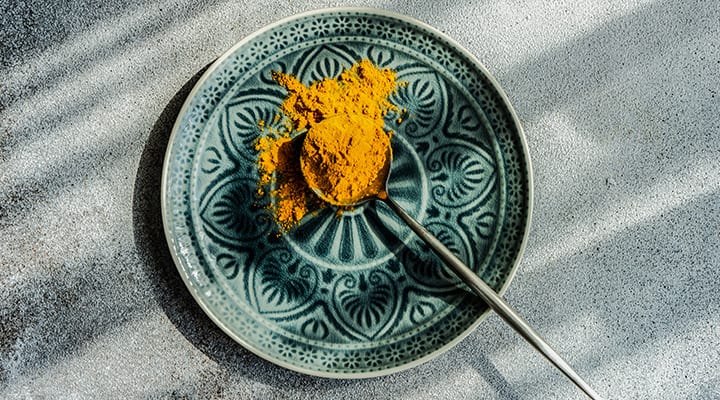
Because there is so much buzz around the term "adaptogen," some popular herbs that are not adaptogens get this label—for example, maca and turmeric. While they may be worth adding to your repertoire for a variety of reasons, they do not fit the scientific definition for this term.
The top 17 adaptogens

Wondering what nutrients are true adaptogens? Here are the top nutrients that have been studied for supporting various aspects of health:
1. Panax ginseng
Panax ginseng, or Korean ginseng, is a plant used in traditional medicine. Its roots contain compounds called ginsenosides, which have antioxidant properties. Panax ginseng supports overall vitality and helps the body adapt to stress.
- Scientific name: Panax ginseng
- Other names: Korean ginseng, Asian ginseng, Red ginseng, Ren Shen
- Commonly used part: Root
2. Panax notoginseng
Another member of the ginseng family, Panax notoginseng is valued for its ability to promote the body's natural response to stress. It's recently been studied to support heart health.
- Scientific name: Panax notoginseng
- Other names: Chinese ginseng, San Qi, and Tian Qi
- Commonly used part: Root, rhizomes
3. Panax japonicus
Panax japonicus is a perennial herb that mainly grows wild in China, Japan, and Korea and is traditionally used there. It is also known as "Zhujieshen" because of its long, bamboo-like, horizontally creeping rhizome. It is used as a substitute for Panax ginseng in China, and research to understand more about this herb is ongoing.
- Scientific name: Panax japonicus
- Other names: Japanese ginseng, Chikusetsu-ninjin (Japan), Zhujieshen
- Commonly used part: Root
4. American ginseng

American ginseng is used in Native American and Chinese herbal traditions as a tonic to support vitality and stress resilience. Like other ginsengs, it also has antioxidant properties.
- Scientific name: Panax quinquefolius L.
- Other names: N/A
- Commonly used part: Root
5. Siberian ginseng
Siberian ginseng does not belong to the Panax genus, and it is not considered a species of ginseng, but it is an adaptogen. Siberian ginseng has traditionally been used in Russia, China, Korea, and Japan to support a healthy response to stress.
- Scientific name: Eleutherococcus senticosus
- Other names: Eleuthero, Ci Wu Jia, Devil's shrub
- Commonly used part: Root, stem bark
6. Rhodiola
Also known as golden root, rhodiola is a plant found in the Arctic and mountainous regions of Europe, Asia and America. It has antioxidant properties and supports exercise endurance.
- Scientific name: Rhodiola rosea
- Other names: Golden root, Arctic root, Jing Tian
- Commonly used part: Root, rhizome
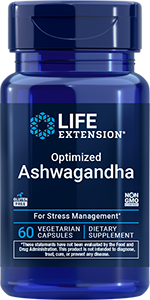
7. Ashwagandha
An essential herb in Ayurvedic tradition, ashwagandha is prized for promoting feelings of calm and relaxation. Ashwagandha extracts are commercially available at different standardizations when it comes to its withanolide glycose content—the active compounds responsible for ashwagandha's health benefits. So you can find ashwagandha supplements that support healthy sleep, mood and cognition.
- Scientific name: Withania somnifera
- Other names: Indian ginseng, winter cherry
- Commonly used part: Root, leaf
8. Schisandra
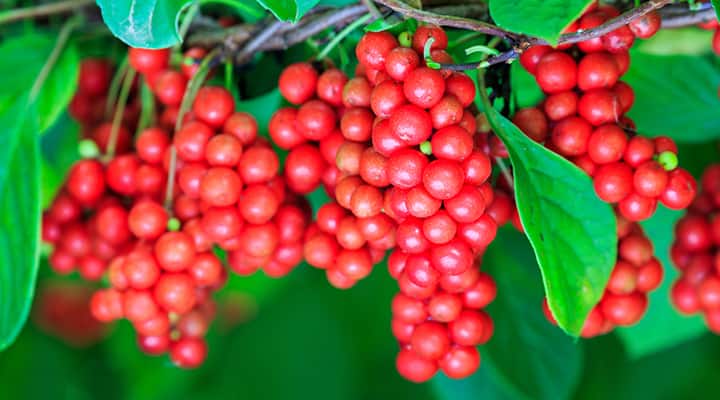
- Scientific name: Schisandra chinensis
- Other names: Wi Wei Zi, five-flavor berry, Gomishi, Omicha, Omija, Ngu mie gee
- Commonly used part: Fruit (berry)
9. Bacopa
Bacopa, a traditional Ayurvedic herb found in the wetlands of India and Southeast Asia, has long been used to support memory, healthy cognition and attention.
- Scientific name: Bacopa monnieri
- Other names: Brahmi, water hyssop
- Commonly used part: Aerial parts (whole plant)
10. Holy basil
Not to be confused with the basil in marinara sauce, holy basil is an herb native to India and revered in Ayurvedic tradition for its use in supporting balance, vitality and overall well-being.
- Scientific name: Ocimum santum
- Other names: Tulsi
- Commonly used part: Leaf
11. Reishi
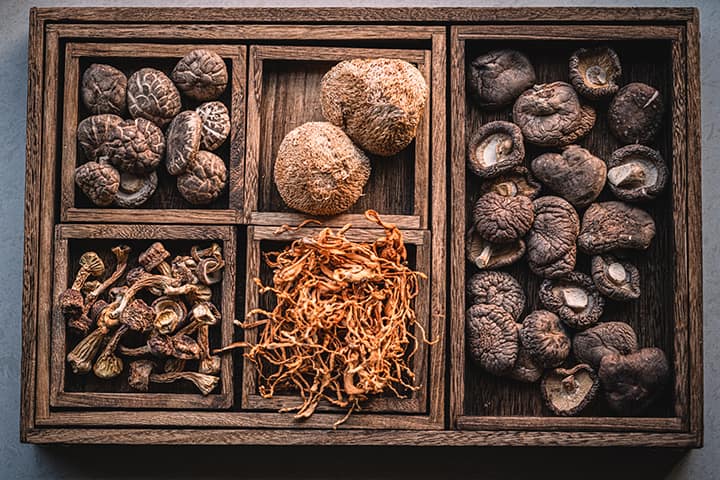
Reishi mushrooms have long been used in traditional Asian medicine to support overall health and vitality. Reishi mushrooms contain triterpenes and polysaccharides, compounds that have been studied to support immune system function.
- Scientific name: Ganoderma lucidum
- Other names: Ling Zhi
- Commonly used part: Fruiting body, mycelium, spores
12. Cordyceps
Traditionally used in East Asian herbal systems to support endurance and vitality, Cordyceps are rich in bioactive polysaccharides that have been studied for immune health support. Recipes for mud water, a chai-like beverage made with mushroom powder, often include Cordyceps as well as chaga and reishi mushrooms.
- Scientific name: Cordyceps sinensis/militaris
- Other names: Dong Chong Xia Cao, vegetable caterpillar, Chinese caterpillar fungus, Semitake, Hsia ts'ao tung ch'ung, Yarsha gumba
- Commonly used part: Fruiting body, mycelium
13. Shiitake
Traditionally used in East Asia to promote vitality and support a healthy response to stress, shiitake mushrooms are rich in bioactive polysaccharides that help promote immune health.
- Scientific name: Lentinula edodes
- Other names: Forest mushroom, Lentinula, Pasania fungus, Hua gu
- Commonly used part: Fruiting body

Explore Our Best Stress Management Supplements
14. Maitake
Also known as the hen-of-the-woods, maitake mushroom is native to the temperate forests in Asia, Europe and North America. This mushroom typically grows in clusters at the base of hardwood trees. It also contains polysaccharides and has been studied for its immune health potential.
- Scientific name: Grifola frondosa
- Other names: Dancing mushroom, hen-of-the-wood
- Commonly used part: Fruiting body
15. Turkey tail
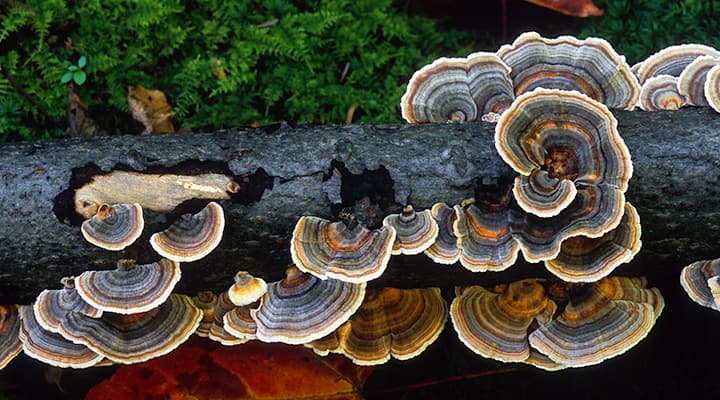
Long used in Chinese traditions, this mushroom is found worldwide, especially on decaying hardwood. Its thin, leathery, fan-shaped fruiting bodies display concentric zones of colors, usually brown, white and tan, sometimes with orange or blue, resembling a turkey's tail. These aptly named mushrooms are rich in polysaccharides.
- Scientific name: Trametes versicolor
- Other names: Yun Zhi, Coriolus versicolor
- Commonly used part: Fruiting body
16. Lion's mane
Lion's mane is an edible mushroom recognized by its distinctive white, shaggy, cascading spines that resemble a lion's mane. It is native to temperate forests in East Asia, North America, and Europe, typically growing on hardwood trees. Both the mycelium and fruiting bodies of lion's mane are used in culinary and traditional contexts.
- Scientific name: Hericium erinaceus
- Other names: Yamabushitake, monkey head mushroom
- Commonly used part: Fruiting body
17. Chaga
Chaga mushroom is a parasitic fungus found on birch trees in cold climates in Northern Europe, Russia, and Siberia. Chaga is commonly dried and ground for use in teas and chagaccinos, extracts, and supplements for its polysaccharide content and adaptogenic properties.
- Scientific name: Inonotus obliquus
- Other names: Cinder cork, Birch cork, Clinker polypore
- Commonly used part: Fruiting body
Myth Busting: What Supplements Are Not Adaptogens?
The term adaptogen is often applied to plants, even when the criteria of an adaptogen—a nutrient that increases non-specific resistance to stress—is not met. These adaptogenic-like nutrients are not considered true adaptogens, according to most experts, but they have an array of other well-known benefits. They include:
- Maca root
- Turmeric from curcumin
- Goji berries
- Licorice root
"Adaptogens have an important and significant general adaptive effect on stress involving the whole organism and its functions," said Dr. Michael A. Smith, the Director of Education for Life Extension. "Although nutrients like curcumin and maca root are not technically adaptogenic, they still have important whole-body benefits and can be a key part of your wellness routine."
Adaptogens by health goal
Although adaptogens have broad effects, certain nutrients have been studied for specific health goals.
| Health goal | Adaptogen | Health benefits |
|---|---|---|
| Focus & energy | Asian ginseng |
|
| Rhodiola |
|
|
| Bacopa |
|
|
| Holy basil |
|
|
| Ashwagandha [std. to 32% oligosaccharides and 10% withanolide glycoside conjugates] |
|
|
| Cordyceps |
|
|
| Sleep & calm | Ashwagandha [std. to 35% withanolide glycosides] |
|
| Immune support | Reishi mushroom |
|
How can I incorporate adaptogens into my daily routine?

The best way to add adaptogens to your wellness routine is to find a form that encourages you to take them consistently. Supplements that are formulated with dosages based on scientific research help to deliver an adaptogen's full benefits, and they are a convenient way to get your everyday dose. The best supplements deliver clinically studied doses to optimize the benefits of the nutrients you are taking, so be a picky shopper!
You can also incorporate adaptogens into your lifestyle through diet, such as a chagaccino in the morning or a cup of moon milk at bedtime.
Are there side effects of adaptogens?
As with any dietary supplement, you should carefully follow the product label; if there are side effects to anticipate, they will be listed there. That being said, everyone's biochemistry is unique, so if you encounter any difficulties, discontinue use. However, you should also speak to your doctor or healthcare provider before adding any supplements to your daily routine or making any major lifestyle changes.
Looking to support healthy energy production? Take our health needs quiz for nutrient recommendations based on your lifestyle and concerns.


References
- Auddy B, et al. "A Standardized Withania Somnifera Extract Significantly Reduces Stress-Related Parameters in Chronically Stressed Humans: A Double-Blind, Randomized, Placebo-Controlled Study." ResearchGate. November 2008. https://www.researchgate.net/publication/242151370_A_Standardized_Withania_Somnifera_Extract_Significantly_Reduces_Stress-Related_Parameters_in_Chronically_Stressed_Humans_A_Double-Blind_Randomized_Placebo-Controlled_Study
- Camilleri E, et al. "A brief overview of the medicinal and nutraceutical importance of Inonotus obliquus (chaga) mushrooms." Heliyon. August 2024. https://pmc.ncbi.nlm.nih.gov/articles/PMC11336990/
- Chen Y, et al. "Panax japonicus C.A. Meyer: a comprehensive review on botany, phytochemistry, pharmacology, pharmacokinetics and authentication." Chin Med. November 2023. https://pubmed.ncbi.nlm.nih.gov/37950271/
- Cohen MM. "Tulsi - Ocimum sanctum: A herb for all reasons." J Ayurveda Integr Med. October-December 2014. https://pmc.ncbi.nlm.nih.gov/articles/PMC4296439/
- Dai X, et al. "Consuming Lentinula edodes (Shiitake) Mushrooms Daily Improves Human Immunity: A Randomized Dietary Intervention in Healthy Young Adults." J Am Coll Nutr. 2015. https://pubmed.ncbi.nlm.nih.gov/25866155/
- De Bock K, et al. "Acute Rhodiola rosea intake can improve endurance exercise performance." Int J Sport Nutr Exerc Metab. June 2004. https://pubmed.ncbi.nlm.nih.gov/15256690/
- Deshpande A, et al. "A randomized, double blind, placebo controlled study to evaluate the effects of ashwagandha (Withania somnifera) extract on sleep quality in healthy adults." Sleep Med. August 2020. https://pubmed.ncbi.nlm.nih.gov/32540634/
- Habtemariam S. "Trametes versicolor (Synn. Coriolus versicolor) Polysaccharides in Cancer Therapy: Targets and Efficacy." Biomedicines. May 2020. https://pubmed.ncbi.nlm.nih.gov/32466253/
- Kim HG, et al. "Antifatigue effects of Panax ginseng C.A. Meyer: a randomised, double-blind, placebo-controlled trial." PLoS One. April 2013. https://pubmed.ncbi.nlm.nih.gov/23613825/
- Kos G, et al. "Eleutherococcus senticosus (Acanthopanax senticosus): An Important Adaptogenic Plant." Molecules. June 2025. https://pubmed.ncbi.nlm.nih.gov/40572479/
- Mancuso C. "Panax notoginseng: Pharmacological Aspects and Toxicological Issues." Nutrients. July 2024. https://pmc.ncbi.nlm.nih.gov/articles/PMC11242943/
- Meyer CA. "Brief Introduction of Panax ginseng." J Korean Med Sci. 2001. https://www.jkms.org/pdf/10.3346/jkms.2001.16.S.S3
- Nocerino E, et al. "The aphrodisiac and adaptogenic properties of ginseng." Fitoterapia. August 2000. https://pubmed.ncbi.nlm.nih.gov/10930706/
- Panossian A, Wikman G. "Effects of Adaptogens on the Central Nervous System and the Molecular Mechanisms Associated with Their Stress-Protective Activity." Pharmaceuticals (Basel). January 2010. https://pmc.ncbi.nlm.nih.gov/articles/PMC3991026/
- Plosca MP, et al. "Ganoderma lucidum-From Ancient Remedies to Modern Applications: Chemistry, Benefits, and Safety." Antioxidants (Basel). April 2025. https://pubmed.ncbi.nlm.nih.gov/40427395/
- Ren Q, et al. "Effects of ginseng consumption on the biomarkers of oxidative stress: A systematic review and meta-analysis." Phytother Res. August 2023. https://pubmed.ncbi.nlm.nih.gov/37216939/
- Shashidhar MG, et al. "Bioactive principles from Cordyceps sinensis: A potent food supplement - A review." J Funct Foods. July 2013. https://pubmed.ncbi.nlm.nih.gov/32288795/
- Sheng K, et al. "Recent advances in polysaccharides from Lentinus edodes (Berk.): Isolation, structures and bioactivities." Food Chem. October 2021. https://pubmed.ncbi.nlm.nih.gov/33940295/
- Valotto Neto LJ, et al. "Investigating the Neuroprotective and Cognitive-Enhancing Effects of Bacopa monnieri: A Systematic Review Focused on Inflammation, Oxidative Stress, Mitochondrial Dysfunction, and Apoptosis." Antioxidants (Basel). March 2024. https://pubmed.ncbi.nlm.nih.gov/38671841/
- Wu JY, et al. "Bioactive Ingredients and Medicinal Values of Grifola frondosa (Maitake)." Foods. January 2021. https://pubmed.ncbi.nlm.nih.gov/33466429/
- Wu L, et al. "Efficacy and Safety of Panax notoginseng Saponins in the Treatment of Adults With Ischemic Stroke in China: A Randomized Clinical Trial." Neurology. June 2023. https://jamanetwork.com/journals/jamanetworkopen/fullarticle/2806292
- Zhao C, et al. "Latest Evidence and Perspectives of Panax Notoginseng Extracts and Preparations for the Treatment of Cardiovascular Diseases." J Cardiovasc Pharmacol. April 2025. https://pubmed.ncbi.nlm.nih.gov/39903802/

Always be in the know!
Access the latest deals, wellness news, expert health tips & more!
Stress Management Favorite