Is B6 Better Taken Alone or with B-Complex Vitamins?
Published: October 2025
At a Glance
- Vitamin B6 can be beneficial whether you take it alone or in a B-complex combination vitamin supplement.
- Many people prefer the convenience of a B-complex vitamin, which contains other important B vitamins.
- You need vitamin B6 for healthy metabolic function.
- You can get B vitamins from food and from supplements. Supplements are usually more effective for saturating the body.
The vitamin aisle is buzzing with Bs! You may have spotted vitamin B6 as a standalone and seen it included in a B-complex formula for energy production, healthy metabolism and more. So which one is better to take?
Vitamin B6 plays a key role in more than 160 enzyme-driven reactions that support protein metabolism, neurological health, immune function and more. But it rarely works in isolation. That's why many people opt for a B-complex supplement to help maintain energy production, cellular health, and metabolic balance across the board. Yet, it can be taken alone, and for some individuals, this may be the best option.
Let's explore how B6 interacts with other B vitamins, the best way to take it, and how pairing it with nutrients like magnesium can unlock even greater benefits.
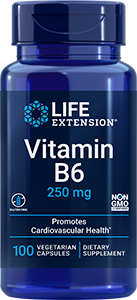
What is the difference between B6 and B-complex vitamins?

Vitamin B6 (also called pyridoxine) is one specific B vitamin out of eight. B-complex has two meanings: it can refer to supplements that contain all eight B vitamins, or it can describe the full group of B vitamins collectively.
Here's a quick B6 vs. B-complex comparison, broken down by vitamin B forms:
| Name | Main Functions | Food Sources | Supplement Forms |
|---|---|---|---|
| Thiamine / B1 |
|
Whole grains, pork, legumes, sunflower seeds |
|
| Riboflavin / B2 |
|
Eggs, dairy, lean meats, green vegetables |
|
| Niacin, Niacinamide / B3 |
|
Poultry, fish, peanuts, whole grains |
|
| Pantothenic Acid / B5 |
|
Avocados, mushrooms, sweet potatoes, chicken |
|
| Pyridoxine / B6 |
|
Chickpeas, tuna, salmon, bananas, fortified cereals |
|
| Biotin / B7 |
|
Egg yolks, nuts, seeds, sweet potatoes | |
| Folate / B9 |
|
Leafy greens, legumes, citrus fruits, fortified grains |
|
| Cobalamin / B12 |
|
Meat, dairy, eggs, fortified plant-based milks |
|

Explore Our Best Vitamin B Supplements
What is a B-complex supplement and how does it work?

A B-complex supplement contains all eight essential B vitamins, sometimes with added nutrients, to help your body maintain healthy energy metabolism, brain function and cellular health. These vitamins work together as coenzymes to help release energy from carbohydrates, fats and proteins.
Within the body, vitamin B coenzymes are crucial to the process that generates the energy needed by every cell. Because B vitamins work together in their metabolic roles, a deficiency in one can affect how your body uses the others, which can impact healthy organ function. That's why a full-spectrum B-complex is often recommended to help support overall vitality.
B-complex supplements help maintain energy production and promote a healthy metabolism. They also encourage brain, cellular, and organ health, making them a convenient option for anyone looking to support whole-body wellness.
Several B vitamins, including folate, vitamin B12, vitamin B6, and riboflavin, have also been studied to help maintain already-healthy homocysteine levels, which is important for metabolic and cardiovascular function.
When should you take B6 alone vs. a B-complex?
Everyone needs all eight B vitamins—they're essential to life. But there are times when taking vitamin B6 alone makes sense:
- If your diet doesn't contain enough B6-rich foods
- If your current supplements don't provide enough B6
- If you have a specific health goal for which additional vitamin B6 may be indicated
- If your healthcare provider recommends it
Pro tip: Vitamin B6 is an excellent standalone dietary supplement and can offer a more robust dose than a B-complex. But for everyday support, a B-complex makes it easy to cover all your bases.
What are the benefits of taking B6 with other B vitamins?

One primary benefit of taking a single supplement with many vitamins is convenience. Taking a B-complex supplement or multivitamin ensures you're getting enough of each nutrient without having to juggle multiple capsules.
Beyond convenience, vitamin B6 (pyridoxine) cooperates with other B vitamins, especially folate (B9) and vitamin B12 (cobalamin), to support key metabolic and neurological functions. These three vitamins are deeply involved in homocysteine metabolism, a process critical for cardiovascular health. A recent study found support for healthy homocysteine levels and metabolic function when folate, B6 and B12 levels are all healthy.
Note that B6's interactions with folate and B12 aren't necessarily about energy metabolism, which tends to be a main reason why people take a B-complex. For that, look to other B vitamins, such as B1 (thiamine), B2 (riboflavin), B3 (niacin), and B5 (pantothenic acid). These vitamins help convert food into usable energy and support nervous system function.
All that being said, ensuring a balanced intake of all B vitamins, through a B-complex supplement or multivitamin, helps optimize your vitamin B benefits.
Can I take both B6 and B-complex supplements together?
B6 is already included in most B-complex supplements. Taking both is usually not necessary.
What Is an Activated B Vitamin?
The body can't make use of B vitamins until it transforms them into active forms. Activation usually involves a small chemical change that allows your body to work with the nutrient. However, you can buy active forms of vitamin B.
For instance, ordinary vitamin B6 is in a form called pyridoxine HCl. Your body activates it by converting it into pyridoxal 5'-phosphate. To take a "shortcut," you can take a supplement with already activated, or methylated, forms.
What’s the optimal way to take vitamin B6 for best results?

As with any vitamin or supplement, always take this vitamin B according to the label instructions, or follow the instructions of your health care provider.
Talk to your healthcare provider first:
Certain compounds can interfere with B6 metabolism. Your doctor may recommend adjusting your vitamin B dosage accordingly.Take it with food, not on an empty stomach:
Most people find B6 sits best with them and their digestive comfort if they take it with food. Taking it this way can also help support nutrient uptake.Start with a low dose and follow label instructions:
B6 is well-tolerated at typical doses, but excessive intake over time may carry a nerve-related risk. It is best to start slow and work up to—but not exceed—the daily dose noted on your supplement.Monitor your intake if you're using multiple supplements:
B6 is found in many multivitamins, energy drinks and fortified foods. So before you add B6, check the labels of what's already in your routine to avoid exceeding clinically studied amounts.Consider pairing it with a multivitamin or mineral supplement:
B6 can be taken with other vitamins and minerals for convenient dosing.Combine it with magnesium:
One popular pairing is B6 with magnesium, which supports complementary functions in the body. Magnesium supports muscle and nerve function, while B6 assists in neurotransmitter synthesis. As a team, they may support overall comfort and healthy mood balance, especially during the menstrual cycle.Be consistent with timing:
Taking B6 at the same time each day, ideally with breakfast or lunch, can help maintain stable levels in your system and reduce the chance of forgetting a dose.
By following these tips, you can help support your vitamin B6 regimen, promote cardiovascular and neurological health, and promote overall wellness.
Want nutrient recommendations based on your lifestyle and concerns? Take our brain health quiz to find the right supplements for your needs.

What form of vitamin B6 should I take?
You can take active or methylated B6 or a conventional B6 formula. Talk to a healthcare provider for additional guidance.
What are the signs I might need more B6?
You may not know if you need more B6. It supports so many functions and processes in the body that it can be hard to tell if you need more. A high-quality multivitamin or B-complex supplement usually covers your needs.
Key Takeaways
- Vitamin B6 supports protein metabolism and enzyme activity.
- B-complex supplements help maintain energy, brain, and cellular health.
- The choice between B6 alone or as part of a B-complex depends on your diet, lifestyle and goals.


About the Author: Carlie Bell, ND, is a licensed Naturopathic Physician and adjunct medical instructor at Saint Louis University. Dr. Bell is also the program director of the American College of Acupuncture and Oriental Medicine.
References
- Hanna M, et al. "B Vitamins: Functions and Uses in Medicine." Perm J. June 2022. https://pmc.ncbi.nlm.nih.gov/articles/PMC9662251/
- Noah L, et al. "Effect of magnesium and vitamin B6 supplementation on mental health and quality of life in stressed healthy adults: Post-hoc analysis of a randomised controlled trial." Stress Health. December 2021. https://pmc.ncbi.nlm.nih.gov/articles/PMC9292249/
- Zhu J, et al. "Folate, Vitamin B6, and Vitamin B12 Status in Association With Metabolic Syndrome Incidence." JAMA Network Open. January 2023. https://jamanetwork.com/journals/jamanetworkopen/fullarticle/2800209
- "Vitamin B6." National Institutes of Health. June 2023. https://ods.od.nih.gov/factsheets/VitaminB6-HealthProfessional/

Always be in the know!
Access the latest deals, wellness news, expert health tips & more!
Popular Supplement