Does CoQ10 Help Support Your Liver Health?
Published: March 2024 | Updated: February 2026
At a Glance
- Coenzyme Q10 is key for cellular energy production, which is especially important for the heart.
- Like the heart, the liver is a hardworking organ that needs CoQ10 for optimal function.
- Levels of CoQ10 decline with age, making supplementation a good choice.
Coenzyme Q10, aka CoQ10, hardly needs an introduction. It is one of the top heart health supplements, and it can help fight the effects of general fatigue. This powerful antioxidant protects cell membranes, lipids and tissues from damaging free radicals. CoQ10 is just one of those all-around nutrient superstars.
Did you know coenzyme Q10 also promotes liver health? Your liver is a critical player in overall health and wellness, so let's take a closer look at how CoQ10 encourages healthy liver function.
What is CoQ10 and why does your liver rely on it?

Coenzyme Q10 is produced naturally in the body and is widely available as a supplement. Its key role is contained in its name: as a "coenzyme," it helps enzymes carry out their jobs. In CoQ10's case, it accepts and donates electrons in mitochondria, an essential part of making ATP, our cellular energy currency.
"CoQ10 is a vital nutrient," explains Stephen Tapanes, PhD, a scientist at Life Extension, "especially for energetically demanding organs susceptible to oxidative stress like the liver."Your liver is a marvel of an organ, with over 500 indispensable functions in the body. But you probably know it best for detoxification. The liver helps break down potentially harmful substances for excretion by the body.
Aside from detoxification, the liver has many other functions, including:
- Converting excess glucose into glycogen for longer-term storage
- Storing iron
- Regulating blood clotting
- Participating in the synthesis of cholesterol
- Synthesizing some immune factors
All this work means the liver needs a lot of energy. Under resting conditions, your liver can contribute to about a quarter of your body's total heat production. That's 25% of your body's resting metabolic rate! When we say it's a workhorse organ, we mean it.
To make all that energy, your body needs coenzyme Q10 for healthy mitochondrial function. (Remember, mitochondria are the powerhouses of cells that provide energy in the form of ATP.) Healthy CoQ10 levels help provide the energy your liver needs.
How might CoQ10 help support liver function?

In addition to providing energy for the liver, CoQ10 is an antioxidant. It not only protects the entire body from oxidative free radicals, but it also helps inhibit inflammatory factors to support whole-body health.
Liver cells, called hepatocytes, are especially susceptible to oxidative stress. CoQ10 helps protect hepatocytes from free radicals, which in turn helps to promote liver function.
| CoQ10 Mechanism | Benefit for Liver Health |
|---|---|
| Cellular energy production | Provides the immense energy required for all liver functions, including detoxification, metabolism of fats/carbohydrates, and synthesis of cholesterol |
| Antioxidant action | Protects hepatocytes (liver cells) from oxidative stress |
| Healthy inflammatory response | Supports whole-body health; helps to maintain normal liver function |
| Support for lipid metabolism | Promotes normal fat metabolism within the liver, promoting overall liver health and cellular function |
| Membrane support | Maintains structural integrity and fluidity of liver cell membranes, supporting membrane function |

Explore Our Best Liver Health / Detoxification Supplements
How does CoQ10 affect liver enzymes?

Supplementation with CoQ10 has been shown to promote healthy serum levels of circulating liver enzymes. Some of them can be tested to measure liver function and health, including ALT (alanine transaminase), AST (aspartate transaminase or aspartate aminotransferase), ALP (alkaline phosphatase), and GGT (gamma-glutamyltransferase).
In a meta-analysis of 13 randomized controlled trials, coenzyme Q10 supplementation was shown to encourage healthy serum levels of ALT, AST, and GGT. The dosage of coenzyme Q10 varied between studies but was often 100 mg daily for at least several weeks.
"CoQ10 is a vital nutrient, especially for energetically demanding organs susceptible to oxidative stress like the liver."
Can CoQ10 help with oxidative stress?
Yes. The word "antioxidant" gets thrown around a lot, but oxidative stress is no joke. Oxidative stress can affect cell membrane integrity and contribute to aging. CoQ10 is a strong antioxidant that protects cellular health and supports overall wellness.
Who might consider CoQ10 for liver health support?

Aging adults should consider coenzyme Q10 supplementation because endogenous CoQ10 levels decline with age. But, they're not the only ones: CoQ10 is a superstar supplement that can be beneficial for almost any adult. If you're focused on supporting your liver health, it definitely deserves a spot in your wellness strategy!
How do you choose a CoQ10 supplement for liver support?
Your first step with any supplement is to find a reliable, quality-based company. A supplement company should be able to provide you with a Certificate of Analysis that ensures the product contains what it says on the label and is free of contamination.
Most CoQ10 clinical studies use dosages between 50 mg and 300 mg for efficacy, so check the label to verify the dose. According to liver health research, 100 mg is a good bet.
Just remember: Always, always, follow the label directions.
Ubiquinol vs. Ubiquinone
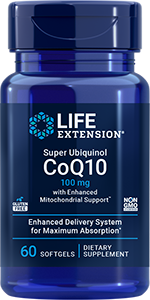
If you've seen the words "ubiquinol" and "ubiquinone" and are unsure how they fit into the CoQ10 picture, let us fill you in. Both ubiquinol and ubiquinone are names for different forms of coenzyme Q10. Ubiquinol is the reduced, active form, and is generally more bioavailable than the ubiquinone form. Ubiquinone has been around for longer, though, so there are more studies done with this form. Some novel formulations now exist that boost the bioavailability of ubiquinone as well.
Ultimately, either form can be used to support CoQ10 levels, but the extent will vary from person to person. Blood tests are available to measure CoQ10 levels, so you can see which form and dose works best for you.What's the best way to take CoQ10 for maximum benefits?

Most CoQ10 supplements will direct you to take with food for better absorption, as it is fat-soluble. Doing so may also help alleviate occasional stomach discomfort.
As for timing, it's best to take a coenzyme Q10 supplement at a time when you are most likely to remember to take it. Morning or night does not really matter much, but consistency does. Decide on a time that works best for you.
Importantly, CoQ10 will have the most benefit when taken for at least several weeks, and many clinical studies show benefits that last at least a month beyond supplementation.Should I get CoQ10 for liver support from food, supplements, or both?
Both! In general, you get small amounts of CoQ10 from foods like fatty fish, organ meat (like liver), and whole grains, and your body makes its own. However, with age comes a decline in CoQ10 production. A CoQ10 supplement can help encourage healthy aging, especially if you're looking for added support for heart health and liver function.
Is CoQ10 safe for your liver?
CoQ10 is well-tolerated in clinical studies and has been shown to support liver health and function. CoQ10 has been administered in clinical studies lasting for months or even years with no significant issues.
However, as with any new health regimen, you should speak with a doctor or healthcare provider before beginning a coenzyme Q10 supplement.
What other health benefits does CoQ10 offer?
In addition to supporting liver function, coenzyme Q10 supplementation has been shown to have numerous health benefits, including:
- Providing antioxidant support, including promoting antioxidants made by your body
- Supporting heart health
- Inhibiting inflammatory factors to support whole-body health
- Fighting the effects of general fatigue
If you're looking for additional support for your liver health, check out our liver health quiz. It will give you a personal recommendation for the nutrients that may be right for you.
Key Takeaways
- Coenzyme Q10 helps provide your liver with much-required energy as well as protection against oxidative stress.
- CoQ10 supplements can be a good choice for aging adults or any adults looking for heart, liver or energy support.
- Healthy lifestyle and targeted supplements support liver health and function.

References
- Ardekani A, et al. "Effects of coenzyme Q10 supplementation on lipid profiles and liver enzymes of nonalcoholic fatty liver disease (NAFLD) patients: A systematic review and meta-analysis of randomized controlled trials." Food Sci Nutr. March 2023. https://www.ncbi.nlm.nih.gov/pmc/articles/PMC10261764/
- Bai M, et al. "Relationships between interspecific differences in the mass of internal organs, biochemical markers of metabolic activity, and the thermogenic properties of three small passerines." Avian Research. June 2016. https://avianres.biomedcentral.com/articles/10.1186/s40657-016-0046-1
- Dabbaghi Varnousfaderani S, et al. "Alleviating effects of coenzyme Q10 supplements on biomarkers of inflammation and oxidative stress: results from an umbrella meta-analysis." Front Pharmacol. August 2023. https://www.ncbi.nlm.nih.gov/pmc/articles/PMC10442645/
- Gong J, et al. "Hepatocytes: A key role in liver inflammation." Front Immunol. January 2023. https://www.ncbi.nlm.nih.gov/pmc/articles/PMC9890163/
- Hidalgo-Gutiérrez A, et al. "Metabolic Targets of Coenzyme Q10 in Mitochondria." Antioxidants (Basel). March 2021. https://pmc.ncbi.nlm.nih.gov/articles/PMC8066821/
- López-Lluch G, et al. "Is coenzyme Q a key factor in aging?" Mech Ageing Dev. April 2010. https://pubmed.ncbi.nlm.nih.gov/20193705/
- Mizuno K, et al. "Ubiquinol-10 Intake Is Effective in Relieving Mild Fatigue in Healthy Individuals." Nutrients. June 2020. https://www.mdpi.com/2072-6643/12/6/1640
- Pelton R. "Coenzyme Q10: A Miracle Nutrient Advances in Understanding." Integr Med (Encinitas). April 2020. https://www.ncbi.nlm.nih.gov/pmc/articles/PMC7482328/
- Qu H, et al. "Can coenzyme Q10 supplementation reduce exercise-induced muscle damage and oxidative stress in athletes? A systematic review and meta-analysis." Complement Ther Clin Pract. August 2025. https://pubmed.ncbi.nlm.nih.gov/40367843/
- Saini R. "Coenzyme Q10: The essential nutrient." J Pharm Bioallied Sci. July 2011. https://www.ncbi.nlm.nih.gov/pmc/articles/PMC3178961/
- Soleimani Damaneh M, et al. "The effect of coenzyme Q10 supplementation on liver enzymes: A systematic review and meta-analysis of randomized clinical trials." Food Sci Nutr. June 2023. https://www.ncbi.nlm.nih.gov/pmc/articles/PMC10494615/
- Sangouni AA, et al. "Effect of Mediterranean diet on liver enzymes: a systematic review and meta-analysis of randomised controlled trials." Br J Nutr. October 2022. https://pubmed.ncbi.nlm.nih.gov/34165054/
- Tamber SS, et al. "Biomarkers of liver diseases." Mol Biol Rep. September 2023. https://pubmed.ncbi.nlm.nih.gov/37482588/
- "Liver: Anatomy and Functions." Johns Hopkins Medicine. https://www.hopkinsmedicine.org/health/conditions-and-diseases/liver-anatomy-and-functions
- "LiverTox: Clinical and Research Information on Drug-Induced Liver Injury." Bethesda (MD): National Institute of Diabetes and Digestive and Kidney Diseases; 2024. Coenzyme Q10. https://www.ncbi.nlm.nih.gov/books/NBK603562/


Always be in the know!
Access the latest deals, wellness news, expert health tips & more!
Popular Supplement