How Does CoQ10 Support Heart Health?
Published: February 2022 | Updated: February 2026
At a Glance
- Coenzyme Q10 (CoQ10) supports heart health by helping cells produce energy.
- The heart has high-energy demands and relies on CoQ10 to function efficiently.
- As an antioxidant, CoQ10 protects heart cells.
CoQ10, or coenzyme 10, is found in every cell in your body, and it plays a key role in your body's cellular energy production cycle and protects cells from oxidative stress—two functions that are especially important for the heart.
You get some CoQ10 from food, and your body also makes it on its own.
So why is CoQ10 one of the most popular heart health supplements? Well, your hard-working heart needs a lot of energy to do its job, so you want to make sure it is fueled up for the long run. Let's get into the ways CoQ10 can help it out in this endeavor!
What is CoQ10 and why does your heart need it?
CoQ10 is a fat-soluble molecule that acts as an essential helper in the mitochondria, where cells produce ATP, the main energy source your body uses to function. By supporting this process, CoQ10 helps meet the energy demands of your body, including the heart muscle.
After all, every heartbeat requires a steady supply of energy, and the heart muscle is one of the most energy-demanding tissues in the body.
CoQ10 has 3 main functions in the body, and all of them support heart health.
Helps produce cellular energy.
CoQ10 acts as an essential energy shuttle, helping your cells move electrons during the production of ATP. Your cells use ATP to power their daily functions, which include everything from breathing to each heartbeat.Provides antioxidant support.
CoQ10 helps defend against free radicals that are created during energy production, helping protect heart cells from oxidative stress.Supports a healthy inflammatory response.
CoQ10 helps inhibit inflammation to support whole-body health, including cardiovascular health.
"The heart has extremely high energy needs because it beats continuously. Every contraction requires cellular energy," said Michael A. Smith, MD, Director of Education for Life Extension. "Since CoQ10 is directly involved in energy production, heart cells rely heavily on adequate CoQ10 levels."
And because all that cellular energy production creates oxidizing free radicals, CoQ10's ability to quench these oxidative stress-causing compounds is not to be overlooked. Free radicals can put stress on everything in your body, including the cell membranes in your heart and cardiovascular system. Having healthy CoQ10 levels can halt these processes in their tracks, however.
“The heart has extremely high energy needs because it beats continuously. Every contraction requires cellular energy. Since CoQ10 is directly involved in energy production, heart cells rely heavily on adequate CoQ10 levels.”
How does CoQ10 support heart function?

CoQ10 supplementation, usually as either ubiquinone or ubiquinol, can add cardiovascular support, help maintain heart health and protect blood vessels through the following actions:
Supports mitochondrial energy for cardiac muscle contraction.
CoQ10 helps support mitochondrial energy production in heart muscle cells, allowing them to efficiently produce ATP, the energy needed for each heartbeat and normal cardiac contraction.Quenches free radicals.
As energy production increases, so does oxidative stress. CoQ10 provides antioxidant support, helping to defend against the free radicals that can place stress on heart cells and blood vessel walls.Supports a healthy inflammatory response.
By supporting a healthy inflammatory response, CoQ10 supports healthy cardiovascular function and adds another layer of protection for the heart.Promotes healthy heart function as we age.
Because of CoQ10's benefits for energy production, antioxidant support and healthy inflammatory response of the heart, it helps keep your ticker going strong, even as you age.
| CoQ10 Benefit | How It Helps |
|---|---|
| Energy production |
|
| Antioxidant |
|
| Healthy inflammatory response |
|

Explore Our Best Heart Health Supplements
Who should consider taking CoQ10 for heart health?
CoQ10 plays an important role in supporting heart health, but it also benefits systems throughout your body. This makes it a great option for most people's supplement routines, particularly older adults. Because CoQ10 levels naturally decline with age, supplementation can help support adequate CoQ10 levels and help maintain cellular energy levels over time.
That being said, it offers antioxidant and cellular energy support benefits that many are seeking, regardless of their ages. CoQ10 is widely tolerated—meaning there are very, very few people who shouldn't take CoQ10. As always, consult with your healthcare provider before starting CoQ10 or any nutritional supplement.
What's the right CoQ10 dosage for heart health?

When taking CoQ10, always follow the instructions on the supplement label.
- A common daily dose of CoQ10 for heart health ranges from 50 to 200 mg per day.
- As with any supplement, always check with your healthcare provider before starting CoQ10 or adjusting your dose.
- The right amount can vary based on age, health needs, and the specific product, so it's important to follow the guidance of the supplement label or your healthcare provider.
This approach helps ensure you're getting effective support while keeping your routine safe and appropriate for your individual health needs.
Is ubiquinol better than ubiquinone for the heart?
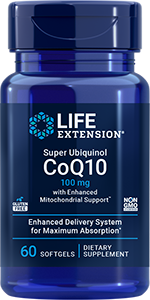
Both ubiquinone and ubiquinol support CoQ10 levels in the body, and research has not definitively shown that one form is superior for heart health. Ubiquinol is the reduced, active form, and is generally more bioavailable than the ubiquinone form. Ubiquinone has been around for longer, though, and some novel formulations now exist that boost the bioavailability of ubiquinone, as well. Either form can be used to support CoQ10 levels for the heart. Blood tests are available to measure CoQ10 levels, so you can see which form and dose work best for you.
How can you strengthen your heart?
The most effective approach to a healthy heart is lifestyle focused. A heart-healthy diet, regular exercise, healthy stress management, quality sleep, and not smoking all play major roles in supporting heart health. Supplements like CoQ10 can complement these habits, but they work best when paired with consistent, healthy daily behaviors.
If you want to support your heart health, get started with Life Extension's health needs quiz. It will recommend supplements that may be right for you based on your individual needs and goals.
Key Takeaways
- CoQ10 supports cellular energy and antioxidant protection.
- Because CoQ10 production declines over time, older adults and anyone focused on healthy heart muscle energy may benefit from supplementation.
- Most adults take 50 to 200 mg of CoQ10 per day.


References
- Ayob Alsaiegh OM, et al. “Evaluation of the Coenzyme Q10 and Some Biochemical Parameters in Patients with Ischemic Heart Disease." Arch Razi Inst. June 2023. https://pmc.ncbi.nlm.nih.gov/articles/PMC10657960/
- Mantle D, et al. “Coenzyme Q10 and Autoimmune Disorders: An Overview." Int J Mol Sci. April 2024. https://pmc.ncbi.nlm.nih.gov/articles/PMC11049925/
- Mantle D, et al. “Mitochondrial Dysfunction and Coenzyme Q10 Supplementation in Post-Viral Fatigue Syndrome: An Overview." Int J Mol Sci. January 2024. https://pubmed.ncbi.nlm.nih.gov/38203745/
- Rabanal-Ruiz Y, et al. “The Use of Coenzyme Q10 in Cardiovascular Diseases." Antioxidants (Basel). May 2021. https://pubmed.ncbi.nlm.nih.gov/34068578/
- Yuan S, et al. “CoenzymeQ in cellular redox regulation and clinical heart failure." Free Radic Biol Med. May 2021. https://pubmed.ncbi.nlm.nih.gov/33753238/

Always be in the know!
Access the latest deals, wellness news, expert health tips & more!
Popular Supplement