What Are the 14 Best Hair Growth Supplements for Women?
Published: April 2025
Let's be honest: thinning hair can leave you feeling less than your best and sometimes can even make it hard to look in the mirror. And, contrary to what some might think, men aren't the only ones who experience it, either. Women are just as susceptible to shedding and less volume.
But there are ways to combat it so you can maintain fuller, stronger hair! In this blog, we'll learn more about nutrients that may help support hair growth, what might be impacting your hair, high-quality hair supplements for women, and other things you can do to promote your hair health and keep your locks luscious.
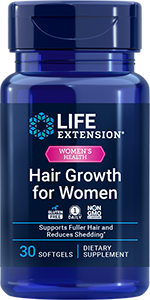
Supplements can help your hair in two ways. First, the most effective supplements are specialty formulas studied for their role in hair growth. Second, supplementing with nutrients that may be missing from your diet will help you stay head (or should we say hair)-to-toe healthy and fill in those dietary gaps. Let's explore both categories.
1. Saw palmetto
Saw palmetto can help support already-healthy levels of the hormone dihydrotestosterone (DHT), which is involved in the exogen phase of the hair growth cycle.
In one randomized, double-blind, placebo-controlled study, participants who took saw palmetto extract noticed an improvement in the appearance of hair thickness. Specifically, they saw positive results in hair shedding/hair falling when their hair was combed and when the strands were counted.

2. Wheat phytoceramides
Ceramides are lipids that play a role in cellular health, and that includes the cells that make up your hair. Ceramides also help preserve collagen integrity—one of the building blocks of healthy hair. In one clinical study, up to 64% of women taking wheat phytoceramides specifically exhibited a measurable improvement in hair density and volume, which was significantly better compared to participants who took a placebo.
And in a self-reported questionnaire, up to 85% of women felt they had less shedding, faster hair growth, and an improvement in general hair health after 12 weeks. Better yet, the results were similar in both pre- and post-menopausal women.
3. Collagen
Collagen is important for healthy hair, skin, and nails. The key here is that collagen's involvement in skin health extends to your scalp. A happy scalp is vital for thick locks. More specifically, preclinical research has found that collagen peptides can actually help lengthen hair follicle tissues and support the production of new hair shafts. This means that collagen peptides have the potential to inhibit hair thinning, reduce shedding and maintain hair health.

4. Iron
Less than ideal iron levels may affect your hair health. And women may be more susceptible to lower iron levels compared to men due to monthly menstruation. This is where an iron supplement comes in. Supporting your healthy iron levels may also help support hair health. To encourage iron levels and continue to grow healthy hair, you can also look to red meat and leafy greens. (Note: only supplement with iron if you're actually deficient in it, which you can determine from a blood test. Too much iron isn't good for you, either.)
5. Zinc
Zinc is required to grow healthy hair, and it tends to be lower in individuals experiencing hair thinning. Research has found that the combination of zinc and calcium pantothenate may increase hair density and thickness.
6. Biotin
If you aren't getting enough biotin, this could affect your hair growth. Your body needs biotin to produce keratin, which is a structural protein that helps form your hair, skin, and nails. Certain food sources—like egg yolks, sweet potatoes, and dairy—contain biotin, or you could opt for a supplement. Biotin products are often combined with other nutrients like collagen or alpha-lipoic acid.
7. Essential fatty acids
Lipids are a group of various types of fat and altered lipid metabolism may affect hair growth. Essential fatty acids, including omega-3 EPA and DHA, are important for hair and scalp health.
8. Protein
Hair follicles are made up almost entirely of the protein keratin. So, consuming enough protein is essential if you want to maintain healthy hair. Meat is an excellent source of protein, or you can opt for a high-quality supplement (like protein powder).
9. Vitamin D
We call vitamin D the sunshine vitamin because your body produces it when you spend time outside. Unfortunately, too many of us spend our days cooped up inside behind a desk. But your body needs vitamin D for hair growth. If you suspect that a lack of vitamin D could be contributing to your thinning hair, eat more egg yolks or mushrooms, or get the vitamin in capsule/tablet form.
10. Selenium
Adequate selenium intake is required for healthy thyroid function, another important pillar of different parts of your overall health—including your hair!
11. Iodine
Iodine is another mineral that plays an important role in thyroid function. Iodine products frequently come in the form of capsules and drops—no table salt required.
12. Vitamin E
Vitamin E plays a role in fighting oxidative stress, which can cause hair thinning. Beyond supplementing, nuts and seeds are a great snack to include in your diet, if you want more of it.
13. B-complex vitamins
B-complex vitamins like B12 and folate help support red blood cell formation, which is required to deliver oxygen to your hair follicles. It also plays a role in protein synthesis.
14. Vitamin C
Vitamin C packs a big punch. This antioxidant helps the body to absorb iron, and it also supports collagen production.
Pro tip: In the case of many of these nutrients, you may want to get regular bloodwork to determine whether you're actually getting enough of certain vitamins and minerals (like iron or zinc). This will give you a better idea of whether they will be as effective for your hair health.

Our Best Hair & Nails Supplements
What causes thinning hair in women?
There are several possible reasons for changes in hair in women.
Hormonal changes—
Our hormones naturally fluctuate over time—both throughout our monthly cycle and as we age. But if your hormones really start to misbehave, it can impact your healthy hair.- Pregnancy and childbirth can both do a real number on your hormones. It's not uncommon for women to experience hair thinning during these special times (although prior to that, some women experience intense hair growth!).
- During menopause, some women experience a shrinking of their hair follicles. This can lead to strands of hair that are thinner, or the follicle may stop producing hair completely.
- Stress is another culprit. If it's not properly addressed, it can lead to changes in women's hair, among other things!
- Any changes in the levels of androgen hormones like DHT can impact healthy hair. Some women experience too much of this hormone.
Genetics—
They say the apple doesn't fall far from the tree, and in the case of hair, this saying rings true. If your parents or other relatives have experienced hair-related changes, that can explain why you are, as well. This may occur in your 40s, 50s, or 60s—although, again, it depends on your genetics.Changing nutritional needs—
The diet you follow in your 20s very well might not be adequate in your 50s. Without making the proper adjustments, there's a chance you might not be getting all the nutrients you need. For example, if you're not getting enough iron or vitamin D in your diet, you might experience hair thinning.Note: Several of these potential factors for hair loss in women might disturb the hair growth process. Hair growth happens in phases, and stress, nutritional needs, etc., can keep you stuck in the hair shed phase for longer periods of time, rather than in the hair growth phase.
Do women’s hair growth supplements really work?

Yes, hair growth supplements can work, but you need to combine your supplement(s) with healthy lifestyle choices and, potentially, other interventions. This includes ensuring your diet is not only well-rounded but meets your specific needs and getting routine lab work done to check your levels.
We want to offer a gentle reminder: There is a lot of hype online, especially on social media, when it comes to hair growth and promised results. Remember to always do your due diligence and avoid following trends merely because they're going viral.
In addition, bear in mind that getting enough vitamins and minerals is important not just for hair growth but for women's health in general.
How can women regrow hair effectively?
There are several things women can do to further encourage hair growth:
Be gentle with your hair—
Avoid using heated tools (like curling irons), wearing tight/slicked-back styles, and brushing too aggressively. Be gentle when you wash and condition, and if you use a blow dryer, use the lowest setting. This is important for both your hair and your scalp.Shampoo and condition regularly—
If too much oil, product, etc., builds up on your scalp, it can negatively affect hair growth.Choose your haircare products wisely—
Many are full of undesirable chemicals, including ones that claim to promote hair growth. Look at the individual ingredients, how they're sourced, and even how the product is packaged.Make healthy lifestyle choices—
Outside of your diet and stress management, this also means avoiding smoking and drinking, staying hydrated, and getting enough high-quality sleep.
Remember, no supplement can compensate for poor lifestyle habits. You must take a holistic approach to hair growth if you want your supplements to help.
How long does it take for hair supplements to show results?
No hair growth supplement provides instant results. This is because, as we mentioned earlier, hair sheds and grows in distinct phases. With a clinically supported supplement formulated with quality ingredients, you may start to see results in two to four months.
Remember that if you want to best address your hair health with supplements, it's crucial that you follow the directions and recommended dosage on the product label as closely as possible. This also means, unless otherwise directed by your healthcare provider, to stay consistent! You will likely need to take your supplement daily for at least two months before you may start to notice changes. First, look for decreased shedding—this is often the first indication that your hair growth vitamins work.
Combining supplements with top-notch nutrition, physical activity, and plenty of sleep, you are off to a great start on your healthy hair journey!

References
- Dudonné S, et al. "Efficacy of a wheat polar lipid complex in reducing hair loss and improving hair growth in healthy women: A randomized, double-blind, placebo-controlled clinical study." Int J Cosmet Sci. April 2024. https://pubmed.ncbi.nlm.nih.gov/37935579/
- Lee JO, et al. "AP collagen peptides (APCPs) promote hair growth by activating the GSK-3β/β-catenin pathway and improve hair condition." Experimental Dermatology. July 2024. https://onlinelibrary.wiley.com/doi/full/10.1111/exd.15137
- Mansour A, et al. "Comparing the Effects of Zinc Sulfate, Calcium Pantothenate, Their Combination and Minoxidil Solution Regimens on Controlling Hair Loss in Women: A Randomized Controlled Trial." Journal of Research in Pharmacy Practice. April-June 2017. https://journals.lww.com/jrpp/fulltext/2017/06020/comparing_the_effects_of_zinc_sulfate,_calcium.5.aspx
- Saini K, Mysore V. "Role of vitamin D in hair loss: A short review." J Cosmet Dermatol. November 2021. https://pubmed.ncbi.nlm.nih.gov/34553483/
- Seo J, et al. "The role of lipids in promoting hair growth through HIF-1 signaling pathway." Scientific Reports. February 2025. https://www.nature.com/articles/s41598-025-88697-8
- Sudeep HV, et al. "Oral and Topical Administration of a Standardized Saw Palmetto Oil Reduces Hair Fall and Improves the Hair Growth in Androgenetic Alopecia Subjects - A 16-Week Randomized, Placebo-Controlled Study." Clin Cosmet Investig Dermatol. November 2023. https://pubmed.ncbi.nlm.nih.gov/38021422/
- Ventura M, et al. "Selenium and Thyroid Disease: From Pathophysiology to Treatment." Int J Endocrinol. 2017. https://pmc.ncbi.nlm.nih.gov/articles/PMC5307254/

Always be in the know!
Access the latest deals, wellness news, expert health tips & more!
Women's Health Favorite