4 Benefits of Nitric Oxide Supplements
Published: October 2023 | Updated: May 2026

At a Glance
- In the body, nitric oxide (NO) helps relax blood vessels and supports healthy circulation.
- Nitric oxide also supports healthy blood flow, cardiovascular health, male sexual health, and exercise performance and recovery.
- You don't take nitric oxide directly—but supplements and some foods provide nutrients your body uses to produce it.
- Key ingredients that support nitric oxide include L-arginine and dietary nitrates from foods like beetroot and leafy greens.
Did you know your body makes a gas that helps your blood flow better? It's called nitric oxide, and it plays a key role in keeping your circulation running smoothly. It helps relax your blood vessels so oxygen and nutrients can get where they need to go.
But that's not all it does. Nitric oxide (NO) is crucial in various aspects of our health, from cardiovascular health to immune function, sexual health and exercise performance.
Here's the catch: Nitric oxide production naturally declines with age and other factors. That's where nitric oxide supplements (and certain foods) come in. Amino acids like L-arginine and dietary nitrates found in foods like beetroot don't provide nitric oxide directly—rather, they give your body the nutrients it needs to make more of it, so you can enjoy the health benefits of this important molecule. And that makes them very helpful to your overall health.
Let's talk about the top benefits of nitric oxide-supporting nutrients:
1. Healthy blood flow and circulation
Good circulation is the primary reason many people turn to nitric oxide-supporting supplements. By promoting vasodilation—the relaxation and widening of blood vessels—nitric oxide helps support healthy blood flow and circulation.
Nitric oxide supplements are especially important for office workers and long-distance travelers, or anyone else who doesn't get much time on their feet. If you spend all day at your desk or cramped in an airplane seat, of course, you'll also want to squeeze in some walks, even if it's just to the restroom, and get in regular exercise. But a little help from a nitric oxide supplement is a great insurance policy.
So what supplements should you take for blood flow? Try Pycnogenol®, a proprietary nutrient that has been studied for its support of healthy nitric oxide levels in the arteries; this helps the blood get to where it needs to go, at the right pace. Combining Pycnogenol® with an enzyme from natto (a fermented soybean that is popular in Japanese cuisine) in a blood flow supplement is a great way to "keep things circulating."
2. Healthy blood pressure and cardiovascular health
Your nitric oxide levels play a key role in the function of the endothelium, the thin layer of cells that line the inside of your blood vessels. A short-lived gas made of nitrogen and oxygen, nitric oxide helps relax the smooth muscle within blood vessel walls so they can dilate properly, which is essential for maintaining vascular health and supporting already-healthy blood pressure. It's produced continuously by the body, which helps maintain vascular tone. Because of this, nitric oxide is closely tied to heart health.
As we mentioned, you can't take nitric oxide itself as a supplement to keep your heart and blood pressure levels healthy, but there is good news: Nitric oxide is produced from the amino acid L-arginine by an enzyme called nitric oxide synthase (NOS). An L-arginine supplement can help you maintain healthy levels of this semi-essential amino acid. As a precursor to nitric oxide, L-arginine helps the arterial system retain youthful elasticity and encourages the endothelium to work more efficiently. This helps maintain already-healthy blood pressure and encourages the health of one of your most important muscles: your heart.
Supplements aren't the only way to get L-arginine (your body naturally makes it, and you can get it through diet), but they are a dependable way to make sure you're getting enough to support healthy NO levels—and, by extension, cardiovascular health.
3. Male sexual health

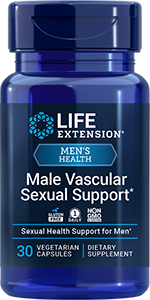
The third benefit of nitric oxide is also tied to getting blood flowing, but in this case, in an area that matters particularly for men! Healthy blood flow is crucial for a man's healthy sexual response, and a number of nutrients have been studied for their role in promoting healthy male sexual function through nitric oxide production.
Nitric oxide is involved in the healthy sexual response of men by encouraging increased circulation where it's needed most. Supporting nitric oxide production through daily nutritional supplements may help maintain these healthy physiological responses in men over time.
Research has found benefits for Pycnogenol® and L-arginine, two well-known promoters of nitric oxide production, in the area of men's sexual health. Studies have also found a black ginger extract, known as Thai black ginger, encourages nitric oxide production for healthy blood flow and male sexual response. In a randomized, double-blind clinical study, K. parviflora black ginger extract promoted a healthy male sexual response as compared to placebo. A follow-up study found similar results, with men reporting healthy sexual function and satisfaction after 30 days.
4. Exercise performance and recovery

Nitric oxide not only supports healthy circulation but may also contribute to exercise performance by improving blood flow to working muscles. During exercise, efficient blood flow helps deliver oxygen and nutrients to working muscles, fueling them for your workout. This circulatory support may help you hit your fitness goals and feel good about the results of your time in the gym.
That healthy circulation also helps supply the nutrients your muscles need for a healthy recovery, especially when your heart-healthy routine includes regular exercise. Nitric oxide production and healthy blood flow help to replenish your muscles' post-workout energy so you are ready to do it all over again tomorrow (or the next day, depending on your cardio plan).
L-arginine is a well-known supplement in the fitness space, especially when it is in the form of a powder formula that combines L-arginine with L-ornithine, a protein-building amino acid that promotes muscle strength and recovery after exercise.
How do nitric oxide supplements work?
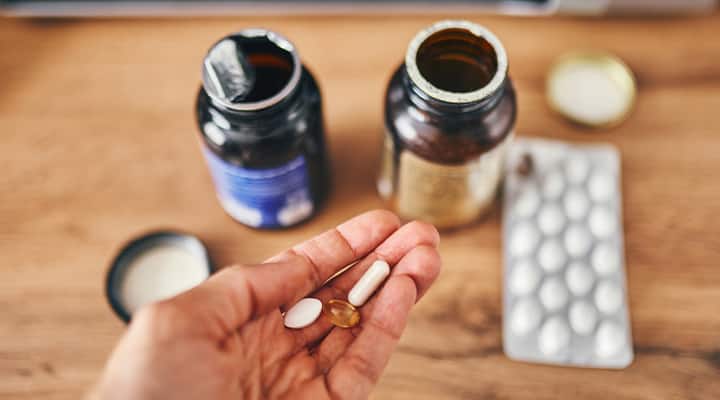
Despite the name, nitric oxide supplements don't actually contain nitric oxide. Remember that nitric oxide is a gas, which would make it pretty hard to bottle up in a capsule. (Yes, that would basically defy physics.) Instead, NO supplements provide nutrients and compounds that help your body produce its own nitric oxide. There are two main ways this happens:
The L-arginine pathway:
The most popular nitric oxide supplements provide an NO precursor, the amino acid L-arginine, which the body converts into nitric oxide through enzymatic processes. Some formulations are designed to go a step further by helping these ingredients remain available in the body for longer. For example, certain stabilized forms of L-arginine are formulated to help maintain circulating arginine levels for extended periods compared to standard forms.The dietary nitrate pathway:
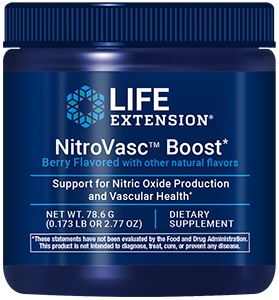
Other supplements contain plant-based nitrates, which follow a different route in the body to ultimately form nitric oxide.
With both options, once absorbed, these compounds are used by the body to generate nitric oxide through natural metabolic processes. The end result is the same: support for healthy blood vessel function and circulation.
| Benefit | Role of nitric oxide | Recommended supplement ingredients |
|---|---|---|
Healthy blood flow and circulation |
Promotes vasodilation—the relaxation and widening of blood vessels |
Nattokinase enzyme with pine bark extract |
Healthy blood pressure and cardiovascular health |
Helps relax the smooth muscle within blood vessel walls so they can dilate properly |
L-arginine or stabilized arginine silicate |
Male sexual health |
Encourages increased circulation where it's needed most for a healthy sexual response in men |
Black ginger extract |
Exercise recovery |
Supports blood flow to working muscles to help deliver oxygen and nutrients |
L-arginine with the amino acid ornithine |

Explore Our Best Heart Health Supplements
Frequently asked questions about nitric oxide supplements

Who takes nitric oxide supplements?
People typically use nitric oxide supplements when they're looking to support healthy circulation and blood flow, exercise recovery, a healthy male sexual response or overall cardiovascular health. Older individuals may also opt for NO supplements. Supporting nitric oxide levels is especially relevant as we age, because the body's natural nitric oxide production can become less efficient over time.
When should you take NO supplements?
As for timing, most nitric oxide supplements can be taken at any time of day. Many people choose to take them before exercise to help support blood flow during activity, while others take them daily as part of their healthy lifestyle routine. Some nitric oxide supplements may include stimulants like caffeine, so those are usually best taken earlier in the day.
Remember to always follow the directions on the product label or the advice of a healthcare provider when taking a supplement. If the directions do not specify taking a supplement with meals or at a certain time, consistency should guide your decisions. Pick a time that best fits your lifestyle, such as taking it with your other supplements or taking it with your morning meal.
Key Takeaways
- Nitric oxide supplements don't contain NO directly—they provide the building blocks your body uses to make it.
- Production of nitric oxide can decline with age, making support from diet and supplements increasingly important.
- Many people choose to take them before exercise to help support blood flow during activity, while others take them daily as part of a healthy routine.

References
- Andrabi SM, et al. "Nitric Oxide: Physiological Functions, Delivery, and Biomedical Applications." Adv Sci (Weinh). October 2023. https://pubmed.ncbi.nlm.nih.gov/37632708/
- Bondonno CP, et al. "Dietary Nitrate, Nitric Oxide, and Cardiovascular Health." Crit Rev Food Sci Nutr. September 2016. https://pubmed.ncbi.nlm.nih.gov/25976309/
- Cyr AR, et al. "Nitric Oxide and Endothelial Dysfunction." Crit Care Clin. April 2020. https://pubmed.ncbi.nlm.nih.gov/32172815/
- Gonzalez AM, et al. "Supplementation with Nitric Oxide Precursors for Strength Performance: A Review of the Current Literature." Nutrients. January 2023. https://pubmed.ncbi.nlm.nih.gov/36771366/
- Greenberg D, et al. "Inositol-Stabilized Arginine Silicate Reduces Exercise Induced Muscle Damage and Increases Perceived Energy." Journal of Exercise and Nutrition. July 2023. https://www.journalofexerciseandnutrition.com/index.php/JEN/article/view/141
- Gonzalez M, et al. "Promotion of nitric oxide production: mechanisms, strategies, and possibilities." Front Physiol. January 2025. https://pubmed.ncbi.nlm.nih.gov/39917079/
- Jones AM, et al. "Dietary Nitrate and Nitric Oxide Metabolism: Mouth, Circulation, Skeletal Muscle, and Exercise Performance." Med Sci Sports Exerc. February 2021. https://pubmed.ncbi.nlm.nih.gov/32735111/
- Kinlay S, et al. "Endothelium-Derived Nitric Oxide Regulates Arterial Elasticity in Human Arteries In Vivo." Hypertension. November 2001. https://www.ahajournals.org/doi/full/10.1161/hy1101.095329
- Komorowski J, et al. "A Pharmacokinetic Evaluation of the Duration of Effect of Inositol-Stabilized Arginine Silicate and Arginine Hydrochloride in Healthy Adult Males." The FASEB Journal. April 2016. https://faseb.onlinelibrary.wiley.com/doi/abs/10.1096/fasebj.30.1_supplement.690.17
- Lundberg JO, et al. "Nitric oxide signaling in health and disease." Cell. August 2022. https://pubmed.ncbi.nlm.nih.gov/35931019/
- Olas B. "The Cardioprotective Role of Nitrate-Rich Vegetables." Foods. February 2024. https://pubmed.ncbi.nlm.nih.gov/38472804/
- Rogers JM, et al. "Acute effects of Nitrosigine® and citrulline malate on vasodilation in young adults." J Int Soc Sports Nutr. February 2020. https://pubmed.ncbi.nlm.nih.gov/32093766/

Always be in the know!
Access the latest deals, wellness news, expert health tips & more!
Popular Supplement