Why Do Joint Health Supplements Contain Krill Oil?
Published: August 2026
At a Glance
- Krill are cold water ocean creatures similar to shrimp that are rich in omega-3s.
- Although both provide omega-3s, krill oil and fish oil support health in different ways.
- Research suggests combining krill oil, hyaluronic acid and astaxanthin may support overall joint comfort.
Have you ever heard of a whale complaining about joint discomfort? Their secret may be in their diet! Filter-feeding whales eat krill—literally tons of it. Fun fact: The largest animal to ever live on earth, the blue whale, has been reported to eat up to 16 tons a day of krill.
Humans don't need nearly this quantity for a boatload of benefits, fortunately. Studies have found that the combination of Antarctic krill oil, a special kind of hyaluronic acid, and astaxanthin may just be the secret to joint health and comfort.
So, let's get into the nitty-gritty of these nutrients and how they can give you a leg (or knee!) up on your joint supplement routine.
What is krill oil and what is it used for?

Krill oil comes from, well, krill! These tiny crustaceans resemble shrimp—think of them as shrimpy shrimps. You'll find them in cold waters all over the world, but mostly near the coast of Antarctica. Don't let their size fool you though: krill are tiny but mighty.
In particular, they are rich in omega-3 fatty acids! Better yet, when combined with hyaluronic acid and astaxanthin, krill oil has been clinically studied to support joint health.
What are the joint health benefits of krill oil?

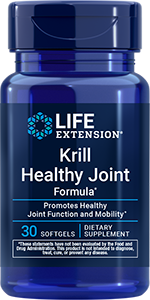
Krill oil's benefits for the joints have only been clinically studied when combined with two other joint-friendly nutrients:
Hyaluronic acid (HA)
—This compound plays an important role in keeping your joints sailing smoothly. That's because hyaluronic acid is already in your joints, and it's a critical factor in keeping them properly lubricated and flexible.Astaxanthin
—Astaxanthin is a carotenoid, like lutein and beta-carotene, produced by microalgae and bacteria and is a potent antioxidant (even stronger than vitamin E!). It's a regular part of the krill diet, since it's found in sea plants. This nutrient supports a healthy inflammatory response and enhances mitochondrial function—giving those little energy-generation powerhouses inside your cells a boost. (Fun fact: salmon and flamingos owe their vibrant, rosy hue to astaxanthin, which enters their diet through small crustaceans like krill, which feast upon sea plants rich in this nutrient.)
Together with krill oil, this trio works—synergistically, to use a million-dollar word—providing stronger joint health support as a team than they would individually.
Here's what those benefits include:
Overall joint comfort.
First and foremost, people take krill combo supplements to promote comfort. In a study comparing krill oil with hyaluronic acid and astaxanthin to placebo and a glucosamine/chondroitin formula, participants voted the krill oil blend superior for joint comfort after just two weeks—with the gap between them growing wider by eight weeks.Freedom of movement and physical function.
It's hard to exercise when your knee keeps "talking" to you—but even simple things, like opening a jar or reaching to grab something on a shelf, can be a challenge when your joints don't cooperate. Fortunately, krill oil blend supplements show promise for anyone trying to stay active: In one study, people with knee or hip concerns taking a combination of krill oil, HA and astaxanthin reported improvements in joint function after 12 weeks.Helps inhibit inflammatory factors to support joint comfort.
Whether it's your joints, vital organs or brain, promoting a healthy inflammatory response is key to head-to-toe health. And krill oil with astaxanthin and hyaluronic acid are exciting players in promoting a healthy inflammatory response.Absorption.
Thanks to its rich phospholipid content, the omega-3 fatty acids in krill combination supplements are well absorbed, making it easier to protect your joints from within.
What is the best way to take krill oil?

Take the studied dose
To get the target benefit of any supplement, look to the clinical studies it was inspired by. In the case of krill oil, this means finding a specialty blend with astaxanthin and hyaluronic acid.
It's also important to take the dosage that was studied to be beneficial. If you're not sure, check out the supplement facts. The recommended dosage on the label should match the dose used in the study.
Choose a reliable and quality brand
Taking supplements is an important part of a healthy lifestyle. That also means getting your supplements from a source that values science and purity—especially one that makes the results of those tests available to you. Maria Tintorê, MD, who runs research and development for the world's leading supplier of krill oil used in the manufacturing of supplements, urges consumers to be discerning. "Not all krill oil is created equal," Dr. Tintorê said. "Quality matters, and it can make a real difference in its everyday benefits. The best krill oil starts with sustainably harvested, high-quality krill."
Of course, cost and convenience matter too, so you should take them all into account. But keep quality foremost in your mind when making these important choices.
"Not all krill oil is created equal. Quality matters, and it can make a real difference in its everyday benefits. The best krill oil starts with sustainably harvested, high-quality krill."
Safety first
Always follow label instructions. In general, krill oil is well tolerated, but keep in mind that krill is a shellfish (crustacean). If you have a shellfish allergy, consult your healthcare practitioner before beginning supplementation with a krill oil blend—or any supplement for that matter!
Is krill oil different than fish oil?
Yes. While krill oil and fish oil are both sources of omega-3 fatty acids, scientific studies have not identified identical health benefits. This ultimately means you'd take a fish oil supplement for a different reason than you'd take a krill combo supplement.
Here's a closer look at their individual benefits:
| Health Benefit | Krill Oil Joint Supplement | Fish Oil |
|---|---|---|
| Joint health & comfort | ✔ | X |
| Healthy inflammatory response | ✔ | ✔ |
| Heart health | X | ✔ |
| Already-healthy triglycerides | X | ✔ |
| Brain health | X | ✔ |

Explore Our Best Joint Health Supplements
Frequently asked questions about krill oil

Ready to add krill oil to your routine? Here's what you need to know about supplementing.
I take fish oil. Can I just add hyaluronic acid and astaxanthin?
No. Remember that fish oil is not krill oil! And if you really want to maximize joint health benefits, you have to look for ingredients or krill oil combinations (like ones that include HA and astaxanthin) that have clinical studies for joint support behind them.
And as with any supplement, it's also important to take dosing and standardizations into account to ensure you're making the most of each nutrient's benefits.
Which has more omega-3s, krill oil or fish oil?
Fins down, fish oil is a more potent source of omega-3s—and there's a reason for it! Since krill are so small, their intake is smaller, along with their omega-3 content. Fish are larger so their intake, and thus their omega-3 content, is greater.
If you're looking for head-to-toe health omega-3 benefits, fish oil is the way to go. But for your joints, look for a krill oil that's been combined with hyaluronic acid and astaxanthin.
Does krill oil or olive oil have more omega-3s?
It shouldn't surprise you, but krill and olive oil aren't exactly similar.
Krill oil and olive oil have different fatty acid compositions—olive oil isn't a source of omega-3 at all. While krill oil provides polyunsaturated fatty acids and contains phospholipids and astaxanthin, olive oil provides omega-9 in the form of monounsaturated fatty acids.
Key Takeaways
- Krill omega-3 fatty acids are well absorbed due to their rich phospholipid content.
- A special krill oil blend has been clinically studied to support overall joint health, freedom of movement and physical function.
- Choosing sustainably sourced, high-quality krill oil matters to maximize its benefits.


References
- Attri N, et al. "Health promoting benefits of krill oil: mechanisms, bioactive combinations, and advanced encapsulation technologies." Food Sci Biotechnol. November 2024. https://pmc.ncbi.nlm.nih.gov/articles/PMC11914527/
- Ferro CJ, et al. "Fish oil supplements in patients with chronic kidney disease." Clin Kidney J. May 2026. https://pubmed.ncbi.nlm.nih.gov/42293365/
- Gupta RC, et al. "Hyaluronic Acid: Molecular Mechanisms and Therapeutic Trajectory." Front Vet Sci. June 2019. https://pmc.ncbi.nlm.nih.gov/articles/PMC6603175/
- Hill WS, et al. "Correction: Hill et al. A Multicenter, Randomized, Double-Blinded, Placebo-Controlled Clinical Trial to Evaluate the Efficacy and Safety of a Krill Oil, Astaxanthin, and Oral Hyaluronic Acid Complex on Joint Health in People with Mild Osteoarthritis." Nutrients. 2023. https://pmc.ncbi.nlm.nih.gov/articles/PMC11206674/
- Hill WS, et al. "A Multicenter, Randomized, Double-Blinded, Placebo-Controlled Clinical Trial to Evaluate the Efficacy and Safety of a Krill Oil, Astaxanthin, and Oral Hyaluronic Acid Complex on Joint Health in People with Mild Osteoarthritis." Nutrients. August 2023. https://pmc.ncbi.nlm.nih.gov/articles/PMC10490060/
- Valachová K, et al. "Hyaluronan: Sources, Structure, Features and Applications." Molecules. February 2024. https://pmc.ncbi.nlm.nih.gov/articles/PMC10856924/

Always be in the know!
Access the latest deals, wellness news, expert health tips & more!
Popular Supplement