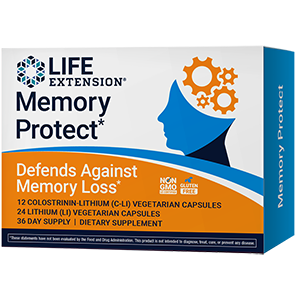
Lithium Supplements: Low-dose Benefits & Forms
Published: March 2023 | Updated: March 2026
At a Glance
- Tiny doses of lithium have big benefits for your brain function, especially as you age.
- Research suggests that low doses of lithium play a role in healthy aging.
- Lithium supplements deliver low, controlled doses of this beneficial mineral.
When you hear the word "lithium," what comes to mind? Nirvana's 1991 hit? Or perhaps a scene from "One Flew Over the Cuckoo's Nest"? Lithium first hit the scene in the mid-19th century but soon faded away—that is, until John Cade reintroduced it to help support mental health around 1949. And in 1970, the U.S. became the 50th country to allow lithium in the marketplace.
Perhaps because of its colorful history, there's a misconception that lithium's only benefit is for mood—something you take to keep an even keel.
But certain types of lithium, in much smaller doses, are available as supplements—and they are used for very different reasons than "old school" lithium. And while the dosages of lithium are tiny, the potential benefits of lithium supplements are not exactly minor (unless you consider brain health and longevity inconsequential!).
Let's dive into what lithium is, how it works, and in what ways lithium supplements might benefit you.
What is lithium and why is it found in supplements?

In its simplest form, lithium is a naturally occurring trace mineral originating from rocks and subsoil. Small amounts are found in food and water.
Supplements that deliver low, controlled lithium doses are popular because it turns out that lithium benefits brain health in a number of ways. As a low-dose supplement, lithium orotate (and other forms of this mineral) falls under the umbrella category of nootropics. Nootropics have a reputation for boosting mental focus and attention.
Also, low trace amounts of lithium in drinking water have been associated with longevity in observational studies, suggesting that lithium plays a role in healthy aging. This benefit has contributed to the popularity of low-dose supplements.
Lithium supplements are measured in micrograms. This dose helps support brain function and cognitive health—but not mood health. Evidence also shows a correlation between long-term lithium use and healthy telomere length (the endcaps on our DNA that protect chromosomes and cellular health).
What are the potential benefits of low-dose lithium supplements?

Low-dose lithium supplements support cognitive function and help maintain a healthy brain, especially as you age.
This contributes to another benefit of low-dose lithium: promoting healthy aging.
Lithium orotate at the 1000 mcg level helps protect your body and brain against oxidative stress and may help maintain DNA health.
In fact, if you're over the age of 60, you might consider starting to take a low-dose oral lithium supplement even as a proactive measure.
How does lithium support brain health?

Lithium plays many roles in the body and is crucial to brain function.
Linked to brain health and healthy brain aging.
Lithium helps maintain youthful, healthy cognition and memory by inhibiting normal, age-related changes in the brain—and can even help protect brain function in healthy individuals.Helps defend against oxidative stress.
The antioxidant action of lithium helps protect against free radicals, helping defend your brain and body against everyday stressors.Involved in cellular signaling pathways.
Lithium modulates key intracellular signaling pathways both directly and indirectly. These signaling pathways are crucial for the brain to function properly and healthily.
| Brain Benefit | How It Works |
|---|---|
| Healthy brain aging | Helps protect against age-related changes |
| Protects brain from oxidative stress | As an antioxidant, lithium protects the brain against free radicals |
| Supports brain function | Affects signaling pathways that are key to healthy brain function |

Explore Our Best Brain Health Supplements
What forms of lithium are used in supplements?

Most often, lithium supplements contain lithium orotate; indeed, if a supplement simply says "lithium" on its label, then it's most likely referring to a low dose of lithium orotate. Orotic acid, or orotate, is used as a binder in mineral supplements.
There are other types of lithium used in supplements, however. Lithium aspartate is derived from aspartic acid, which is an amino acid. There's also lithium citrate, which is a chemical compound of lithium and citric acid.
Different types of lithium require different doses for efficacy. For example, some research suggests that lithium orotate might be more effective at a lower dosage compared to other forms. This is why you might find low-dose lithium orotate supplements in greater abundance than lithium aspartate or citrate.
Pro tip: If you've heard about lithium carbonate, perhaps you're wondering what that is. Carbonate is made of carbon and oxygen and can act as a binding partner for lithium. Lithium carbonate is not a supplement, does not have the same use case or benefits, and must be prescribed by a healthcare professional.
“When it comes to supplemental lithium, more is not better. The healthy aging and brain health benefits of low-dose lithium have been shown from small daily amounts.”
How much lithium is typically used in supplements?
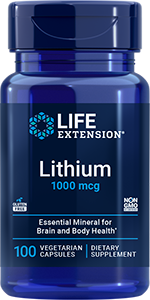
Daily supplements will contain various concentrations of lithium, generally measured in micrograms or low milligrams. For example, Life Extension's brain health supplements include a lithium supplement with a dose of 1,000 mcg (or 1 mg) of lithium from lithium orotate.
"When it comes to supplemental lithium, more is not better," said Dr. Michael A. Smith, MD, the Director of Education for Life Extension. "The healthy aging and brain health benefits of low-dose lithium have been shown from small daily amounts."
Is lithium in supplements safe for long-term use?
Low doses of lithium, like those found in supplements, are generally well tolerated. As always, we recommend that you look into how a brand sources its ingredients, along with what additional ingredients appear in its supplement. You also want to confirm what type of lithium is in the supplement and ensure that you are indeed micro-dosing with it.
You should always discuss your options with your healthcare provider before starting a new supplement or lifestyle change.
High doses of lithium are not considered dietary supplements and should only be administered under the guidance of a qualified healthcare professional.
Can you get lithium from food?

If you're looking to boost your lithium levels with dietary choices, certain foods and spices contain it. These include:
- Potatoes
- Mineral waters (check for ones that are lithium-enriched)
- Milk
- Tomatoes
- Cereal
- Eggs
- Cabbage
- Nutmeg
- Cumin
- Coriander seeds
Elemental lithium might also be present in your drinking water, but the amount varies by location—and your amounts might be less if your water is filtered or distilled.
Very often, it's difficult to get what you need from food and water alone—the amount of lithium is just too small to experience its benefits. This is why a low-dose lithium supplement, which delivers a consistent daily dose, is an excellent way to support healthy cognitive function and overall wellness.
Be smart about your brain health. Take our health needs quiz for a personalized nutrient recommendation.
Key Takeaways
- Lithium plays many roles in the body and is crucial to brain function.
- Daily supplements contain doses of lithium measured in micrograms or low milligrams.
- Lithium supplements support cognitive function, healthy aging and DNA health.

References
- Bertollo AG, et al. "Lithium Therapeutic Functions: An Update on Pharmacokinetics, Pathophysiological Mechanisms of Action, Toxicity, and Side Effects." Mol Neurobiol. February 2026. https://pubmed.ncbi.nlm.nih.gov/41627641/
- Fajardo VA, et al. "Trace lithium in Texas tap water is negatively associated with all-cause mortality and premature death." Appl Physiol Nutr Metab. April 2018. https://pubmed.ncbi.nlm.nih.gov/29206474/
- Fraiha-Pegado J, et al. "Trace lithium levels in drinking water and risk of dementia: a systematic review." Int J Bipolar Disord. August 2024. https://pmc.ncbi.nlm.nih.gov/articles/PMC11364728/
- Ghanaatfar F, et al. "Is lithium neuroprotective? An updated mechanistic illustrated review." Fundam Clin Pharmacol. February 2023. https://pubmed.ncbi.nlm.nih.gov/35996185/
- Hamstra SI, et al. "Beyond its Psychiatric Use: The Benefits of Low-dose Lithium Supplementation." Curr Neuropharmacol. 2023. https://pmc.ncbi.nlm.nih.gov/articles/PMC10227915/
- Iordache AM, et al. "Lithium Content and Its Nutritional Beneficence, Dietary Intake, and Impact on Human Health in Edibles from the Romanian Market." Foods. February 2024. https://pubmed.ncbi.nlm.nih.gov/38397569/
- Pacholko AG, Bekar LK. "Lithium orotate: A superior option for lithium therapy?" Brain Behav. August 2021. https://www.ncbi.nlm.nih.gov/pmc/articles/PMC8413749/
- Pacholko AG, Bekar LK. "Lithium orotate is more potent, effective, and less toxic than lithium carbonate in a mouse model of mania." bioRxiv. May 2022. https://www.biorxiv.org/content/10.1101/2022.05.01.490227v1.full
- Post RM. "The New News about Lithium: An Underutilized Treatment in the United States." Neuropsychopharmacology. April 2018. https://www.ncbi.nlm.nih.gov/pmc/articles/PMC5854802/
- Shorter E. "The history of lithium therapy." Bipolar Disord. June 2009. https://www.ncbi.nlm.nih.gov/pmc/articles/PMC3712976/
- Strawbridge R, et al. "Identifying the neuropsychiatric health effects of low-dose lithium interventions: A systematic review." Neuroscience & Biobehavioral Reviews. January 2023. https://www.sciencedirect.com/science/article/pii/S014976342200464X
- Szklarska D, Rzymski P. "Is Lithium a Micronutrient? From Biological Activity and Epidemiological Observation to Food Fortification." Biol Trace Elem Res. May 2019. https://www.ncbi.nlm.nih.gov/pmc/articles/PMC6443601/
- Zarse K, et al. "Low-dose lithium uptake promotes longevity in humans and metazoans." Eur J Nutr. August 2011. https://pubmed.ncbi.nlm.nih.gov/21301855/

Always be in the know!
Access the latest deals, wellness news, expert health tips & more!
Memory & Cognition Favorite