When to Take DHEA: Morning vs. Night for Maximum Benefits
Published: March 2024 | Updated: August 2025
- Hormone health
- Memory and cognition
- Sexual function
- Bone health
- Muscle mass and strength
- Overall well-being
But there has been some discussion over whether it's better to take DHEA in the morning—as is generally recommended—or at night.
Health experts and clinical guidelines recommend taking DHEA in the morning to match your body's DHEA production cycle and maximize its benefits. However, some sources have stated that taking this supplement at night may give them an extra boost while they sleep.
We'll explore the benefits of DHEA and discuss the established benefits of taking this supplement in the morning.

Explore Our Best Hormone Balance Supplements
Why take DHEA in the morning?

Your body's DHEA production follows a daily cycle: It reaches its highest point in the early morning and then slowly drops as the day goes on. This daily rhythm is tied in with other important hormones, like cortisol, which peak in the morning to help you feel alert and manage stress throughout the day.
Scientists have found that timing your DHEA supplementation with your DHEA production maximizes its benefits and works in sync with your body's natural rhythm.
Why do some people take DHEA at night?

- Convenience. Many people have an established nighttime routine and prefer to take all their daily vitamins and supplements before bed so they don't have to think about it in the morning.
- Nighttime support. Some think that taking DHEA at night can support the body's nighttime recovery cycle or align with other hormones, like growth hormones, which rise during sleep.
What the science says: Since DHEA promotes hormone balance, brain function, bone health, and more, it seems logical to assume that taking it at night would encourage these benefits while you sleep. In reality, though, respecting your body's inherent circadian rhythm is key to getting the most out of this supplement. Sticking with a morning dose of DHEA is essential for supporting your body's natural patterns.
DHEA timing: what the science says

Morning results:
A study in older adults found that taking DHEA in the morning supported the body's daily pattern of serum DHEA and promoted a healthy cortisol/DHEA ratio more commonly seen in younger adults.
Nighttime results:
One reason some people consider taking DHEA at night is to promote recovery while they sleep. However, a small study in postmenopausal women found that taking DHEA at night can unpredictably affect sleep patterns and hormone levels during the night.
Clinical guidelines, including those from the Endocrine Society, recommend a single oral dose of DHEA in the morning. This supports normal DHEA levels and keeps lab test results simple and reliable.

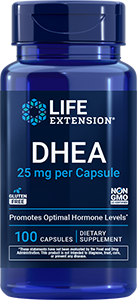
Explore Our Best DHEA Supplements
DHEA supplementation:

Keeping DHEA at healthy levels over the years can make a difference in staying strong, feeling vital, and keeping your mind sharp. When taken consistently at 50mg a day or higher, DHEA supplementation has been linked to several important health benefits:
- Promoting healthy hormone balance. One of DHEA's biggest roles in the body is serving as a building block for other hormones like estrogen and testosterone. Supplementing with DHEA can help maintain a healthy balance of these hormones as levels decline with age.
- Support for sturdy bones. For many adults, especially postmenopausal women, bone mineral density drops with age. DHEA has been shown to support bone strength and increase bone mineral density in older adults.
- Supporting sexual health. One of the less fun parts of aging is the hit it can take on your sex life. The good news? Studies show DHEA can help support healthy sexual function and satisfaction.
- Increased muscle mass and strength. While DHEA won't replace the need for strength training, it can help you keep the muscle you work so hard for. Research has linked DHEA to increased lean muscle mass and muscle strength, which are both key for staying strong as we age.
- Supporting brain health. Keeping your mind sharp is a big part of healthy aging. Research points to DHEA as one more tool that may help maintain memory and cognitive health as you get older.
Does DHEA Help You Fall Asleep?
The idea that DHEA supports better sleep is one of the driving forces behind the mistaken belief in taking DHEA at night. However, this isn't how DHEA naturally works in the body, and taking it at the wrong time could actually have the opposite effect for some people, as research has shown.
Taking DHEA in the morning supports overall wellness and works in tandem with your body's natural rhythms. You'll be getting the most out of your DHEA supplement and reducing the risk of interfering with a good night's sleep.
Choosing the right DHEA supplement

It's not enough to know when to take DHEA. It's just as important to choose a supplement that supports your health goals safely and effectively.
- Talk to a doctor. DHEA plays an important role in hormone production, so always talk to your doctor before adding this—or any—supplement to your routine, especially if you are already under a doctor's care. Your doctor can help you determine the right dose and check your DHEA-S (DHEA sulfate) levels to make sure you're staying within a healthy range.
- Select a dosage that fits your needs. Research points to benefits at a dose of 50 mg per day or higher. That said, the right amount can vary depending on your age, current health, and specific goals.
- Know your DHEA levels. It's also a good idea to continue testing after you start supplementation. DHEA serum blood tests are recommended 3 to 6 weeks after beginning supplementation to help fine-tune your dose and keep your DHEA levels where they should be.
- Brand matters. Choose a supplement from a reputable brand that uses high-quality ingredients and follows strict standards for purity and potency. Always follow the dosing instructions on the label to get the best results safely.
Want to maintain healthy hormone levels but not sure where to start? Our health needs quiz can give you a personalized recommendation on the nutrients that may be right for you.


References
- Bloch M, et al. "The use of dehydroepiandrosterone in the treatment of hypoactive sexual desire disorder: a report of gender differences." Eur Neuropsychopharmacol. August 2013. https://pubmed.ncbi.nlm.nih.gov/23084789/
- Bornstein SR, et al. "Diagnosis and Treatment of Primary Adrenal Insufficiency: An Endocrine Society Clinical Practice Guideline." The Journal of Clinical Endocrinology & Metabolism. February 2016. https://academic.oup.com/jcem/article/101/2/364/2810222
- Boxer RS, et al. "Effects of dehydroepiandrosterone (DHEA) on cardiovascular risk factors in older women with frailty characteristics." Age Ageing. July 2010. https://pubmed.ncbi.nlm.nih.gov/20484057/
- Caufriez A, et al. "Effects of a 3-week dehydroepiandrosterone administration on sleep, sex steroids and multiple 24-h hormonal profiles in postmenopausal women: a pilot study." Clin Endocrinol (Oxf). November 2013. https://pubmed.ncbi.nlm.nih.gov/23488643/
- Ceresini G, et al. "Evaluation of the circadian profiles of serum dehydroepiandrosterone (DHEA), cortisol, and cortisol/DHEA molar ratio after a single oral administration of DHEA in elderly subjects." Metabolism. April 2000. https://pubmed.ncbi.nlm.nih.gov/10778884/
- Mandal S, et al. "DHEA on Sexual Function in Sheehan Syndrome: A Randomized Double-Blind Placebo-Controlled Crossover Trial." J Clin Endocrinol Metab. July 2022. https://pubmed.ncbi.nlm.nih.gov/35481572/
- Merritt P, et al. "Administration of dehydroepiandrosterone (DHEA) increases serum levels of androgens and estrogens but does not enhance short-term memory in post-menopausal women." Brain Res. November 2012. https://pubmed.ncbi.nlm.nih.gov/22985672/
- Stangl B, et al. "Administration of dehydroepiandrosterone (DHEA) enhances visual-spatial performance in postmenopausal women." Behav Neurosci. October 2011. https://pmc.ncbi.nlm.nih.gov/articles/PMC3715689/
- Tang J, et al. "The Utilization of Dehydroepiandrosterone as a Sexual Hormone Precursor in Premenopausal and Postmenopausal Women: An Overview." Pharmaceuticals (Basel). December 2021. https://pubmed.ncbi.nlm.nih.gov/35056103/
- Villareal DT, Holloszy JO. "DHEA enhances effects of weight training on muscle mass and strength in elderly women and men." Am J Physiol Endocrinol Metab. November 2006. https://pubmed.ncbi.nlm.nih.gov/16787962/
- Weiss EP, et al. "Dehydroepiandrosterone replacement therapy in older adults: 1- and 2-y effects on bone." Am J Clin Nutr. May 2009. https://pubmed.ncbi.nlm.nih.gov/19321570/

Always be in the know!
Access the latest deals, wellness news, expert health tips & more!
Hormone Balance Favorite