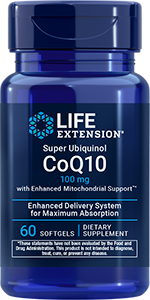
Can You Take Fish Oil With CoQ10? Here’s What the Science Says
Published: October 2025
You've heard the phrase "teamwork makes the dream work." Well, it's not just a catchy line your boss throws around to get you pumped up about a group project. From energy and cell health to heart and cognitive function, both CoQ10 and fish oil are well-known for their benefits in different ways, and both have plenty of research to back them up.
In particular, people following a heart-healthy lifestyle often have one or both of these supplements in their routine. Here's why:
- CoQ10 helps support the heart (and other high-energy organs) at the cellular level
- Fish oil helps maintain already-healthy cholesterol levels
Let's explore how these two nutrients work together to support your health—specifically, the health of your heart—and why you can and should take this combo!
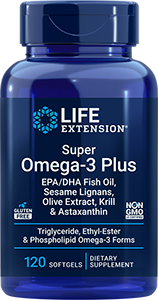
Why combine CoQ10 with fish oil?

Let's dive deeper into how these nutrients work on their own—starting with coenzyme Q10, aka CoQ10.
CoQ10 is, as its namesake suggests, a coenzyme and non-protein molecule that helps enzymes (proteins) do their jobs. It is also considered an essential antioxidant that helps protect cells against oxidative stress.
CoQ10 can be found in almost all cells throughout the body, and your body has a high requirement for it to support healthy mitochondrial function. This process helps your hard-working organs produce the energy they need to thrive at the cellular level through the production of ATP.
CoQ10 is found in high concentrations in the heart, brain, liver and kidneys, where energy demands are high. But unfortunately, as the body ages, CoQ10 levels naturally decline.
You can find CoQ10 in a few foods, including meat, dairy, eggs and legumes. While adding more of these nutritious foods to your diet is a great idea, it won't necessarily have a huge impact on your CoQ10 levels. You'll get a much more concentrated dose when you choose a CoQ10 supplement.
Now, what about fish oil?

Fish oil refers to oil derived from fish that is rich in omega-3 fatty acids. There are two omega-3 fatty acids that have gotten significant attention for their benefits:
- Eicosapentaenoic acid (EPA)
- Docosahexaenoic acid (DHA)
More often than not, the term "fish oil" refers to the supplement form of these omega-3 fatty acids.
If you know anything about fish oil, you probably know many people take omega-3s for heart health—and if you want to get into specifics, omega-3 EPA and DHA have been well-studied to help maintain healthy cholesterol and triglyceride levels already within normal limits—but there are plenty of other positive effects of fish oil.
You should also know that omega-3s are essential nutrients because the body cannot produce enough on its own. You must get these fatty acids from food and supplements.
ALA, alpha-linolenic acid, is another omega-3 that comes from plant oils, such as flax, chia, walnuts and soy. In most people, only very small amounts of ALA convert to EPA and DHA. The best sources of EPA and DHA are found in many cold-water fish.
However, most people don't consume enough fish or other seafood to get optimal omega-3 levels. Taking omega-3 fish oil supplements is a good idea—even for those with the healthiest diets. It's especially important to supplement if you follow a vegan diet or don't eat fish.
Compare and Contrast: CoQ10 vs. Omega-3 Supplements
Let's break down the specific benefits of each a little more:
| Benefits | Fish Oil | CoQ10 |
|---|---|---|
| Fights general fatigue | No | Yes |
| Heart health | Yes | Yes |
| Liver health | No | Yes |
| Promotes a healthy inflammatory response |
Yes | Yes |
| Cognitive health | Yes | No |
| Cell health | No | Yes |

While this table isn't perfectly exact (there is evidence that fish oil can benefit liver and cell health), as you can see, among their shared benefits, both of these nutrients support heart health. But, not in exactly the same way.
On one hand, you have CoQ10 helping to keep cells in and around the heart energized and free from the damaging effects of free radicals. On the other hand, you have fish oil helping maintain already-healthy levels of cholesterol and triglycerides.
The fact that these nutrients overlap in complementary ways explains why the sum of the parts is greater than the whole. Think about the Secret Service for a moment. The agents protect from all different entry points. They have to in order to effectively do their job.
Similarly, by combining CoQ10 and fish oil, you support other parts of your health from multiple fronts. It's like having Secret Service agents guarding you from every angle. It's your very own dream team—and who wouldn't want that?

Explore Our Best Heart Health Supplements
Who should take fish oil and CoQ10?

Anyone can take a CoQ10 and fish oil combination for heart health. The decision to take both depends on your particular long-term health goals.
Review the benefits of each noted above. If any of those align with your current health status or family history, it might be time to step it up a notch.
Those who may benefit most from fish oil and CoQ10 supplements include those who:
- Follow a vegan diet (you can take vegetarian DHA to avoid animal byproducts)
- Have an aversion to fish or other seafood
- Don't eat at least 1-1/2 cups of fruits and 2 cups of vegetables per day
- Don't get a good variety of colors in their diet (red, blue, green, yellow, orange, purple)
Be mindful of dosing and supplement quality

High-quality fish oil omega-3 supplements can be hard to find, but there are things you can do to ensure you're choosing wisely. First, read the label! The supplement facts panel will tell you exactly how much omega-3 fatty acids you're getting per serving. Then, of course, confirm the serving size you're taking or the serving size you are willing to take.
Next, confirm the integrity of the product by asking the manufacturer for a certificate of analysis, or COA. The COA gives you all the pertinent details, including product identity, potency, expected expiration and any results from product testing.
To reduce your risk of exposure to heavy metals, mold and bacteria, you want to choose CoQ10 and fish oil supplements that are tested for quality assurance. For instance, omega-3 supplements certified by the International Fish Oil Standards (IFOS™) program are highly regarded as safe, pure and effective.
As for dosing, there's no consensus on the exact amount of EPA and DHA you need per day. However, the research studies on omega-3s have consistently included at least 1 gram per day of omega-3s, with some coming from EPA and some from DHA.
As far as CoQ10 formulas are concerned, studies suggest 200 mg daily for best results.
FAQs about fish oil and CoQ10

If you're looking for straightforward answers, you've come to the right place. These frequently asked questions should shore up whether adding omega-3 and CoQ10 supplements will work for you.
Q. Can I take fish oil and CoQ10 together daily?
- Yes, taking fish oil and CoQ10 together can be a smart and effective supplement strategy. There are many notable health benefits to taking both nutrients. But always speak to your healthcare provider before adding new supplements to your regimen.
Q. Should I choose a combined supplement or take them separately?
- There is no hard and fast rule that you need to take a product with fish oil and CoQ10 in the same formula. In fact, it is perfectly safe and effective to take separate formulas at the same time.
Q. How do dietary sources of omega-3 compare to supplementation?
- Unfortunately, the average American diet lacks these quality sources of omega-3s. If your diet is one of them, omega-3 supplements are a powerful alternative that can help fill in the gaps. Better yet, pair CoQ10 with omega-3 fatty acids and enjoy the benefits of this combo for your best heart health.
What other supplements work well when taken together?
Fish oil and CoQ10 aren't the only power duos! The following supplements are powerful on their own, but may be more powerful when taken together:
- Magnesium and potassium
- Vitamin C and iron
- Folic acid and vitamin B12
- Calcium and vitamin D
Pro tip: If you're still not sure what you need, take our heart health quiz to determine exactly which nutrients may best support your goals.


References
- Harris WS. "Recent studies confirm the utility of the omega-3 index." Current Opinion in Clinical Nutrition and Metabolic Care. March 2025. https://journals.lww.com/co-clinicalnutrition/fulltext/2025/03000/recent_studies_confirm_the_utility_of_the_omega_3.8.aspx
- Hou S, et al. "Efficacy and Optimal Dose of Coenzyme Q10 Supplementation on Inflammation-Related Biomarkers: A GRADE-Assessed Systematic Review and Updated Meta-Analysis of Randomized Controlled Trials." Mol Nutr Food Res. July 2023. https://pubmed.ncbi.nlm.nih.gov/37118903/
- Tsai IC, et al. "Effectiveness of Coenzyme Q10 Supplementation for Reducing Fatigue: A Systematic Review and Meta-Analysis of Randomized Controlled Trials." Front Pharmacol. August 2022. https://pubmed.ncbi.nlm.nih.gov/36091835/
- "Advice about Eating Fish." U.S. Food & Drug Administration. March 2024. https://www.fda.gov/food/consumers/advice-about-eating-fish
- "Coenzyme Q10." National Library of Medicine. April 2024. https://www.ncbi.nlm.nih.gov/books/NBK603562/
- "Omega-3 Supplements: What You Need To Know." National Center for Complementary and Integrative Health. November 2024. https://www.nccih.nih.gov/health/omega3-supplements-what-you-need-to-know

Always be in the know!
Access the latest deals, wellness news, expert health tips & more!
Popular Supplement