Functional Foods vs. Supplements: Which Deliver More Benefits?
Published: September 2025
As a registered dietitian, I always emphasize a "food first" approach to good health. Most of your nutrition should come from a balanced, varied diet focused on nutrient-dense whole foods. These foods provide not only vitamins and minerals, but also fiber, antioxidants, phytonutrients and the nutrient synergy that helps your body utilize them.
The best diets include functional foods: those with concentrations of bioactive compounds high enough to offer health benefits beyond basic nutrition. (Some people refer to these as "superfoods.") These foods provide levels of compounds that can actively support gut health, heart health and more.
Dietary supplements can also play an important supporting role, especially when health goals, dietary restrictions or certain stages of life make it hard to get enough specific nutrients from food alone. Supplements can help fill in nutrition gaps when needed and support digestive health and microbiome balance, among other benefits.
So, which packs in a bigger health punch: functional foods or supplements? Grab your fork, because functional foods are the winner. But that doesn't mean you should live on food alone. As the word "supplement" suggests, you should power up your plate with healthy foods, and supplement with vitamins, minerals and other dietary formulas to make sure you're getting optimal nutrition.
The key is learning how to use both supplements and functional foods in a complementary way to optimize your nutrition, no matter your age or goals.
Not sure how to do that? Not to worry: I've got a game plan right here for you!
What are functional foods?
Functional foods embody the idea that we are what we eat. While anything you eat can meet your basic energy needs, functional foods take it a step further. These foods aren't legally defined, but according to professional nutrition organizations, functional foods naturally contain or have been fortified to contain bioactive ingredients such as fiber, phytochemicals, omega-3 fats or probiotics at concentrations that are high enough to support specific health benefits, such as cardiovascular, gut or metabolic health.
For example, probiotics in yogurt can help support digestion and immune health, beta-glucans in oats promote heart health, and omega-3 fats in fatty fish encourage brain health and cardiovascular protection. Even some fortified foods, like nutritional yeast enriched with B vitamins, can be considered functional.
Studies show that these foods, when consumed consistently, may play a role in long-term wellness.
What are dietary supplements?
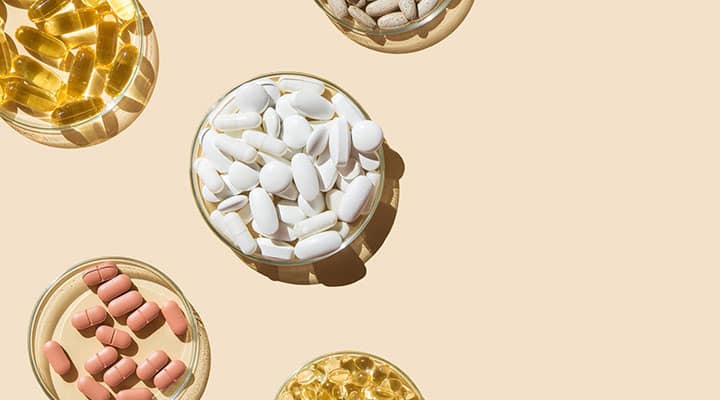
Dietary supplements are concentrated forms of nutrients, botanicals or other bioactive compounds provided in a measurable dose, usually in the form of capsules, tablets or powders. Supplements can't replace a healthy diet, so they won't help much if you decide to eat only processed foods like burgers and ice cream with no fruits, vegetables or plant fiber in sight. But they are a great way to fill in nutrient gaps or deliver specific ingredients in amounts that would be hard to get from diet alone.
Given that many Americans fall short on key nutrients (like vitamin D, calcium and fiber, to name a few), dietary supplements can be useful for reaching optimal intake levels. And, they can be particularly helpful for those with restricted diets, such as vegans, and those with increased nutrient needs, such as older adults and pregnant women.Dietary supplements are also an excellent way to promote specific health goals, which may range from healthy weight and stress management to support for brain function and eye health.
12 Functional food examples and benefits

These foods are considered "functional" because they contain enough bioactive compounds to support several health benefits:
Yogurt and kefir:
These fermented foods contain live probiotics and sometimes even heat-inactivated postbiotics that have been studied to support immune health and gut health.Berries:
Small but mighty, berry fruits such as blueberries contain antioxidants called anthocyanins, as well as essential vitamins and minerals that have been linked to benefits for cardiovascular and cognitive health.Cruciferous vegetables:
These vegetables, including broccoli, cauliflower and kale, contain compounds called glucosinolates and isothiocyanates that have cellular protective properties.Fatty fish:
Fatty fish such as salmon provide omega-3 fatty acids that support cardiovascular health, cognitive health and other aspects of healthy aging.Whole grains:
Whole grains such as oats and buckwheat, along with pseudo grains like quinoa, deliver vitamins, minerals and fibers such as beta-glucans, which are particularly beneficial for heart and cholesterol health.Legumes:
Legumes including soy, lentils, beans and chickpeas, are good sources of plant protein and fiber, both of which support metabolic health.Nuts and seeds:
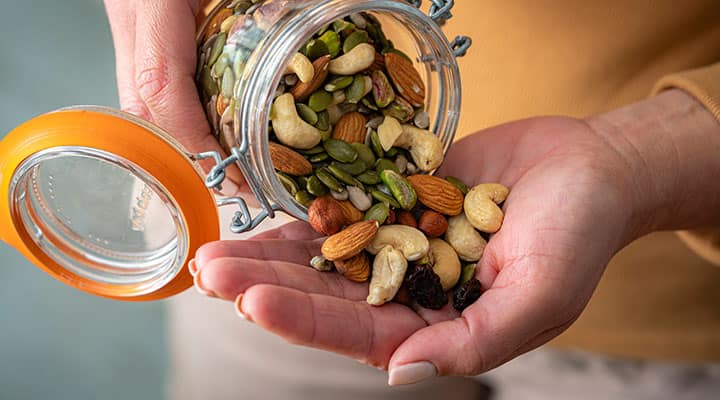
Nuts and seeds such as almonds, walnuts, cashews, flax and chia, contain good fats including ALA omega-3 fatty acids along with plant protein and essential vitamins and minerals.Tea:
Tea beverages, especially green tea, can be considered functional foods because they contain polyphenols and catechins such as EGCG that have antioxidant properties that support cellular health and cardiometabolic health.Spices and seasonings:
Spices and seasonings like turmeric, cinnamon and garlic contain bioactive compounds, including curcumin and allicin, that can help support a healthy inflammatory response and cardiovascular health.Dark chocolate:
Rich in polyphenols and flavanols, dark chocolate can support endothelial health, brain health and mood when consumed in moderation.Coffee:
Coffee, also in moderation, can support various aspects of health, including metabolic health, thanks to its polyphenols.Fortified foods:
Fortified foods, such as vitamin D-fortified milk and nutritional yeast enriched with B vitamins, can also serve as functional foods. However, not all fortified foods qualify. For example, many fortified sugar-laden breakfast cereals do not fit the definition of functional.

What is the difference between functional foods and supplements?

Functional foods are whole or fortified foods that provide bioactive ingredients within their natural food matrix. In many whole foods, nutrients and compounds complement each other, creating health benefits that extend beyond what any single nutrient could achieve on its own.
Dietary supplements, on the other hand, deliver standardized doses of nutrients, botanicals or other bioactive compounds. While they cannot replicate the complexity of whole foods, their precision can be especially useful when dosage matters or when it is difficult to obtain adequate amounts of certain nutrients through diet alone.

Explore Our Best Prebiotic & Probiotic Supplements
Is it better to eat food or take supplements?

Both food and dietary supplements can play useful roles in a healthy diet, and they work best together. Eating a healthy variety of whole foods is a great way to get most of the nutrients you need, such as vitamins, minerals, fiber and other bioactive compounds. Dietary supplements, however, can be useful when your chosen diet doesn't provide enough of a nutrient or when absorption is limited by lifestyle or physiology.
For example, turmeric contains curcumin, a compound that supports a healthy inflammatory response as well as heart, brain and immune health. But most recipes call for a sprinkle of this golden spice—not the whole root—and that spice typically contains only about 3% curcumin. Clinical research studies often use doses in the hundreds of milligrams, which means you would need to consume several teaspoons of turmeric every day to reach those levels. Also, absorption of curcumin can be limited, making a standardized curcumin supplement formulated for bioavailability a more practical option.
The same applies to probiotics. While foods like yogurt and kefir naturally contain beneficial bacteria, many food products do not list the exact strains or count. Probiotic supplements can provide clinically supported doses with precise labeling of amounts and strains and what they have been scientifically studied for.
The key is to use supplements as a complement to a balanced diet and choose them based on your individual needs and guidance from a healthcare professional. As a general rule, it is always best to talk to your healthcare provider before taking any supplement.
Can you combine functional foods and supplements?
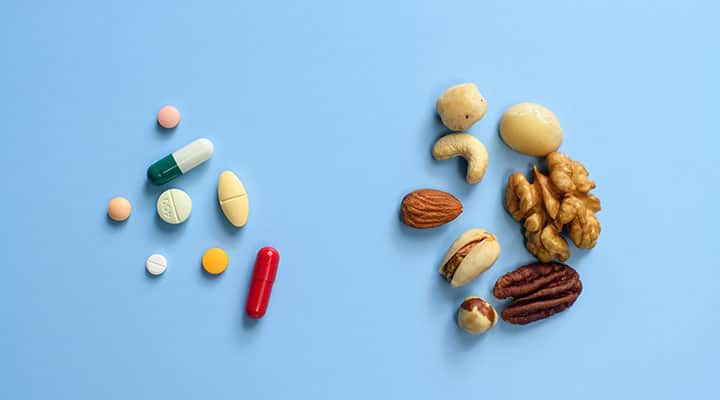
Yes, you can (and should) combine functional foods and dietary supplements. Functional foods are a big part of a healthy, balanced diet, and supplements are designed to complement that diet. They work side by side to support specific health goals.
| Eat This (Real Food) | Take This (Supplement) | What It Helps With | ||
|---|---|---|---|---|
| Decaffeinated/herbal tea | + | GABA | ➜ | Calming, pre-bed routine |
| Coffee | + | Ashwagandha | ➜ | Focus and attention without too many jitters |
| Fatty fish | + | Fat-soluble vitamins like D, K and E | ➜ | Whole-body health, including cardiovascular health |
| Oats | + | CoQ10 | ➜ | Heart health |
| Nutrient-dense protein sources (lean meat, fish, etc.) | + | Creatine powder | ➜ | Muscle growth and physical performance |
| Legumes, a source of prebiotics | + | Probiotics | ➜ | Gut health and microbiome balance |
| Dark chocolate | + | L-theanine | ➜ | Calming, stress relief, mood support |
When Food Alone Isn’t Enough
While generally, anyone could benefit from supplements studied to support their health concerns, supplements are specifically recommended for certain populations. For example:
- Pregnancy: Prenatal vitamins are recommended during pregnancy and breastfeeding; folate in particular is key to infant brain development.
- Vegans and vegetarians: Vitamin B12 is recommended for vegans, because this nutrient is found in animal byproducts.
- Postmenopausal women: Vitamin D and calcium are important for bone strength and more after menopause.
How do functional foods and supplements work together?
Besides establishing a base for optimal health and wellness, functional foods can help supplements work better in your body. For instance, beans and legumes are a rich source of prebiotics, the fiber that feeds the microbes in your gut and helps these beneficial bacteria thrive. And foods like fatty fish provide the oil that helps your body absorb fat-soluble vitamins like D, K and E.
FAQs

Can supplements replace functional foods?
No. Supplements are meant to complement an already healthy diet, not replace the nutrition and diverse natural compounds that whole foods provide.
However, supplements may be able to deliver targeted nutrition to fill the gaps if you avoid certain foods in an otherwise balanced diet. For instance, if you don't like yogurt or fermented foods, but want to support your gut microbiome with healthy bacteria strains, a probiotic may provide that support. In the same way, if you don't eat fish or flax seeds, an EPA/DHA supplement with omega-3 fatty acids may be beneficial for your heart and brain health.
Should I take supplements if I already eat healthy?
If you have specific health goals (such as maintaining muscle, encouraging attention and focus, or helping maintain healthy cholesterol levels), supplements can be a helpful addition to a healthy diet. Also, let's be realistic: Most people fall short of the recommended daily amounts of fruits, vegetables, protein, dairy and grains in one way or another.
But even those who follow a varied, nutrient-dense diet may want to consider dietary supplements. Nutrients like vitamin D or B12 can be difficult to obtain in sufficient amounts, despite a balanced diet.
Supplements, when tailored to your needs with guidance from a healthcare professional, can help ensure optimal nutrition and long-term wellness.
Looking to support whole body health through your microbiome? Our health needs quiz can deliver a personalized nutrient plan for your lifestyle and health concerns.


References
- Fekete M, et al. "Functional Foods in Modern Nutrition Science: Mechanisms, Evidence, and Public Health Implications." Nutrients. June 2025. https://pmc.ncbi.nlm.nih.gov/articles/PMC12251440/
- Imaizumi VM, et al. "Garlic: A systematic review of the effects on cardiovascular diseases." Crit Rev Food Sci Nutr. 2023. https://pubmed.ncbi.nlm.nih.gov/35193446/
- Kim H, et al. "Coffee and Its Major Polyphenols in the Prevention and Management of Type 2 Diabetes: A Comprehensive Review." Int J Mol Sci. June 2025. https://pubmed.ncbi.nlm.nih.gov/40565007/
- Muth H, et al. "Come to the dark side - A review on the health-beneficial and disease-alleviating effects of cocoa-rich dark chocolate." Eur J Microbiol Immunol (Bp). March 2025. https://pubmed.ncbi.nlm.nih.gov/40126573/
- Pyo Y, et al. "Probiotic Functions in Fermented Foods: Anti-Viral, Immunomodulatory, and Anti-Cancer Benefits." Foods. July 2024. https://pubmed.ncbi.nlm.nih.gov/39123577/
- Rivero-Pino F, et al. "Prospective, Randomized, Double-Blind Parallel Group Nutritional Study to Evaluate the Effects of Routine Intake of Fresh vs. Pasteurized Yogurt on the Immune System in Healthy Adults." Nutrients. June 2024. https://pmc.ncbi.nlm.nih.gov/articles/PMC11206341/
- Tayyem RF, et al. "Curcumin content of turmeric and curry powders." Nutr Cancer. 2006. https://pubmed.ncbi.nlm.nih.gov/17044766/
- Temple NJ. "A rational definition for functional foods: A perspective." Front Nutr. September 2022. https://pmc.ncbi.nlm.nih.gov/articles/PMC9559824/
- Wood E, et al. "Wild blueberry (poly)phenols can improve vascular function and cognitive performance in healthy older individuals: a double-blind randomized controlled trial." Am J Clin Nutr. June 2023. https://pubmed.ncbi.nlm.nih.gov/36972800/
- Zhao T, et al. "Green Tea (Camellia sinensis): A Review of Its Phytochemistry, Pharmacology, and Toxicology." Molecules. June 2022. https://pmc.ncbi.nlm.nih.gov/articles/PMC9231383/

Always be in the know!
Access the latest deals, wellness news, expert health tips & more!
Popular Supplement