9 Health Benefits of Astaxanthin
Published: May 2023 | Updated: July 2026
At a Glance
- Astaxanthin is a pink-red carotenoid antioxidant found in certain seaweeds, seafoods and algae.
- This carotenoid has been studied for eye, heart, brain, skin, immune and metabolic health.
- Astaxanthin helps to fight free radicals and supports a healthy inflammatory response in the body.
For whole-body health, it's time to think pink! Astaxanthin is a type of antioxidant that gives flamingos, shrimp and salmon their bright vivid hue. Specifically, it's a carotenoid that is difficult to get from diet, said Dr. Michael A. Smith, MD. "Astaxanthin is one of nature's most powerful antioxidants, with benefits for your eyes, your heart, your brain, your metabolism and your whole-body health."
Let's dive into astaxanthin's many benefits, some of the limitations of traditional astaxanthin supplements, and the best way to make sure you're getting all of this nutrient's "pink power" in your daily dose.
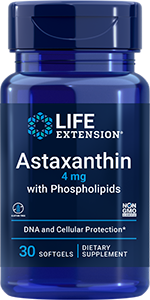
What is astaxanthin?

Astaxanthin belongs to the class of nutrient pigments called carotenoids. Other members of this class include beta-carotene (sometimes written as β-carotene), lutein, zeaxanthin and lycopene. Like other carotenoids, astaxanthin has powerful antioxidant properties.
Though structurally similar to other carotenoids like beta-carotene and lutein, astaxanthin has distinct features that make it an even more powerful antioxidant. It's actually 11 times more potent than β-carotene and 550 times more powerful than alpha tocopherol (the most common form of vitamin E).
Astaxanthin's special chemical structure also allows it to cross the blood-brain and blood-retina barriers.
Astaxanthin and other carotenoids give color to various plants and animals. (But nothing to fear—if you get astaxanthin from food or supplements, you won't change color!) Astaxanthin is present in seaweed, algae, phytoplankton, seafood and crustaceans. This means you'll only get dietary astaxanthin if you eat pink or red-colored fish like salmon or arctic char or snack on astaxanthin-containing seaweeds—all the more reason to explore astaxanthin supplementation!
The most concentrated naturally occurring source is an astaxanthin-producing microalgae (a really tiny freshwater plant). Most supplements are made from extracts of this plant, called Haematococcus pluvialis.
Astaxanthin's health benefits

Because of its structure, astaxanthin can offer powerful health benefits, including the following:
1. Heart health
Astaxanthin's one-two punch—powerful antioxidant activity plus support for a healthy inflammatory response—makes it particularly beneficial for heart and vascular health. And one of its standout benefits is supporting already-healthy levels of lipids.
A clinical study found that astaxanthin supplementation helped support already-healthy triglycerides and HDL (the "good" cholesterol) levels.
2. Eye health
Carotenoids are famous for their role in eye health. They form an essential part of the protection of the retina of the eye (specifically the macula of the retina) against light exposure.
Popular eye supplements that help protect aging vision usually contain familiar carotenoids like beta-carotene, lutein and zeaxanthin. But the most advanced eye health supplements will often add astaxanthin and another "cousin," alpha-carotene.
Astaxanthin helps promote visual acuity and helps relieve occasional discomfort associated with eye strain (an effect you may have felt after a long day of staring at screens). A clinical study found that taking astaxanthin every day helped protect visual acuity in people aged 40 and older who worked at their computers. Researchers chalk these positive effects up to astaxanthin's ability to inhibit oxidative stress in the eyes.

3. Brain health
Your brain is a wonder—you could say it runs the whole show. It's protected on the outside by the skull, but it's also protected on the inside by the blood-brain barrier. This microscopic barrier in the blood vessels of our brains is highly selective and can't be penetrated by just anything. That quality helps keep toxins and other unwanted substances out.
Astaxanthin, a powerful antioxidant that supports a healthy inflammatory response, has been found to cross the blood-brain barrier (meaning, the body and brain welcome it). That's great for brain health.
One clinical study found that a combination including astaxanthin and sesamin (an extract from sesame seeds) promoted comprehension and helped people perform complex tasks quickly and accurately. Another study found that people under the age of 55 who took astaxanthin performed better on a word memory test.
4. Immune health
We all want the best possible immune system health, which helps protect us against immune challenges and helps us stay healthy and vital as we age. Astaxanthin's ability to support a healthy inflammatory response and help inhibit oxidative stress means it can be one of our best allies in encouraging immune health. As an antioxidant, astaxanthin helps neutralize free radicals and protect cell membranes—and these benefits help promote a healthy immune system.

5. Healthy inflammatory response
We keep saying that astaxanthin helps support a healthy inflammatory response—and that's one of the main drivers of this antioxidant's benefits. But what does that really mean? A healthy inflammatory response means your body can activate a response when needed (like after a tough workout) and dial it back down once the job is done. As an antioxidant, astaxanthin helps support that system.
6. Metabolic health
One of the ways astaxanthin supports whole-body health is through your metabolism, a broad term that relates to how your body processes foods into energy. That, in turn, has a big effect on the health of your blood vessels, your heart and your brain, as well as every cell and organ in your body.
You can support metabolic health with a healthy diet, regular exercise, self-care, and targeted nutrition, which may include an astaxanthin supplement. In an 8-week clinical study, astaxanthin supported healthy blood sugar metabolism and promoted already-healthy blood pressure.
"Astaxanthin is one of nature's most powerful antioxidants, with benefits for your eyes, your heart, your brain, your metabolism and your whole-body health."

7. Exercise endurance
Regular exercise is good for your entire body, but even athletes may sometimes need some extra support for performance recovery. That's where astaxanthin comes in.
In fact, modern research shows the potential of astaxanthin to improve endurance performance in endurance athletes. Astaxanthin may support cardiorespiratory fitness, cycling performance, recovery from post-exercise soreness, and antioxidant status in the body.
8. Mitochondrial protection
Rewind to grade school and you might recall that the mitochondria are the powerhouses of the cell, which means they produce energy. Astaxanthin doesn't just work as a powerful antioxidant; it also encourages mitochondrial function by working to activate key cellular pathways that keep your mitochondria in tip-top shape.
9. Skin health
Your skin is your largest organ, so it's important to protect it, and astaxanthin may be able to help. This is why you'll find astaxanthin in some skin care products that are designed to smooth the appearance of wrinkles and promote supple skin.
| Astaxanthin health benefit | How supplementation helps |
|---|---|
| Eye health | Supports visual acuity and helps relieve eye strain |
| Heart health | Antioxidant properties; promotes healthy inflammatory response |
| Immune health | Antioxidant properties; promotes healthy inflammatory response |
| Brain health (cognition and memory) | Promotes cognitive performance; crosses blood-brain barrier |
| Healthy inflammatory response | Encourages a healthy response to challenges |
| Mitochondrial protection | Antioxidant properties; supports mitochondrial activity |
| Metabolic health | Promotes already-healthy blood sugar and blood pressure |
| Exercise endurance | Encourages athletic performance and exercise recovery |

Explore Our Best Eye Health Supplements
Looking for other nutrients for whole-body health as you age? Our health needs quiz can help point you in the right direction and provide personalized recommendations of nutrients that fit your lifestyle.
Key Takeaways
- Astaxanthin's antioxidant properties help support many areas of health, including your heart and brain.
- Astaxanthin also encourages the function of mitochondria, the powerhouses of your cells.
- Astaxanthin benefits are distinct from other carotenoids and cannot be replicated by beta-carotene, lutein or lycopene.


References
- Fakhri S, et al. "Astaxanthin: A mechanistic review on its biological activities and health benefits." Pharmacological Research. October 2018. https://www.sciencedirect.com/science/article/abs/pii/S1043661818309976?via%3Dihub
- Fassett RG, Coombes JS. "Astaxanthin in cardiovascular health and disease." Molecules. February 2012. https://pmc.ncbi.nlm.nih.gov/articles/PMC6268807/
- Hayashi M, et al. "Effect of astaxanthin-rich extract derived from Paracoccus carotinifaciens on cognitive function in middle-aged and older individuals." J Clin Biochem Nutr. March 2018. https://pubmed.ncbi.nlm.nih.gov/29610561/
- Ito N, et al. "Effects of Composite Supplement Containing Astaxanthin and Sesamin on Cognitive Functions in People with Mild Cognitive Impairment: A Randomized, Double-Blind, Placebo-Controlled Trial." J Alzheimers Dis. 2018. https://pubmed.ncbi.nlm.nih.gov/29614679/
- Ito N, et al. "The Protective Role of Astaxanthin for UV-Induced Skin Deterioration in Healthy People-A Randomized, Double-Blind, Placebo-Controlled Trial." Nutrients. June 2018. https://pubmed.ncbi.nlm.nih.gov/29941810/
- Mashhadi NS, et al. "Astaxanthin improves glucose metabolism and reduces blood pressure in patients with type 2 diabetes mellitus." Asia Pac J Clin Nutr. 2018. https://pubmed.ncbi.nlm.nih.gov/29384321/
- Medoro A, et al. "Dietary Astaxanthin: A Promising Antioxidant and Anti-Inflammatory Agent for Brain Aging and Adult Neurogenesis." Mar Drugs. December 2023. https://pmc.ncbi.nlm.nih.gov/articles/PMC10744637/
- Nishida Y, et al. "Astaxanthin as a Novel Mitochondrial Regulator: A New Aspect of Carotenoids, beyond Antioxidants." Nutrients. December 2021. https://pmc.ncbi.nlm.nih.gov/articles/PMC8746862/
- Oninku B, et al. "Astaxanthin: An overview of its sources, extraction methods, encapsulation techniques, characterization, and bioavailability." Journal of Agriculture and Food Research. June 2025. https://www.sciencedirect.com/science/article/pii/S2666154325002406
- Sekikawa T, et al. "Effects of diet containing astaxanthin on visual function in healthy individuals: a randomized, double-blind, placebo-controlled, parallel study." J Clin Biochem Nutr. January 2023. https://pubmed.ncbi.nlm.nih.gov/36777084/
- Siqueira JS, et al. "Nutraceutical Potential of Astaxanthin in Muscle Metabolism, Exercise Adaptation, and Obesity." Nutrients. December 2025. https://pubmed.ncbi.nlm.nih.gov/41515196/
- Tominaga K, et al. "Protective effects of astaxanthin on skin deterioration." J Clin Biochem Nutr. July 2017. https://pubmed.ncbi.nlm.nih.gov/28751807/
- Waldman H. "Astaxanthin Supplementation as a Potential Strategy for Enhancing Mitochondrial Adaptations in the Endurance Athlete: An Invited Review." Nutrients. June 2024. https://pubmed.ncbi.nlm.nih.gov/38892683/
- Yoon HS, et al. "Supplementating with dietary astaxanthin combined with collagen hydrolysate improves facial elasticity and decreases matrix metalloproteinase-1 and -12 expression: a comparative study with placebo." J Med Food. July 2014. https://pubmed.ncbi.nlm.nih.gov/24955642/

Always be in the know!
Access the latest deals, wellness news, expert health tips & more!
Eye Health Favorite