When Should You Take CoQ10 for Best Absorption and Energy Support?
Published: May 2022 | Updated: December 2025
At a Glance
- CoQ10 benefits the heart and other large organs.
- It can be taken any time of day or night.
- Absorption increases when CoQ10 is taken with a fatty meal, since it's a fat-soluble nutrient.
When it comes to popular supplements, CoQ10 is a chart topper, ranking right up there with multivitamins and fish oil as an everyday staple for many people seeking a longer, healthier life.
That's because CoQ10 benefits the heart and other large organs and has a well-earned reputation as an antioxidant and an energy supplement.
If you're taking or are considering taking CoQ10, you may wonder: how should you take it? Morning or night? With food or without? Let's get into the details!
Should you take CoQ10 with food or on an empty stomach?
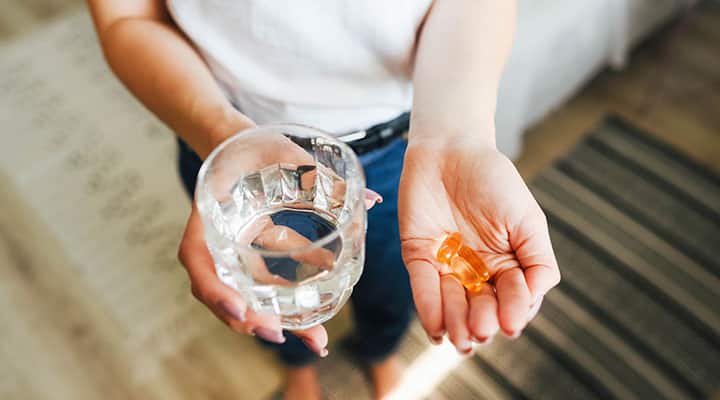
Always take CoQ10 supplements with food—ideally a meal or snack that contains healthy fat. Why? CoQ10 is a fat-soluble nutrient, which just means fat helps dissolve CoQ10 and can increase absorption up to three times more compared to taking it on an empty stomach.
And no need to overthink it: CoQ10 supplements aren't picky! In other words, the source of fat makes no difference, so grab your favorite option! However, it's always important to choose foods that contain healthier fats, such as:
- Olive oil
- Nuts
- Avocado
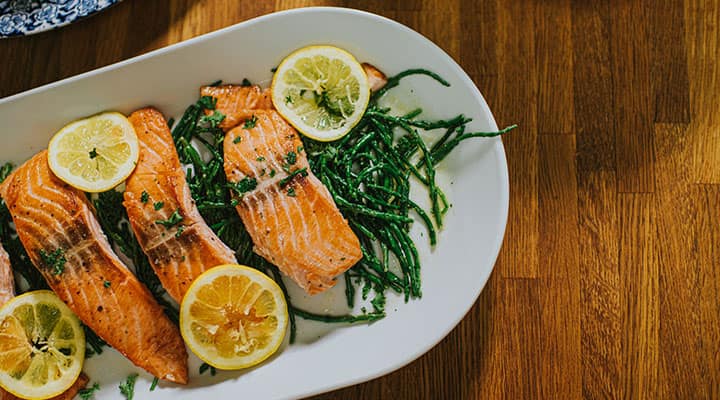
- Salmon
Is morning or evening the best time to take CoQ10?

If you're wondering when to take CoQ10 for energy, it's not a trick question! There's no scientifically proven best time to take CoQ10. Some people prefer taking it in the morning, while others take it later—what matters most is consistency. Pick a time that works for you and stick to it! (Just remember to take it with a food that has fat in it, whether it's nuts in your granola or a hearty salmon dinner.)
For healthy adults, a typical dose ranges from 50 to 200 mg daily and can be taken once per day.
When larger dosages of CoQ10 are needed, split dosing (literally splitting up doses throughout the day) may be a better option for maintaining optimal CoQ10 blood levels and supporting cardiovascular health.
In fact, a study of healthy individuals found that morning and evening dosing supported CoQ10 levels better than an equivalent dose taken all at once.
Keep in mind:
- CoQ10 doesn't produce immediate energy boosts; its benefits develop over weeks or months. (It's not going to replace your morning coffee!)
- Timing doesn't affect safety or sleep; there are no known CoQ10 side effects at night.
- If you are taking something that lowers your CoQ10 levels as a side effect, you need to supplement to make up for it!
What form of CoQ10 is best for absorption?
Before we talk more about when to take CoQ10, let's take a closer look at the two different forms of CoQ10 to supplement with:
- Ubiquinol–the more absorbable and bioavailable form.
- Ubiquinone–still well absorbed and effective for many individuals.
While ubiquinol is superior for absorption, ubiquinone remains a good option, especially if your levels respond well.
To know your optimal CoQ10 dose and form, consider getting a CoQ10 blood test.

Explore Our Best Heart Health Supplements
What else is in CoQ10 supplements?
You can take CoQ10 as a standalone supplement, but many people prefer a combo formula that includes other complementary nutrients. Here are some of the more popular add-ins:
| Nutrient | What It Is |
|---|---|
| CoQ10 |
|
| PQQ |
|
| d-Limonene |
|
| Shilajit |
|
Can taking CoQ10 too late affect your sleep?
Worried CoQ10 is going to affect your shuteye? Good news: there is no evidence that taking CoQ10 in the evening disrupts sleep. So, if that's how it fits into your routine, there are no complaints here! Just remember—CoQ10 plays best with a fatty meal.
And while we're on the topic of timing, it's important not to head straight to bed after dinner. Ideally, finishing your meal three hours before bedtime should give your body enough time to digest.
If you get hungry before bed, try eating light snacks like fruit, yogurt, or a protein smoothie. These small bites may actually help you sleep more easily!
Now that you know taking CoQ10 at night doesn't negatively impact your sleep, are you curious if it can help you sleep better?
Interestingly, one study found that combining CoQ10 and NADH resulted in some improvements in self-reported sleep quality, but the results were not statistically significant. Plus, no other studies have evaluated changes in sleep quality with CoQ10 supplementation, so more research is needed for a definitive answer.
What is the best time of day to take CoQ10?

While there is no specific hour that is best, consistency is key! Taking CoQ10 every day at a similar time is the best way to make the most of its benefits.
Some people prefer morning doses for convenience or routine but taking them early doesn't actually provide an added energy boost for your day. However, long-term supplementation may result in greater physical energy over time.
Can you take CoQ10 every day?
Yes. If you're wondering how to take CoQ10 properly, you can and should take it daily! Remember: consistency is the best way to maximize its benefits.
However, it's important to follow the recommendations on the supplement bottle or ask your healthcare provider to determine what's best for you!
Not sure whether you should take CoQ10? Take a supplement quiz for personalized recommendations!
At a Glance
- There is no recommended time to take CoQ10—take it when it's best for you!
- CoQ10 should be taken with healthy fat to promote optimal absorption.
- CoQ10 is generally safe to take in the morning or at night, depending on preference.

References
- Castro-Marrero J, et al. "Effect of Dietary Coenzyme Q10 Plus NADH Supplementation on Fatigue Perception and Health-Related Quality of Life in Individuals with Myalgic Encephalomyelitis/Chronic Fatigue Syndrome: A Prospective, Randomized, Double-Blind, Placebo-Controlled Trial." Nutrients. July 2021. https://pubmed.ncbi.nlm.nih.gov/34444817/
- Chung N, et al. "Does the Proximity of Meals to Bedtime Influence the Sleep of Young Adults? A Cross-Sectional Survey of University Students." Int J Environ Res Public Health. April 2020. https://pubmed.ncbi.nlm.nih.gov/32295235/
- Covey C. "Coenzyme Q10 for Heart Failure." American Family Physician. 2021. https://www.aafp.org/pubs/afp/issues/2021/1100/p458.html
- Fogacci F, et al. "Effect of Coenzyme Q10 on Physical Performance in Older Adults with Statin-Associated Asthenia: A Double-Blind, Randomized, Placebo-Controlled Clinical Trial." J Clin Med. June 2024. https://pubmed.ncbi.nlm.nih.gov/38999304/
- Mortensen SA, et al. "The effect of coenzyme Q10 on morbidity and mortality in chronic heart failure: results from Q-SYMBIO: a randomized double-blind trial." JACC Heart Fail. December 2014. https://pubmed.ncbi.nlm.nih.gov/25282031/
- Petrangolini G, et al. "A New Food-grade Coenzyme Q10 Formulation Improves Bioavailability: Single and Repeated Pharmacokinetic Studies in Healthy Volunteers." Curr Drug Deliv. 2019. https://pubmed.ncbi.nlm.nih.gov/31475897/
- Singh RB, et al. "Effect on absorption and oxidative stress of different oral Coenzyme Q10 dosages and intake strategy in healthy men." Biofactors. 2005. https://pubmed.ncbi.nlm.nih.gov/16873950/
- Tsai IC, et al. "Effectiveness of Coenzyme Q10 Supplementation for Reducing Fatigue: A Systematic Review and Meta-Analysis of Randomized Controlled Trials." Front Pharmacol. August 2022. https://pubmed.ncbi.nlm.nih.gov/36091835/
- Yan T, et al. "Pyrroloquinoline Quinone (PQQ): Its impact on human health and potential benefits: PQQ: Human health impacts and benefits." Curr Res Food Sci. October 2024. https://pmc.ncbi.nlm.nih.gov/articles/PMC11541945/

Always be in the know!
Access the latest deals, wellness news, expert health tips & more!
Popular Supplement