

Life Extension Magazine®
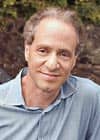
Ray Kurzweil is at war. A healthy 57-year-old who can rattle off streams of his own vital statistics, Kurzweil believes that humanity is standing on the brink of immortality—and all that is holding us back is our own evolutionary biology. Thus Kurzweil fights a war against a protein-based machine—the human body—whose basic design is about to become obsolete. He figures he needs only to hold off disease and aging long enough, maybe 20 more years, to reap the rewards of a revolution in health technology that will rely on advanced gene therapy and robots the size of blood cells to grant life everlasting. While his ideas might seem far-fetched, he points out that space flight and mass agriculture would have been inconceivable to earlier generations. Instead of believing in doubt, Kurzweil has chosen to believe in the future, and he backs up his vision with sound science and impressive credentials.
As a teenager, Kurzweil attracted attention for writing a computer program that composed piano music. After attending the Massachusetts Institute of Technology, he went on to a lucrative career as an inventor. His inventions, which include an optical character recognition program and a text-to-speech voice synthesizer, earned him the government’s National Medal of Technology and the $500,000 Lemelson-MIT Prize, the nation’s largest award for invention. More recently, however, Kurzweil has turned his attention to two favorite subjects: health and technological innovation. His interest in both subjects has very personal roots. “In my mid-thirties, I was diagnosed with type II diabetes,” he recalls. “Because my father died early of heart disease, I also had a disposition for high cholesterol. I followed the conventional treatment for a while, but it really made things worse and caused me to gain weight.” Gaining weight and unhappy, Kurzweil decided to approach the problem like an inventor, as “someone who could find a solution to the problem.” He immersed himself in the scientific literature and soon designed a health program, based on diet modification and nutritional supplementation, that reversed his diabetes without medical intervention. This program became the subject of a bestselling book, The Ten Percent Solution for a Healthy Life, published in 1994. Since then, Kurzweil has taken his theories even further. With the rate of technological innovation increasing exponentially, he believes it is only a matter of years—decades at most—until futuristic technologies will entirely reverse-engineer the human machine. “We’re beginning to understand biology and health, disease and aging, as information processes,” he explains. “We’re learning very precisely the sequences of steps concerning genes, proteins, and enzymes—and the sharing of information from one biochemical step to the next—that underlie aging and disease.”
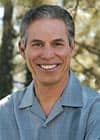
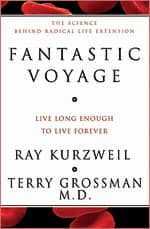
The trick, Kurzweil says, is to live long enough for scientists to unlock the biological riddle of aging. To do that, he advises people to use every weapon at their disposal to defy aging. These weapons include the most sophisticated, up-to-the-minute health information available and extensive dietary supplementation to replace nutrients lost to the aging process. Kurzweil himself takes 250 supplements every day, while closely tracking and monitoring about 50 different measures of his own health. At any given time, he knows his exact levels of cholesterol, HDL (high-density lipoprotein), LDL (low-density lipoprotein), triglycerides, homocysteine, and C-reactive protein, as well as his blood concentrations of various antioxidants and nutrients. “I haven’t aged much in the last 15 years,” he says. His program is presented in Fantastic Voyage: Live Long Enough to Live Forever, a new book he coauthored with Terry Grossman, MD. According to Kurzweil, “Radical life extension is close at hand.” Bridges to the FutureTo make their theories easier to understand, Kurzweil and Grossman have developed three “bridges,” each of which must be crossed before humanity reaches immortality. The first bridge is classic life extension, based on the most advanced science available today. It draws on much of the same science reported each month in Life Extension magazine. In fact, Kurzweil is a regular reader of Life Extension and supports the Foundation’s products. “Bridge One involves learning about how the body’s different systems work,” Kurzweil explains. “Insulin resistance . . . methylation . . . atherosclerosis . . . cancer. They say that aging and disease are 80% genes and 20% lifestyle. That’s only true if you follow the usual, watered-down, compromised approach. If you’re aggressive, you can overcome almost any genetic disposition. “Atherosclerosis is the perfect example. Only 25 years ago, scientists had only a rudimentary understanding of heart disease. Today, however, we understand atherosclerosis as an inflammatory condition that may begin in childhood and can be treated and even reversed through healthy lifestyle decisions, including frequent exercise, dietary choices that reduce inflammation, and aggressive supplementation with nutrients that reduce cholesterol. “A lot of people feel that they shouldn’t take a supplement or medication unless it’s a last resort. That’s not the case. Evolution is not on our side. We need to aggressively reprogram our biochemistry, and that’s what my program does.” Because every person’s biology is different, Kurzweil’s program is individualized, but based on concepts that will be familiar to readers of Life Extension. Following are some of the program’s key recommendations. You are what you drinkThe human body comprises various fluids, ranging in pH from very acidic (stomach acid, for example) to rather alkaline (pancreatic fluid), and many bodily fluids have very narrow parameters. For example, the fluid within our cells ranges in pH from 6.8 to 7.1, while blood pH exists in a very narrow, slightly alkaline band of between 7.35 and 7.45. Any disruption to this careful pH balance is dangerous. Unfortunately, it is easy for the body’s fluids to become too acidic, because many metabolic processes produce acidic by-products. According to Kurzweil, good health depends on maintaining a slightly alkaline pH level, so he recommends avoiding acidic beverages such as soft drinks and drinking purified water that has been treated using a special alkalinizing machine to adjust its pH level. This promotes powerful detoxification and health-promoting effects, says Kurzweil. Reduce your glycemic loadThis concept is receiving more attention as scientists continue to unravel the relationships between blood sugar, obesity, diabetes, and heart disease, conditions that have one thing in common: excess carbohydrate intake. Kurzweil recommends dramatically reducing carbohydrate intake, especially for those with type II diabetes or insulin resistance. Not all carbohydrates are equal, however. Simple carbohydrates, such as refined sugar, cause a rapid elevation in blood sugar, thus provoking an insulin response as the body produces extra insulin to bring the blood sugar level down. Over time, the body’s system for controlling blood sugar breaks down and diabetes develops. Diabetes and heart disease are closely associated.
To prevent this vicious cycle, Kurzweil recommends that people avoid simple carbohydrates, opting instead for foods with a lower glycemic load. The glycemic load is calculated by multiplying the number of grams of carbohydrates in a given food by its glycemic index (which measures how quickly the food is converted into glucose and released into the bloodstream). The glycemic load is an accurate measure of how much insulin your body will have to produce to neutralize the carbohydrates in a given food. Carbohydrates with a low glycemic load include peanuts, carrots, lentils, and kidney beans. By contrast, carbohydrates with a high glycemic load include all candy and refined sugar, white rice, potatoes, pasta, and white bread. Carbohydrates should account for no more than one third of total caloric intake, says Kurzweil. People with diabetes or insulin resistance should limit their carbohydrate intake even further. Choose your fats wiselyIt is well known that Americans eat too much fat, but only recently have many people begun to pay attention to the kinds of fat they eat. In Kurzweil’s view, fat itself is an outdated form of energy storage in humans, one that made sense when calories were scarce, hunting was uncertain, and winters were long. In today’s era of abundance, however, fat storage is yet another example of biology sabotaging our well-being. Kurzweil’s program admonishes people to stay away from unhealthy saturated and trans fats, but also recommends that we pay more attention to the kind of healthy, unsaturated fats we eat, particularly omega-3 and omega-6 fatty acids. Omega-6 fatty acids, found in plant-based oils, and omega-3 fatty acids, abundant in sources such as fish, walnuts, and flaxseed, are both unsaturated fats, though they act very differently in the body. Omega-6 fatty acids encourage inflammation, while omega-3 fatty acids are anti-inflammatory. Inflammation has been linked to a host of degenerative conditions, including heart disease, diabetes, Alzheimer’s disease, and arthritis. The modern American diet, which typically is high in processed plant oils, encourages consumption of far too much pro-inflammatory omega-6 fatty acids. The Kurzweil program recommends high levels of omega-3 fatty acids, such as ALA (alpha-linolenic acid), EPA (eico-sapentaenoic acid), and DHA (docosahexaenoic acid). EPA and DHA especially have been shown to lower triglyceride levels dramatically. At the same time, Kurzweil’s program recommends incorporating certain omega-6 fatty acids such as GLA (gamma-linolenic acid) in the diet to lower blood pressure, cholesterol, and heart attack and stroke risk. Another healthy omega-6 fatty acid is DGLA (dihomogamma-linolenic acid). Kurzweil recommends that fat make up no more than 25% of daily caloric intake, and that virtually all of this should be in the form of healthy fats. Saturated fats should account for no more than 3% of total calories.
| |||||||||||||||||||||||||||||||||||||||||||||||||||||||||||||||||||||||||||||||||||||||||||||||||||||||||||||||||||
Improving on Biology TodayWhile Kurzweil’s book touches on subjects such as diet, nutrition, methylation, glycation, and inflammation, one theme is emphasized repeatedly: human biology can and should be improved upon. This idea helps explain why Kurzweil has little use for current government recommendations concerning nutrient and supplement levels. Because humans are programmed to die around middle age, he says, it makes no sense to think that a healthy diet alone can provide sufficient nutrients needed to grant long life. In fact, many people are born with genetic deficiencies that can be overcome only by megadosing with the nutrients in which they are deficient. “All the standards are inadequate,” Kurzweil says. “I’ve had these dialogues with the Joslin Diabetes Center at Harvard and the American Heart Association. Frequently, I get back comments like, ‘Well, you’re right. What you’re recommending would be much better, but we have enough trouble getting people to follow these watered-down recommendations.’ My reaction to that is, ‘One of the reasons you may be having a hard time is that they don’t work.’” He cites homocysteine as an example. Many people are born with a genetic deficiency that causes abnormally high homocysteine levels, a condition that can be corrected only with high doses—many times the US RDAs—of vitamin B6, vitamin B12, and folic acid. According to Kurzweil, the most common genetic variations known to science involve the way vitamins bind to enzymes. In many cases, the binding is somehow compromised, meaning that the only way to deliver enough of a given vitamin is to take much larger doses of it, because only a fraction will actually bind to the appropriate enzyme. He says this may help explain why leading medical journals, such as the New England Journal of Medicine and the Journal of the American Medical Association, have published articles recommending that all adults take a daily multivitamin. “I think we should at least tell people what’s optimal,” says Kurzweil. “The Joslin Diabetes Center, for example, recommends a body mass index of 25, which is borderline overweight. Why not target 18.5, which is still within the healthy range?”
Bridge Two: The Biotechnology RevolutionWhile some people might be intimidated by the idea of massive nutritional supplementation, it is purely a short-term solution, says Kurzweil. He predicts that in the next decade or so, biotechnology will render many of our deadliest diseases and conditions powerless. This is the “second bridge.” “Within 10 or 15 years, we’ll be able to reprogram a lot of biological processes away from disease and aging, to stop and reverse aging and maintain optimal health,” he says.
As an example of biotechnology at work, he cites obesity. According to the National Institutes of Health, about 60% of American adults are either obese or overweight. Obesity is closely linked to heart disease, various cancers, diabetes, joint injuries, inflammation, and a host of ill health effects. In a recent editorial in the New England Journal of Medicine, researchers estimated that the current generation of Americans may experience a shortened life expectancy of almost a year because of diseases associated with obesity. Kurzweil, however, has little patience for this kind of prediction, arguing that it is dangerous when researchers make predictions based on one trend alone, as if life occurs in a vacuum. Instead, he predicts that before long, scientists will invent drugs that can turn off the body’s calorie-storage mechanisms. People will be able to eat as much as they want but never gain weight. If this sounds impossible, Kurzweil answers that it has already been done in rats, and that it is only a matter of time until humans make a similar leap. He predicts that the same will hold true for any number of conditions. Heart disease drugs will reverse atherosclerosis. Cancer drugs may be able to restore damaged DNA and stop cell proliferation. Diabetes drugs will prevent insulin resistance before diabetes is diagnosed. The DNA of viruses will be mapped overnight and treatments will be designed to kill the viruses. “We’re gaining the technology to shape tools at the molecular level and have the models of disease progression that enable us to design new interventions,” he says. Much of this will be possible because of our increasing understanding of the human genome. In the 1990s, scientists announced they had successfully mapped the entire human genome, ahead of schedule. The implications are enormous, as the genome carries in its 23 pairs of chromosomes the entire map of human life. In the coming years, as we unravel the complex interaction between gene expression and health, we will gain a greater understanding of what makes us sick or healthy. “There’s some very exciting work being done with gene therapy,” Kurzweil says. “We’re understanding the triggers for diabetes and for the creation and eruption of vulnerable plaque. We’re in the early stages of developing gene tools.” This revolution in biotechnology will allow us to conquer diseases and conditions that have plagued us for millennia. According to Kurzweil, however, this is only the beginning. The next bridge will carry us toward immortality on the backs of tiny robots.
Bridge Three: Nanotechnology—Evolution in MotionEven Kurzweil acknowledges that his “third bridge”—the advent of nanotechnology—is “very futuristic.” However, having spent much of his life studying the rate of technological innovation, he is convinced that nanotechnology is the future. “It sounds very futuristic, but I’d point out there are already many experiments in animals that use blood cell-sized devices,” he explains. “One experiment we write about in the book involves a device the size of a blood cell that cured type I diabetes in rats. Pancreatic islet cells are actually inside the device. Glucose gets into the islet cells to be measured and insulin is released. It works perfectly normally. That’s occurring today.”
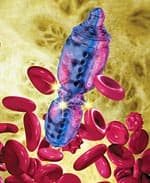
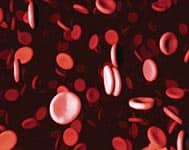
Kurzweil predicts a future in which these tiny robots are everywhere, attacking a host of conditions and enabling humans to “go substantially beyond the limitations of biology.” Robots the size of red blood cells could be injected by the billions to carry oxygen more efficiently than can actual red blood cells. Neurons could be enhanced by tiny microcomputers implanted in the capillaries of the brain, which would communicate with biological cells, each other, and a wireless Internet. Still other robots could monitor our blood glucose and maintain a safe level of insulin, rendering diabetes powerless. The opportunities are endless. “We’ll be able to provide full-immersion virtual reality from within the central nervous system,” he says. “‘Nanobots’ could shut down the signals coming from your real nervous system and put in place signals you would be receiving if you were in the virtual environment. Designing new virtual environments will be a new art form.” This concept strikes to the very heart of what it means to be human. To many, the idea of tiny robots working within our bodies is literally heresy, evoking images of horror movies and a world populated by cyborg beings that have lost their essential humanity. Once again, however, Kurzweil has no patience for this critique. This fear will be swept away, he says, by the enormous benefits associated with this technology. He points out that the miniaturization of technology is already increasing exponentially. Computers that once required whole rooms to operate now fit within the palm of a hand. It is only a matter of time before they can fit within the walls of human arteries. “We will become our technology,” he says. “We’re going to merge with it and will be indistinguishable from it. It’s not going to be a matter of how we compete with the machines. We will become the machines.”
To Kurzweil, this is only natural. Technology is the next step in human evolution. Our biology was originally designed to deal with scarcity. From birth until death, the human body is designed to hoard calories, to crave fat and sugar, and to react to danger with stress chemicals that raise blood pressure and constrict arteries. Until recently, this made sense. It was logical for the survival of the species that following our reproductive years, people gradually succumbed to disease and death, thus freeing up resources for the young. But that era is ending, says Kurzweil. We are entering the age of abundance, when manufacturing and energy will cost virtually nothing, when 1-3% of humanity can feed the rest of world with advanced agriculture, and when we improve on our original design through our insatiable drive to overcome our own limitations. “This future isn’t an alien invasion,” he says. “It’s emerging from within our civilization, and it will literally be within us. It will be expanding human potential. That’s what the drive of the human species is all about.” |




Wellness
Specialists
1-800-226-2370 - This service is FREE
7:30 AM - 12 AM (ET) Mon-Fri | 9 AM - 12 AM (ET) Sat-Sun