



Life Extension Magazine®

Astaxanthin and Your Brain
Clinical data show that taking astaxanthin significantly improved cognitive function, memory, and learning. In other studies, daily astaxanthin protected against neuronal cell death.
Scientifically reviewed by: Gary Gonzalez, MD, in September 2025. Written by: Brian Thompson.
Vegetable carotenoids are known to provide systemic benefits, including helping to maintain ocular and cardiovascular functions.1
But one carotenoid has a unique structure that sets it apart: astaxanthin.
Preclinical data has shown that astaxanthin can promote brain health.2-4
Clinical research suggests that astaxanthin’s neuroprotective properties may help reduce dementia risk factors.4-6
In human studies, taking astaxanthin daily led to significant improvements in cognition, including tests of memory and learning.4,7
What Is Astaxanthin?
Astaxanthin is a red pigment in the carotenoid family, which also includes lutein, zeaxanthin, and lycopene.8 It is produced by microalgae and phytoplankton in the ocean.8
The pinkish-red color of shrimp, lobsters, crabs, and salmon is due to their astaxanthin-rich diet. Even pink flamingos’ color comes from the astaxanthin in the crustaceans they eat.8
As evidence mounts about its multiple biological properties, it is being included in more nutritional regimens designed to counteract degenerative aging processes.
What Makes Astaxanthin Unique?
Astaxanthin’s unique structure makes it one of the most powerful antioxidants known.9
Its exceptional structure allows it to penetrate deep within cell membranes. It blends well with cell membrane fats and remains stable in its form. This makes astaxanthin highly effective at neutralizing harmful free radicals.9
Oxidative damage to cell membranes is a driver of many degenerative disorders including the development of Alzheimer’s.10
Protecting the Brain
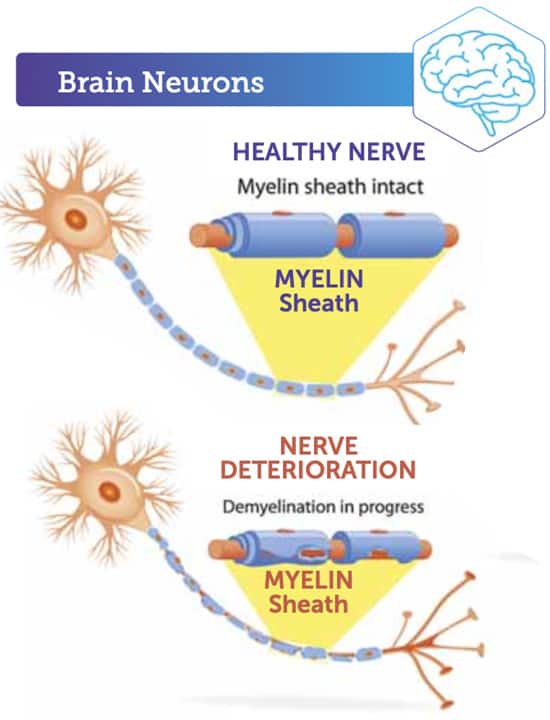
Myelin is a protective covering on nerve fibers that helps brain signals to be properly transmitted. Damage to the myelin sheath is related to neurodegenerative diseases.11
Astaxanthin’s ability to wedge itself into these cell membranes provides strong protection against myelin damage. Few other antioxidants defend cell membranes in this particular way.
Preclinical studies have shown that astaxanthin has potent anti-inflammatory and neuroprotective properties that may contribute to protection against brain-related disorders,12 as well as potential brain benefits including adult neurogenesis (formation of new brain cells).13
In preclinical studies, it has even helped prevent the accumulation of beta-amyloid plaques. These abnormalities in the brain are associated with the development of Alzheimer’s.2,14,15
Preclinical studies suggest that astaxanthin may offer neuroprotective benefits, as it can cross the blood-brain barrier when taken orally—an ability that sets it apart from many other compounds.13
Diverse Brain Benefits
Astaxanthin has been studied in many cell and animal models of neurological conditions.
In mouse models of Alzheimer’s disease, astaxanthin prevented accumulation of toxic beta-amyloid and tau proteins in the brain and reduced inflammation and oxidative stress. These effects led to improvements in cognitive function.14,15
In mouse models of vascular dementia, a common form of dementia that occurs due to reduced blood supply to the brain, astaxanthin prevented neuron cell death, resulting in improved cognitive function and motor behavior.16,17
Astaxanthin also could protect against general brain aging. A model of accelerated aging in mice typically leads to rapid cognitive decline and neurodegenerative disease. Astaxanthin intake significantly delayed brain aging and decline in brain function.18
Researchers found that some of this anti-aging effect could be attributed to enhanced autophagy in the brain,18 "cellular housekeeping" that rejuvenates cells and helps maintain healthy function.
Preclinical studies have shown that astaxanthin benefits the brain in a wide range of additional ways, including by:4
- Improving blood flow,
- Reducing neuroinflammation,
- Increasing brain antioxidant capacity,
- Improving mitochondrial function,
- Preventing brain cell death, and
- Inhibiting abnormal protein accumulation.
Insights from Human Studies
Human studies of astaxanthin have demonstrated protective potential.
One study showed that astaxanthin lowered levels of oxidative stress in the form of phospholipid hydro-peroxides. These compounds reach abnormal concentrations in the red blood cells of dementia patients. Taking astaxanthin reduced levels of these hydroperoxides in the red blood cells of middle-aged and elderly adults compared to placebo.19
What You Need To Know

Support Cognitive Function
Astaxanthin is a red-pigmented carotenoid and powerful antioxidant formed primarily in microalgae.
Its ability to cross the blood-brain barrier and to be inserted into cellular membranes makes it particularly beneficial in the brain, where it can protect against oxidative damage.
Preclinical studies show that astaxanthin defends brain health and protects against loss of cognitive function.
Human trials of astaxanthin show that it can boost cognitive function and reduce markers of dementia.
A clinical trial in adults has shown that taking astaxanthin significantly improves cognitive function after eight weeks of supplementation.20
Other aspects of health have also been explored in separate clinical trials. In one study, a daily dose of 12 mg of astaxanthin was shown to reduce fatigue21 while another trial reported improvements in mood, including reductions in depression.22
Astaxanthin is emerging as a valuable nutrient to promote optimal brain health into older age.

Summary
Astaxanthin is a carotenoid produced by certain microalgae. The body inserts it into cellular membranes, where it protects against oxidation.
In animal and cell studies, astaxanthin exhibits neuroprotective activity that may guard against neurodegenerative disease, including Alzheimer’s disease.
Human trials show astaxanthin can boost cognitive function and reduce markers of dementia.
If you have any questions on the scientific content of this article, please call a Life Extension Wellness Specialist at 1-866-864-3027.
References
- Eggersdorfer M, Wyss A. Carotenoids in human nutrition and health. Arch Biochem Biophys. 2018 Aug 15;652:18-26.
- Babalola JA, Lang M, George M, et al. Astaxanthin enhances autophagy, amyloid beta clearance and exerts anti-inflammatory effects in in vitro models of Alzheimer’s disease-related blood brain barrier dysfunction and inflammation. Brain Res. 2023 Nov 15;1819:148518.
- Bahbah EI, Ghozy S, Attia MS, et al. Molecular Mechanisms of Astaxanthin as a Potential Neurotherapeutic Agent. Mar Drugs. 2021 Apr 3;19(4).
- Cao Y, Yang L, Qiao X, et al. Dietary astaxanthin: an excellent carotenoid with multiple health benefits. Crit Rev Food Sci Nutr. 2023;63(18):3019-45.
- Queen CJJ, Sparks SA, Marchant DC, et al. The Effects of Astaxanthin on Cognitive Function and Neurodegeneration in Humans: A Critical Review. Nutrients. 2024 Mar 14;16(6).
- Adiguzel E, Ulger TG. A marine-derived antioxidant astaxanthin as a potential neuroprotective and neurotherapeutic agent: A review of its efficacy on neurodegenerative conditions. Eur J Pharmacol. 2024 Aug 15;977:176706.
- Donoso A, Gonzalez-Duran J, Munoz AA, et al. "Therapeutic uses of natural astaxanthin: An evidence-based review focused on human clinical trials". Pharmacol Res. 2021 Apr;166:105479.
- Nishida Y, Nawaz A, Hecht K, et al. Astaxanthin as a Novel Mitochondrial Regulator: A New Aspect of Carotenoids, beyond Antioxidants. Nutrients. 2021 Dec 27;14(1).
- Villalain J. Location and dynamics of astaxanthin in the membrane. Chem Phys Lipids. 2025 Aug;270:105512. 10. Perluigi M, Di Domenico F, Butterfield DA. Oxidative damage in neurodegeneration: roles in the pathogenesis and progression of Alzheimer disease. Physiol Rev. 2024 Jan 1;104(1):103-97.
- Wang SS, Zhang Z, Zhu TB, et al. Myelin injury in the central nervous system and Alzheimer’s disease. Brain Res Bull. 2018 Jun;140:162-8.
- Fakhri S, Aneva IY, Farzaei MH, et al. The Neuroprotective Effects of Astaxanthin: Therapeutic Targets and Clinical Perspective. Molecules. 2019 Jul 20;24(14).
- Medoro A, Davinelli S, Milella L, et al. Dietary Astaxanthin: A Promising Antioxidant and Anti-Inflammatory Agent for Brain Aging and Adult Neurogenesis. Mar Drugs. 2023 Dec 16;21(12).
- Balendra V, Singh SK. Therapeutic potential of astaxanthin and superoxide dismutase in Alzheimer’s disease. Open Biol. 2021 Jun;11(6):210013.
- Magadmi R, Nassibi S, Kamel F, et al. The protective effect of Astaxanthin on scopolamine - induced Alzheimer’s model in mice. Neurosciences (Riyadh). 2024 May;29(2):103-12.
- Wei N, Zhang LM, Xu JJ, et al. Astaxanthin Rescues Memory Impairments in Rats with Vascular Dementia by Protecting Against Neuronal Death in the Hippocampus. Neuromolecular Med. 2024 Jul 16;26(1):29.
- Zhu N, Liang X, Zhang M, et al. Astaxanthin protects cognitive function of vascular dementia. Behav Brain Funct. 2020 Nov 18;16(1):10.
- Fu M, Liang X, Zhang X, et al. Astaxanthin delays brain aging in senescence-accelerated mouse prone 10: inducing autophagy as a potential mechanism. Nutr Neurosci. 2023 May;26(5):445-55.
- Nakagawa K, Kiko T, Miyazawa T, et al. Antioxidant effect of astaxanthin on phospholipid peroxidation in human erythrocytes. Br J Nutr. 2011 Jun;105(11):1563-71.
- Hayashi M, Ishibashi T, Maoka T. Effect of astaxanthin-rich extract derived from Paracoccus carotinifaciens on cognitive function in middle-aged and older individuals. J Clin Biochem Nutr. 2018 Mar;62(2):195-205.
- Hongo N, Fujishita M, Y T, et al. Daily fatigue-reducing effect of astaxanthin-a randomized, placebo-controlled, double-blind, parallel-group study. Jpn Pharmacol Ther. 2017;45(1):67-72.
- Talbott S, Hantla D, Capelli B, et al. Astaxanthin supplementation reduces depression and fatigue in healthy subjects. EC Nutrition. 2019;14(3):239-46.


Wellness
Specialists
1-800-226-2370 - This service is FREE
7:30 AM - 12 AM (ET) Mon-Fri | 9 AM - 12 AM (ET) Sat-Sun