

Life Extension Magazine®

Optimizing Garlic’s Cardiovascular Benefits
A patented aged black garlic extract improved multiple cardiovascular markers in a clinical trial in just 12 weeks.
Scientifically reviewed by: Gary Gonzalez, MD, in October 2026. Written by: Marsha McCulloch.
People frequently use dietary supplements to support cardiovascular health.1
This is understandable since cardiovascular disease is the leading cause of death globally.2
Beating the odds of cardiovascular disease requires managing the underlying risk factors, such as unhealthy lipid levels, elevated blood pressure, and high blood sugar.3,4

An aged black garlic extract was associated with improvements in multiple cardiovascular risk factors. A 12-week clinical study5 showed the following reductions:
- Total cholesterol by 11.8%,
- LDL ("bad") cholesterol by 13%,
- Fasting blood sugar by 10%, and
- Systolic blood pressure by 5.3%.
The process used to produce aged black garlic greatly reduces garlic odor and may improve its tolerability.6,7
Understanding Aged Black Garlic
Garlic is recognized for its strong odor and distinctive taste. To retain its health benefits while minimizing its pungent smell, a variety of garlic formulations have been developed.6,8
Allicin, a bioactive compound in garlic, has traditionally been valued and studied for its potential to support cardiovascular and overall health.9
S-allyl-cysteine (SAC), another garlic-derived compound, has been shown to exhibit antioxidant and anti-inflammatory effects that benefit cardiovascular health. It was also shown to help lower cholesterol—in part by reducing its synthesis.10
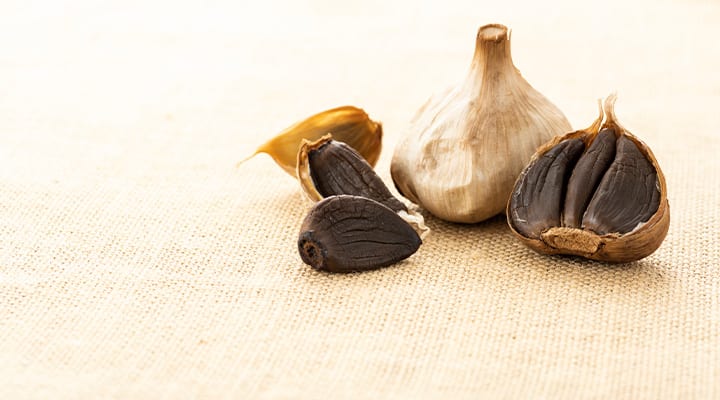
The S-allyl-cysteine content of fresh garlic is low.10 However, treating raw garlic with elevated heat and humidity for up to 90 days boosts the S-allyl-cysteine content.6,10
The special aging process also increases the concentration of polyphenols and other antioxidants in the final product.7,11
S-allyl-cysteine is highly stable in the bloodstream, giving it time to exert its benefits in the body.10,12
Aged black garlic produces less of the strong odor and bad breath associated with fresh garlic, because the aging process markedly reduces pungent organosulfur compounds.13,14
Scientists have developed a patented process for producing an aged black garlic extract with twice the amount of S-allyl-cysteine typically found in oral garlic.5
With levels standardized to 0.5%, this extract provides 2.5 mg of SAC in a single 500 mg dose.5
Improving Blood Lipids
In a clinical trial, researchers tested this aged black garlic in healthy adults with borderline cardiovascular risk levels.
While subjects taking a placebo had minimal changes from baseline, those who took the extract daily for 12 weeks had improvements in blood lipids compared to baseline, including an:5
- 11.8% reduction in total cholesterol,
- 13% reduction in LDL ("bad") cholesterol,
- 11.5% increase in protective HDL ("good") cholesterol, and a
- 12.3% reduction in triglycerides.
In addition, the ratio of total cholesterol to HDL cholesterol improved from 4.85 to 3.84,5 moving it close to the optimal level of 3.5 or less.15
What You Need To Know
Garlic That’s Better with Age
- Garlic has long been used for cardiovascular and overall health support.
- Scientists developed a patented garlic aging process that increases levels of S-allyl-cysteine (SAC) while reducing garlic odor and potentially improving tolerability.
- In a 12-week placebo-controlled trial, this aged black garlic extract was associated with reductions in total cholesterol (11.8%), LDL cholesterol (13%), systolic blood pressure (5.3%), and fasting blood sugar (10%).
- These findings represent favorable changes in established cardiovascular risk factors.
Antioxidant and Anti-Inflammatory Protection
Oxidative stress and inflammation play significant roles in the development of cardiovascular disease.16,17
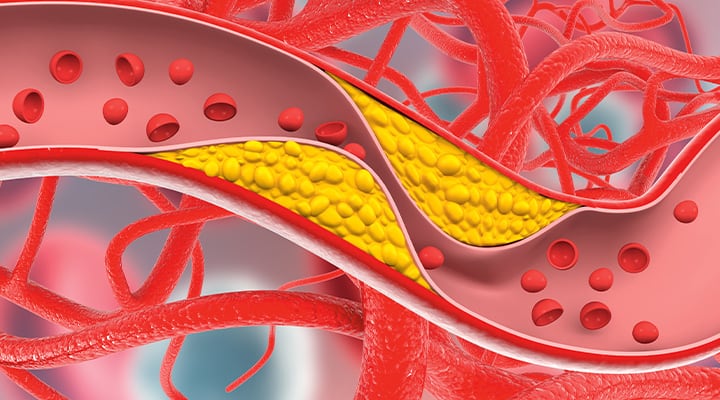
High levels of reactive oxygen species (unstable oxygen molecules), a hallmark of oxidative stress, can damage the inner lining of blood vessels,18 contributing to atherosclerosis (the buildup of plaque in arteries) and high blood pressure.10
In preclinical research, S-allyl-cysteine has been shown to scavenge reactive oxygen species and help prevent LDL oxidation.10
In preclinical cell culture studies—including human cell lines—S-allyl-cysteine has been shown to inhibit multiple mediators of cardiovascular inflammation, including unwanted activation of NF-kB (nuclear factor-kappa B).10
Lowering Blood Pressure
Elevated blood pressure must be treated to avoid the serious and potentially deadly consequences. If not properly managed, high blood pressure dramatically raises the risk of:19
- Heart attack
- Stroke
- Dementia
- Heart failure
- Kidney disease or failure
- Vision loss
- Sexual dysfunction
Optimal blood pressure targets continue to be debated, but we at Life Extension have long argued that, for most people, a systolic blood pressure below 120 mmHg and a diastolic blood pressure below 80 mmHg are ideal.
In the 12-week trial that also measured lipids, taking aged black garlic reduced:21
- Systolic pressure by 5.3% (6.64 mmHg), compared to 1.26% for placebo, and
- Diastolic pressure by 6.5% (5.5 mmHg), compared to 2.24% for placebo.
One way garlic's organo-sulfur compounds may promote lower blood pressure is by generating hydrogen sulfide, a signaling molecule that relaxes and widens blood vessels for better blood flow.22,23
Those with significantly higher blood pressure should be prescribed anti-hypertensive medications, in addition to adjuvant approaches such as weight loss, exercise, and use of nutrients that support vascular health.
Use of at-home blood pressure monitors enables people to measure blood pressure throughout the day/night to more effectively achieve optimal safe levels.
Normalizing Blood Sugar
Adults with type 2 diabetes have up to four times greater risk of cardiovascular disease than those without diabetes.24
The worse a person's blood sugar control, the more the risk of cardiovascular disease increases.24
When subjects in the clinical trial described in this article trial took aged black garlic for 12 weeks, their fasting blood sugar dropped by 10%, compared to just 1.2% in the placebo group.21 The garlic reduced average fasting blood sugar from 99 mg/dL (near the prediabetes level) to 89 mg/dL, in the optimal range.25
Collectively, these are favorable changes in established cardiovascular risk factors.
Summary
Reducing the risk of heart and blood vessel disease requires addressing multiple cardiometabolic risk factors.
In a 12-week clinical study, a standardized aged black garlic extract was associated with improvements in blood lipids, blood pressure, and fasting blood sugar compared with baseline, representing favorable changes in established cardiovascular risk factors.
If you have any questions on the scientific content of this article, please call a Life Extension Wellness Specialist at 1-866-864-3027.
References
- Assadourian JN, Peterson ED, Gupta A, et al. Use of Dietary Supplements Among People With Atherosclerotic Cardiovascular Disease in the United States: A Population-Based Analysis From NHANES. J Am Heart Assoc. 2024 May 7;13(9):e033748.
- Di Cesare M, Perel P, Taylor S, et al. The Heart of the World. Glob Heart. 2024;19(1):11.
- Global Cardiovascular Risk C, Magnussen C, Ojeda FM, et al. Global Effect of Modifiable Risk Factors on Cardiovascular Disease and Mortality. N Engl J Med. 2023 Oct 5;389(14):1273-85.
- Tsao CW, Aday AW, Almarzooq ZI, et al. Heart Disease and Stroke Statistics—2022 Update: A Report From the American Heart Association. Circulation. 2022 2022/02/22;145(8):e153-e639.
- Nirvanashetty S. High Potency Aged Garlic Extract reduces Cardiovascular Disease Risk Factors in Healthy Participants: A Randomized, Double-Blind, Placebo Controlled Study. Journal of Complementary and Alternative Medicine. 2023 September 20, 2023;6(1).
- Ryu JH, Kang D. Physicochemical Properties, Biological Activity, Health Benefits, and General Limitations of Aged Black Garlic: A Review. Molecules. 2017 Jun 1;22(6).
- Ahmed T, Wang CK. Black Garlic and Its Bioactive Compounds on Human Health Diseases: A Review. Molecules. 2021 Aug 19;26(16).
- Vlachojannis C, Schoenenberger AW, Erne P, et al. Preliminary evidence of the clinical effectiveness of odourless garlic. Phytotherapy Research. 2019 2019/09/01;33(9):2179-91.
- Deng Y, Ho CT, Lan Y, et al. Bioavailability, Health Benefits, and Delivery Systems of Allicin: A Review. J Agric Food Chem. 2023 Dec 13;71(49):19207-20.
- Rais N, Ved A, Ahmad R, et al. S-allyl-L-cysteine—a garlic bioactive: physicochemical nature, mechanism, pharmacokinetics, and health promoting activities. Journal of Functional Foods. 2023;107:105657.
- Qiu Z, Zheng Z, Zhang B, et al. Formation, nutritional value, and enhancement of characteristic components in black garlic: A review for maximizing the goodness to humans. Compr Rev Food Sci Food Saf. 2020 Mar;19(2):801-34.
- Kodera Y, Suzuki A, Imada O, et al. Physical, chemical, and biological properties of s-allylcysteine, an amino acid derived from garlic. J Agric Food Chem. 2002 Jan 30;50(3):622-32.
- Kimura S, Tung YC, Pan MH, et al. Black garlic: A critical review of its production, bioactivity, and application. J Food Drug Anal. 2017 Jan;25(1):62-70.
- Vecchi V, Sabbioni G, Altieri MT, et al. Black Garlic: Evolution of the Chemical Composition and Broad Biological Activities. J Agric Food Chem. 2025 Nov 5;73(44):27933-49.
- Habib MB, Akbar NS, Batool G. Investigation of Dyslipidemia and Lipid Profile Ratios Among Patients in Tertiary Care Hospitals. EJIFCC. 2025 Jun;36(2):124-31.
- Valaitienė J, Laučytė-Cibulskienė A. Oxidative stress and its biomarkers in cardiovascular diseases. Artery Res. 2024;30(18).
- Evans BR, Yerly A, van der Vorst EPC, et al. Inflammatory Mediators in Atherosclerotic Vascular Remodeling. Front Cardiovasc Med. 2022;9:868934.
- Myszko M, Bychowski J, Skrzydlewska E, et al. The Dual Role of Oxidative Stress in Atherosclerosis and Coronary Artery Disease: Pathological Mechanisms and Diagnostic Potential. Antioxidants (Basel). 2025 Feb 26;14(3).
- Available at: https://www.alzheimers.org.uk/about-dementia/managing-the-risk-of-dementia/reduce-your-risk-of-dementia/high-blood-pressure. Accessed August 18, 2026.
- Jones DW, Ferdinand KC, Taler SJ, et al. 2025 AHA/ACC/AANP/AAPA/ABC/ACCP/ACPM/AGS/AMA/ASPC/NMA/PCNA/SGIM Guideline for the Prevention, Detection, Evaluation, and Management of High Blood Pressure in Adults: A Report of the American College of Cardiology/American Heart Association Joint Committee on Clinical Practice Guidelines. J Am Coll Cardiol. 2025 Nov 4;86(18):1567-678.
- Nirvanashetty S, Panda SK. High potency aged garlic extract reduces cardiovascular disease risk factors in healthy participants: a randomized, double-blind, placebo controlled study. Journal of Complementary and Alternative Medicine. 2023 Sept 20;6(1).
- Piragine E, Citi V, Lawson K, et al. Regulation of blood pressure by natural sulfur compounds: Focus on their mechanisms of action. Biochem Pharmacol. 2022 Dec;206:115302.
- Benavides GA, Squadrito GL, Mills RW, et al. Hydrogen sulfide mediates the vasoactivity of garlic. Proc Natl Acad Sci U S A. 2007 Nov 13;104(46):17977-82.
- Dal Canto E, Ceriello A, Ryden L, et al. Diabetes as a cardiovascular risk factor: An overview of global trends of macro and micro vascular complications. Eur J Prev Cardiol. 2019 Dec;26(2_suppl):25-32.
- Available at: https://diabetes.org/about-diabetes/diagnosis. Accessed September 10, 2025,


Wellness
Specialists
1-800-226-2370 - This service is FREE
7:30 AM - 12 AM (ET) Mon-Fri | 9 AM - 12 AM (ET) Sat-Sun