



Life Extension Magazine®

The Power of Broccoli
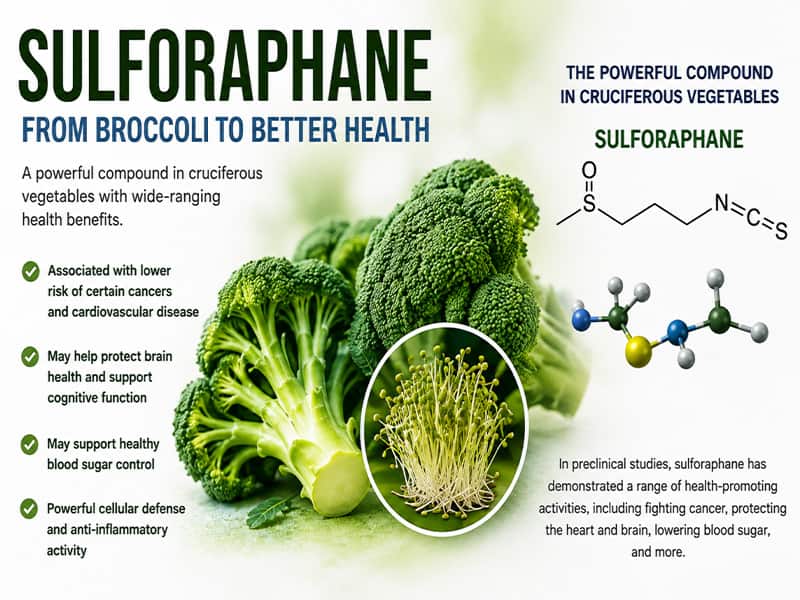
Sulforaphane, a compound that results from the ingestion of broccoli, provides numerous disease-fighting effects including promoting detoxification.
Scientifically reviewed by: Gary Gonzalez, MD, in October 2026. Written by: Stan Richards.
The health benefits of broccoli have been known for decades.1,2
Higher intake of broccoli and other cruciferous vegetables including cabbage, kale, Brussels sprouts, and cauliflower has been associated with a lower risk of cardiovascular disease,3,4 and certain cancers.3,5,6 These vegetables may also help protect against neurodegenerative disorders.7
Some studies suggest that cruciferous vegetables may help support blood sugar control.8,9
Research indicates that many of these benefits are due to a specific compound called sulforaphane.1,10
Broccoli stores sulforaphane in an inactive precursor form called glucoraphanin.
Glucoraphanin is converted into active sulforaphane when the vegetable is chopped or chewed and exposed to the enzyme myrosinase, which is also present in broccoli.2
In preclinical studies, sulforaphane has demo-nstrated a range of health-promoting activities, including protection of the heart and brain,11 support for healthy blood sugar levels,12,13 and other beneficial biological activities.
Defending Cells
Sulforaphane works in many different ways to protect cells and tissues.1,14
One of its most crucial functions is to activate Nrf2, a protein that regulates hundreds of genes involved in cellular defense mechanisms, including antioxidant response and detoxification.15,16
Nrf2 also activates detoxification enzymes that protect against multiple disease mechanisms,17 even neutralizing toxins that can cause the kind of cellular damage that contributes to chronic diseases.18,19
Sulforaphane also reduces harmful chronic inflammation by inhibiting NF-kB (nuclear factor-kappa B), a cellular complex that drives production of pro-inflammatory compounds.20 This kind of inflammation is a driver of nearly all age-related chronic diseases.21
Together, these actions may help support healthy aging.
Potential Role In Cancer Research and Potential Anti-Cancer Effects
In preclinical studies, sulforaphane has acted against cancer cells and slowed tumor growth by switching on tumor-suppressing genes, promoting the death of cancer cells.22,23
Reviews of observational studies have found that individuals who eat more cruciferous vegetables such as broccoli have a lower risk of many different cancers, including breast, prostate, colorectal, lung, gastric, and bladder cancers.3,24,25
Early human research is limited but encouraging. One clinical trial of men with prostate cancer who were being closely monitored found that eating a broccoli soup rich in glucoraphanin for one year was associated with changes in genes involved in cancer-related and inflammatory pathways. The effects were greater among those who consumed more soup.26
A systematic review of randomized controlled trials found that sulforaphane may have beneficial effects in patients with pancreatic cancer.27
For now, sulforaphane remains a promising area for continued scientific study.
Other Benefits
There is growing evidence that sulforaphane has multiple additional health benefits.
For instance, in preclinical studies sulforaphane has shown an ability to both cross the blood-brain barrier while also preserving its integrity.11 Other preclinical studies have explored its potential to treat neuro-degenerative diseases.11,28
In animal models of Alzheimer's, sulforaphane has been associated with improvements in memory and cognitive function. In models of Parkinson's, it has been associated with improved motor function and protection against neuronal degeneration.28
Sulforaphane has also shown potential benefits for cardiovascular and metabolic disease.
Studies in animal models have found that sulforaphane may help improve lipid levels,29,30 reduce obesity,29,31 and slow the progression of atherosclerosis,35 all actions that may help support cardiovascular health.
In preclinical studies, sulforaphane improved fasting blood glucose and insulin sensitivity.32-34
In a human trial, concentrated broccoli extract was associated with reductions in fasting blood glucose and hemoglobin A1c (HbA1c), a marker of long-term glucose control, in obese patients with type 2 diabetes.35
These findings reinforce sulforaphane's potential for managing a range of chronic conditions.
How People Obtain Sulforaphane
Broccoli and other cruciferous vegetables don't actually contain sulforaphane. Instead, they contain a sulforaphane precursor called glucoraphanin and an enzyme called myrosinase, which converts gluco-raphanin into sulforaphane.2
Cooking broccoli, as most people do, inactivates myrosinase, dramatically reducing sulforaphane formation in the gut.36-38
Broccoli sprouts offer the highest natural concentrations of sulforaphane, though studies have used very large, impractical quantities.39
Scientists developed an approach to this problem. They extracted the sulforaphane precursor gluco-raphanin from broccoli seeds, then combined it with a more robust and stable form of myrosinase derived from mustard seeds.40
When consumed, the glucoraphanin and myrosinase mix during digestion, releasing sulforaphane for absorption in the intestine. This allows active sulforaphane to be absorbed and distributed throughout the body, where it can exert its many benefits.40
Get the Benefits of Broccoli
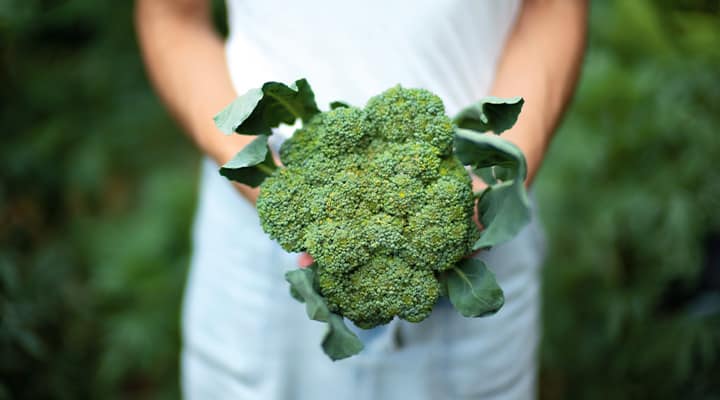
- Broccoli and other cruciferous vegetables have been associated with a lower risk of cardiovascular disease and certain cancers and may also help protect against neurodegenerative disorders.
- Many of these potential benefits have been attributed to sulforaphane, a compound obtained from cruciferous vegetables that enhances cellular defense mechanisms.
- When broccoli is cooked, its ability to produce sulforaphane is rapidly lost.
- A formula has been developed that combines glucoraphanin, the precursor to sulforaphane that is found in broccoli, with an enzyme found in mustard seeds. Consuming this combination produces sulforaphane in the digestive tract, where it can be rapidly absorbed into the body.
- This formulation is designed to enhance sulforaphane production in the digestive tract and may help support healthy aging.
Summary
Sulforaphane, a compound derived from broccoli and other cruciferous vegetables, has demonstrated beneficial biological activity relevant to cancer, neuro-degeneration, cardiovascular disease, and type 2 diabetes in preclinical and early clinical research.
Consuming a precursor called glucoraphanin with the enzyme myrosinase allows conversion into active sulforaphane in the gut, which can then be absorbed into systemic circulation.
Most of these mechanisms have been demonstrated in laboratory and animal studies. Human evidence is available for glucose control in type 2 diabetes.37
Mechanisms of Potential Health Benefits of Sulforaphane
| Potential Health Benefit | Mechanism of Action |
|---|---|
| Cardiovascular Health-Related Properties29,30 |
|
| Potential Neuroprotective Benefits43 |
|
| Anti-Cancer Activity1,44 |
|
| Potential Anti-Diabetes Activities32,33 |
|
Optimizing Sulforaphane
Cruciferous vegetables are typically cooked, which inactivates myrosinase, the plant enzyme responsible for converting glucoraphanin into active sulforaphane.38
Scientists have developed an approach to maximize sulforaphane activation and absorption. Glucoraphanin, the precursor to sulforaphane, is extracted from broccoli seeds and combined with myrosinase derived from mustard seed powder.
Mustard plants belong to the same cruciferous family as broccoli, and mustard-seed myrosinase is more heat- resistant than the myrosinase naturally present in broccoli.41
During digestion, the precursor and enzyme interact to rapidly release sulforaphane in the gut. This process enables sulforaphane to be absorbed efficiently and distributed throughout the body while still in its active form.42
If you have any questions on the scientific content of this article, please call a Life Extension Wellness Specialist at 1-866-864-3027.
References
- Houghton CA. Sulforaphane: Its "Coming of Age" as a Clinically Relevant Nutraceutical in the Prevention and Treatment of Chronic Disease. Oxid Med Cell Longev. 2019;2019:2716870.
- Mangla B, Javed S, Sultan MH, et al. Sulforaphane: A review of its therapeutic potentials, advances in its nanodelivery, recent patents, and clinical trials. Phytother Res. 2021 Oct;35(10):5440-58.
- Li YZ, Yang ZY, Gong TT, et al. Cruciferous vegetable consumption and multiple health outcomes: an umbrella review of 41 systematic reviews and meta-analyses of 303 observational studies. Food Funct. 2022 Apr 20;13(8):4247-59.
- Miller V, Micha R, Choi E, et al. Evaluation of the Quality of Evidence of the Association of Foods and Nutrients With Cardiovascular Disease and Diabetes: A Systematic Review. JAMA Netw Open. 2022 Feb 1;5(2):e2146705.
- Ren HG, Luu HN, Liu Y, et al. High intake of cruciferous vegetables reduces the risk of gastrointestinal cancers: results from observational studies. Crit Rev Food Sci Nutr. 2024;64(23):8493-9.
- Li N, Wu X, Zhuang W, et al. Cruciferous vegetable and isothiocyanate intake and multiple health outcomes. Food Chem. 2022 May 1;375:131816.
- Kakarla R, Karuturi P, Siakabinga Q, et al. Current understanding and future directions of cruciferous vegetables and their phytochemicals to combat neurological diseases. Phytother Res. 2024 Mar;38(3):1381-99.
- Connolly EL, Liu AH, Woodman RJ, et al. Cruciferous vegetables improve glycaemic control compared to root/squash vegetables in a randomized, controlled, crossover trial: The VEgetableS for vaScular hEaLth (VESSEL) study. Diabetes Obes Metab. 2025 Aug;27(8):4300-10.
- Piragine E, Petri D, Giometto S, et al. Potential effects of Alliaceae and Brassicaceae edible plants on blood glucose levels in patients with type 2 diabetes: A systematic review and meta-analysis of clinical trials. Pharmacol Res. 2022 Nov;185:106519.
- Jiang X, Liu Y, Ma L, et al. Chemopreventive activity of sulforaphane. Drug Des Devel Ther. 2018;12:2905-13.
- Kamal RM, Abdull Razis AF, Mohd Sukri NS, et al. Beneficial Health Effects of Glucosinolates-Derived Isothiocyanates on Cardiovascular and Neurodegenerative Diseases. Molecules. 2022 Jan 19;27(3).
- Bhat R, Saxena S, Khajuria M, et al. Glucosinolates Hydrolysis Products: Promising Bioactives for the Prevention of Diabetes. Mol Nutr Food Res. 2025 Dec;69(24):e70302.
- Nagata N, Xu L, Kohno S, et al. Glucoraphanin Ameliorates Obesity and Insulin Resistance Through Adipose Tissue Browning and Reduction of Metabolic Endotoxemia in Mice. Diabetes. 2017 May;66(5):1222-36.
- Shinkai Y, Sumi D, Fukami I, et al. Sulforaphane, an activator of Nrf2, suppresses cellular accumulation of arsenic and its cytotoxicity in primary mouse hepatocytes. FEBS Lett. 2006 Mar 20;580(7):1771-4.
- Boddupalli S, Mein JR, Lakkanna S, et al. Induction of phase 2 antioxidant enzymes by broccoli sulforaphane: perspectives in maintaining the antioxidant activity of vitamins a, C, and e. Front Genet. 2012;3:7.
- Hammad M, Raftari M, Cesario R, et al. Roles of Oxidative Stress and Nrf2 Signaling in Pathogenic and Non-Pathogenic Cells: A Possible General Mechanism of Resistance to Therapy. Antioxidants (Basel). 2023 Jun 30;12(7):1371.
- Cuadrado A, Manda G, Hassan A, et al. Transcription Factor NRF2 as a Therapeutic Target for Chronic Diseases: A Systems Medicine Approach. Pharmacol Rev. 2018 Apr;70(2):348-83.
- Hayes JD, McMahon M, Chowdhry S, et al. Cancer chemoprevention mechanisms mediated through the Keap1-Nrf2 pathway. Antioxid Redox Signal. 2010 Dec 1;13(11):1713-48.
- Zhang C, Su ZY, Khor TO, et al. Sulforaphane enhances Nrf2 expression in prostate cancer TRAMP C1 cells through epigenetic regulation. Biochem Pharmacol. 2013 May 1;85(9):1398-404.
- Heiss E, Herhaus C, Klimo K, et al. Nuclear factor kappa B is a molecular target for sulforaphane-mediated anti-inflammatory mechanisms. J Biol Chem. 2001 Aug 24;276(34):32008-15.
- Kunnumakkara AB, Shabnam B, Girisa S, et al. Inflammation, NF-kappaB, and Chronic Diseases: How are They Linked? Crit Rev Immunol. 2020;40(1):1-39.
- Asif Ali M, Khan N, Kaleem N, et al. Anticancer properties of sulforaphane: current insights at the molecular level. Front Oncol. 2023;13:1168321.
- Nandini DB, Rao RS, Deepak BS, et al. Sulforaphane in broccoli: The green chemoprevention!! Role in cancer prevention and therapy. J Oral Maxillofac Pathol. 2020 May-Aug;24(2):405.
- Baladia E, Monino M, Pleguezuelos E, et al. Broccoli Consumption and Risk of Cancer: An Updated Systematic Review and Meta-Analysis of Observational Studies. Nutrients. 2024 May 23;16(11).
- Guo C, Liu Y, Fu H, et al. Effect of cruciferous vegetable intake on cancer: An umbrella review of meta-analysis. J Food Sci. 2024 Sep;89(9):5230-44.
- Traka MH, Melchini A, Coode-Bate J, et al. Transcriptional changes in prostate of men on active surveillance after a 12-mo glucoraphanin-rich broccoli intervention-results from the Effect of Sulforaphane on prostate CAncer PrEvention (ESCAPE) randomized controlled trial. Am J Clin Nutr. 2019 Apr 1;109(4):1133-44.
- ElKhalifa D, Al-Ziftawi N, Awaisu A, et al. Efficacy and tolerability of sulforaphane in the therapeutic management of cancers: a systematic review of randomized controlled trials. Front Oncol. 2023;13:1251895.
- Schepici G, Bramanti P, Mazzon E. Efficacy of Sulforaphane in Neurodegenerative Diseases. Int J Mol Sci. 2020 Nov 16;21(22).
- Du K, Fan Y, Li D. Sulforaphane ameliorates lipid profile in rodents: an updated systematic review and meta-analysis. Sci Rep. 2021 Apr 8;11(1):7804.
- Zhao L, Li J, Dang Y, et al. Protective role of sulforaphane in lipid metabolism-related diseases. Mol Biol Rep. 2025 Feb 17;52(1):241.
- Ranaweera SS, Natraj P, Rajan P, et al. Anti-obesity effect of sulforaphane in broccoli leaf extract on 3T3-L1 adipocytes and ob/ob mice. J Nutr Biochem. 2022 Feb;100:108885.
- Zhang Y, Wu Q, Liu J, et al. Sulforaphane alleviates high fat diet-induced insulin resistance via AMPK/Nrf2/GPx4 axis. Biomed Pharmacother. 2022 Aug;152:113273.
- Tian S, Wang Y, Li X, et al. Sulforaphane Regulates Glucose and Lipid Metabolisms in Obese Mice by Restraining JNK and Activating Insulin and FGF21 Signal Pathways. J Agric Food Chem. 2021 Nov 10;69(44):13066-79.
- Xu Y, Fu JF, Chen JH, et al. Sulforaphane ameliorates glucose intolerance in obese mice via the upregulation of the insulin signaling pathway. Food Funct. 2018 Sep 19;9(9):4695-701.
- Axelsson AS, Tubbs E, Mecham B, et al. Sulforaphane reduces hepatic glucose production and improves glucose control in patients with type 2 diabetes. Sci Transl Med. 2017 Jun 14;9(394).
- Barba FJ, Nikmaram N, Roohinejad S, et al. Bioavailability of Glucosinolates and Their Breakdown Products: Impact of Processing. Front Nutr. 2016;3:24.
- Okunade O, Niranjan K, Ghawi SK, et al. Supplementation of the Diet by Exogenous Myrosinase via Mustard Seeds to Increase the Bioavailability of Sulforaphane in Healthy Human Subjects after the Consumption of Cooked Broccoli. Mol Nutr Food Res. 2018 Sep;62(18):e1700980.
- Fahey JW, Holtzclaw WD, Wehage SL, et al. Sulforaphane Bioavailability from Glucoraphanin-Rich Broccoli: Control by Active Endogenous Myrosinase. PLOS ONE. 2015;10(11):e0140963.
- Kaiser AE, Baniasadi M, Giansiracusa D, et al. Sulforaphane: A Broccoli Bioactive Phytocompound with Cancer Preventive Potential. Cancers (Basel). 2021 Sep 25;13(19).
- 2023. SIDDoF. Supplier Internal Data. Data on File. 2023.
- Ghawi SK, Methven L, Niranjan K. The potential to intensify sulforaphane formation in cooked broccoli (Brassica oleracea var. italica) using mustard seeds (Sinapis alba). Food Chemistry. 2013 2013/06/01/;138(2):1734-41.
- Okunade O, Niranjan K, Ghawi SK, et al. Supplementation of the Diet by Exogenous Myrosinase via Mustard Seeds to Increase the Bioavailability of Sulforaphane in Healthy Human Subjects after the Consumption of Cooked Broccoli. Molecular Nutrition & Food Research. 2018 2018/09/01;62(18):1700980.
- Bessetti RN, Litwa KA. Broccoli for the brain: a review of the neuroprotective mechanisms of sulforaphane. Front Cell Neurosci. 2025;19:1601366.
- Juge N, Mithen RF, Traka M. Molecular basis for chemoprevention by sulforaphane: a comprehensive review. Cell Mol Life Sci. 2007 May;64(9):1105-27.


Wellness
Specialists
1-800-226-2370 - This service is FREE
7:30 AM - 12 AM (ET) Mon-Fri | 9 AM - 12 AM (ET) Sat-Sun