



Life Extension Magazine®

Dual-Action Urinary Tract Defense
Specially encapsulated bacteriophages combined with whole-fruit cranberry provides targeted defense against urinary tract infections.
Scientifically reviewed by: Gary Gonzalez, MD, in November 2026. Written by: Marsha McCulloch.
Pain and burning during urination, persistent need to urinate, and urinary urgency/frequency are recognized signs of urinary tract infections (UTIs).1,2
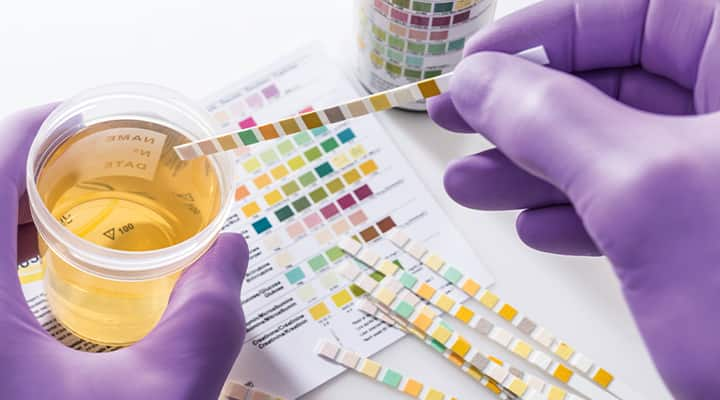
Globally, about 400 million UTIs are diagnosed each year, the majority in women.3 About 25% of women deal with recurrent UTIs.4
These infections are commonly treated with antibiotics, but repeated use is contributing to increasing drug resistance.5
Researchers have identified two non-drug approaches that may support urinary tract health.
Compounds found in cranberries are thought to prevent infection-causing E. coli from adhering to urinary tract cells.6,7 Cranberry has been shown to reduce the occurrence of UTIs in women with recurrent infections.8
In a randomized trial of women with recurrent UTIs, cranberry powder reduced the relative risk of E. coli–related UTIs by 64% and of all recurrent UTIs by 58% compared with placebo.9
To complement cranberries, scientists developed a targeted blend of bacteriophages that, in preclinical studies, were found to seek out and selectively target E. coli strains responsible for UTIs.10
Researchers have now combined these bacteriophages with a cranberry powder encapsulated to maintain potency.
This oral formula is designed to support urinary tract health through complementary mechanisms.
Understanding Urinary Tract Infections
A urinary tract infection (UTI) can affect any part of the urinary system, including the bladder, kidneys, and the tubes that connect them.11
Common symptoms include a painful burning during urination and a frequent, strong need to use the bathroom.1,2
UTIs are much more common in women because of anatomical differences.8 Women are also more likely to experience recurrent UTIs, defined as at least two infections within six months or three within 12 months.4
Menopause is an established risk factor for recurrent UTIs, largely because declining estrogen alters the urogenital epithelium and microbiome.4,12
Roughly 80% of urinary tract infections are caused by the bacteria Escherichia coli (E. coli).13 Many different strains can cause UTIs.14
UTIs are becoming harder to treat as the bacteria that cause them are developing resistance to antibiotics.15 Antibiotics can also cause side effects, including microbiome imbalances and gastrointestinal issues.16
As a result, interest in non-drug strategies for managing UTIs is growing.4,17
Cranberries Prevent UTIs

Cranberries have long been used to support urinary tract health.8,9
These berries are rich in compounds that help prevent E. coli from adhering to urinary tract cells,8,17 potentially reducing E. coli's ability to colonize the urinary tract.6,18
This anti-adhesion effect has been demonstrated in the laboratory. In one in vitro study, pretreating human urinary tract cells with cranberry powder reduced E. coli binding by 90% compared with untreated cells.18 In another, cranberry juice reduced the ability of E. coli to bind to human kidney epithelial cells.6
These laboratory findings are supported by clinical trials: A rigorous Cochrane Review of clinical trials in women with recurrent urinary tract infections found that cranberry products lowered the risk for future infections by an average of 26%.8
In an earlier randomized trial, 176 women with a recent history of UTIs took either 500 mg of whole-fruit cranberry powder or a placebo daily for six months. Over the course of the trial, the cranberry group had a 58% lower risk of recurrent UTIs and a 64% lower risk of E. coli-related UTIs than the placebo group.9
Bacteriophages: A Cutting-Edge Solution
Cranberry's ability to stop E. coli from sticking to the urinary tract would be complemented by an agent that helps curb E. coli growth. That's where bacteriophages come in.
A bacteriophage, or phage for short, is a naturally occurring virus that infects specific bacteria and can destroy them, while generally not targeting human cells.19,20
Phage therapy emerged in the early 1900s as a way to combat bacterial infections, but its use declined when antibiotics became widespread.20,21 Now, phages are receiving renewed interest as antibiotic resistance grows.20,22-24
In addition, phages are highly prevalent in the environment and in our bodies.11 We ingest them every day in food and water.25
Targeting Infection-Causing Bacteria
Phage therapy is highly specific. This means that bacteriophages can be selected to target certain bacteria, including specific strains of E. coli.20
Scientists identified 27 E. coli strains reported to be associated with urinary tract infections. Next, they developed a blend of three phages (ECRBP-203-2, ECTF-195-1, and ECML-1) in preclinical testing to target all 27 strains of E. coli evaluated.10
The scientists then compared the ability of the phage blend and cranberry powder to suppress the growth of three E. coli strains commonly associated with UTIs.26
In simulated small intestine and urine environments, the phages significantly suppressed E. coli growth, while cranberry did not.
In other words, cranberries have been shown to reduce E. coli adhesion to urinary tract cells, but only the selected phages suppressed E. coli growth.26
In preclinical studies, E. coli–targeting phage cocktails reduced E. coli while sparing beneficial microbes commonly found in the gut.27,28 By contrast, antibiotics wiped out both harmful and beneficial gut bacteria.29,30
Pairing this phage blend with encapsulated whole-fruit cranberry powder is intended to combine two complementary mechanisms: cranberry's anti-adhesion effect and the phages' ability to target bacteria directly, which may support urinary tract health.
What You Need To Know
Safeguard Urinary Tract Health
- Women are highly vulnerable to urinary tract infections (UTIs), and antibiotic resistance has made them increasingly difficult to treat.
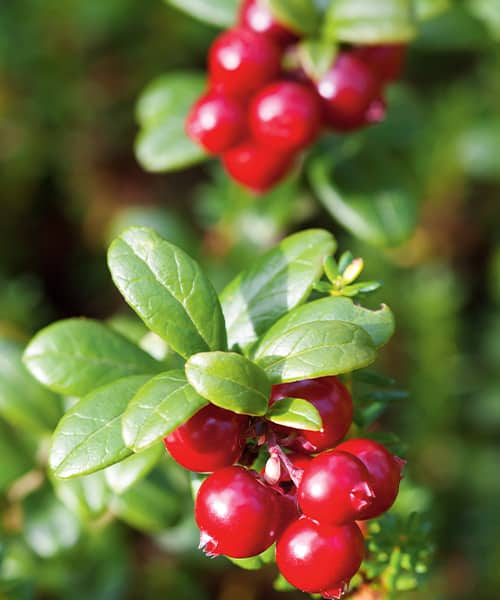
- Cranberries have long been used to maintain urinary tract health. In clinical studies, they lower UTI relative risk by as much as 58%, potentially preventing infection-causing E. coli bacteria from adhering to urinary tract cells.
- To complement cranberry's actions, scientists developed a blend of three bacteriophages that, in preclinical testing, selectively targeted 27 distinct E. coli strains associated with UTIs.
- Combining specially encapsulated whole-fruit cranberry powder with the three-phage blend is intended to provide dual support for urinary tract health.
Summary
Painful and irritating urinary tract infections are common in women. Antibiotic resistance is making them harder to treat, causing many people to seek other solutions.
Whole-fruit cranberry powder has been shown to help prevent infection-causing bacteria from adhering to urinary tract cells and has been associated with reduced UTI recurrence in clinical trials.
A scientifically selected blend of bacteriophages has been shown in preclinical studies to target E. coli strains associated with urinary tract infections.
An oral combination of cranberry powder and phages is designed to provide complementary support for urinary tract health.
If you have any questions on the scientific content of this article, please call a Life Extension Wellness Specialist at 1-866-864-3027.
References
- Hooton TM. Clinical practice. Uncomplicated urinary tract infection. N Engl J Med. 2012 Mar 15;366(11):1028-37.
- Dune TJ, Price TK, Hilt EE, et al. Urinary Symptoms and Their Associations With Urinary Tract Infections in Urogynecologic Patients. Obstet Gynecol. 2017 Oct;130(4):718-25.
- Yang X, Chen H, Zheng Y, et al. Disease burden and long-term trends of urinary tract infections: A worldwide report. Front Public Health. 2022;10:888205.
- Advani SD, Thaden JT, Perez R, et al. State-of-the-Art Review: Recurrent Uncomplicated Urinary Tract Infections in Women. Clin Infect Dis. 2025 Mar 17;80(3):e31-e42.
- Gupta K, Wagenlehner F, Wilcox M, et al. Urinary tract infection in adults: gaps in current guidelines - opinions from an international multidisciplinary panel and relevance to clinical practice. BMC Proc. 2025 Jul 3;19(Suppl 16):18.
- Liu Y, Gallardo-Moreno AM, Pinzon-Arango PA, et al. Cranberry changes the physicochemical surface properties of E. coli and adhesion with uroepithelial cells. Colloids Surf B Biointerfaces. 2008 Aug 1;65(1):35-42.
- Available at: https://www.auanet.org/guidelines-and-quality/guidelines/recurrent-uti#x20898. Accessed August 19, 2026.
- Williams G, Stothart CI, Hahn D, et al. Cranberries for preventing urinary tract infections. Cochrane Database Syst Rev. 2023 Nov 10;11(11):CD001321.
- Vostalova J, Vidlar A, Simanek V, et al. Are High Proanthocyanidins Key to Cranberry Efficacy in the Prevention of Recurrent Urinary Tract Infection? Phytother Res. 2015 Oct;29(10):1559-67.
- file. Do. Intralytix Phage Blend Development. Data on file. 2024.
- Tan CW, Chlebicki MP. Urinary tract infections in adults. Singapore Med J. 2016 Sep;57(9):485-90.
- Glover M, Moreira CG, Sperandio V, et al. Recurrent urinary tract infections in healthy and nonpregnant women. Urol Sci. 2014 Mar;25(1):1-8.
- Klein RD, Hultgren SJ. Urinary tract infections: microbial pathogenesis, host-pathogen interactions and new treatment strategies. Nat Rev Microbiol. 2020 Apr;18(4):211-26.
- Vejborg RM, Hancock V, Schembri MA, et al. Comparative genomics of Escherichia coli strains causing urinary tract infections. Appl Environ Microbiol. 2011 May;77(10):3268-78.
- Kurotschka PK, Gagyor I, Ebell MH. Acute Uncomplicated UTIs in Adults: Rapid Evidence Review. Am Fam Physician. 2024 Feb;109(2):167-74.
- Butler AM, Durkin MJ, Keller MR, et al. Association of Adverse Events With Antibiotic Treatment for Urinary Tract Infection. Clin Infect Dis. 2022 Apr 28;74(8):1408-18.
- Jangid H, Shidiki A, Kumar G. Cranberry-derived bioactives for the prevention and treatment of urinary tract infections: antimicrobial mechanisms and global research trends in nutraceutical applications. Front Nutr. 2025;12:1502720.
- Gupta K, Chou MY, Howell A, et al. Cranberry products inhibit adherence of p-fimbriated Escherichia coli to primary cultured bladder and vaginal epithelial cells. J Urol. 2007 Jun;177(6):2357-60.
- Ofir G, Sorek R. Contemporary Phage Biology: From Classic Models to New Insights. Cell. 2018 Mar 8;172(6):1260-70.
- Ibrahim R, Aranjani JM, Kalikot Valappil V, et al. Unveiling the potential bacteriophage therapy: a systematic review. Future Sci OA. 2025 Dec;11(1):2468114.
- Al-Anany AM, Hooey PB, Cook JD, et al. Phage Therapy in the Management of Urinary Tract Infections: A Comprehensive Systematic Review. Phage (New Rochelle). 2023 Sep 1;4(3):112-27.
- Rahimian M, Jafari-Gharabaghlou D, Mohammadi E, et al. A New Insight into Phage Combination Therapeutic Approaches Against Drug-Resistant Mixed Bacterial Infections. Phage (New Rochelle). 2024 Dec;5(4):203-22.
- Kiani AK, Anpilogov K, Dautaj A, et al. Bacteriophages in food supplements obtained from natural sources. Acta Biomed. 2020 Nov 9;91(13-S):e2020025.
- Zulk JJ, Patras KA, Maresso AW. The rise, fall, and resurgence of phage therapy for urinary tract infection. EcoSal Plus. 2024 Dec 12;12(1):eesp00292023.
- Forde A, Hill C. Phages of life - the path to pharma. Br J Pharmacol. 2018 Feb;175(3):412-8.
- file. Do. Intralytix Phage Efficacy Report. Data on file. 2025.
- Galtier M, De Sordi L, Maura D, et al. Bacteriophages to reduce gut carriage of antibiotic resistant uropathogens with low impact on microbiota composition. Environ Microbiol. 2016 Jul;18(7):2237-45.
- Cieplak T, Soffer N, Sulakvelidze A, et al. A bacteriophage cocktail targeting Escherichia coli reduces E. coli in simulated gut conditions, while preserving a non-targeted representative commensal normal microbiota. Gut Microbes. 2018;9(5):391-9.
- Zimmermann P, Curtis N. The effect of antibiotics on the composition of the intestinal microbiota - a systematic review. J Infect. 2019 Dec;79(6):471-89.
- Duan H, Yu L, Tian F, et al. Antibiotic-induced gut dysbiosis and barrier disruption and the potential protective strategies. Crit Rev Food Sci Nutr. 2022;62(6):1427-52.


Wellness
Specialists
1-800-226-2370 - This service is FREE
7:30 AM - 12 AM (ET) Mon-Fri | 9 AM - 12 AM (ET) Sat-Sun