



Life Extension Magazine®

Boost Your Heart's Pumping Capacity
In a clinical trial, a plant extract increased cardiac ejection fraction, reduced exhaustion, and reduced perceived exertion during exercise.
By Michael Downey.
As we age, the heart finds it harder to pump strongly when we exert ourselves or feel stressed.1
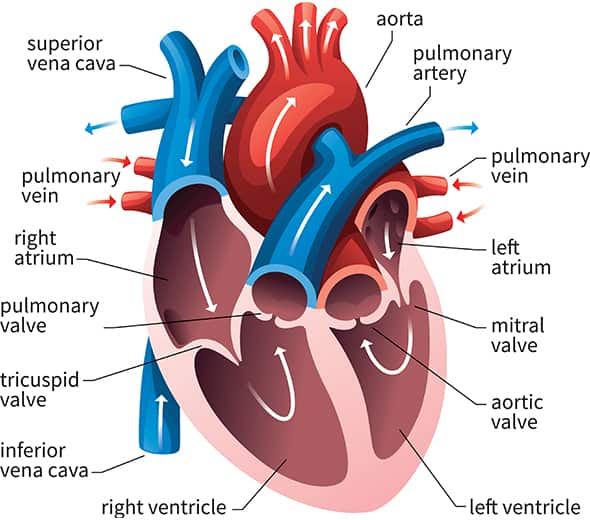
A weaker pumping capacity of the left ventricle is a sign that the heart isn't working as efficiently as it should.2 This can lead to rapid physical fatigue, especially with exertion or stress.1,3,4
The arjuna plant has long been used in traditional Indian Ayurvedic medicine to treat heart disorders.5
Modern research suggests that in people with heart failure, arjuna added to standard treatment may help improve symptoms and functional capacity.6,7
In a trial of healthy adults, a standardized arjuna extract raised ejection fraction by about 3.6 percentage points (from a baseline near 58%) and lowered fatigue scoresby roughly 23%.8
An earlier trial in young male athletes similarly found improvements in ejection fraction and reductions in post-exercise fatigue.9
Your Heart's Pumping Power

An ejection fraction test measures the percentage of blood within a heart's chamber ejected with each heartbeat. In common usage, ejection fraction nearly always refers to the left ventricle.10
Doctors use left ventricular ejection fraction (LVEF) to evaluate how effectively the left ventricle pushes oxygen-rich blood into the aorta, from which it circulates throughout the body.10
A normal LVEF will be somewhere between 50% and 75%.11 An ejection fraction below 50% is considered below normal and may indicate that the heart is not pumping as efficiently as it should, particularly during activity or stress.12
With age, the heart fills less easily and its pumping reserve declines.1 Beyond lifestyle approaches, researchers are investigating natural compounds that may help support cardiac performance.13
A proprietary arjuna extract was shown to increase left ventricular ejection fraction in healthy adults in a small, randomized trial.8
Heart-Supportive Compounds
The arjuna tree is native to the Indian subcontinent and has long been studied for its medicinal qualities.14
In laboratory and animal studies, the natural substances in arjuna have shown a range of promising effects. They appear to protect the heart, help keep arteries clear, calm inflammation, shield cells from damage, and may even act against tumors.15
Many of these observed effects may be related in part to a group of plant compounds called polyphenols—the same kind of protective substances found in foods like green tea and berries. Arjuna's polyphenols include:
Flavonols (quercetin, myricetin, and kaempferol),15
Flavan-3-ols (catechin, gallocatechin, epigallo-catechin, proanthocyanidin oligomers),16 and
Phenolic acids (gallic acid, p-coumaric acid, and ferulic acid).15
Arjuna also contains natural compounds called "cardiotonic," meaning "heart-strengthening." These are thought to support cardiac contraction and pumping efficiency, so it pumps more blood with each beat.14
In trials of a standardized arjuna extract in healthy adults, this has translated into measurable improvements in ejection fraction and less physical fatigue.8,9
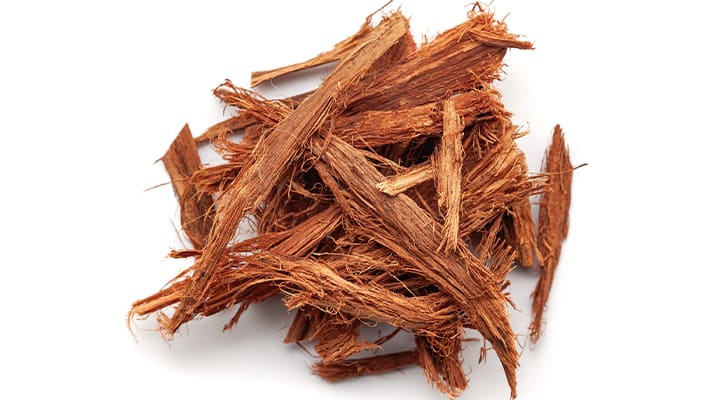
These compounds are especially concentrated in the bark, which is why the bark has traditionally been the medicinal part of the tree.5,17
Researchers created a bark extract with consistent, measured levels of these active compounds.8 Each batch is also checked with DNA testing—a botanical fingerprint—to confirm it is true arjuna and not a look-alike tree.16,18
Improved Pumping, Reduced Fatigue
To evaluate the cardiac effects of this arjuna extract in humans, researchers conducted two placebo-controlled clinical trials.
One trial involved 72 sedentary, overweight men and women aged 30-70 years. Their left ventricular ejection fraction, measured by echocardiogram, fell between 48% and 60%, from mildly reduced to within the normal range.8 Participants took either 400 mg of arjuna bark extract or a placebo daily, while continuing their usual diet and exercise habits.8 After eight weeks, the arjuna group experienced increased left ventricular ejection fraction−a measure of how efficiently the heart pumps with each beat−by an average of 3.6 percentage points.8
The arjuna group also experienced improved physical fatigue scores on a validated fatigue questionnaire by an average of nearly 23%, compared with under 10% for placebo. Participants reported that arjuna reduced how much fatigue interfered with:8
- Physical functioning,
- Sustained physical functioning, and
- Performance of certain duties and responsibilities.
While these are early findings from a small, short-term trial, they add to a growing body of research pointing to arjuna as a promising candidate for supporting heart function.7,19
What You Need To Know
Enzymes Maximize Digestion and Nutrition

- Age-related changes can impair the ability of the heart's left ventricle to pump oxygen-rich blood. Over time, this may contribute to cardiovascular disease.
- A standardized arjuna bark extract has been shown in clinical studies to increase left ventricular ejection fraction (LVEF), a measure of how efficiently the left ventricle pumps blood with each heartbeat.
- In one clinical study, 400 mg of arjuna extract daily raised LVEF by 3.6 percentage points among adults with mildly reduced to normal values. Physical fatigue scores improved by 23%.
- In another clinical trial, arjuna extract led to similar gains in left ventricular ejection fraction in active young men whose values were already in the healthy range, suggesting it may help support measures of cardiac function across a range of healthy adults and those with mildly reduced LVEF.
Benefits for Healthy Adults
Researchers also tested the extract in healthy men aged 18–40, who regularly engaged in endurance exercise. Their left ventricular ejection fraction ranged from 55% to 70%, well within the normal range.9
Subjects took either a placebo or 400 mg of standardized arjuna bark extract daily for eight weeks.
Left ventricular ejection fraction was measured after using a treadmill. Physical fatigue was also measured, using a perceived-exertion scale.
After eight weeks, those taking arjuna extract:9
- Significantly increased their time to exhaustion on the treadmill,
- Raised their already-normal LVEF by 3.7 percentage points, and
- Significantly reduced their perceived exertion during exercise.
Interpreting Left Ventricular Ejection Fraction

The left ventricular ejection fraction (LVEF) is the percentage of blood in the heart's main pumping chamber (left ventricle) that is squeezed out with each heartbeat.
A physician should always interpret your LVEF number. But traditional guidelines are:
50% to ~75% - Normal function,11
41% to 49% - Mild dysfunction,20
30% to 40% - Moderate dysfunction,20 and
Below 30% - Severe dysfunction, possibly indicating heart failure.20
Increasing attention has focused on LVEF trajectory, or how ejection fraction changes over time, rather than a single measurement alone.21,22 Because larger studies have linked changes in ejection fraction over time with clinical outcomes, even modest changes in LVEF, especially around 50–55% may carry prognostic significance.23
The findings from these two studies indicate that arjuna may support cardiac function and resistance to fatigue in individuals with mildly reduced or healthy left ventricular ejection fraction, and even in healthy young endurance exercise-trained individuals.
Neither trial reported any adverse events judged related to the arjuna extract.8,9
Together, these early studies suggest arjuna bark extract may support healthy heart function and reduce physical fatigue — findings researchers hope to confirm in larger, longer trials.
Summary
Age-related changes can affect the heart's pumping efficiency and its ability to respond to increased demands for blood flow throughout the body.
In clinical studies, arjuna bark extract increased left ventricular ejection fraction, a measure of the percentage of blood ejected from the left ventricle with each beat, and reduced fatigue.
Benefits occurred in healthy young athletic subjects, as well as in overweight sedentary adults with mildly reducedto normal ejection fractions.
If you have any questions on the scientific content of this article, please call a Life Extension Wellness Specialist at 1-866-864-3027.
References
- Triposkiadis F, Xanthopoulos A, Butler J. Cardiovascular Aging and Heart Failure: JACC Review Topic of the Week. J Am Coll Cardiol. 2019 Aug 13;74(6):804-13.
- Available at: https://www.nia.nih.gov/health/heart-health/heart-health-and-aging. Accessed 01/27/2025.
- Fleg JL, Forman DE. Aging Changes in Cardiovascular Structure and Function. In: Waldstein SR, Kop WJ, Suarez EC, Lovallo WR, Katzel LI, editors. Handbook of Cardiovascular Behavioral Medicine. New York, NY: Springer New York; 2022:127-62.
- Tanushree A, Sherif F. N. Changes in cardiac structure and function with aging. The Journal of Cardiovascular Aging. 2022;2(1):13.
- Dwivedi S, Chopra D. Revisiting Terminalia arjuna - An Ancient Cardiovascular Drug. J Tradit Complement Med. 2014 Oct;4(4):224-31.
- Maulik SK, Wilson V, Seth S, et al. Clinical efficacy of water extract of stem bark of Terminalia arjuna (Roxb. ex DC.) Wight & Arn. in patients of chronic heart failure: a double-blind, randomized controlled trial. Phytomedicine. 2016 Oct 15;23(11):1211-9.
- Tang T, Li G, Huang X, et al. Efficacy of plant extracts in heart failure patients: a systematic review and network meta-analysis. BMC Cardiovasc Disord. 2026 Jun 12;26(1):502.
- Srivastava S, Girandola RN, Abedon B. Effect of E-OJ-01 on Left Ventricular Ejection Fraction and Myocardial Oxygen Consumption: A Randomized, Double-Blind, Placebo-Controlled Study. J Multidiscip Healthc. 2022;15:2511-25.
- Girandola RN, Srivastava S. Effect of E-OJ-01 on Cardiac Conditioning in Young Exercising Adults: A Randomized Controlled Trial. Am J Ther. 2017 May;24(3):e298-e307.
- Wagholikar KB, Fischer CM, Goodson A, et al. Extraction of Ejection Fraction from Echocardiography Notes for Constructing a Cohort of Patients having Heart Failure with reduced Ejection Fraction (HFrEF). J Med Syst. 2018 Sep 25;42(11):209.
- Lang RM, Badano LP, Mor-Avi V, et al. Recommendations for Cardiac Chamber Quantification by Echocardiography in Adults: An Update from the American Society of Echocardiography and the European Association of Cardiovascular Imaging. Journal of the American Society of Echocardiography. 2015;28(1):1-39.e14.
- Available at: https://www.heart.org/en/health-topics/heart-failure/diagnosing-heart-failure/ejection-fraction-heart-failure-measurement. Accessed September 15, 2026.
- Schmanske N, Ngo JM, Kalra K, et al. Healthy ageing in older adults with cardiovascular disease. Eur Heart J. 2025 Jul 7;46(26):2536-51.
- Dwivedi S. Terminalia arjuna Wight & Arn.--a useful drug for cardiovascular disorders. J Ethnopharmacol. 2007 Nov 1;114(2):114-29.
- Ramesh P, Palaniappan A. Terminalia arjuna, a Cardioprotective Herbal Medicine-Relevancy in the Modern Era of Pharmaceuticals and Green Nanomedicine-A Review. Pharmaceuticals (Basel). 2023 Jan 13;16(1).
- Saha A, Pawar VM, Jayaraman S. Characterisation of Polyphenols in Terminalia arjuna Bark Extract. Indian J Pharm Sci. 2012 Jul;74(4):339-47.
- Meena DK, Sahoo AK, Srivastava PP, et al. On valorization of solvent extracts of Terminalia arjuna (arjuna) upon DNA scission and free radical scavenging improves coupling responses and cognitive functions under in vitro conditions. Sci Rep. 2021 May 20;11(1):10656.
- Mishra P, Kumar A, Nagireddy A, et al. Evaluation of single and multilocus DNA barcodes towards species delineation in complex tree genus Terminalia. PLoS One. 2017;12(8):e0182836.
- Kapoor D, Vijayvergiya R, Dhawan V. Terminalia arjuna in coronary artery disease: ethnopharmacology, pre-clinical, clinical & safety evaluation. J Ethnopharmacol. 2014 Sep 11;155(2):1029-45.
- Heidenreich PA, Bozkurt B, Aguilar D, et al. 2022 AHA/ACC/HFSA Guideline for the Management of Heart Failure: A Report of the American College of Cardiology/American Heart Association Joint Committee on Clinical Practice Guidelines. Circulation. 2022 May 3;145(18):e895-e1032.
- Available at: https://newsroom.heart.org/news/global-experts-update-heart-failure-definition-to-improve-prevention-diagnosis-and-care. Accessed September 11, 2026.
- Walsh MN, Kober L, Sliwa K, et al. AHA/ACC/ESC/WHF Expert Consensus Document: Second Universal Definition of Heart Failure (2026). Circulation. 2026 Aug 18;154(7):e279-e93.
- Strange G, Playford D, Scalia GM, et al. Change in ejection fraction and long-term mortality in adults referred for echocardiography. Eur J Heart Fail. 2021 Apr;23(4):555-63.


Wellness
Specialists
1-800-226-2370 - This service is FREE
7:30 AM - 12 AM (ET) Mon-Fri | 9 AM - 12 AM (ET) Sat-Sun