



Life Extension Magazine®

Superfoods: Zucchini
While zucchini is low in calories, sugar, and fat, it is rich in minerals, vitamins, and two important carotenoid pigments—lutein and zeaxanthin—that support macular pigment.
Scientifically reviewed by: Gary Gonzalez, MD, in November 2026. Written by: Laurie Mathena.
Many low-calorie foods are also low in nutrients. Not zucchini.
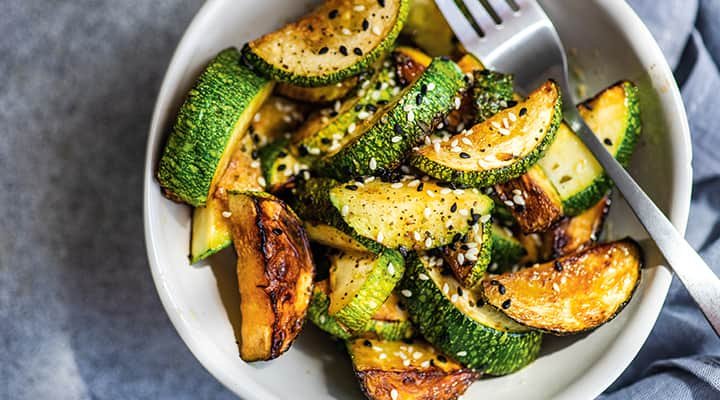
At just 33 calories per medium zucchini, this fruit (yes, it's a fruit!) is naturally low in fat and sugar, yet it delivers a variety of vitamins (C and B-group), minerals (including potassium, phosphorus, manganese, magnesium, iron, and zinc), and beneficial plant compounds, along with small amounts of protein and fiber.1
One medium zucchini provides nearly 40% of the daily value of vitamin C, about 20% of the daily value of vitamin B6, and about 500 mg of potassium. It also supplies calcium, phosphorus, manganese, and folate, making it a nutrient-dense food for its calorie content.2
Zucchini is also a source of lutein and zeaxanthin, two carotenoid pigments found in fruits and vegetables that contribute to their color.3,4
These are the only two dietary carotenoids that cross the blood-retina barrier to form macular pigment, and they also preferentially accumulate in the brain, where lutein predominates.5 In these tissues, they act as antioxidants, helping protect cells from oxidative damage.
Because the body doesn't make lutein or zeaxanthin on its own, it is essential to obtain them from food sources like zucchini, or through supplementation.6
Zucchini's mild flavor makes it a versatile ingredient in a variety of recipes. It can be sauteed in olive oil, roasted, grilled, or added to stir-fries, soups, and stews. You can also blend it into sauces or bake it into bread for extra nutrition.
Zucchini can also be spiralized into "zoodles" and used in place of traditional wheat noodles for a lower-calorie, gluten-free option.
To obtain the most nutrients from zucchini, be sure to consume it with the skin on because many of its beneficial nutrients are concentrated there. •
References
- Salehi B, Quispe C, Sharifi-Rad J, et al. Antioxidant potential of family Cucurbitaceae with special emphasis on Cucurbita genus: A key to alleviate oxidative stress-mediated disorders. Phytotherapy Research. 2021 2021/07/01;35(7):3533-57.
- Available at: https://tools.myfooddata.com/nutrition-facts/169291/wt4/1. Accessed July 30, 2026.
- Fratianni A, Mignogna R, Niro S, et al. Determination of Lutein from Fruit and Vegetables Through an Alkaline Hydrolysis Extraction Method and HPLC Analysis. J Food Sci. 2015 Dec;80(12):C2686-91.
- Humphries JM, Khachik F. Distribution of lutein, zeaxanthin, and related geometrical isomers in fruit, vegetables, wheat, and pasta products. J Agric Food Chem. 2003 Feb 26;51(5):1322-7.
- Johnson EJ. A possible role for lutein and zeaxanthin in cognitive function in the elderly. Am J Clin Nutr. 2012 Nov;96(5):1161s-5s.
- Li X, Holt RR, Keen CL, et al. Potential roles of dietary zeaxanthin and lutein in macular health and function. Nutr Rev. 2023 May 10;81(6):670-83.


Wellness
Specialists
1-800-226-2370 - This service is FREE
7:30 AM - 12 AM (ET) Mon-Fri | 9 AM - 12 AM (ET) Sat-Sun