



Life Extension Magazine®

A Bee Product That Reduces Sick Days
An anti-microbial substance made by bees can enhance immune defense against the common cold.
By William Faloon.

Each year millions of Americans suffer through upper respiratory tract infections.1
Many experience multiple episodes.2
The resulting impact on productivity and healthcare costs is substantial.
The most prevalent upper respiratory tract infection is the common cold.
While over-the-counter (OTC) medications offer some temporary symptom relief, they may do little to reduce the duration of illness or address the cause.3,4
We’ve long questioned the prevailing medical model that prioritizes symptom suppression in lieu of active intervention and prevention. We have reported on research supporting immune modulating nutrients like zinc, lactoferrin, garlic, and vitamin D.
New clinical research helps validate an option that has a history of beneficial purposes.
Propolis is a bee-derived substance that has been shown to enhance protection and recovery from upper respiratory tract infections.
In double-blind randomized placebo-controlled clinical trials of adults:
- Those with an upper respiratory tract infection who took an oral throat spray of propolis daily had their symptoms resolved two days faster than those receiving a placebo.5
- Those without an upper respiratory tract infection during the colder months who took oral capsules containing propolis daily reported 34% fewer sick days than those receiving placebo.6
When combined with other immune-supporting supplements it may be possible for even faster resolution of symptoms and enhanced defense against future infection.
Gaining Scientific Validation

Bees are responsible for the pollination of over 100 commercial crops in the United States.7 They also produce a substance that boosts immune functions.
Propolis is created primarily by honeybees when they mix their saliva and beeswax with pollen or resins gathered from buds or cracks in bark.8
Bees utilize propolis for a variety of purposes, such as to fill in cavities in the beehive and mummify intruders to prevent their decay.9
Ancient Greek, Roman, and Egyptian civilizations were documented as users of propolis for a variety of purposes.10
While propolis has been widely accessible in complementary medicine since the 1980s, only in the last 20 years has science been paying closer attention.11
Researchers have discovered that propolis contains a variety of polyphenols that have anti-microbial and anti-inflammatory benefits.11,12
The effects of propolis on the immune system may be two-fold:13
- Modulating innate (first line of defense) immune function, and
- Enabling better adaptive (acquired) immunity.
Propolis has demonstrated in preclinical models that it may increase natural killer (NK) cell activity14 and modulates the function of monocytes that adversely down-regulate certain immune activity.13,15 NK cells and monocytes are types of white blood cells that are part of the innate immune system.16
For a robust immune response, you want to temporarily up-regulate NK cell activity and turn down excess monocyte function.
Propolis may also increase antibody production from B-cells which are part of the adaptive immune response.17
One dilemma for propolis supplements is that the content of polyphenols can vary depending on what plant species the bees use, which changes based on the time of year and location.18
To overcome this obstacle, scientists developed methods to standardize propolis to a specific concentration of polyphenols.18
A standardized propolis formula has been clinically validated in two delivery systems (capsules and spray) to provide immune support.
Clinical Trials Demonstrate Protection

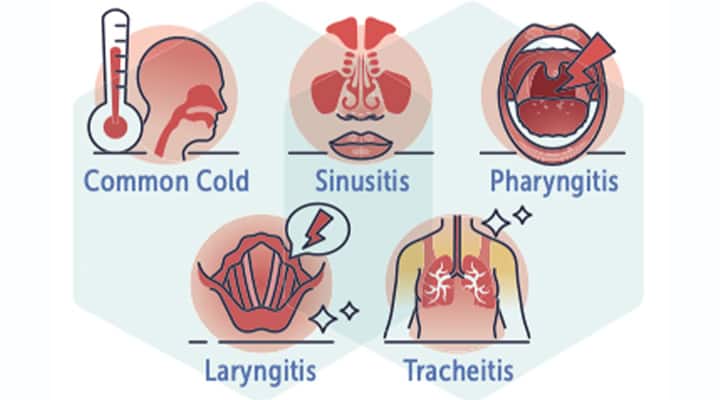
Upper respiratory tract infections refer to acute infections of the mucosa lining in the upper respiratory tract caused by bacteria or viruses.
Infections classified in this way include the common cold, pharyngitis (sore throat), sinusitis, laryngitis, and tracheitis.
During the colder months, the risk of respiratory illnesses increases.19
In a randomized controlled trial, 295 healthy men and women between the ages of 25-69 were enrolled to study the effect propolis has on upper respiratory tract infection risk between the autumn and spring months.
One group took a capsule containing 200 mg of standardized propolis at breakfast and another at dinner for a total of 400 mg daily. The other group did the same with a placebo.
After 12 weeks those who took propolis compared to placebo had:
- 29% fewer sick events,
- 31% reduced risk of experiencing respiratory discomfort, and
- 34% fewer sick days.6
Speeding the Pace of Recovery

Propolis may not only modulate the immune system to provide greater protection from new infections, but when taken as an oral spray (targeting the back of the throat), it may provide faster relief from an existing upper respiratory tract infection.
In a randomized-controlled trial, 122 people aged 18-77 years old with a mild upper respiratory tract infection (viral or bacterial origin) were split into groups to receive an oral propolis spay or a placebo.
Dosing was 2-4 sprays three times a day for five days.
The participants’ symptoms included sore throat, hoarseness, swelling, and/or redness. Infection was confirmed from a clinical evaluation and a microbial throat swab administered by a physician.
After three days, 83% of subjects taking the propolis oral spray experienced remission in upper respiratory tract discomfort. Only 28% of the placebo group experienced remission.
Mild respiratory tract discomfort cleared up two days earlier in the propolis-supplemented group.5
Summary
Upper respiratory tract infections are a huge burden on society.
When symptoms manifest, it is frustrating not to have immediate access to an intervention that may reduce symptoms and shorten duration.
Over-the-counter medications can help relieve some symptoms but do little to address the underlying causes.
Propolis is a bee-derived substance that has long been utilized in traditional medicine. It has been available as a dietary supplement for decades. In recent years scientists have been paying closer attention.
Taking propolis capsules during the colder months resulted in 34% fewer sick days than for those receiving a placebo.
In the form of an oral spray, propolis resolved symptoms two days faster than placebo.
Combining propolis with other immune-supporting nutrients may offer even greater protection and recovery against common upper respiratory tract infections.
When symptoms develop, it's nice to have something on hand that may shorten duration and boost immune functions.
For longer life,

William Faloon, Co-Founder Life Extension®
References
- Zimmerman RK, Balasubramani GK, D’Agostino HEA, et al. Population-based hospitalization burden estimates for respiratory viruses, 2015-2019. Influenza Other Respir Viruses. 2022 Nov;16(6):1133-40.
- Prasad S, Lownik E, Ricco J. Viral Infections of the Respiratory Tract. Family Medicine. 2016 Feb 17;17:507-17.
- Smith A, Kardos P, Pfaar O, et al. The treatment of mild upper respiratory tract infections - a position paper with recommendations for best practice. Drugs Context. 2023;12.
- De Sutter AI, Eriksson L, van Driel ML. Oral antihistamine-decongestant-analgesic combinations for the common cold. Cochrane Database Syst Rev. 2022 Jan 21;1(1):Cd004976.
- Esposito C, Garzarella EU, Bocchino B, et al. A standardized polyphenol mixture extracted from poplar-type propolis for remission of symptoms of uncomplicated upper respiratory tract infection (URTI): A monocentric, randomized, double-blind, placebo-controlled clinical trial. Phytomedicine. 2021 Jan;80:153368.
- Data on file: Poplar-type Propolis Dry Extract ESIT12 : Immunomodulation Efficacy Study. 2024.
- Available at: https://www.usda.gov/about-usda/news/blog/buzz-about-pollinators. Accessed August 28th, 2025,
- Bobis O. Plants: Sources of Diversity in Propolis Properties. Plants (Basel). 2022 Sep 2;11(17).
- Simone-Finstrom M, Spivak M. Propolis and bee health: the natural history and significance of resin use by honey bees*. Apidologie. 2010 5//;41(3):295-311.
- Kuropatnicki AK, Szliszka E, Krol W. Historical aspects of propolis research in modern times. Evid Based Complement Alternat Med. 2013;2013:964149.
- Salatino A. Perspectives for Uses of Propolis in Therapy against Infectious Diseases. Molecules. 2022 Jul 19;27(14).
- Zaccaria V, Curti V, Di Lorenzo A, et al. Effect of Green and Brown Propolis Extracts on the Expression Levels of microRNAs, mRNAs and Proteins, Related to Oxidative Stress and Inflammation. Nutrients. 2017 Oct 1;9(10).
- Conte FL, Santiago KB, Conti BJ, et al. Propolis from southeastern Brazil produced by Apis mellifera affects innate immunity by modulating cell marker expression, cytokine production and intracellular pathways in human monocytes. J Pharm Pharmacol. 2021 Mar 4;73(2):135-44.
- Takeda K, Nagamatsu K, Okumura K. A water-soluble derivative of propolis augments the cytotoxic activity of natural killer cells. J Ethnopharmacol. 2018 May 23;218:51-8.
- Zulhendri F, Lesmana R, Tandean S, et al. Recent Update on the Anti-Inflammatory Activities of Propolis. Molecules. 2022 Dec 2;27(23).
- Gabrielli S, Ortolani C, Del Zotto G, et al. The Memories of NK Cells: Innate-Adaptive Immune Intrinsic Crosstalk. J Immunol Res. 2016;2016:1376595.
- Freitas JA, Vanat N, Pinheiro JW, et al. The effects of propolis on antibody production by laying hens. Poult Sci. 2011 Jun;90(6):1227-33.
- Wieczorek PP, Hudz N, Yezerska O, et al. Chemical Variability and Pharmacological Potential of Propolis as a Source for the Development of New Pharmaceutical Products. Molecules. 2022 Feb 28;27(5).
- Price RHM, Graham C, Ramalingam S. Association between viral seasonality and meteorological factors. Sci Rep. 2019 Jan 30;9(1):929.


Wellness
Specialists
1-800-226-2370 - This service is FREE
7:30 AM - 12 AM (ET) Mon-Fri | 9 AM - 12 AM (ET) Sat-Sun