



Life Extension Magazine®

Probiotics Tailored for Women
Specific oral probiotics provide support for female concerns. In clinical trials, one probiotic reduced vaginal yeast infections, while another promoted gut and immune health.
Scientifically reviewed by: Gary Gonzalez, MD, in January 2026. Written by: Marsha McCulloch, MS, RD.
A common misconception is that all probiotics are essentially the same.1
In reality, their effects vary dramatically from strain to strain.
For the greatest benefits, it is essential to use probiotic strains that have been clinically tested for specific health issues.2,3
Two oral probiotics have been shown to address common health concerns of women. In clinical trials:
- Lactobacillus plantarum P17630 helped restore healthy balance to the vaginal flora (the vaginal microbiome) and reduced symptoms of vaginal yeast infections in women with a history of recurrent vulvo- vaginal yeast infection.4
- Lactobacillus helveticus L10 supported women’s immune defenses against infections.5,6
A combination of these probiotics provides tailored support for female health concerns.
Women’s Intimate Health
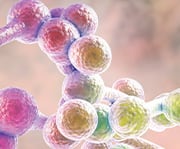
Just like the gut microbiome, the vaginal flora can be healthy or unhealthy.
A healthy vaginal flora is typically high in Lactobacillus bacteria.7
Lactobacillus produces lactic acid to help maintain a slightly acidic (lower pH) environment that deters the growth of harmful bacteria.8,9
When the vaginal floral balance is upset (known as dysbiosis), Candida yeast can overgrow and cause a yeast infection. Candida albicans is the most common yeast species involved.8
Yeast infections are extremely common. Symptoms include vaginal itching, burning, and discharge.8,10
Standard antifungal treatments often fail in recurrent yeast infections because the Candida forms protective biofilms that make it harder for the drugs to work. Harmful microbes like this can become resistant to medications when they’re used repeatedly.11
Proven Vaginal Health Support
Probiotics are not only beneficial for gut health, they can also help support a balanced vaginal flora and improved gynecological wellness.
Scientists identified a bacterial strain, Lactobacillus plantarum P17630, that was present in women with healthy vaginal flora, supporting a more balanced vaginal environment.12
In a laboratory culture of human vaginal epithelial cells, Lactobacillus plantarum P17630 was demonstrated to adhere to the cells and to competitively inhibit Candida adhesion.13
To explore its effectiveness as an oral probiotic, a pilot study was conducted with six healthy women (ages 18 to 45) with normal vaginal flora.14
For 60 days, the women took L. plantarum P17630. After 30 days, results showed colonization of L. plantarum P17630 in the vagina of 80% of the women, leading to an improvement in the vaginal flora.14
These impressive results were maintained even after the women stopped taking the probiotic for 15 days.
In a larger clinical trial, scientists enrolled 93 women (ages 18 to 58) with a history of recurrent vaginal yeast infections.4
The women took 5 billion CFU of L. plantarum P17630 or a placebo daily. They completed three cycles of 15 days taking the probiotic, followed by a 15-day break in between.
Significant improvement was seen after about six weeks, by which time the participants had taken the probiotic for a total of 30 days.
The percentage of women with healthy vaginal microbiome scores (high in lactobacillus) nearly doubled, while the percentage with less healthy or frankly unhealthy scores decreased markedly, as compared to the start of the study.
In the placebo group, women with the least healthy scores had far worse scores after 45 and 90 days.4
The probiotic group also had a significant decrease in yeast infection symptoms at the 45 and 90-day follow ups, including vaginal redness, swelling, and discharge, compared to the placebo group.4
Bolstering Immune Defenses for Vaginal Health
Lactobacillus helveticus is recognized as a probiotic strain that helps support gut and immune health by promoting a balanced intestinal microbiome and limiting the growth of harmful microbes.15 Constituents of L. helveticus strains have demonstrated beneficial immune effects in a preclinical setting.16
Preclinical research shows that L. helveticus can inhibit pathogens such as Listeria,17 Candida,18 and E. coli19 in both the gastrointestinal and vaginal environments.20 Uncontrolled proliferation of these pathogens may lead to gastrointestinal problems and flu-like symptoms.
Clinical studies also show L. helveticus may help prevent gastrointestinal infections and influence immune activity.15
Ongoing stress can weaken a woman’s immune system.21 Immune-supportive probiotics can boost defenses against infections throughout the body.22
Researchers have also examined the Lactobacillus helveticus L10 strain specifically, finding that it can help support healthy immune function. In studies in elite athletes, L10 improved immune markers, an important benefit for athletes, whose intense training can temporarily weaken immune defenses and increase susceptibility to respiratory infections.
In a clinical trial, elite athletes took 20 billion CFU of Lactobacillus helveticus L10 or a placebo daily for 14 weeks during winter.5
The probiotic group reported 29% fewer upper respiratory infection symptoms, and infections lasted about 3.5 fewer days compared to the placebo group, a sign of improved immunity.5
Further analysis showed that total salivary IgA (immunoglobulin A) levels were maintained in the probiotic group.6
IgA is an antibody that provides the first line of mucosal immune defense against respiratory tract infections. IgA also supports immune defense in the vaginal tract.23
The placebo group had up to 35% reduction in salivary IgA, suggesting weakened immunity.6
Together, oral intake of L. plantarum P17630 and L. helveticus L10 may help address top health concerns of women and promote better vaginal, immune, and gut health.
What You Need To Know
Probiotics Just for Her
- Scientists have identified probiotic strains and dosages for women that help reduce vaginal yeast infections, and support gut and immune health.
- In a clinical trial, women who took Lactobacillus plantarum P17630 every day experienced a marked improvement in their vaginal flora and significantly reduced symptoms of vaginal yeast infections.
- In a clinical trial in elite athletes, daily oral intake of Lactobacillus helveticus L10 supported the maintenance of IgA, an antibody that provides immune defense in the gastrointestinal, vaginal, and respiratory tract.
- A combination of L. plantarum P17630 and L. helveticus L10 delivers targeted support for a woman’s vaginal health as well as her overall immunity.
Summary

Probiotics for women’s health should be chosen based on clinically proven benefits, using specific strains and dosages.
Two clinical trials have demonstrated that daily oral intake of 5 billion CFU of L. plantarum P17630 can restore normal vaginal flora and reduce symptoms of yeast infections.
Additional clinical research suggests that taking 20 billion CFU of L. helveticus L10 daily can help bolster immune defenses.
Combining these two probiotics provides well-rounded support for common health concerns of women.
If you have any questions on the scientific content of this article, please call a Life Extension Wellness Specialist at 1-866-864-3027.
References
- Available at: https://ipa-biotics.org/infographics/7-probiotic-myths-to-expose-with-facts/. Accessed November 7, 2025.
- Forssten SD, Laitila A, Maukonen J, et al. Probiotic triangle of success; strain production, clinical studies and product development. FEMS Microbiol Lett. 2020 Oct 21;367(19).
- McFarland LV, Evans CT, Goldstein EJC. Strain-Specificity and Disease-Specificity of Probiotic Efficacy: A Systematic Review and Meta-Analysis. Front Med (Lausanne). 2018;5:124.
- Vladareanu R, Mihu D, Mitran M, et al. New evidence on oral L. plantarum P17630 product in women with history of recurrent vulvovaginal candidiasis (RVVC): a randomized double-blind placebo-controlled study. Eur Rev Med Pharmacol Sci. 2018 Jan;22(1):262-7.
- Michalickova D, Minic R, Dikic N, et al. Lactobacillus helveticus Lafti L10 supplementation reduces respiratory infection duration in a cohort of elite athletes: a randomized, double-blind, placebo-controlled trial. Appl Physiol Nutr Metab. 2016 Jul;41(7):782-9.
- Michalickova DM, Kostic-Vucicevic MM, Vukasinovic-Vesic MD, et al. Lactobacillus helveticus Lafti L10 Supplementation Modulates Mucosal and Humoral Immunity in Elite Athletes: A Randomized, Double-Blind, Placebo-Controlled Trial. J Strength Cond Res. 2017 Jan;31(1):62-70.
- Montella R, Malfa P, Giuliano A, et al. Vaginal adhesion of Lactobacillus plantarum P17630 after probiotic food supplement oral administration: a preliminary in vivo study. Nutrafoods. 2013;12(2):35-42.
- Faustino M, Ferreira CMH, Pereira AM, et al. Candida albicans: the current status regarding vaginal infections. Appl Microbiol Biotechnol. 2025 Apr 10;109(1):91.
- Nieto M, Rus M, Areal Quecuty V, et al. Menopausal shift on women’s health and microbial niches. npj Women s Health. 2025 05/07;3:11.
- Martin Lopez JE. Candidiasis (vulvovaginal). BMJ Clin Evid. 2015 Mar 16;2015.
- Akinosoglou K, Livieratos A, Asimos K, et al. Fluconazole-Resistant Vulvovaginal Candidosis: An Update on Current Management. Pharmaceutics. 2024 Dec 4;16(12).
- De Seta F, Parazzini F, De Leo R, et al. Lactobacillus plantarum P17630 for preventing Candida vaginitis recurrence: a retrospective comparative study. Eur J Obstet Gynecol Reprod Biol. 2014 Nov;182:136-9.
- Culici M. Adhesion of Lactobacillus plantarum P 17630 to vaginal epithelial cells and its influence on Candida albicans adhesion. GIMMOC. 2004;VIII(1):34-41.
- Montella R, Malfa P, Giuliano A, et al. Vaginal adhesion of Lactobacillus plantarum P17630 after probiotic food supplement oral administration: a preliminary in vivo study. Nutrafoods. 2013 06/01;12.
- Taverniti V, Guglielmetti S. Health-Promoting Properties of Lactobacillus helveticus. Front Microbiol. 2012;3:392.
- Zago M, Massimiliano L, Bonvini B, et al. Functional characterization and immunomodulatory properties of Lactobacillus helveticus strains isolated from Italian hard cheeses. PLoS One. 2021;16(1):e0245903.
- Mahoney M, Henriksson A. The effect of processed meat and meat starter cultures on gastrointestinal colonization and virulence of Listeria monocytogenes in mice. Int J Food Microbiol. 2003 Aug 1;84(3):255-61.
- Elahi S, Pang G, Ashman R, et al. Enhanced clearance of Candida albicans from the oral cavities of mice following oral administration of Lactobacillus acidophilus. Clin Exp Immunol. 2005 Jul;141(1):29-36.
- Johnson-Henry KC, Hagen KE, Gordonpour M, et al. Surface-layer protein extracts from Lactobacillus helveticus inhibit enterohaemorrhagic Escherichia coli O157:H7 adhesion to epithelial cells. Cell Microbiol. 2007 Feb;9(2):356-67.
- Pino A, Bartolo E, Caggia C, et al. Detection of vaginal lactobacilli as probiotic candidates. Sci Rep. 2019 Mar 4;9(1):3355.
- Alotiby A. Immunology of Stress: A Review Article. J Clin Med. 2024 Oct 25;13(21).
- Yan F, Polk DB. Probiotics and immune health. Curr Opin Gastroenterol. 2011 Oct;27(6):496-501.
- Li Y, Jin L, Chen T. The Effects of Secretory IgA in the Mucosal Immune System. Biomed Res Int. 2020;2020:2032057.


Wellness
Specialists
1-800-226-2370 - This service is FREE
7:30 AM - 12 AM (ET) Mon-Fri | 9 AM - 12 AM (ET) Sat-Sun