

Life Extension Magazine®

Botanical Solution for Low Back Pain
A clinical trial showed that two plant extracts significantly reduced lower back pain for 79% of patients in 30 days. In a separate clinical trial, another plant extract eliminated chronic low back pain for 22% of subjects after four weeks.
Scientifically reviewed by: Gary Gonzalez, MD, in March 2026. Written by: Marsha McCulloch, MS, RD.
Lower back pain can interfere with work, sleep, and social activities1 and make day-to-day life miserable.
Only 10% of common non-surgical treatments for lower back pain are effective.2
Searching for plant-based alternatives,3 scientists focused on three botanical extracts. They all have documented anti-inflammatory and pain-relieving properties.4-7
A placebo-controlled clinical trial showed that about 79% of people taking a blend of chaste tree and ginger extracts experienced clinically significant reduction in lower back pain intensity, compared with just 36% in the placebo group.8
In a separate clinical trial, 22% of subjects were completely free of chronic lower back pain after four weeks of taking white willow bark extract.9
A nutritional solution that combines these ingredients can help people stay active and independent as they age.
The Lowdown on Low Back Pain
Lower back pain is alarmingly common and is the single leading cause of disability worldwide.10
In the U.S., over 8% of adults have chronic severe back pain, and according to an analysis from the National Health Interview Survey, nearly 75% of them have trouble with mobility.11
People will try anything to ease back pain. But a meta-analysis of 301 studies of non-surgical treatments found that the majority produced little to no improvement.2
Non-steroidal anti-inflammatory drugs (NSAIDs), such as ibuprofen (Advil®, Motrin®) and aspirin, provided only slight reductions in low back pain.2
NSAIDs, however, increase the risk of gastro-intestinal bleeding, heart attacks, renal damage, and strokes.12 The risk of side effects grows with higher doses and long-term use.13-15
Chaste Tree, Ginger, and Willow Bark
To formulate a safe and potent pain solution, scientists selected three botanicals:
- Five-leaf chaste tree
- Ginger
- White willow bark
Five-leaf chaste tree is a shrub native to China and India.16 It has been used in Ayurveda (traditional Indian medicine) to relieve pain and inflammation.5
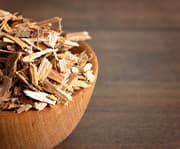
Ginger has a history of use in Chinese medicine and is known for its digestive health benefits.17 Newer research has explored its pain-relief properties.6,18
White willow bark is chemically related to aspirin.7 It contains salicin, which can be converted to salicylic acid in the body.9,19 Unlike aspirin, which can cause gastrointestinal bleeding, willow bark has not shown this side effect.7,9,19
Preclinical and clinical research suggest that pain-relief benefits from these extracts may come from inhibiting:
- Enzyme pathways that promote inflammation and pain,7,18,20,21
- Inflammatory signaling, including by NF-kB (nuclear factor-kappa B)17,22 and TNF-alpha (tumor necrosis factor-alpha),8,19,23 and
- Oxidative stress, by suppressing xanthine oxidase,18 an enzyme that generates oxidative stress,24 and increasing the antioxidant glutathione.25
To maximize benefits, scientists combined standardized extracts from five-leaf chaste tree leaves and ginger root, then added white willow bark extract.
Clinical Results
To test the chaste tree-ginger extract blend, researchers enlisted 67 relatively sedentary adults, aged 18-60, with persistent low back pain.
They were given 200 mg of chaste tree-ginger blend or a placebo twice daily for 30 days.8
Within seven days, those taking the extracts had a three times greater reduction in self-rated pain than those taking placebos.
By the end of the study, a whopping 79% of the extract group reported a clinically significant reduction in lower back pain intensity, compared with only 36% in the placebo group.
In this study, about 77% achieved a meaningful improvement in functional activity, compared with 30% in the placebo group.8
Those taking the extract blend also had:
- More than twice the reduction in low back pain-related disability compared to placebo, improving their ability to perform daily activities,
- A 40% improvement in bending flexibility (the ability to touch their toes), compared to a 17% improvement in the placebo group, and
- Improved sleep quality, compared to no clinically meaningful improvement in the placebo group.
Optimizing Pain Relief with Willow Bark
Researchers tested white willow bark in a clinical trial of 191 people with recent worsening of their chronic lower back pain.9
Subjects received either a placebo or a low-dose willow bark extract containing 120 mg of salicin, roughly equal to half a baby aspirin.26
All participants could use an opioid rescue medication (tramadol) for pain, if necessary.
After four weeks, 22% of those taking low-dose willow bark were completely pain-free (without rescue medication), compared with 7% of placebo recipients.
Only 15% of subjects taking willow bark for four weeks needed the opioid pain medication, compared to 56% in the placebo group.9
What You Need To Know

Beat Lower Back Pain
- Most medications to relieve lower back pain have limited benefits and carry risks.
- Scientists developed a safe blend of extracts from five-leaf chaste tree leaves, ginger root, and white willow bark, which have pain-relieving, anti-inflammatory, and antioxidant properties.
- A placebo-controlled clinical trial reported that nearly 79% of participants treated with a combination of five-leaf chaste tree and ginger extracts experienced a clinically significant decrease in lower back pain intensity, versus just 36% in the placebo group.
- In another clinical trial, 22% of subjects taking white willow bark extract experienced complete relief from lower back pain.
- A blend of these extracts may help ease pain, reduce functional disability, and improve quality of life.
The pain-relieving benefits of willow bark likely come from its salicin and polyphenol content.7,19 The polyphenols may also help protect the stomach lining.7,19
Willow bark was well tolerated in this9 and other studies.19,27 However, individuals allergic to aspirin or sensitive to salicylates should not take willow bark.19
White willow bark, five-leaf chaste tree, and ginger extracts clearly provide much-needed, safe relief for back pain.
Summary

A placebo-controlled trial showed that about 79% of participants taking five-leaf chaste tree and ginger extracts reported a clinically significant reduction in lower back pain intensity, compared to only 36% of the placebo group.
In another clinical trial, 22% of participants with lower back pain became pain-free within four weeks of taking white willow bark extract.
Taking a blend of these extracts twice daily is recommended for maximum effectiveness.
If you have any questions on the scientific content of this article, please call a Life Extension Wellness Specialist at 1-866-864-3027.
References
- Cheung CKC, Cheung ETC, Schoeb V, et al. Lived Experiences of Older Adults With Chronic Low Back Pain and Implications on Their Daily Life: A Metasynthesis of Qualitative Research. Arch Rehabil Res Clin Transl. 2025 Jun;7(2):100456.
- Cashin AG, Furlong BM, Kamper SJ, et al. Analgesic effects of non-surgical and non-interventional treatments for low back pain: a systematic review and meta-analysis of placebo-controlled randomised trials. BMJ Evid Based Med. 2025 Mar 18.
- Hartvigsen J, Hancock MJ, Kongsted A, et al. What low back pain is and why we need to pay attention. Lancet. 2018 Jun 9;391(10137):2356-67.
- Dharmasiri MG, Jayakody JR, Galhena G, et al. Anti-inflammatory and analgesic activities of mature fresh leaves of Vitex negundo. J Ethnopharmacol. 2003 Aug;87(2-3):199-206.
- Khan A, Naz S, Farooq U, et al. Bioactive chromone constituents from Vitex negundo alleviate pain and inflammation. J Pain Res. 2018;11:95-102.
- Kim S, Cheon C, Kim B, et al. The Effect of Ginger and Its Sub-Components on Pain. Plants (Basel). 2022 Sep 2;11(17):2296.
- Vlachojannis J, Magora F, Chrubasik S. Willow species and aspirin: different mechanism of actions. Phytother Res. 2011 Jul;25(7):1102-4.
- Srivastava S, Karvir S, Girandola RN. Effect of E-PR-01 on non-specific low back pain in the adult population: A randomized, double-blind, placebo-controlled, parallel-group trial. J Back Musculoskelet Rehabil. 2024;37(2):487-502.
- Chrubasik S, Eisenberg E, Balan E, et al. Treatment of low back pain exacerbations with willow bark extract: a randomized double-blind study. Am J Med. 2000 Jul;109(1):9-14.
- Available at: https://www.who.int/news-room/fact-sheets/detail/low-back-pain. Accessed January 12, 2026.
- Available at: https://www.nccih.nih.gov/research/research-results/us-national-survey-identifies-associations-between-chronic-severe-back-pain-and-disability. Accessed January 12, 2026.
- Davis A, Robson J. The dangers of NSAIDs: look both ways. Br J Gen Pract. 2016 Apr;66(645):172-3.
- Tai FWD, McAlindon ME. Non-steroidal anti-inflammatory drugs and the gastrointestinal tract. Clin Med (Lond). 2021 Mar;21(2):131-4.
- Wehling M. Non-steroidal anti-inflammatory drug use in chronic pain conditions with special emphasis on the elderly and patients with relevant comorbidities: management and mitigation of risks and adverse effects. Eur J Clin Pharmacol. 2014 Oct;70(10):1159-72.
- Cooper C, Chapurlat R, Al-Daghri N, et al. Safety of Oral Non-Selective Non-Steroidal Anti-Inflammatory Drugs in Osteoarthritis: What Does the Literature Say? Drugs Aging. 2019 Apr;36(Suppl 1):15-24.
- Loganathan K, Arthanari S, Priya PH, et al. A review on Vitex negundo-lamiaceae family. J Pharmacogn Nat Prod. 2024;10(4):311.
- Zhang C, Rao A, Chen C, et al. Pharmacological activity and clinical application analysis of traditional Chinese medicine ginger from the perspective of one source and multiple substances. Chin Med. 2024 Jul 12;19(1):97.
- Rondanelli M, Fossari F, Vecchio V, et al. Clinical trials on pain lowering effect of ginger: A narrative review. Phytother Res. 2020 Nov;34(11):2843-56.
- Shara M, Stohs SJ. Efficacy and Safety of White Willow Bark (Salix alba) Extracts. Phytother Res. 2015 Aug;29(8):1112-6.
- Jadhav RN, Shinde GS, Bansode HB, et al. A review: analgesic & antiinflammatory activity of Vitex negundo. IJIRT. 2024;11(3):141-5.
- Rudrapal M, Eltayeb WA, Rakshit G, et al. Dual synergistic inhibition of COX and LOX by potential chemicals from Indian daily spices investigated through detailed computational studies. Sci Rep. 2023 May 27;13(1):8656.
- Singh A, Bharadvaja N. The therapeutic potential of Vitex negundo: a phytochemical exploration. Vegetos. 2025 01/20.
- Nyamweya B, Rukshala D, Fernando N, et al. Cardioprotective Effects of Vitex negundo: A Review of Bioactive Extracts and Compounds. J Evid Based Integr Med. 2023 Jan-Dec;28:2515690X231176622.
- Umamaheswari M, AsokKumar K, Somasundaram A, et al. Xanthine oxidase inhibitory activity of some Indian medical plants. J Ethnopharmacol. 2007 Feb 12;109(3):547-51.
- Khayyal MT, El-Ghazaly MA, Abdallah DM, et al. Mechanisms involved in the anti-inflammatory effect of a standardized willow bark extract. Arzneimittelforschung. 2005;55(11):677-87.
- Schmid B, Kotter I, Heide L. Pharmacokinetics of salicin after oral administration of a standardised willow bark extract. Eur J Clin Pharmacol. 2001 Aug;57(5):387-91.
- Cheshier BC, Jacobson BH, Diehl C. Effect of white willow bark on delayed onset muscle soreness following resistance training: a pilot study. Asian J Kinesiol. 2021;23(4):40-9.


Wellness
Specialists
1-800-226-2370 - This service is FREE
7:30 AM - 12 AM (ET) Mon-Fri | 9 AM - 12 AM (ET) Sat-Sun