

Life Extension Magazine®

Probiotics Improve Survival During Cancer Treatment
A recent study found that cancer patients on a common class of immunotherapy drugs who took probiotics had prolonged progression-free survival. The probiotic group was 42% less likely to die during follow-up.
Scientifically reviewed by: Gary Gonzalez, MD, in March 2026. Written by: Ryan Sullivan.
In recent years, doctors have made remarkable progress recruiting the body’s own immune system to fight cancer.
A 2025 meta-analysis shows that adding probiotics during these treatments may be associated with improved patient outcomes.1
The analysis showed that taking oral probiotics significantly prolonged overall and progression-free survival in patients taking immune checkpoint inhibitor drugs (like Keytruda®).
Those using probiotics were 42% less likely to die during follow-up than those who did not receive probiotics.1
Cancer patients are frequently susceptible to infection and are prescribed antibiotics, however this has been associated with a higher risk of adverse effects and reduced survival.2
The Promise of ICIs
Traditional cancer treatments use surgery, chemotherapy, and radiation to remove or kill cancer cells.3
Over the past few decades, doctors began using a new approach: harnessing our own immune system to better target and destroy cancer cells. This is known as immunotherapy.4
One example that has entered routine cancer care is the immune checkpoint inhibitor (ICI) class of drugs.5
These medications increase the power of cancer-fighting immune cells.5 Among them are cytotoxic T cells whose role is identifying and killing virus-infected cells, but they are also the preferred immune cells for targeting cancer.6
The ICI drugs work by removing immune system "checkpoints" in tumors that can shut off T cell activation. This allows those T cells to successfully attack and kill cancer cells.5
ICIs have improved outcomes for many cancers, particularly melanoma and non-small-cell lung cancer.1,5
But roughly 10-27% of patients experience resistance to ICI treatment,7 which means the cancer fails to respond to treatment. Additionally, 52-57% develop secondary resistance. These patients initially respond to treatment, but the cancer rebounds.8
Gut Health Impacts Cancer Treatment
Scientists looking for ways to improve the response to ICI drugs focused on the gut microbiome.
That’s because a healthy gut microbiome, the mix of microorganisms in our digestive tract, is crucial to the health of the immune system.9 An unhealthy microbiome can weaken immune function.
As the use of ICIs grew, doctors noted that cancer patients who responded well to these treatments had a more diverse mix of microorganisms and greater proportion of healthy bacteria than patients who failed to respond to therapy.10-14
Furthermore, antibiotics may damage the gut microbiome15 and are shown in observational studies to be associated with worsened outcomes and shortened survival in ICI treatment.16 Randomized controlled trials could help confirm if the association is causal; however it is unethical to blind patients susceptible to infection with a placebo.
Prospective observational studies and interventional studies are needed to better understand this association.17
Other interventions that improved gut health, such as fecal transplants and high fiber dietary interventions, are associated with better outcomes in small studies of patients receiving cancer immunotherapy.2 This suggests that probiotics would be useful too.
Probiotics Improved Survival
Following these observations, researchers investigated whether improving the health of the gut microbiome would promote immune health and improve the response to ICIs.1,13,18,19
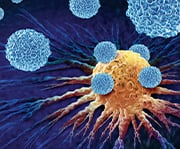
In a meta-analysis published in 2025, researchers compiled data from 12 studies including 3,142 cancer patients on ICI therapy. They found that using probiotics was associated with better overall survival and progression-free survival. Those using probiotics had a 42% lower risk of death during follow-up than those who did not receive them.1
This means that probiotic supplements may be associated with improved survival outcomes in people with cancer undergoing ICI treatment.
Not only that, but progression-free survival refers to a period during which cancer growth is not observed during these treatments. Probiotics extended the duration of that as well.
While ICI medications have improved the outcomes of therapy in many forms of cancer, a simple and inexpensive probiotic supplement may help optimize these therapies and minimize treatment resistance.
The type of probiotic varied from study to study. Several bacterial strains were used, including Lactobacillus species, Bifido-bacterium, Streptococcus faecalis, and butyric acid bacteria.1
The meta-analysis also found that use of probiotics could ameliorate the negative effects of antibiotics on ICI treatment.1
In patients with non-small-cell lung cancer who took antibiotics during ICI therapy, use of a probiotic reduced the chance of death by an astonishing 55% during follow-up, compared to those not taking a probiotic.1
While ICIs improve outcomes for many cancers, a probiotic may optimize these therapies and help prevent treatment resistance.
PROBIOTICS USED IN THE CHECKPOINT INHIBITOR STUDIES
The preliminary data from these multiple studies is extremely encouraging for cancer patients being experimentally treated with checkpoint inhibitors and probiotics. Clearly more studies are needed to assess how to best match specific probiotic strains with specific cancers and their treatments.
It is important to note that probiotics come in many different types of strains that have specific targets. In these studies, a variety of specific strains were used in each case. In other words, there is no one probiotic that is appropriate for each situation. Currently, there are no commercial products available that match the formulations used in the studies.
The type of probiotic varied from study to study. Several bacterial strains were used, including Lactobacillus species, Bifidobacterium, Streptococcus faecalis, and butyrate producing bacteria.9
These exciting findings of the benefits of specific probiotics being used with cancer treatments require further study. If you are undergoing cancer therapy, please discuss this article with your doctor before taking probiotics. Not every cancer patient would benefit from probiotics during treatment.
As always, Life Extension will keep you up to date regarding ongoing developments in this field.
Summary
Immune checkpoint inhibitors (ICIs) have improved outcomes for many people with cancer, but resistance to these medications is still common.9,20
A meta-analysis of patients undergoing ICI treatment found that taking a probiotic prolonged overall survival and progression-free survival.
Antibiotic use can impair ICI effectiveness. This research found that taking probiotics may help counter this effect and support treatment response.
The addition of a probiotic to ICI drugs may support the effectiveness of these cancer treatments and be associated with longer survival.
If you have any questions on the scientific content of this article, please call a Life Extension Wellness Specialist at 1-866-864-3027.
References
- Zhao S, Lu Z, Zhao F, et al. Assessing the impact of probiotics on immunotherapy effectiveness and antibiotic-mediated resistance in cancer: a systematic review and meta-analysis. Front Immunol. 2025;16:1538969.
- Fernandez E, Wargo JA, Helmink BA. The Microbiome and Cancer: A Translational Science Review. JAMA. 2025;333(24):2188-96.
- Kaur R, Bhardwaj A, Gupta S. Cancer treatment therapies: traditional to modern approaches to combat cancers. Mol Biol Rep. 2023 Nov;50(11):9663-76.
- Kumar AR, Devan AR, Nair B, et al. Harnessing the immune system against cancer: current immunotherapy approaches and therapeutic targets. Mol Biol Rep. 2021 Dec;48(12):8075-95.
- Shiravand Y, Khodadadi F, Kashani SMA, et al. Immune Checkpoint Inhibitors in Cancer Therapy. Curr Oncol. 2022 Apr 24;29(5):3044-60.
- Farhood B, Najafi M, Mortezaee K. CD8(+) cytotoxic T lymphocytes in cancer immunotherapy: A review. J Cell Physiol. 2019 Jun;234(6):8509-21.
- Zhou S, Yang H. Immunotherapy resistance in non-small-cell lung cancer: From mechanism to clinical strategies. Front Immunol. 2023;14:1129465.
- Schoenfeld AJ, Hellmann MD. Acquired Resistance to Immune Checkpoint Inhibitors. Cancer Cell. 2020 Apr 13;37(4):443-55.
- Wang Q, Meng Q, Chen Y, et al. Interaction between gut microbiota and immunity in health and intestinal disease. Front Immunol. 2025;16:1673852.
- Gopalakrishnan V, Spencer CN, Nezi L, et al. Gut microbiome modulates response to anti-PD-1 immunotherapy in melanoma patients. Science. 2018 Jan 5;359(6371):97-103.
- Matson V, Fessler J, Bao R, et al. The commensal microbiome is associated with anti-PD-1 efficacy in metastatic melanoma patients. Science. 2018 Jan 5;359(6371):104-8.
- Moiseenko F, Kechin A, Koryukov M, et al. Interconnection of Gut Microbiome and Efficacy of Immune Checkpoint Inhibitors in Inoperable Non-Small-Cell Lung Cancer. Int J Mol Sci. 2025 Aug 11;26(16).
- Gazzaniga FS, Kasper DL. The gut microbiome and cancer response to immune checkpoint inhibitors. J Clin Invest. 2025 Feb 3;135(3).
- Ajab SM, Zoughbor SH, Labania LA, et al. Microbiota composition effect on immunotherapy outcomes in colorectal cancer patients: A systematic review. PLoS One. 2024;19(7):e0307639.
- Zimmermann P, Curtis N. The effect of antibiotics on the composition of the intestinal microbiota - a systematic review. J Infect. 2019 Dec;79(6):471-89.
- Wu Q, Liu J, Wu S, et al. The impact of antibiotics on efficacy of immune checkpoint inhibitors in malignancies: A study based on 44 cohorts. Int Immunopharmacol. 2021 Mar;92:107303.
- Crespin A, Le Bescop C, de Gunzburg J, et al. A systematic review and meta-analysis evaluating the impact of antibiotic use on the clinical outcomes of cancer patients treated with immune checkpoint inhibitors. Front Oncol. 2023;13:1075593.
- Simpson RC, Shanahan ER, Scolyer RA, et al. Towards modulating the gut microbiota to enhance the efficacy of immune-checkpoint inhibitors. Nat Rev Clin Oncol. 2023 Oct;20(10):697-715.
- Lee KA, Thomas AM, Bolte LA, et al. Cross-cohort gut microbiome associations with immune checkpoint inhibitor response in advanced melanoma. Nat Med. 2022 Mar;28(3):535-44.
- Zhang C, Zhang C, Wang H. Immune-checkpoint inhibitor resistance in cancer treatment: Current progress and future directions. Cancer Lett. 2023 May 28;562:216182.


Wellness
Specialists
1-800-226-2370 - This service is FREE
7:30 AM - 12 AM (ET) Mon-Fri | 9 AM - 12 AM (ET) Sat-Sun