

Life Extension Magazine®

An Even More Bioavailable CoQ10
CoQ10 levels decrease with aging and statin use. In a clinical trial, a new CoQ10 formulation boosted bioavailability up to 24-fold, compared to conventional CoQ10.
By Michael Downey.
Coenzyme Q10 (CoQ10) is naturally present in almost every cell in your body.1,2
It plays critical roles in cellular energy production, anti-inflammatory activity, heart and blood vessel support, glucose metabolism, and more.1,2
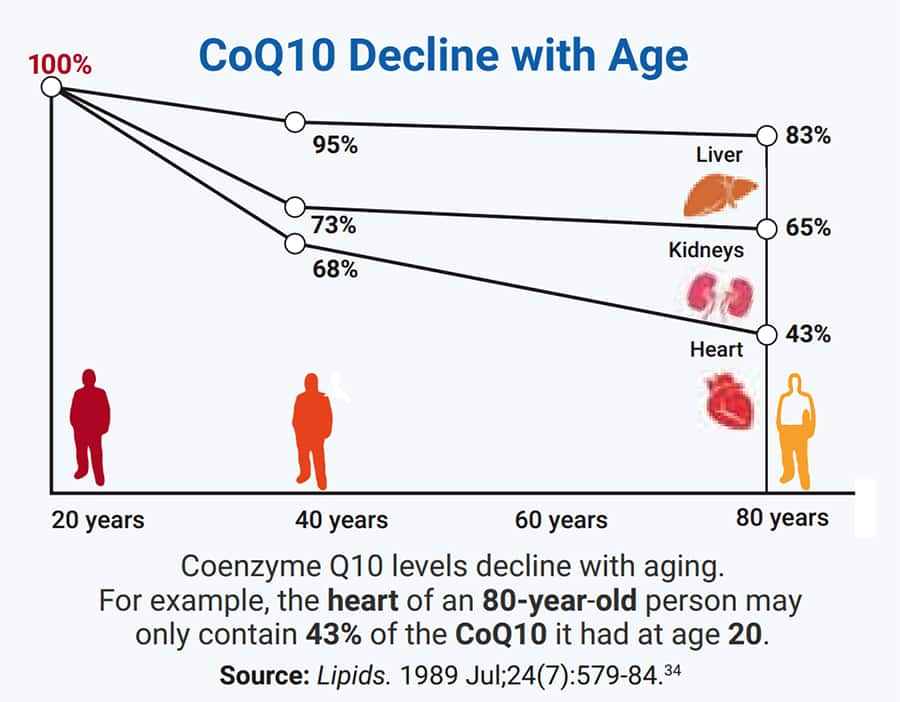
But our ability to synthesize coenzyme Q10 typically begins to diminish after our mid-twenties.3,4 And when taken orally, there are limitations as to how well it is absorbed by the body.2,5
Now, a collaborative effort involving Life Extension® scientists has led to a new approach to addressing this.
Using a 100% plant-based delivery system, scientists have developed a form of CoQ10 designed to enhance its stability and significantly boost its bioavailability.6
Multiple bioavailability studies have been conducted, and a recent clinical trial demonstrated that, compared to standard coenzyme Q10, this next-generation form of CoQ10 resulted in up to 24-fold improvement in bioavailability!6
This formulation resulted in higher circulating levels of CoQ10 that persisted longer.
The Need for Coenzyme Q10

Coenzyme Q10 is a fat-soluble, vitamin-like molecule synthesized by the body and found in all human tissues. It plays an essential role for the creation of ATP, the energy used by cells.2,5,7
Its highest concentrations are in tissues with the greatest energy requirements, like the heart, kidneys, liver, and muscle.5 One hallmark of aging is a decline in energy metabolism.8
Preclinical research suggests that CoQ10 may help address mitochondrial dysfunction.5,9,10 Mitochondria produce the energy our cells need. Mitochondrial damage is associated with age-related degenerative conditions, and reduced lifespan.11
Some of this damage is linked to oxidative stress. CoQ10 acts as an antioxidant in cells and helps support other antioxidants and mitochondrial enzymes.8
Challenge: Poor Bioavailability
Absorption refers to how much of a nutrient enters the digestive system and bloodstream. Bioavailability refers to how much of a nutrient passes through the digestive system and reaches tissues that need it most.12
Standard CoQ10 suffers from both poor absorption and bioavailability. Taken orally, relatively little of it circulates in the bloodstream or reaches tissues, and it may degrade.13
The body's ability to produce its own CoQ10 decreases with age.8
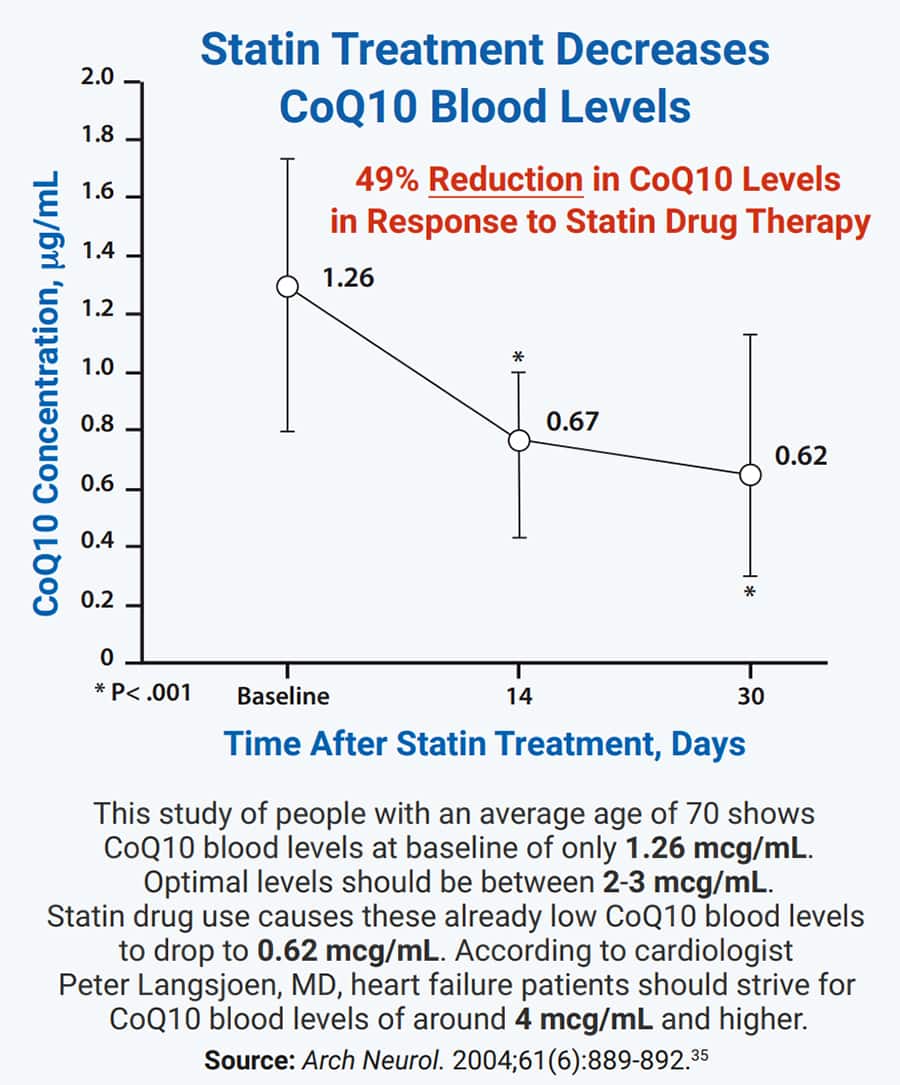
Statin drugs, which are taken by about 35% of Americans, further inhibit CoQ10 synthesis and deplete body levels.5,15
Solution: Galactomannan Technology

In a recent development, scientists developed a new form of CoQ10 with superior bioavailability.6
Using a patented, plant-based water extraction process, they combined CoQ10 in a hydrogel with components of the spice fenugreek.
Fenugreek seeds contain galactomannan, a fiber with a unique chemical structure that improves CoQ10's stability and protects it from breakdown, enhancing bioavailability.
In a human study, scientists tested this galactomannan-CoQ10 formula against two forms of regular CoQ10: the standard ubiquinone form and a reduced form called ubiquinol.6 Ubiquinol has been shown to produce higher plasma concentrations than ubiquinone.16,17
With a 12-day washout period between each single-dose supplementation, 12 healthy adults (aged 30-57 years) took:6
- 100 mg of ubiquinone CoQ10 formulated with 400 mg of galactomannan,
- 100 mg of standard CoQ10 as ubiquinone, and/or
- 100 mg of CoQ10 as ubiquinol.
Measuring plasma CoQ10 over twenty-four hours showed that:6
- Taking the new galactomannan-CoQ10 formulation resulted in a 24-fold improvement in bioavailability, compared to standard CoQ10 in the ubiquinone form.
- Even compared to CoQ10 in the more bioavailable ubiquinol form, taking the galactomannan-CoQ10 formulation resulted in a three-fold higher bioavailability.
Validated in Older Adults
Scientists also tested the new formula in older adults, who have lower CoQ10 levels and may absorb it less efficiently.18
With a 12-day washout period between each single-dose supplement, twelve healthy volunteers, aged 58-73, took:6
- 250 mg of the galactomannan-CoQ10 formulation (which uses 20% CoQ10 as ubiquinone, providing 50 mg of CoQ10), and
- 50 mg of standard CoQ10 as ubiquinone.
Compared to standard CoQ10, the galactomannan-CoQ10 formulation led to a 16-fold higher bioavailability in these older adults.6
What You Need To Know
A Better Coenzyme Q10

- Found in all human tissues, coenzyme Q10 (CoQ10) is required for the creation of ATP, the energy used by cells
- CoQ10 production declines with age. Taken orally, it suffers from low bioavailability, which means little of it makes it to tissues where it is needed most.
- A new formulation has been developed that has resulted in a new enhanced-bioavailability CoQ10 that combines it with the fiber galactomannan from fenugreek seeds.
- In a human study, a single dose of this next-generation formulation led to a remarkable 24-fold improvement in bioavailability, compared to standard CoQ10 (ubiquinone).
- This new formulation may help support cardiovascular and metabolic health, cellular energy production, and healthy aging.
Clinical Benefits

This new formulation increased the circulating levels of CoQ10 in the studies conducted.
The potential benefits can be remarkable. Coenzyme Q10 supports cardiovascular and metabolic health and may influence factors associated with several chronic conditions.10,19-22
In other clinical trials, CoQ10:
- Reduced the rate of major cardiovascular events like heart attack, stroke, or death by 50% in heart failure patients,23
- Decreased levels of triglycerides, LDL, and total cholesterol and increased HDL,24
- Improved endothelial function and blood flow,25
- Improved total antioxidant capacity and reduced a marker for oxidative stress and lipid peroxidation, a process that leads to cell damage,19,26
- Boosted activity of the innate antioxidant superoxide dismutase,19
- Increased cellular energy production,27
- Lowered levels of multiple chronic inflammation biomarkers,28
- Decreased insulin resistance, fasting insulin, fasting glucose, and HbA1c (a measure of average blood glucose over time),29
- Increased the pregnancy rate in women with infertility undergoing assisted reproductive technologies,30
- Reduced the frequency, duration, and severity of migraines,31,32
- Reduced general fatigue and enhanced physical performance,33 and
- Decreased myopathy (muscular pain or weakness) associated with the use of statins.15
Improving CoQ10's bioavailability may help optimize these and other benefits.
Summary
Coenzyme Q10 is required throughout the body to boost cellular energy, help combat inflammation, support cardiovascular and metabolic health, and more.
CoQ10 production decreases with aging and statin drug use, and it suffers from poor bioavailability when taken orally.
A new formulation gets around that problem. Combining CoQ10 with the fiber galactomannan significantly increases bioavailability.
In a human trial, this novel formulation of CoQ10 provided vast improvements in bioavailability, compared to standard CoQ10. Greater bioavailability was separately validated in older adults, who generally have more difficulty absorbing CoQ10.
The greater bioavailability may help support CoQ10's multiple roles related to healthy aging.
If you have any questions on the scientific content of this article, please call a Life Extension Wellness Specialist at 1-866-864-3027.
References
- Gasmi A, Bjorklund G, Mujawdiya PK, et al. Coenzyme Q(10) in aging and disease. Crit Rev Food Sci Nutr. 2024;64(12):3907-19.
- Hernandez-Camacho JD, Garcia-Corzo L, Fernandez-Ayala DJM, et al. Coenzyme Q at the Hinge of Health and Metabolic Diseases. Antioxidants (Basel). 2021Nov 8;10(11).
- Hargreaves IP, Mantle D. Coenzyme Q10 Supplementation in Fibrosis and Aging. Adv Exp Med Biol. 2019;1178:103-12.
- Lopez-Lluch G. Coenzyme Q-related compounds to maintain healthy mitochondria during aging. Adv Protein Chem Struct Biol. 2023;136:277-308.
- Raizner AE, Quinones MA. Coenzyme Q(10) for Patients With Cardiovascular Disease: JACC Focus Seminar. J Am Coll Cardiol. 2021Feb 9;77(5):609-19.
- Enhanced bioavailability and pharmacokinetics of a novel hybrid-hydrogel formulation of Coenzyme Q10. Data on File. 2025.
- Rauchova H. Coenzyme Q10 effects in neurological diseases. Physiol Res. 2021Dec 30;70(Suppl4):S683-S714.
- Lopez-Lluch G. Coenzyme Q homeostasis in aging: Response to non-genetic interventions. Free Radic Biol Med. 2021Feb 20;164:285-302.
- Nakazawa H, Ikeda K, Shinozaki S, et al. Coenzyme Q10 protects against burn-induced mitochondrial dysfunction and impaired insulin signaling in mouse skeletal muscle. FEBS Open Bio. 2019Feb;9(2):348-63.
- Rabanal-Ruiz Y, Llanos-Gonzalez E, Alcain FJ. The Use of Coenzyme Q10 in Cardiovascular Diseases. Antioxidants (Basel). 2021May 10;10(5).
- Somasundaram I, Jain SM, Blot-Chabaud M, et al. Mitochondrial dysfunction and its association with age-related disorders. Front Physiol. 2024;15:1384966.
- Rodrigues DB, Marques MC, Hacke A, et al. Trust your gut: Bioavailability and bioaccessibility of dietary compounds. Curr Res Food Sci. 2022;5:228-33.
- Mantle D, Dybring A. Bioavailability of Coenzyme Q(10): An Overview of the Absorption Process and Subsequent Metabolism. Antioxidants (Basel). 2020May 5;9(5).
- Matyori A, Brown CP, Ali A, et al. Statins utilization trends and expenditures in the U.S. before and after the implementation of the 2013 ACC/AHA guidelines. Saudi Pharm J. 2023Jun;31(6):795-800.
- Ahmad K, Manongi NJ, Rajapandian R, et al. Effectiveness of Coenzyme Q10 Supplementation in Statin-Induced Myopathy: A Systematic Review. Cureus. 2024Aug;16(8):e68316.
- Zhang Y, Liu J, Chen XQ, et al. Ubiquinol is superior to ubiquinone to enhance Coenzyme Q10 status in older men. Food Funct. 2018Nov 14;9(11):5653-9.
- Failla ML, Chitchumroonchokchai C, Aoki F. Increased bioavailability of ubiquinol compared to that of ubiquinone is due to more efficient micellarization during digestion and greater GSH-dependent uptake and basolateral secretion by Caco-2 cells. J Agric Food Chem. 2014Jul 23;62(29):7174-82.
- Mantle D, Lopez-Lluch G, Hargreaves IP. Coenzyme Q10 Metabolism: A Review of Unresolved Issues. Int J Mol Sci. 2023Jan 30;24(3).
- Akbari A, Mobini GR, Agah S, et al. Coenzyme Q10 supplementation and oxidative stress parameters: a systematic review and meta-analysis of clinical trials. Eur J Clin Pharmacol. 2020Nov;76(11):1483-99.
- Gutierrez-Mariscal FM, de la Cruz-Ares S, Torres-Pena JD, et al. Coenzyme Q(10) and Cardiovascular Diseases. Antioxidants (Basel). 2021Jun 3;10(6).
- Dludla PV, Orlando P, Silvestri S, et al. Coenzyme Q(10) Supplementation Improves Adipokine Levels and Alleviates Inflammation and Lipid Peroxidation in Conditions of Metabolic Syndrome: A Meta-Analysis of Randomized Controlled Trials. Int J Mol Sci. 2020May 4;21(9).
- Fan L, Feng Y, Chen GC, et al. Effects of coenzyme Q10 supplementation on inflammatory markers: A systematic review and meta-analysis of randomized controlled trials. Pharmacol Res. 2017May;119:128-36.
- Mortensen SA, Rosenfeldt F, Kumar A, et al. The effect of coenzyme Q10 on morbidity and mortality in chronic heart failure: results from Q-SYMBIO: a randomized double-blind trial. JACC Heart Fail. 2014Dec;2(6):641-9.
- Liu Z, Tian Z, Zhao D, et al. Effects of Coenzyme Q10 Supplementation on Lipid Profiles in Adults: A Meta-analysis of Randomized Controlled Trials. J Clin Endocrinol Metab. 2022Dec 17;108(1):232-49.
- Gao L, Mao Q, Cao J, et al. Effects of coenzyme Q10 on vascular endothelial function in humans: a meta-analysis of randomized controlled trials. Atherosclerosis. 2012Apr;221(2):311-6.
- Dai S, Tian Z, Zhao D, et al. Effects of Coenzyme Q10 Supplementation on Biomarkers of Oxidative Stress in Adults: A GRADE-Assessed Systematic Review and Updated Meta-Analysis of Randomized Controlled Trials. Antioxidants (Basel). 2022Jul 13;11(7).
- Mantle D, Dewsbury M, Hargreaves IP. The Ubiquinone-Ubiquinol Redox Cycle and Its Clinical Consequences: An Overview. Int J Mol Sci. 2024Jun 20;25(12).
- Hou S, Tian Z, Zhao D, et al. Efficacy and Optimal Dose of Coenzyme Q10 Supplementation on Inflammation-Related Biomarkers: A GRADE-Assessed Systematic Review and Updated Meta-Analysis of Randomized Controlled Trials. Mol Nutr Food Res. 2023Jul;67(13):e2200800.
- Liang Y, Zhao D, Ji Q, et al. Effects of coenzyme Q10 supplementation on glycemic control: A GRADE-assessed systematic review and dose-response meta-analysis of randomized controlled trials. EClinicalMedicine. 2022Oct;52:101602.
- Florou P, Anagnostis P, Theocharis P, et al. Does coenzyme Q(10) supplementation improve fertility outcomes in women undergoing assisted reproductive technology procedures? A systematic review and meta-analysis of randomized-controlled trials. J Assist Reprod Genet. 2020Oct;37(10):2377-87.
- Nattagh-Eshtivani E, Dahri M, Hashemilar M, et al. The effect of Coenzyme Q10 supplementation on serum levels of lactate, pyruvate, matrix metalloproteinase 9 and nitric oxide in women with migraine. A double blind, placebo, controlled randomized clinical trial. European Journal of Integrative Medicine. 20182018/08/01/;21:70-6.
- Sandor PS, Di Clemente L, Coppola G, et al. Efficacy of coenzyme Q10 in migraine prophylaxis: a randomized controlled trial. Neurology. 2005Feb 22;64(4):713-5.
- Mizuno K, Tanaka M, Nozaki S, et al. Antifatigue effects of coenzyme Q10 during physical fatigue. Nutrition. 2008Apr;24(4):293-9.
- Kalen A, Appelkvist EL, Dallner G. Age-related changes in the lipid compositions of rat and human tissues. Lipids. 1989 Jul;24(7):579-84.
- Rundek T, Naini A, Sacco R, et al. Atorvastatin Decreases the Coenzyme Q10 Level in the Blood of Patients at Risk for Cardiovascular Disease and Stroke. Archives of Neurology. 2004;61(6):889-92.


Wellness
Specialists
1-800-226-2370 - This service is FREE
7:30 AM - 12 AM (ET) Mon-Fri | 9 AM - 12 AM (ET) Sat-Sun