

Life Extension Magazine®

Protecting Your Telomeres
Telomere shortening is associated with increased risk of disease and decreased lifespan. Various nutrients have been shown to support the length and health of telomeres in clinical and preclinical studies.
Scientifically reviewed by: Gary Gonzalez, MD, in May 2026. Written by: Richard Ross.
Every strand of DNA in our cells is capped by protective structures called telomeres.
Long, healthy telomeres are essential to the function and stability of our genetic material.1,2
The problem is that telomeres shorten each time cells divide, a process thought to be accelerated by oxidative stress and inflammation.
When telomeres become too short, cells stop dividing or die, contributing to aging and age-related diseases.3 For this reason, telomere length and shortening rate are considered markers of biological age.3,4
Several nutrients have been found to protect telomeres and may even boost the function of enzymes that lengthen telomeres.
Oral intake of these ingredients may help reduce telomere shortening and protect DNA.
The Importance of Telomeres

Almost 100 years ago, scientists discovered that our chromosomes, or strands of DNA, are capped on each end by structures they called telomeres, a Greek-derived name meaning “end part.”
In youth, telomeres are long and healthy. But with age, they slowly become damaged and shorten. This telomere attrition is considered a primary marker and driver of biological aging.5,6
When telomeres shorten to a critical length, this can damage DNA. Over time, this can impair the body's ability to repair tissues and contribute to age-related disorders, including cardiovascular, neurodegenerative, and metabolic diseases6 and an increased risk of overall mortality.7
In cell and animal models, increased telomere shortening is a predictor of decreased lifespan.4,8
Human studies show shorter telomeres predict higher risk of mortality.4,7,9
The bad news is that loss of telomeres is currently inevitable. (Current research aims to reverse this trend.)10
The good news is that the rate of telomere shortening can be slowed. An enzyme called telomerase is able to add to the telomere structure, maintaining longer telomeres.3,6 Another enzyme, WRN helicase, has been shown to work alongside telomerase to maintain telomere integrity.11
Specific nutrients have been shown to boost these enzymes' activity, protect telomeres, and promote healthy aging.
Scarlet Beebalm
Scarlet beebalm is an herb in the mint family native to North America. It contains several flavonoid nutrients such as didymin, which has garnered increasing attention in the medical literature for its multifaceted beneficial properties including a reduction in rate of telomere shortening.12,13
In preclinical studies, an extract of scarlet beebalm has been found to exhibit multiple anti-aging effects on five recognized contributors of aging, including protecting DNA from damage, reducing cellular senescence, and suppressing chronic inflammation.12
The same extract was evaluated in human subjects. Adults aged 45-65 years were randomized to receive either 100 mg of the beebalm extract or a placebo daily for 12 weeks. Despite the relatively short intervention period, participants receiving the beebalm extract demonstrated no significant increase in epigenetic age, a major determinant of biological aging.12
In contrast, DNA methylation age in the placebo group increased by 1.7 years over the 12‑week period.
Compared with placebo, the beebalm extract was associated with improvements in leukocyte telomere length and stabilization of DNA methylation age.12
Leukocyte telomere length increased among treated participants relative to placebo, suggesting a potential benefit for longer health span.
Curcumin
Curcumin is a polyphenol derived from turmeric root.14 It has been shown in preclinical studies to protect telomeres by activating telomerase.14-16
In a lab study of cells damaged by amyloid plaques, (protein deposits that accumulate in the brains of Alzheimer's patients) curcumin exerted a neuro-protective effect. When scientists blocked telomerase, this effect was lost.14
In other words, the neuroprotective activity observed in this study appeared to be largely due to curcumin's positive impact on activity of the telomerase enzyme.
Lithium
Lithium is a mineral present in small amounts in natural water sources and some foods.17
While high doses of a specific form of lithium are used as a treatment for bipolar disorder, in smaller amounts lithium may support optimal health.17
Lower lithium intake has been associated with higher rates of cognitive decline and dementia, mental health disorders, cardiovascular disease, and metabolic disease.18
In animal models, lithium has been shown to help preserve longer telomeres by regulating genes responsible for telomere maintenance.19-22 In human studies, patients with bipolar disorder who have been prescribed high doses of lithium tend to have significantly longer telomeres than those not taking lithium.21
Nicotinamide Riboside
Nicotinamide riboside is a bioavailable form of vitamin B3. It is a precursor for NAD+, a compound essential to cellular function.23
Several proteins that maintain the health of our genetic material require ample NAD+ to function. For example, sirtuins protect telomere health and have been tied to longer lifespan and protection from disease, but they don't work without adequate NAD+.23,24
In one preclinical study, nicotinamide riboside boosted cellular NAD+ levels, helping to maintain telomere length.25
Omega-3 Fatty Acids
Several human studies have shown that omega-3 fatty acids have a beneficial effect on telomere length.26-28
One study found that higher DHA, an omega-3 found in fish oil, was linked to longer telomere length as compared to lower DHA intake.27
Vitamin D
A substantial amount of human research indicates that vitamin D supports healthy telomeres.29-32
One study noted that women with higher vitamin D levels had telomere lengths of people approximately five years younger than those with low vitamin D levels.33 Multiple studies have confirmed this association.30,34,35
In overweight subjects, taking vitamin D for 16 weeks significantly increased telomerase activity, compared to baseline, whereas no changes were observed in the placebo group.31
In a large clinical trial published in 2025, taking 2,000 IU of vitamin D3 daily for four years modestly slowed telomere shortening compared with the placebo, suggesting a protective effect on leukocyte telomere length. This benefit was consistent over time.32
Taurine
Taurine is an amino acid, well-known for support of DNA health, among many other supportive properties.36-38 Some scientists have proposed that taurine deficiency may contribute to aging.36-38
In animal studies, taurine has been found to protect against telomerase deficiency. This helps prevent telomere shortening and protects DNA from damage.38
Telomeres, the caps on chromosomes, shorten with age and with each round of cell division.
What You Need To Know
Safeguard Your DNA
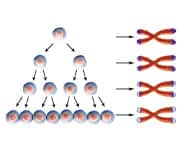
- Every DNA strand in our chromosomes, in the nuclei of our cells, is protected by caps called telomeres. Telomere shortening, which occurs with age, is associated with an increased risk of chronic disease and a decreased lifespan.
- Various nutrients have been found to protect telomeres and may activate enzymes that add to telomere structure.
- Scarlet beebalm, curcumin, lithium, nicotinamide riboside, omega-3 fatty acids, vitamin D, and taurine have been shown to help support telomere health.
- Maintaining longer, healthier telomeres may help protect DNA and promote healthy aging.
Summary

Telomeres help protect our genetic material (our chromosomes). Telomere shortening is considered a hallmark of aging and is associated with increased risk of disease and decreased lifespan.
Various nutrients may support telomere length or the enzymes that maintain them.
Scarlet beebalm, curcumin, lithium, nicotinamide riboside, omega-3 fatty acids from fish oil, vitamin D, and taurine have all been shown in preclinical or clinical studies to support telomere length, which may help protect DNA and promote healthy aging.
If you have any questions on the scientific content of this article, please call a Life Extension Wellness Specialist at 1-866-864-3027.
Researching Telomere-Based Longevity Therapies

Researchers associated with the University of Oxford, University College London, and a private laboratory have begun reporting on a previously undescribed telomere phenomenon that one day may lead to extended longevity.
Telomeres are repeating patterns of DNA base pairs that preserve our genetic material. Telomere length and the rate of their shortening have been used as a marker of biological aging in numerous research studies for years.
According to the researchers' published and unpublished papers on their preclinical research, under specific conditions some immune cells may transfer telomeres from one cell to another.10,39
Immune helper T cells can take up telomere DNA, which may prevent cellular senescence and promote longevity of these cells.10,39 What's more, these activated T cells can then spread telomere material to other cells through so-called Telomere Rivers—a new term coined by this same group of researchers.10 Essentially, this process spreads additional telomere length to various cells, which may contribute to improved cellular function and longevity.
In one of the recent experiments in aged mice, researchers were able to induce this phenomenon (transfer of telomeres from one cell to another) in living animals. This intervention suggested a mechanism that may restore a cell's ability to divide, delay senescence, and sustain long-term immunological memory.10
It is important to note that this research is currently very preliminary and theoretical. The authors' most recent study demonstrating life-span extension in mice has not undergone a peer-review process nor been published in the medical literature.10 Its lead author is the founder of a company planning to market anti-aging therapies.
For these reasons and more, these preliminary reports should be viewed as a promising first step in a possible new theory of life extension. Further studies and replication of these findings by independent laboratories need to occur. The long-term safety of this technology in humans will also need to be investigated carefully before considering it as a viable anti-aging approach.
References
- Alanazi AFR, Parkinson GN, Haider S. Structural Motifs at the Telomeres and Their Role in Regulatory Pathways. Biochemistry. 2024 Apr 2;63(7):827-42.
- Lim CJ, Cech TR. Shaping human telomeres: from shelterin and CST complexes to telomeric chromatin organization. Nat Rev Mol Cell Biol. 2021 Apr;22(4):283-98.
- Pietri P, Stefanadis C. Cardiovascular Aging and Longevity: JACC State-of-the-Art Review. J Am Coll Cardiol. 2021 Jan 19;77(2):189-204.
- Whittemore K, Vera E, Martinez-Nevado E, et al. Telomere shortening rate predicts species life span. Proc Natl Acad Sci U S A. 2019 Jul 23;116(30):15122-7.
- Colloca G, Di Capua B, Bellieni A, et al. Biological and Functional Biomarkers of Aging: Definition, Characteristics, and How They Can Impact Everyday Cancer Treatment. Curr Oncol Rep. 2020 Aug 22;22(11):115.
- Schellnegger M, Hofmann E, Carnieletto M, et al. Unlocking longevity: the role of telomeres and its targeting interventions. Front Aging. 2024;5:1339317.
- Schneider CV, Schneider KM, Teumer A, et al. Association of Telomere Length With Risk of Disease and Mortality. JAMA Intern Med. 2022 Mar 1;182(3):291-300.
- Vera E, Bernardes de Jesus B, Foronda M, et al. The rate of increase of short telomeres predicts longevity in mammals. Cell Rep. 2012 Oct 25;2(4):732-7.
- Bojesen SE. Telomeres and human health. J Intern Med. 2013 Nov;274(5):399-413.
- Lanna A, Valvo S, Dustin M, et al. CD4⁺ T cells confer transplantable rejuvenation via Rivers of telomeres. 2025.
- Sanders JL, Newman AB. Telomere length in epidemiology: a biomarker of aging, age-related disease, both, or neither? Epidemiol Rev. 2013;35(1):112-31.
- Campisi M, Cannella L, Paccagnella O, et al. Unveiling the geroprotective potential of Monarda didyma L.: insights from in vitro studies and a randomized clinical trial on slowing biological aging and improving quality of life. Geroscience. 2025 Jun;47(3):4253-90.
- Yao Q, Lin MT, Zhu YD, et al. Recent Trends in Potential Therapeutic Applications of the Dietary Flavonoid Didymin. Molecules. 2018 Oct 6;23(10).
- Xiao Z, Zhang A, Lin J, et al. Telomerase: a target for therapeutic effects of curcumin and a curcumin derivative in Abeta1-42 insult in vitro. PLoS One. 2014;9(7):e101251.
- Chung SS, Dutta P, Chard N, et al. A novel curcumin analog inhibits canonical and non-canonical functions of telomerase through STAT3 and NF-kappaB inactivation in colorectal cancer cells. Oncotarget. 2019 Jul 16;10(44):4516-31.
- Taka T, Changtam C, Thaichana P, et al. Curcuminoid derivatives enhance telomerase activity in an in vitro TRAP assay. Bioorg Med Chem Lett. 2014 Nov 15;24(22):5242-6.
- Szklarska D, Rzymski P. Is Lithium a Micronutrient? From Biological Activity and Epidemiological Observation to Food Fortification. Biol Trace Elem Res. 2019 May;189(1):18-27.
- Hamstra SI, Roy BD, Tiidus P, et al. Beyond its Psychiatric Use: The Benefits of Low-dose Lithium Supplementation. Curr Neuropharmacol. 2023;21(4):891-910.
- McColl G, Killilea DW, Hubbard AE, et al. Pharmacogenetic analysis of lithium-induced delayed aging in Caenorhabditis elegans. J Biol Chem. 2008 Jan 4;283(1):350-7.
- Squassina A, Pisanu C, Congiu D, et al. Leukocyte telomere length positively correlates with duration of lithium treatment in bipolar disorder patients. Eur Neuropsychopharmacol. 2016 Jul;26(7):1241-7.
- Coutts F, Palmos AB, Duarte RRR, et al. The polygenic nature of telomere length and the anti-ageing properties of lithium. Neuropsychopharmacology. 2019 Mar;44(4):757-65.
- Wei YB, Backlund L, Wegener G, et al. Telomerase dysregulation in the hippocampus of a rat model of depression: normalization by lithium. Int J Neuropsychopharmacol. 2015 Jan 24;18(7):pyv002.
- Trammell SA, Schmidt MS, Weidemann BJ, et al. Nicotinamide riboside is uniquely and orally bioavailable in mice and humans. Nat Commun. 2016 Oct 10;7:12948.
- Samoilova EM, Romanov SE, Chudakova DA, et al. Role of sirtuins in epigenetic regulation and aging control. Vavilovskii Zhurnal Genet Selektsii. 2024 Apr;28(2):215-27.
- Sun C, Wang K, Stock AJ, et al. Re-equilibration of imbalanced NAD metabolism ameliorates the impact of telomere dysfunction. EMBO J. 2020 Nov 2;39(21):e103420.
- Ali S, Scapagnini G, Davinelli S. Effect of omega-3 fatty acids on the telomere length: A mini meta-analysis of clinical trials. Biomol Concepts. 2022 Feb 21;13(1):25-33.
- Seo B, Yang K, Kahe K, et al. Association of omega-3 and omega-6 fatty acid intake with leukocyte telomere length in US males. Am J Clin Nutr. 2022 Dec 19;116(6):1759-66.
- da Silva A, Silveira BKS, Hermsdorff HHM, et al. Effect of omega-3 fatty acid supplementation on telomere length and telomerase activity: A systematic review of clinical trials. Prostaglandins Leukot Essent Fatty Acids. 2022 Jun;181:102451.
- Ruggiero C, Tafaro L, Cianferotti L, et al. Targeting the Hallmarks of Aging with Vitamin D: Starting to Decode the Myth. Nutrients. 2024 Mar 21;16(6).
- Zarei M, Zarezadeh M, Hamedi Kalajahi F, et al. The Relationship Between Vitamin D and Telomere/Telomerase: A Comprehensive Review. J Frailty Aging. 2021;10(1):2-9.
- Zhu H, Guo D, Li K, et al. Increased telomerase activity and vitamin D supplementation in overweight African Americans. Int J Obes (Lond). 2012 Jun;36(6):805-9.
- Zhu H, Manson JE, Cook NR, et al. Vitamin D(3) and marine omega-3 fatty acids supplementation and leukocyte telomere length: 4-year findings from the VITamin D and OmegA-3 TriaL (VITAL) randomized controlled trial. Am J Clin Nutr. 2025 Jul;122(1):39-47.
- Richards JB, Valdes AM, Gardner JP, et al. Higher serum vitamin D concentrations are associated with longer leukocyte telomere length in women. Am J Clin Nutr. 2007 Nov;86(5):1420-5.
- Beilfuss J, Camargo CA, Jr., Kamycheva E. Serum 25-Hydroxyvitamin D Has a Modest Positive Association with Leukocyte Telomere Length in Middle-Aged US Adults. J Nutr. 2017 Apr;147(4):514-20.
- Shen J, Wang L, Liu J, et al. The association of serum levels of vitamin D with leucocyte telomere length, as a marker of biological aging: A meta-analysis. Medicine (Baltimore). 2026 Feb 6;105(6):e44487.
- Surai PF, Earle-Payne K, Kidd MT. Taurine as a Natural Antioxidant: From Direct Antioxidant Effects to Protective Action in Various Toxicological Models. Antioxidants (Basel). 2021 Nov 24;10(12).
- McGaunn J, Baur JA. Taurine linked with healthy aging. Science. 2023 Jun 9;380(6649):1010-1.
- Singh P, Gollapalli K, Mangiola S, et al. Taurine deficiency as a driver of aging. Science. 2023 Jun 9;380(6649):eabn9257.
- Lanna A, Vaz B, D'Ambra C, et al. An intercellular transfer of telomeres rescues T cells from senescence and promotes long-term immunological memory. Nat Cell Biol. 2022 Oct;24(10):1461-74.


Wellness
Specialists
1-800-226-2370 - This service is FREE
7:30 AM - 12 AM (ET) Mon-Fri | 9 AM - 12 AM (ET) Sat-Sun