

Life Extension Magazine®

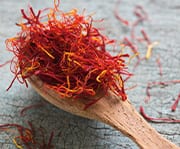
What Is Saffron?
Compounds in saffron help balance mood and improve eye health. Also, a saffron extract decreased snacking by 55% and promoted weight loss.
Scientifically reviewed by: Gary Gonzalez, MD, in May 2026. Written by: Laurie Mathena.

Saffron has been used for over 2,500 years in traditional medicine for a variety of conditions.1
Preclinical research has shown that saffron contains natural compounds that may help protect cells, reduce inflammation and improve memory and mood.1
Emerging evidence from human studies suggests that these beneficial compounds may help support metabolic and cardiovascular health markers such as blood glucose,2,3 cholesterol,4 and blood pressure.5-7
Among its various benefits, two in particular stand out:
- Mood and emotional well‑being – There is clinical evidence for saffron's effects on improvements in mood and reduction in symptoms of depression and anxiety.1 In one clinical trial, a standardized saffron extract increased satiety and reduced between-meal snacking versus placebo.8
- Visual and retinal health – Saffron has been associated with improved visual function and support for retinal health in people with macular degeneration.9,10
Saffron for Snacking Control
Snacking can sabotage even the most disciplined weight loss efforts. It adds extra hidden calories, disrupts blood sugar balance, and can contribute to insulin resistance, especially when it happens late at night.
One research study found that a particular saffron extract helped reduce snacking, cravings, and appetite—contributing to measurable weight loss in as little as eight weeks.
In a randomized, double-blind trial, 60 mildly overweight women took either this particular saffron extract (176.5 mg) or a placebo for eight weeks. By the end of the study, the saffron group experienced a 55% decrease in snacking frequency and lost significantly more weight than the placebo group.8
Saffron for Mood Balance
A systematic review of 12 randomized controlled trials evaluating saffron's effects on psychological and behavioral outcomes reported improvements in depressive and premenstrual symptoms as a result of saffron extract consumption.1
Preclinical research suggests that saffron and its active compounds may help support mood by modulating brain pathways involved in mood, inflammation, and nerve protection. One way that saffron may help curb snacking is by supporting healthy serotonin levels in the brain.11
Dysregulation of this neurotransmitter has been linked to carbohydrate craving,12,13 increased appetite,14 less meal satisfaction,14-16 and emotional eating.17
Saffron has shown effects on depressive symptoms comparable to some anti-depressants in certain studies, which could possibly help reduce emotionally driven snacking behaviors.1
Better Eye Health
The macula is a small central part of the retina responsible for sharp, detailed vision directly in front of the eyes. Age‑related macular degeneration (AMD), the leading cause of vision loss in older adults, damages the macula and gradually reduces central vision.18 The retina is critical for vision because it detects light and translates it into signals your brain can use. Generally, better retinal function is associated with better visual acuity.19
AMD develops over time due to aging, genetic factors, and environmental exposure, which cause inflammation and oxidative damage to retinal cells.18
While there is no cure for AMD, evidence shows that saffron may improve visual function in those with mild to moderate AMD.
Two ways saffron may accomplish this, as shown in several clinical trials, are by reducing inflammation and oxidative stress,6,20 two key mechanisms involved in AMD pathophysiology.
Encouraging symptomatic improvement has also been demonstrated in clinical studies. For instance, in a double-blind, placebo-controlled, crossover trial, 100 adults with mild to moderate AMD took either 20 mg per day of oral saffron supplementation or a placebo for three months. Those already taking "eye vitamins" continued taking them. Saffron supplementation resulted in improvements in "best-corrected visual acuity," meaningparticipants experienced improvement in vision even when using corrective lenses. The study also found improved retinal function, further confirming saffron's benefits to vision and the eyes.10
Another study reported that participants taking 20 mg per day of oral saffron supplementation had improvements in visual acuity (sharpness of vision) after three months, with these changes remaining stable during follow‑up over approximately 14 months.9 This means that the observed visual changes were maintained over time in this study population, though the extent and consistency of such effects may vary.
These visual improvements make sense in light of saffron's benefits to retinal function, inflammation, and oxidative stress.6,10,20-22
Summary
Saffron is a well-known spice with a variety of properties that have been studied for health-promoting effects. Saffron has been associated with effects on mood, impulse control, and appetite regulation, which may help reduce between-meal snacking, stress eating, and late-night cravings.
Saffron has also been associated with improvements in retinal function and it promotes better visual function in individuals with age-related macular degeneration.
Overall, current evidence suggests that saffron may help support both mood and long-term vision. •
If you have any questions on the scientific content of this article, please call a Life Extension Wellness Specialist at 1-866-864-3027.
References
- Hausenblas HA, Heekin K, Mutchie HL, et al. A systematic review of randomized controlled trials examining the effectiveness of saffron (Crocus sativus L.) on psychological and behavioral outcomes. J Integr Med. 2015 Jul;13(4):231-40.
- Amatto PPG, Chaves L, Braga GG, et al. Effect of Crocus sativus L. (saffron) and crocin in the treatment of patients with type-2 diabetes mellitus: A systematic review and meta-analysis. J Ethnopharmacol. 2024 Jan 30;319(Pt 2):117255.
- Zhang JW, Zhao Q, Li Z, et al. The effect of saffron supplementation on liver and kidney function, blood glucose and pressure in patients with diabetes and prediabetes: A grade assessed systematic review and meta-analysis of randomized controlled trials. Prostaglandins Other Lipid Mediat. 2025 Mar;177:106949.
- Rahmani J, Manzari N, Thompson J, et al. The effect of saffron on weight and lipid profile: A systematic review, meta-analysis, and dose-response of randomized clinical trials. Phytother Res. 2019 Sep;33(9):2244-55.
- Zhang X, Miao J, Song Y, et al. Effects of Saffron Supplementation on Glycolipid Metabolism and Blood Pressure in Patients With Metabolic Syndrome and Related Disorders: A Systematic Review and Meta-Analysis of Randomized Controlled Trials. Phytother Res. 2025 May;39(5):1883-904.
- Mafi A, Mokhtari Z, Hosseini E, et al. Effect of Saffron (Crocus sativus) Supplementation on Oxidative Stress, Inflammatory Indices, and Renal and Liver Function Parameters in Patients With Type 2 Diabetes Mellitus: A GRADE-Assessed Systematic Review and Meta-analysis of Randomized Clinical Trials. Nutr Rev. 2025 Jun 1;83(6):971-87.
- Schuster J, Mundhenke C, Nordsieck H, et al. Effect of a saffron extract on sleep quality in adults with moderate insomnia: A decentralized, randomized, double-blind, placebo-controlled trial. Sleep Med X. 2025 Dec 15;10:100147.
- Gout B, Bourges C, Paineau-Dubreuil S. Satiereal, a Crocus sativus L extract, reduces snacking and increases satiety in a randomized placebo-controlled study of mildly overweight, healthy women. Nutr Res. 2010 May;30(5):305-13.
- Piccardi M, Marangoni D, Minnella AM, et al. A longitudinal follow-up study of saffron supplementation in early age-related macular degeneration: sustained benefits to central retinal function. Evid Based Complement Alternat Med. 2012;2012:429124.
- Broadhead GK, Grigg JR, McCluskey P, et al. Saffron therapy for the treatment of mild/moderate age-related macular degeneration: a randomised clinical trial. Graefes Arch Clin Exp Ophthalmol. 2019 Jan;257(1):31-40.
- Chauhan S, Tiwari A, Verma A, et al. Exploring the Potential of Saffron as a Therapeutic Agent in Depression Treatment: A Comparative Review. Yale J Biol Med. 2024 Sep;97(3):365-81.
- Ventura T, Santander J, Torres R, et al. Neurobiologic basis of craving for carbohydrates. Nutrition. 2014 Mar;30(3):252-6.
- Leibowitz SF, Alexander JT. Hypothalamic serotonin in control of eating behavior, meal size, and body weight. Biol Psychiatry. 1998 Nov 1;44(9):851-64.
- Lam DD, Garfield AS, Marston OJ, et al. Brain serotonin system in the coordination of food intake and body weight. Pharmacol Biochem Behav. 2010 Nov;97(1):84-91.
- Sadek AT. Serotonin as a Regulator of Leptin-Mediated Food Intake Control Within a Novel Neuronal Circuit Between the Hypothalamus and Raphe Nuclei. Journal of the Endocrine Society. 2021 April-May 2021;5:A55-A6.
- Feijo Fde M, Bertoluci MC, Reis C. [Serotonin and hypothalamic control of hunger: a review]. Rev Assoc Med Bras (1992). 2011 Jan-Feb;57(1):74-7.
- Markus CR, Verschoor E, Smeets T. Differential effect of the 5-HTT gene-linked polymorphic region on emotional eating during stress exposure following tryptophan challenge. J Nutr Biochem. 2012 Apr;23(4):410-6.
- Guymer RH, Campbell TG. Age-related macular degeneration. Lancet. 2023 Apr 29;401(10386):1459-72.
- Ptito M, Bleau M, Bouskila J. The Retina: A Window into the Brain. Cells. 2021 Nov 23;10(12).
- Bahari H, Shahraki Jazinaki M, Aghakhani L, et al. Crocin Supplementation on Inflammation and Oxidative Stress: A Systematic Review and Meta-Analysis. Phytother Res. 2025 Jan;39(1):465-79.
- Falsini B, Piccardi M, Minnella A, et al. Influence of saffron supplementation on retinal flicker sensitivity in early age-related macular degeneration. Invest Ophthalmol Vis Sci. 2010 Dec;51(12):6118-24.
- Di Marco S, Carnicelli V, Franceschini N, et al. Saffron: A Multitask Neuroprotective Agent for Retinal Degenerative Diseases. Antioxidants (Basel). 2019 Jul 17;8(7).


Wellness
Specialists
1-800-226-2370 - This service is FREE
7:30 AM - 12 AM (ET) Mon-Fri | 9 AM - 12 AM (ET) Sat-Sun