




Life Extension Magazine.

As We See It: The Longevity Research Tsunami
A wave of converging technologies could result in biological age reversal in our lifetime.
By William Faloon.

For nearly 50 years, I've professionally advocated that substantial resources be allocated to support longevity research.
My early talks/articles were met with skepticism by those who could not conceive of older people growing biologically younger.
In recent decades, scientific advances have enabled me to pursue and directly fund a concept that:
Age reversal may become medically achievable within our lifetime.
My recent lectures at biomedical conferences emphasize a convergence of technologies that are changing aging research into an exciting bioengineering endeavor.
Promising solutions include partial cellular reprogramming, senescent cell clearance, AI-driven drug discovery, organ regeneration, and therapies aimed at restoring youthful functionality.
While scientists remain cautious about timelines, I view laboratory developments occurring today as beyond anything previously seen in medicine.
This editorial describes a few topics from my recent live presentations on the science behind biological age reversal.
Cellular Reprogramming
My research team, along with others, is funding research that adds copies of genes that have been shown to improve health and/or longevity in old cells and old mice.
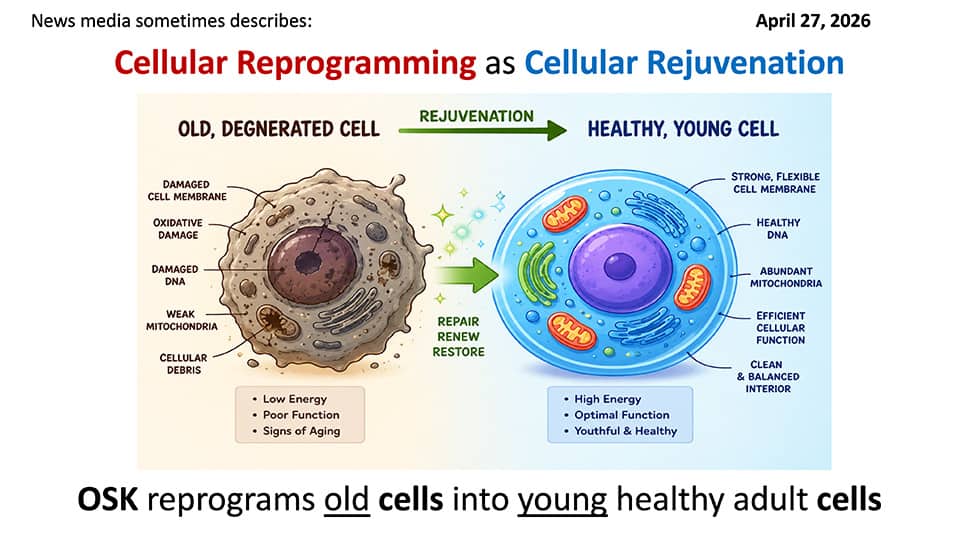
In recent years, my presentations describe the discovery that aged cells may be pushed back toward a younger biological state1 through the use of reprogramming factors first identified by Dr. Shinya Yamanaka.2,3
These "Yamanaka factors" — often abbreviated as OSKM or OSK — demonstrate that mature (old) cells can be reverted to a more youthful state.4
Note that OSK is the abbreviation for three of the four Yamanaka transcription factors.
Yamanaka factors are one of the most important discoveries in modern biology.
Research around these factors suggests aging may not simply be passive wear and tear, but a reversible process via genetic optimization.
In this editorial, I highlight findings from experiments in which old mice experienced restoration of tissue function, improved regeneration, and/or extension of remaining lifespan after partial cell reprogramming.1,5,6
If restoring the youthful identity of your old cells by resetting your epigenome seems speculative, understand that the vitamin D you take is known to directly affect at least hundreds of genes, and indirectly affects thousands more.
It both upregulates and downregulates target genes involved in diverse physiological processes.7-9
For those who are not familiar with the term epigenome, this is a set of mechanisms inside cells that regulate which genes are turned "on" and "off".10
(Note: While vitamin D beneficially impacts gene expression, it does NOT perform cellular reprogramming in the same sense as epigenetic reprogramming observed with Yamanaka factors.)9
Rather than viewing aging as an irreversible accumulation of damage, I present evidence showing our body may be capable of restoring younger functions if properly activated via cellular reprogramming and other interventions.
The graphic on this page is what I present at scientific conferences to depict delivery of OSK into nuclear DNA, where it can reprogram old cells back to a more youthful state, as shown in preclinical studies. Our research team is funding a study using OSK in vivo in an attempt to reverse aging in old primates.
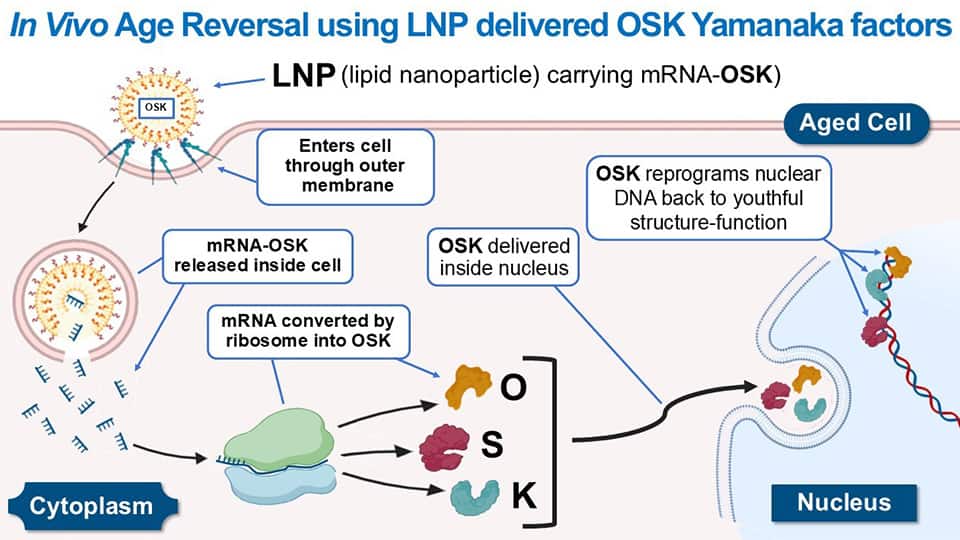
See how we encase the OSK RNA blueprint into a lipid nanoparticle to enable it to easily cross the cell membrane. Once inside, the lipid nanoparticle releases the OSK blueprint that is converted to OSK proteins by ribosomes. These OSK proteins then pass through pores in the nucleus where they bind to nuclear DNA and induce a "reprogramming" effect that enables old cells to regain youthful structure-function.11
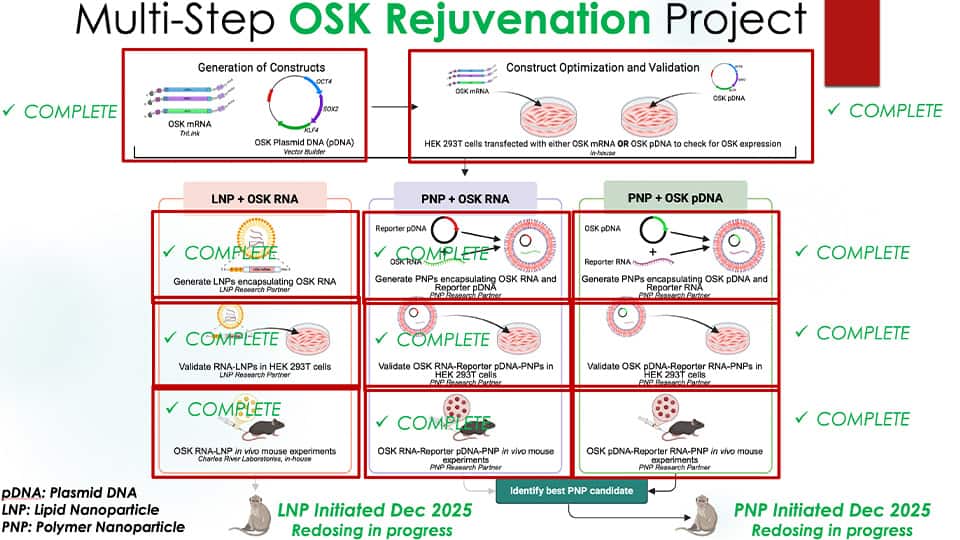
Cellular Reprogramming: From Petri Dish to Preclinical Validation
Preclinical evaluation pipeline for OSK-based reprogramming constructs, including in vitro validation, in vivo testing in mouse models, and subsequent evaluation in non-human primates.
Measuring Biological Age
Starting in the mid-1990s, our Life Extension® group attempted to develop tests to assess biological age. We knew that, to rapidly determine whether a therapy might extend a healthy lifespan, we required a way to determine if experimental interventions reduce biological age markers.
The state of biomedical technology in that era prevented us from achieving consistent results.
But fortunately, starting in 2011, other research groups succeeded in developing DNA methylation-based age measurement tools using saliva12 and blood samples, as well as a composite phenotypic age score derived from existing blood tests such as C-reactive protein (CRP), glucose, immune cells, etc.13
These transformative tools (and other tests) allow scientists to quantify aging in ways that were impossible decades ago.
Instead of waiting years to determine whether a therapy extends lifespan, researchers can now examine whether interventions appear to reduce biological age markers in months or even weeks.
Counteracting Other Aging Mechanisms
We are funding an expensive primate project using nanoparticle-delivered OSK gene addition therapy. We are simultaneously studying other interventions with significant regenerative potential.
I've enlightened audiences about senescent cells that secrete destructive compounds into surrounding tissue. Senescent cells contribute to frailty, fibrosis, vascular disease, osteoarthritis, and systemic inflammation.14
Even if OSK genes succeed in reprogramming old cells back to youth, we still may need to eliminate senescent cells using senolytic compounds such as fisetin, quercetin, and senolytic drugs that are being developed.15
Animal studies that use senolytics to clear senescent cells have shown improvements in physical function and an extended lifespan.16 Senolytics may be analogous to periodically removing malfunctioning components from an aging machine. While human evidence remains limited, senolytic interventions could eventually become part of routine preventive medical practice.
Artificial intelligence-driven drug discovery offers tremendous potential.17 I often discuss companies such as Insilico Medicine, which we helped fund in its early years.
Insilico has pioneered machine learning systems capable of identifying therapeutic compounds at unprecedented speeds.
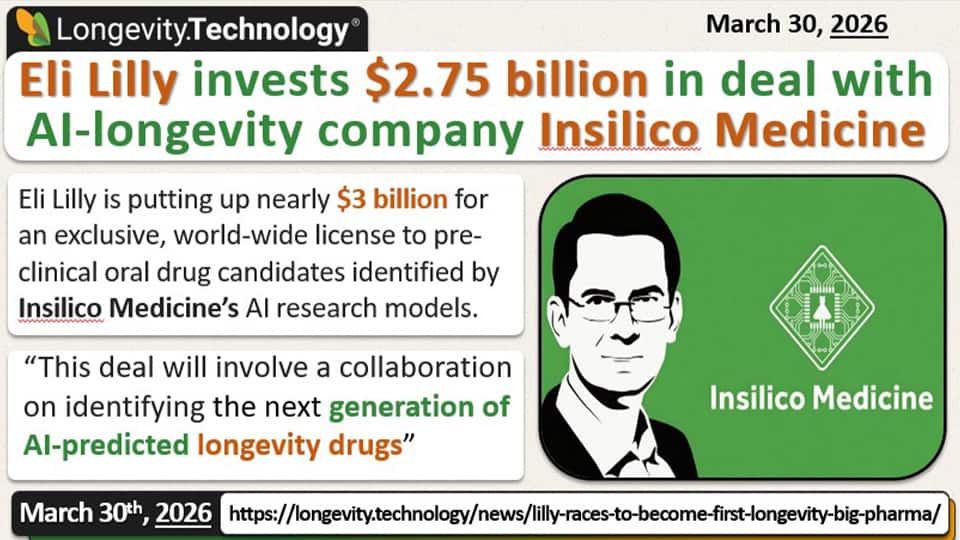
Insilico has entered into "a significant deal of up to $2.75 billion, including $115 million up front with pharma giant Eli Lilly" to rapidly develop new drugs, some intended to counteract biological aging.18 AI is compressing timelines that once required decades of pharmaceutical development.
These computational systems can predict candidate drugs, optimize structures, and identify targets far faster than traditional approaches.17
The intersection of AI, genomics, and biologics is producing a beneficial compounding effect.
I view this as a "biomedical renaissance" where aging research is advancing exponentially.
To put this into historic perspective, prior to year 2014, there was little in the way of regenerative therapies we could expect to become clinically available in the foreseeable future. Today multiple youth restoration interventions are being aggressively studied.
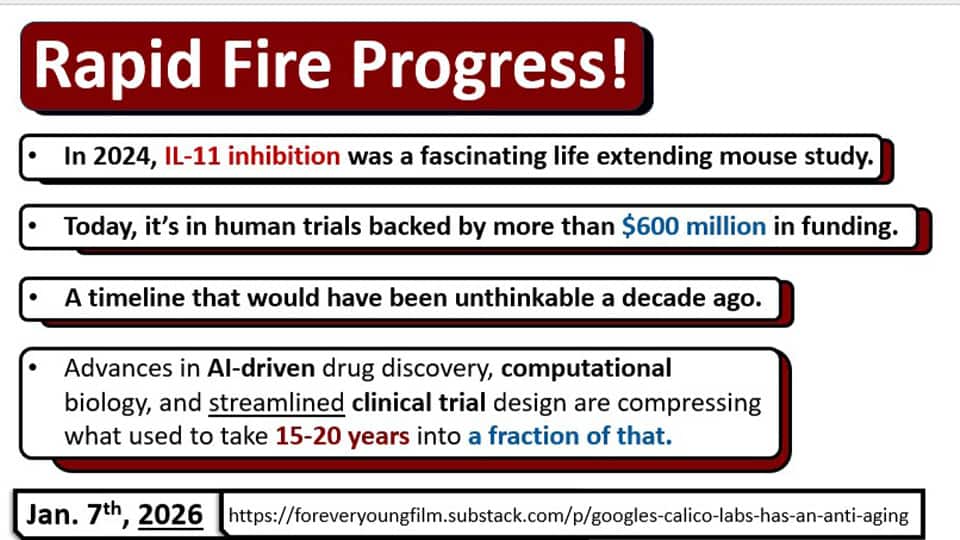
Rapid Fire Progress
Fibrosis is the excessive accumulation of dysfunctional connective tissue and other extracellular matrix components. This pathological process contributes to countless deaths worldwide.19,20
Think pulmonary fibrosis, cardiac fibrosis, liver fibrosis, kidney fibrosis et al.
Fibrosis and its inflammation-associated damage are implicated in degenerative aging.21
A recently identified mediator of fibrosis is a cytokine called interleukin-11 (IL-11).22
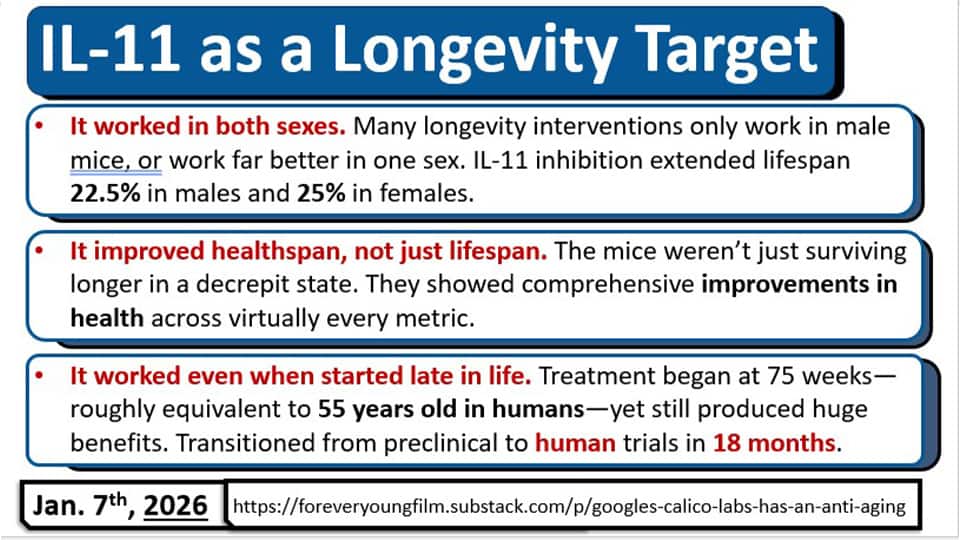
A study published in 2024 showed that neutralizing IL-11 in mice improved healthspan and median lifespan (23–25%) when given to 75-week-old mice (roughly equivalent to 55 years old in human years).23,24
These findings are significant because they bene-ficially circumvent multiple age-related mechanisms. This includes measures of frailty, metabolism, fibrosis, and cancer incidence.
Research involving IL-11 inhibitors has drawn attention from biotechnology firms and longevity-focused investors.23,25,26 Calico (Google's research arm) struck a deal to develop an IL‑11–targeting drug, paying $25 million up front with up to $571 million in milestone payments ($600 million total).27
What's exciting is a potent IL-11 inhibitor drug advanced into clinical trials in 202528 only 18 months after the mouse study was published!23 It usually takes many years for research to move from mouse to human study…if ever.
If this anti-IL-11 antibody drug proves effective in humans, we may add it to our list of repurposed drugs (like metformin) that help neutralize pathologic aging processes. Most of our readers supplement with nutrients with anti-fibrotic activity including curcumin,29,30 resveratrol,29 and quercetin.29-31 If the anti-IL-11 antibody drug becomes available, I anticipate it will be more effective in suppressing the pathologic (IL-11) cytokine. The fact that we are living in this era of rapid innovation is beyond fascinating. We may live long enough to personally benefit.
Huge Amounts of Research Funding
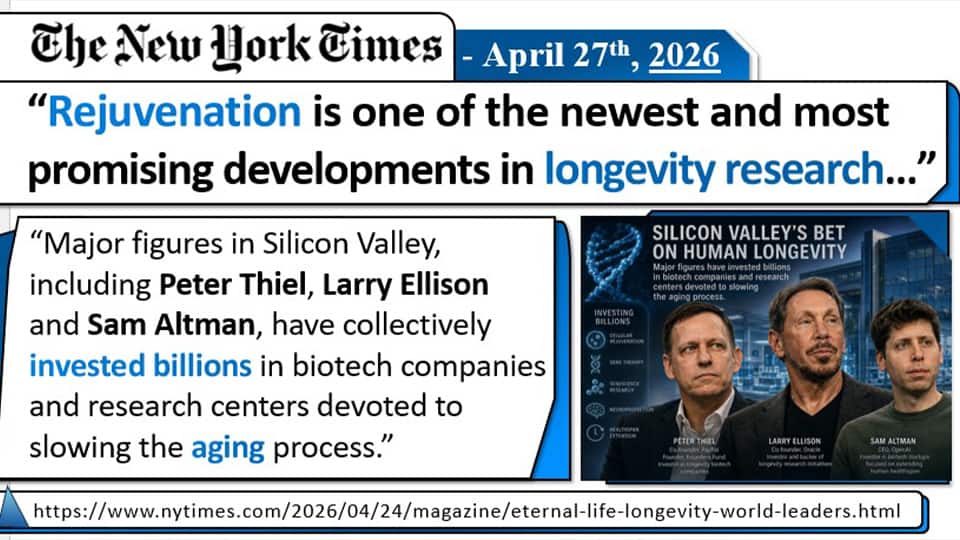
The media has extensively reported on the growing role of wealthy investors and major biotechnology firms entering the longevity research field.
An enormous influx of capital is pouring into charities and companies pursuing rejuvenation science. Recent advances have moved anti-aging research from fringe science into mainstream biotechnology.
Most groups involved in funding distinguish between extending lifespan and improving healthspan. They argue that the central goal is not merely increasing years lived, but preserving youthful function, cognition, mobility, and independence.
A Tidal Wave of Longevity Research
Aging is the dominant risk factor underlying most chronic diseases.32 Rather than treating cancer, dementia, heart disease, and frailty as separate phenomena, increasing numbers of influential individuals recognize that most degenerative diseases are downstream consequences of aging biology.
And while improved healthspan is an often-stated objective, the benefit of increased lifespan is being recognized as a bridge to future advances in medicine. In other words, individuals today may benefit by engaging in interventions to remain alive long enough to benefit from revolutionary rejuvenation therapies.
This is one of several motivating factors that is causing billions of dollars of mostly private money to go toward longevity research…enabling a virtual tsunami of discoveries/innovation.
Systemic Interventions

Successful age reversal will require interventions that have system-wide regenerative effects. This differs from single-pill studies that often do not yield meaningful results.
Laboratory and clinical advances today are improving gene regulation, inflammatory signaling, stem cell functionality, and regenerative capacities.
What was once viewed as speculative anti-aging enthusiasm now involves major universities, pharma-ceutical companies, AI laboratories, and billions of dollars of investment capital.
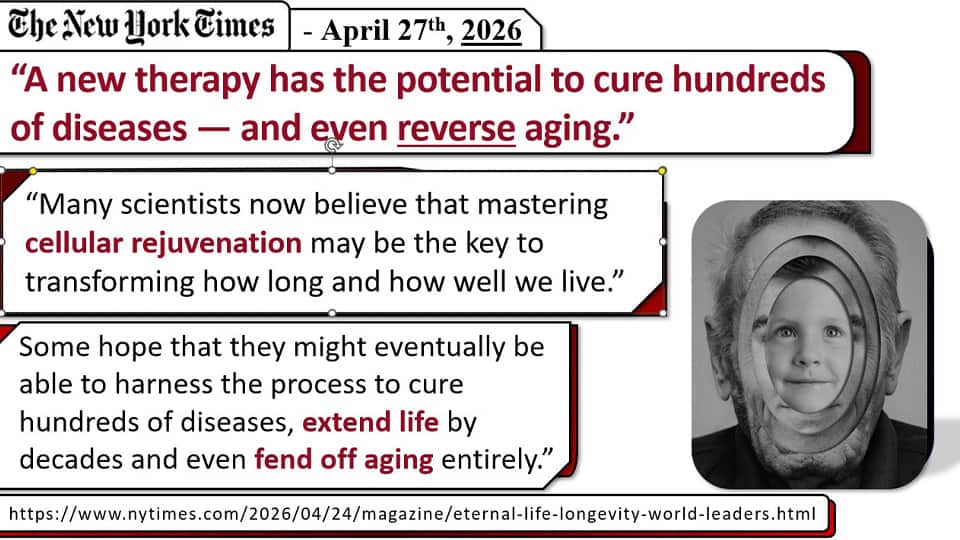
The implications are profound. If biological aging can be slowed, halted, or partially reversed, then medicine can shift from treating individual diseases toward preserving youthful function itself.
The emergence of rejuvenation biotechnology may ultimately represent the largest transformation in human history — not simply adding years to life, but potentially redefining what aging means altogether.
My recurring messaging is urgency. We are all degenerating.
I use proceeds from Life Extension® blood tests and supplement sales to support several promising longevity projects.
Your ongoing patronage is enabling precedent setting advances in the biomedical research arena.
For longer life,

William Faloon, Co-Founder, Life Extension®
References
- Ocampo A, Reddy P, Martinez-Redondo P, et al. In Vivo Amelioration of Age-Associated Hallmarks by Partial Reprogramming. Cell. 2016 Dec 15;167(7):1719-33 e12.
- Takahashi K, Yamanaka S. A decade of transcription factor-mediated reprogramming to pluripotency. Nat Rev Mol Cell Biol. 2016 Mar;17(3):183-93.
- Takahashi K, Yamanaka S. Induction of pluripotent stem cells from mouse embryonic and adult fibroblast cultures by defined factors. Cell. 2006 Aug 25;126(4):663-76.
- Ding F, Yu Y, Zhao J, et al. The interplay of cellular senescence and reprogramming shapes the biological landscape of aging and cancer revealing novel therapeutic avenues. Front Cell Dev Biol. 2025;13:1593096.
- Macip CC, Hasan R, Hoznek V, et al. Gene Therapy-Mediated Partial Reprogramming Extends Lifespan and Reverses Age-Related Changes in Aged Mice. Cell Reprogram. 2024 Feb;26(1):24-32.
- Sahu SK, Reddy P, Lu J, et al. Targeted partial reprogramming of age-associated cell states improves markers of health in mouse models of aging. Sci Transl Med. 2024 Sep 11;16(764):eadg1777.
- Dimitrov V, Barbier C, Ismailova A, et al. Vitamin D-regulated Gene Expression Profiles: Species-specificity and Cell-specific Effects on Metabolism and Immunity. Endocrinology. 2021 Feb 1;162(2).
- Pasing Y, Fenton CG, Jorde R, et al. Changes in the human transcriptome upon vitamin D supplementation. J Steroid Biochem Mol Biol. 2017 Oct;173:93-9.
- Carlberg C. Vitamin D and Its Target Genes. Nutrients. 2022 Mar 24;14(7).
- Zhang W, Qu J, Liu GH, et al. The ageing epigenome and its rejuvenation. Nat Rev Mol Cell Biol. 2020 Mar;21(3):137-50.
- Faloon W. Prospects of Achieving Immortality - William Faloon. 2025.
- Bocklandt S, Lin W, Sehl ME, et al. Epigenetic predictor of age. PLoS One. 2011;6(6):e14821.
- Levine ME, Lu AT, Quach A, et al. An epigenetic biomarker of aging for lifespan and healthspan. Aging (Albany NY). 2018 Apr 18;10(4):573-91.
- Kirkland JL, Tchkonia T. Cellular Senescence: A Translational Perspective. EBioMedicine. 2017 Jul;21:21-8.
- Forman DE, Kuchel GA, Newman JC, et al. Impact of Geroscience on Therapeutic Strategies for Older Adults With Cardiovascular Disease: JACC Scientific Statement. J Am Coll Cardiol. 2023 Aug 15;82(7):631-47.
- Gomez LS, Jurk D. Unlocking the Potential of Senolytic Compounds: Advancements, Opportunities, and Challenges in Ageing-Related Research. Subcell Biochem. 2024;107:91-116.
- Huanbutta K, Burapapadh K, Kraisit P, et al. Artificial intelligence-driven pharmaceutical industry: A paradigm shift in drug discovery, formulation development, manufacturing, quality control, and post-market surveillance. Eur J Pharm Sci. 2024 Dec 1;203:106938.
- Available at: https://www.linkedin.com/posts/zhavoronkov_i-am-pleased-to-announce-a-significant-deal-ugcPost-7444215013235421184-ZWZ8/. Accessed June 22, 2026.
- Dees C, Chakraborty D, Distler JHW. Cellular and molecular mechanisms in fibrosis. Exp Dermatol. 2021 Jan;30(1):121-31.
- Murtha LA, Schuliga MJ, Mabotuwana NS, et al. The Processes and Mechanisms of Cardiac and Pulmonary Fibrosis. Front Physiol. 2017;8:777.
- Selman M, Pardo A. Fibroageing: An ageing pathological feature driven by dysregulated extracellular matrix-cell mechanobiology. Ageing Res Rev. 2021 Sep;70:101393.
- Cook SA. Understanding interleukin 11 as a disease gene and therapeutic target. Biochem J. 2023 Dec 13;480(23):1987-2008.
- Widjaja AA, Lim WW, Viswanathan S, et al. Inhibition of IL-11 signalling extends mammalian healthspan and lifespan. Nature. 2024 Aug;632(8023):157-65.
- Available at: https://www.medicalnewstoday.com/articles/new-drug-helps-fight-typical-signs-of-aging-extends-lifespan-by-25-in-mice#IL-11-s-role-in-human-aging. Accessed June 22, 2026.
- Khan S, Chang V, Winer DA. The inflammaging clock strikes IL-11! Immunity. 2024 Sep 10;57(9):2010-2.
- King DJ, Swaney JS, Rich C, et al. IL-11 receptor is a novel target for drug development with pharmacological activity in fibro-inflammatory disease. Sci Rep. 2026 May 2.
- Available at: https://foreveryoungfilm.substack.com/p/googles-calico-labs-has-an-anti-aging. Accessed June 22, 2026.
- Mabwell. Mabwell Announces First Patient Dosed in Phase II Trial of Anti-IL-11 Antibody for Pathological Scarring. 2025.
- Avila-Carrasco L, Majano P, Sanchez-Tomero JA, et al. Natural Plants Compounds as Modulators of Epithelial-to-Mesenchymal Transition. Front Pharmacol. 2019;10:715.
- Yu S, Pu J, Liu K, et al. Curcumin mediates oxidative stress to play an anti-fibrotic role, focusing on liver, renal, myocardial and pulmonary fibrosis. Front Pharmacol. 2025;16:1636538.
- Liu X, Liang Q, Qin Y, et al. Advances and Perspectives on the Anti-Fibrotic Mechanisms of the Quercetin. Am J Chin Med. 2025;53(5):1411-40.
- Goldberg EL, Dixit VD. Drivers of age-related inflammation and strategies for healthspan extension. Immunol Rev. 2015 May;265(1):63-74.


Wellness
Specialists
1-800-226-2370 - This service is FREE
7:30 AM - 12 AM (ET) Mon-Fri | 9 AM - 12 AM (ET) Sat-Sun