



Life Extension Magazine®

How to Stay Mentally Sharp and Support Cognitive Health
In separate clinical trials, three plant compounds were associated with improvements in measures of memory, learning performance, and multi-tasking ability.
Scientifically reviewed by: Gary Gonzalez, MD, in September 2026. Written by: Marsha McCulloch.
Cognitive decline during aging is well documented, with age being the strongest risk factor for dementia.1
In the U.S., an estimated 10% of adults aged 65 and older have dementia and 22% have mild cognitive impairment.1,2
Specific plant compounds have demonstrated neuroprotective effects.3
In preclinical studies, green oat extract promoted faster learning performance and reduced markers of brain inflammation.4,5
In a clinical trial, a combination of Boswellia tree resin and haritaki fruit extract significantly improved measures of short-term and long-term memory.6
In another clinical trial, standardized green oat extract showed significantly better performance than a placebo.4
Combining these ingredients is a science-based strategy to optimize cognitive function and promote long-term brain health.
Understanding the Aging Brain
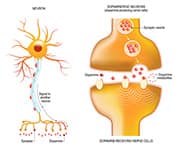
Inside the brain, billions of neurons (nerve cells) communicate with each other at junctions called synapses.7
Neurons use neurotransmitters to send messages across synapses.7
As we age, cognitive function gradually declines. One reason is decreased production and release of neurotransmitters, including acetylcholine and dopamine.8
Acetylcholine is essential for learning and memory, including episodic memory, the recall of life events.8,9
Dopamine helps regulate synaptic plasticity (the ability to form new synaptic connections) and neurogenesis (the ability to generate new neurons), both of which are also critical for learning and memory.8,10
With aging, levels of brain-derived neurotrophic factor (BDNF) also fall. This protein promotes the growth of neurons and synapses and supports acetylcholine-associated memory processes.11 Therefore, BDNF plays a crucial role in learning and memory.11,12
Scientists have identified botanicals that target these and other mechanisms of cognitive aging and help keep the brain sharp.
Brain Botanicals
Ayurveda, an ancient holistic medical system, has traditionally used Boswellia serrata (Indian frankincense) resin13,14 and haritaki (Terminalia chebula), a fruit from Southeast Asia,15-17 for various medicinal purposes.
Modern preclinical research has since explored the neuroprotective potential of Boswellia18-20 and haritaki plants,21,22 including their effects on cognitive function.
Preclinical research shows that Boswellia20,23,24 and haritaki25 may help inhibit the activity of the enzyme responsible for breaking down the neurotransmitter acetylcholine.
In a randomized, double-blind, placebo-controlled study, 100 adults aged 40–65 with subjective memory complaints received either 300 mg of a standardized Boswellia serrata and haritaki extract or placebo daily for 120 days.6
Cognitive function was assessed using the Rey Auditory Verbal Learning Test, where participants listen to and recall word lists several times, then remember them again after short and longer delays, and finally recognize the words from a larger list.
Compared to placebo, the treatment group showed statistically significant improvements in:6
- Immediate (short-term) and delayed recall,
- Overall learning and learning rate,
- Total learning capacity, and
- Recognition memory.
Some improvements were observed as early as 15 days after treatment initiation.
An additional battery of computerized tests was used to assess non-verbal cognition. Compared to placebo, the treatment group demonstrated significant improvements in visual learning, processing speed, and task accuracy.
The intervention also significantly improved sleep quality and increased serum brain-derived neurotrophic factor (BDNF) levels, a biomarker associated with neuronal health and synaptic plasticity.6
Green Oat Supports Cognition
Green oat (Avena sativa) has been traditionally used as an antispasmodic, diuretic, and neurotonic agent. Its extract is rich in avenanthramides, flavonoids, triterpenoid saponins, and sterols.26 Preclinical research suggests that a standardized green oat extract may help reduce markers of brain inflammation and improve measures of cognitive function.5 It exerts these effects through multiple mechanisms, including:5
- Activating the Nrf2/HO-1 antioxidant defense pathway, which mitigates oxidative stress-related neuronal damage,
- Inhibiting the NF-κB/MAPK neuroinflammatory signaling pathway in microglial cells, reducing inflammatory responses, and
- Upregulating the CREB/BDNF pathway, which supports neuroprotection and memory formation.
In an animal model of mild cognitive impairment (similar to Alzheimer's symptoms), mice were given a standardized green oat extract for 14 days, while a control group received no treatment.5 The extract attenuated spatial memory learning impairments, as assessed by maze tests.
Improve Memory and Multitasking
The benefits of green oat extract have been seen in human studies as well.
In a clinical trial of 132 healthy adults (ages 35 to 65), those who took 430 mg of standardized green oat extract daily for 29 days showed significantly better performance than a placebo group on a computerized test of visuospatial working memory.4
This test requires a participant to reproduce a sequence of blocks in the same order as they were presented, with difficulty increasing over time.
In everyday life, visuospatial working memory is important for tracking locations of moving objects and navigating dynamic environments, such as when driving.
Participants also completed a multitasking test that involved performing serial subtraction while simultaneously tracking an asterisk moving across a screen.4
Participants taking 430 mg of standardized green oat extract demonstrated improved tracking performance without compromising subtraction accuracy, suggesting improved divided attention.
This may translate to better performance in real-world situations that require managing multiple tasks at once, such as driving while holding a conversation.
What You Need To Know
Supporting Healthy Cognitive Aging

- Age-related memory loss and cognitive dysfunction are not inevitable.
- Preclinical studies suggest that extracts from Boswellia serrata resin, haritaki fruit, and green oat may help preserve acetylcholine activity, a neurotransmitter involved in learning and memory.
- Boswellia and haritaki extracts increased serum brain-derived neurotrophic factor (BDNF) levels in one clinical trial, which supports the brain's ability to adapt and form new connections.
- In a clinical trial of adults with subjective memory complaints, intake of Boswellia resin and haritaki fruit extracts increased BDNF levels while improving measures of short- and long-term memory.
- Another clinical trial of healthy adults found that intake of green oat extract improved performance on tests of visuospatial working memory and multitasking.
Taking a combination of Boswellia, haritaki, and green oat extracts daily may help support cognitive performance and long-term brain health.
Summary

Specialized botanical extracts may help support cognitive performance and promote healthy brain aging.
Boswellia tree resin, haritaki fruit, and green oat extracts have been studied for their effects on acetylcholine activity and BDNF levels, which are involved in cognitive function.
In clinical trials, daily intake of these extracts was associated with improvements in several measures of memory, learning performance, and improvements in multitasking ability.
If you have any questions on the scientific content of this article, please call a Life Extension Wellness Specialist at 1-866-864-3027.
References
- Manly JJ, Jones RN, Langa KM, et al. Estimating the Prevalence of Dementia and Mild Cognitive Impairment in the US: The 2016 Health and Retirement Study Harmonized Cognitive Assessment Protocol Project. JAMA Neurol. 2022 Dec 1;79(12):1242-9.
- Aigbogun MS, Stellhorn R, Krasa H, et al. Severity of memory impairment in the elderly: Association with health care resource use and functional limitations in the United States. Alzheimers Dement (Amst). 2017;8:51-9.
- Alum EU, Uti DE, Egba SI, et al. The role of phytochemicals in age-related cognitive decline: a natural solution for brain health. Natural Product Communications. 2025;20(6):1-18.
- Kennedy DO, Bonnlander B, Lang SC, et al. Acute and Chronic Effects of Green Oat (Avena sativa) Extract on Cognitive Function and Mood during a Laboratory Stressor in Healthy Adults: A Randomised, Double-Blind, Placebo-Controlled Study in Healthy Humans. Nutrients. 2020 May 29;12(6).
- Balakrishnan R, Kim YS, Kang SI, et al. Green oat cognitaven(R) attenuates mild cognitive impairment by activating the CREB/BDNF/Nrf2/HO-1 pathway and modulating NF-kappaB/MAPK signaling. Biomed Pharmacother. 2025 Aug;189:118295.
- Salter D, Gupta SVB, Sairam B, et al. A standardized combination of Boswellia serrata and Terminalia chebula extracts to improve cognition in adults with subjective memory complaints: a randomized controlled proof-of-concept study. Front Nutr. 2025;12:1695341.
- Sivadas A, Broadie K. How Does My Brain Communicate with My Body? Front Young Minds. 2020 Oct;8.
- Lee J, Kim HJ. Normal Aging Induces Changes in the Brain and Neurodegeneration Progress: Review of the Structural, Biochemical, Metabolic, Cellular, and Molecular Changes. Front Aging Neurosci. 2022;14:931536.
- Davidson PSR, Karpov G, Giguere L, et al. Older adults' episodic memory is related to a neurophysiological marker of brain cholinergic activity. Exp Brain Res. 2022 Sep;240(9):2269-76.
- Garcia-Garrote M, Parga JA, Labandeira PJ, et al. Dopamine regulates adult neurogenesis in the ventricular-subventricular zone via dopamine D3 angiotensin type 2 receptor interactions. Stem Cells. 2021 Dec;39(12):1778-94.
- Miranda M, Morici JF, Zanoni MB, et al. Brain-Derived Neurotrophic Factor: A Key Molecule for Memory in the Healthy and the Pathological Brain. Front Cell Neurosci. 2019;13:363.
- Cunha C, Brambilla R, Thomas KL. A simple role for BDNF in learning and memory? Front Mol Neurosci. 2010;3:1.
- Ammon HP. Boswellic Acids and Their Role in Chronic Inflammatory Diseases. Adv Exp Med Biol. 2016;928:291-327.
- Hamidpour R, Hamidpour S, Hamidpour M, et al. Frankincense ( ru xiang; boswellia species): from the selection of traditional applications to the novel phytotherapy for the prevention and treatment of serious diseases. J Tradit Complement Med. 2013 Oct;3(4):221-6.
- Hassan Bulbul MR, Uddin Chowdhury MN, Naima TA, et al. A comprehensive review on the diverse pharmacological perspectives of Terminalia chebula Retz. Heliyon. 2022 Aug;8(8):e10220.
- Nigam M, Mishra AP, Adhikari-Devkota A, et al. Fruits of Terminalia chebula Retz.: A review on traditional uses, bioactive chemical constituents and pharmacological activities. Phytother Res. 2020 Oct;34(10):2518-33.
- Jokar A, Masoomi F, Sadeghpour O, et al. Potential therapeutic applications for Terminalia chebula in Iranian traditional medicine. J Tradit Chin Med. 2016 Apr;36(2):250-4.
- Wei C, Fan J, Sun X, et al. Acetyl-11-keto-beta-boswellic acid ameliorates cognitive deficits and reduces amyloid-beta levels in APPswe/PS1dE9 mice through antioxidant and anti-inflammatory pathways. Free Radic Biol Med. 2020 Apr;150:96-108.
- Khaafi F, Javadi B. Molecular Targets Underlying the Neuroprotective Effects of Boswellic Acid: A Systematic Review. Mini Rev Med Chem. 2023;23(19):1912-25.
- Mohamed EA, Ahmed HI, Zaky HS, et al. Boswellic acids ameliorate neurodegeneration induced by AlCl(3): the implication of Wnt/beta-catenin pathway. Environ Sci Pollut Res Int. 2022 Oct;29(50):76135-43.
- Gao H, Lu H, Fang N, et al. The potential of Terminalia chebula in alleviating mild cognitive impairment: a review. Front Pharmacol. 2024;15:1484040.
- Kumar R, Arora R, Agarwal A, et al. Protective effect of Terminalia chebula against seizures, seizure-induced cognitive impairment and oxidative stress in experimental models of seizures in rats. J Ethnopharmacol. 2018 Apr 6;215:124-31.
- Assaran AH, Hosseini M, Shirazinia M, et al. Neuro-protective Effect of Acetyl-11-keto-beta-boswellic Acid in a Rat Model of Scopolamine-induced Cholinergic Dysfunction. Curr Pharm Des. 2024;30(2):140-50.
- Siddiqui A, Shah Z, Jahan RN, et al. Mechanistic role of boswellic acids in Alzheimer's disease: Emphasis on anti-inflammatory properties. Biomed Pharmacother. 2021 Dec;144:112250.
- Afshari AR, Sadeghnia HR, Mollazadeh H. A Review on Potential Mechanisms of Terminalia chebula in Alzheimer's Disease. Adv Pharmacol Sci. 2016;2016:8964849.
- Singh R, De S, Belkheir A. Avena sativa (Oat), a potential neutraceutical and therapeutic agent: an overview. Crit Rev Food Sci Nutr. 2013;53(2):126-44.


Wellness
Specialists
1-800-226-2370 - This service is FREE
7:30 AM - 12 AM (ET) Mon-Fri | 9 AM - 12 AM (ET) Sat-Sun