

Life Extension Magazine®

Senolytics Remove Aged Cells
Dysfunctional aged cells accelerate degenerative processes. Senolytics can help the body remove them.
Scientifically reviewed by: Gary Gonzalez, MD, in July 2025. Written by: Steven Townsend.
Cells have a built-in program to beneficially self-destruct (via apoptosis) that is part of the body’s maintenance system.1
With age, however, not all of aged “senescent” cells are eradicated.
Instead of undergoing normal elimination, senescent cells linger in a toxic dysfunctional state.
The accumulation of damaged senescent cells can accelerate aging processes and contribute to development of chronic diseases.2
Scientists have conducted research into compounds (called senolytics) that remove senescent cells, which have shown promising regenerative effects.3-5
Enlightened people today utilize plant-based senolytics like fisetin, theaflavins and quercetin that target pathways that block favorable programmed cell death (apoptosis).
Turning “on” youthful apoptosis helps rid the body of accumulated senescent cells.
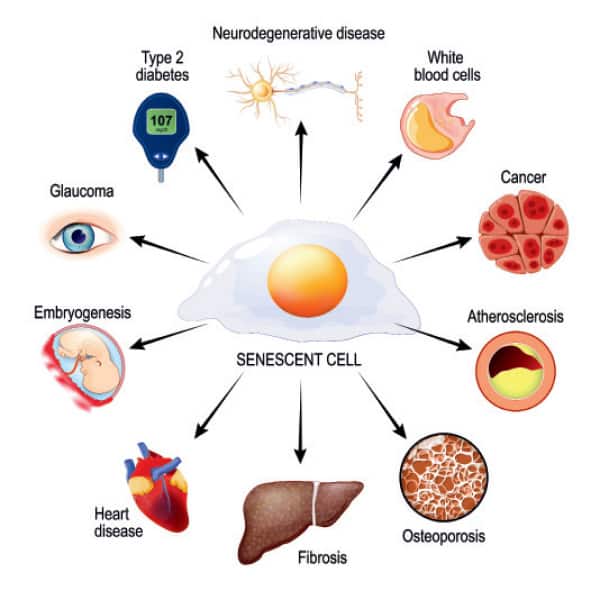
The Problem of Cellular Senescence
Senescent cells have structural and functional abnormalities that make them different from normal, healthy cells.2,6,7
As these damaged (senescent) cells accumulate with age, they secrete compounds that promote local and systemic degeneration. Their resistance to apoptosis has earned them the nickname “zombie cells.”8
Compounds secreted by senescent cells are called senescence-associated secretory phenotypes (SASPs). They degrade surrounding tissues and contribute to chronic inflammation.6,9
This low-grade inflammation, also known as inflammaging, is a significant contributor to loss of function and chronic disease.10
The buildup of senescent cells and inflammaging has been shown in clinical and preclinical settings to accelerate the aging process and increase the risk of age-related diseases, including:
- Cardiovascular disease,6,11
- Osteoarthritis,2,7,11
- Type 2 diabetes,12
- Cognitive decline and dementia,2,7,11 and
- Cancer.2,6,7,11
Senolytic Therapy
Researchers at a major research hospital have made significant contributions to ways to combat cellular senescence.13,14 They found that compounds called senolytics activated a kind of “switch” in senescent cells, causing them to die without affecting healthy cells.2,13 They also found that the removal of senescent cells may delay aging-associated disorders.13
They termed these interventions senolytic therapy. By targeting senescent cells for removal, senolytic compounds aim to delay age-associated diseases and restore tissue function.
In animal models, using senolytics to eliminate senescent cells has demonstrated remarkable health effects, including:
- Improving markers associated with aging,9,15,16
- Extending the life of elderly mice by about 10%, which is analogous to a 75-year-old human living an extra 7.5 years,17
- Halting or even reversing atherosclerotic plaque development, the most common cause of cardiovascular disease in mice,14,16
- Reducing inflammation associated with obesity and improving metabolic health,15,18 and
- Protecting against osteoarthritis.16,19
Intermittent treatment with senolytics (formulated with the drug dasatinib and the nutrient quercetin) reduced senescent cells, improved physical function, and increased post-treatment survival by 36%, lowering the mortality hazard by 65% in aged mice.5
Early human studies of senolytic therapies have shown promise as well.
In one pilot study of patients suffering from idiopathic pulmonary fibrosis, a progressive lung disease, senolytic therapy with a cocktail of dasatinib (100 mg per day) and quercetin (1250 mg per day) for three consecutive days per week over a total of three weeks, led to a clinically meaningful improvement in physical function, including gains in walking distance and gait speed.20
In a phase 2 randomized controlled trial of 60 postmenopausal women who had a high burden of senescent cells, intermittent senolytic therapy for 20 weeks with dasatinib and quercetin significantly increased markers of bone formation and increased bone mineral density.21
Plant-Derived Senolytics
Scientists have spent years testing plant-derived nutrients for their senolytic properties to aid in the safe removal of senescent cells.3-5 These damaged cells not only contribute to aging but can accelerate the aging process throughout the body, contributing to degenerative diseases such as cancer and arthritis.2,6 These nutrients help activate the senolytic process in the body without the use of pharmaceuticals. The following compounds have been found to be particularly promising:
- Fisetin, a polyphenol found in fruits such as strawberries and apples, is one of the most potent plant-derived senolytics yet discovered. In an animal study, old mice given fisetin eliminated about 70% of senescent cells and experienced an increase in lifespan of nearly 10%.17 In other preclinical studies, fisetin has demonstrated other health-promoting effects, including reducing body weight, improving metabolic health, protecting the brain against degenerative diseases, and reducing cancer incidence.22,23
- Quercetin, an anti-inflammatory nutrient found in many fruits and vegetables.24 On its own, it removed senescent cells in the kidneys of mice, improving function and decreasing the fibrosis (scarring) that leads to kidney failure.25
- Theaflavins, polyphenolic compounds found in black tea, have been known and studied for anti-cancer properties, cognitive function improvement, and anti-inflammatory effects.26 Theaflavins have shown anticancer effects by inducing apoptosis in several cancer cell lines. They work by targeting survival pathways of senescent cells involving a protein called BCL-2 that stops senescent cells from dying.27 In one mouse model study, theaflavins were shown to have significant senolytic activity in ameliorating ionizing radiation-induced cell injury.28
- Apigenin is a polyphenol found in various foods such as parsley, celery, and chamomile. It has been shown to block the pro-inflammatory compounds senescent cells produce, decreasing harmful chronic inflammation,29,30 and has also been shown to improve physical and cognitive function in animal models of premature aging.31
What You Need To Know

How Senolytics may Slow Aging and Chronic Disease
- Some aging, dysfunctional cells become senescent, spreading pro-inflammatory compounds and refusing to die off to make room for new, healthy cells.
- Senescent cells have been found to contribute to loss of function and progression of age-related disease in tissues and organs throughout the body.
- Senolytics are compounds that can eliminate senescent cells by turning on the “cellular switch” that allows them to die, while leaving healthy cells unharmed.
- In early preclinical and clinical studies, senolytic therapy has been effective at reducing senescent cells, improving tissue function, and reducing risk for disease.
- Several plant-derived compounds have been found to possess potent senolytic activity, including fisetin, quercetin, theaflavins, and apigenin.
- A combination of these senolytics may work in different ways to reduce the number of senescent cells in the body and block their harmful effects.
Taken together, these senolytic nutrients may work in different ways to help wipe away senescent cells and reduce the toxic impact of those that remain.
There is much discussion in the longevity field about the best way to use senolytic therapies.
Right now, taking these treatments intermittently may work best for clearing out senescent cells.2,20,32,33 In one preclinical study, a drug that blocked the inflammatory signals released by senescent cells was more effective when used on an occasional basis rather than being used daily.34
Early research suggests that taking high doses of compounds like fisetin, quercetin, theaflavins, and apigenin once a week could be an effective approach.
Summary
Aged cells can become dysfunctional and toxic to healthy cells around them. This cellular senescence occurs throughout the body and is a major contributor to accelerated aging and risk for age-related disease.
Scientists have discovered that some compounds have a senolytic effect, removing senescent cells from tissues, reducing associated inflammation, and improving tissue health and function.
Some of the most potent plant-derived senolytic compounds identified include fisetin, quercetin, theaflavins, and apigenin.
Senolytics

Senolytics are compounds (medications or dietary products) that help clear senescent cells from the body.
What Are Senescent Cells?
They are old or damaged cells that have stopped dividing but remain in the body.
Over time, they build up and release inflammatory chemicals.
This inflammation can harm surrounding tissues and contribute to age-related diseases, like cancer, arthritis, and frailty.
How Senolytics Help:
Senolytics specifically target and eliminate senescent cells.
By reducing these cells, senolytics lower inflammation and may improve tissue health.
This could help slow aging and reduce the risk of diseases linked to aging.
Early studies have found senolytic therapies to be effective in reducing senescent cell numbers and improving health. Scientists are optimistic that senolytics can help rejuvenate tissues, slowing loss of function associated with aging and reducing risk for chronic disease.
If you have any questions on the scientific content of this article, please call a Life Extension Wellness Specialist at 1-866-864-3027.
References
- Alberts B JA, Lewis J, et al. Molecular Biology of the Cell. 4th edition. 4th ed: New York: Garland Science;; 2002.
- Kirkland JL, Tchkonia T. Cellular Senescence: A Translational Perspective. EBioMedicine. 2017 Jul;21:21-8.
- Kirkland JL, Tchkonia T, Zhu Y, et al. The Clinical Potential of Senolytic Drugs. J Am Geriatr Soc. 2017 Oct;65(10):2297-301.
- Robbins PD, Jurk D, Khosla S, et al. Senolytic Drugs: Reducing Senescent Cell Viability to Extend Health Span. Annu Rev Pharmacol Toxicol. 2021 Jan 6;61:779-803.
- Xu M, Pirtskhalava T, Farr JN, et al. Senolytics improve physical function and increase lifespan in old age. Nat Med. 2018 Aug;24(8):1246-56.
- Di Micco R, Krizhanovsky V, Baker D, et al. Cellular senescence in ageing: from mechanisms to therapeutic opportunities. Nat Rev Mol Cell Biol. 2021 Feb;22(2):75-95.
- Zhu Y, Armstrong JL, Tchkonia T, et al. Cellular senescence and the senescent secretory phenotype in age-related chronic diseases. Curr Opin Clin Nutr Metab Care. 2014 Jul;17(4):324-8.
- Zhao Y, Simon M, Seluanov A, et al. DNA damage and repair in age-related inflammation. Nat Rev Immunol. 2023 Feb;23(2):75-89.
- Zhang L, Pitcher LE, Prahalad V, et al. Targeting cellular senescence with senotherapeutics: senolytics and senomorphics. FEBS J. 2023 Mar;290(5):1362-83.
- Franceschi C, Campisi J. Chronic inflammation (inflammaging) and its potential contribution to age-associated diseases. J Gerontol A Biol Sci Med Sci. 2014 Jun;69 Suppl 1:S4-9.
- Walker KA, Basisty N, Wilson DM, 3rd, et al. Connecting aging biology and inflammation in the omics era. J Clin Invest. 2022 Jul 15;132(14).
- Narasimhan A, Flores RR, Robbins PD, et al. Role of Cellular Senescence in Type II Diabetes. Endocrinology. 2021 Oct 1;162(10).
- Baker DJ, Wijshake T, Tchkonia T, et al. Clearance of p16Ink4a-positive senescent cells delays ageing-associated disorders. Nature. 2011 Nov 2;479(7372):232-6.
- Childs BG, Baker DJ, Wijshake T, et al. Senescent intimal foam cells are deleterious at all stages of atherosclerosis. Science. 2016 Oct 28;354(6311):472-7.
- Chaib S, Tchkonia T, Kirkland JL. Cellular senescence and senolytics: the path to the clinic. Nat Med. 2022 Aug;28(8):1556-68.
- Zhang L, Pitcher LE, Yousefzadeh MJ, et al. Cellular senescence: a key therapeutic target in aging and diseases. J Clin Invest. 2022 Aug 1;132(15).
- Yousefzadeh MJ, Zhu Y, McGowan SJ, et al. Fisetin is a senotherapeutic that extends health and lifespan. EBioMedicine. 2018 Oct;36:18-28.
- Islam MT, Tuday E, Allen S, et al. Senolytic drugs, dasatinib and quercetin, attenuate adipose tissue inflammation, and ameliorate metabolic function in old age. Aging Cell. 2023 Feb;22(2):e13767.
- Yamaura K, Nelson AL, Nishimura H, et al. Therapeutic potential of senolytic agent quercetin in osteoarthritis: A systematic review and meta-analysis of preclinical studies. Ageing Res Rev. 2023 Sep;90:101989.
- Justice JN, Nambiar AM, Tchkonia T, et al. Senolytics in idiopathic pulmonary fibrosis: Results from a first-in-human, open-label, pilot study. EBioMedicine. 2019 Feb;40:554-63.
- Farr JN, Atkinson EJ, Achenbach SJ, et al. Effects of intermittent senolytic therapy on bone metabolism in postmenopausal women: a phase 2 randomized controlled trial. Nat Med. 2024 Sep;30(9):2605-12.
- Pal HC, Pearlman RL, Afaq F. Fisetin and Its Role in Chronic Diseases. Adv Exp Med Biol. 2016;928:213-44.
- Grynkiewicz G, Demchuk OM. New Perspectives for Fisetin. Front Chem. 2019;7:697.
- Deepika, Maurya PK. Health Benefits of Quercetin in Age-Related Diseases. Molecules. 2022 Apr 13;27(8).
- Li M, Zhang C, Xiao X, et al. Theaflavins in Black Tea Mitigate Aging-Associated Cognitive Dysfunction via the Microbiota-Gut-Brain Axis. J Agric Food Chem. 2023 Feb 8;71(5):2356-69.
- O’Neill EJ, Termini D, Albano A, et al. Anti-Cancer Properties of Theaflavins. Molecules. 2021 Feb 13;26(4).
- Han X, Zhang J, Xue X, et al. Theaflavin ameliorates ionizing radiation-induced hematopoietic injury via the NRF2 pathway. Free Radic Biol Med. 2017 Dec;113:59-70.
- Lim H, Park H, Kim HP. Effects of flavonoids on senescence-associated secretory phenotype formation from bleomycin-induced senescence in BJ fibroblasts. Biochem Pharmacol. 2015 Aug 15;96(4):337-48.
- Perrott KM, Wiley CD, Desprez PY, et al. Apigenin suppresses the senescence-associated secretory phenotype and paracrine effects on breast cancer cells. Geroscience. 2017 Apr;39(2):161-73.
- Zhang H, Xu Q, Jiang Z, et al. Targeting Senescence with Apigenin Improves Chemotherapeutic Efficacy and Ameliorates Age-Related Conditions in Mice. Adv Sci (Weinh). 2025 Apr 23:e2412950.
- Zhu Y, Tchkonia T, Pirtskhalava T, et al. The Achilles’ heel of senescent cells: from transcriptome to senolytic drugs. Aging Cell. 2015 Aug;14(4):644-58.
- Roos CM, Zhang B, Palmer AK, et al. Chronic senolytic treatment alleviates established vasomotor dysfunction in aged or atherosclerotic mice. Aging Cell. 2016 Oct;15(5):973-7.
- Laberge RM, Sun Y, Orjalo AV, et al. MTOR regulates the pro-tumorigenic senescence-associated secretory phenotype by promoting IL1A translation. Nat Cell Biol. 2015 Aug;17(8):1049-61.


Wellness
Specialists
1-800-226-2370 - This service is FREE
7:30 AM - 12 AM (ET) Mon-Fri | 9 AM - 12 AM (ET) Sat-Sun