


Life Extension Magazine.

In the News: CoQ10 Supplementation Benefits Male Infertility
CoQ10 improved male infertility; choline linked to lower Alzheimer’s risk; dietary antioxidants may decrease risk of glaucoma; compound in olive oil decreased marker of inflammation.
Scientifically reviewed by Gary Gonzalez, MD, in January 2026.
A benefit was found for coenzyme Q10 (CoQ10) in the treatment of infertility in men, according to a systematic review and meta-analysis of randomized studies.*
Researchers reviewed eight studies that included a total of 781 men with infertility of unidentified cause.
Four hundred thirty men received CoQ10, and 351 men received a placebo or other control comparison.
CoQ10 doses ranged from 100 mg to 200 mg per day in the five studies that evaluated the effects of CoQ10 as a single nutrient.
The meta-analysis revealed a significantly higher sperm concentration among men who received CoQ10 when compared with a placebo control. Participants who received CoQ10 had significantly greater seminal volume and improved quality in studies that evaluated this parameter.
Sperm motility was also higher in CoQ10-treated men compared with the control participants.
Editor’s Note: Two other studies, which documented pregnancy-rate outcomes, found a significantly higher rate in women whose partners received CoQ10.
* World J Mens Health. 2025 Aug 27.
Greater Choline Intake Linked to Lower Alzheimer’s Risk

A study reported in The Journal of Nutrition revealed a link between dietary intake of choline and a lower risk of developing Alzheimer’s in older adults.*
The study examined the daily choline intake of 991 men and women enrolled in the Rush Memory and Aging Project prospective cohort.
The participants, whose age averaged 81 years at the beginning of the study, were followed for an average of about eight years, during which 266 participants were diagnosed with Alzheimer’s dementia.
Compared with those whose intake of choline was lowest, at less than 200 mg per day, participants whose intake was highest, at over 350 mg per day, had a 51% lower risk of developing Alzheimer’s dementia. An intake of 251 mg–300 mg was associated with a 40% lower risk and 301 mg–350 mg was associated with a 38% risk reduction.
Editor’s Note: Choline is an essential nutrient that is used by the body to form the neurotransmitter acetylcholine, which facilitates the transmission of impulses between nervous system cells known as neurons and is needed for memory and learning.
* J Nutr. 2025 May 28:S0022-3166(25)00297-4.
Antioxidant-Rich Diets Linked with Lower Glaucoma Risk
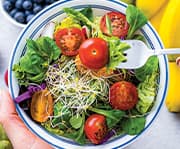
An observational study uncovered an association between improved antioxidant status and a lower risk of glaucoma, an eye disease marked by increased eye pressure in which oxidative stress plays a role.*
The investigation included 4,909 men and women aged 20 years and older who participated in the 2005-2008 National Health and Nutrition Examination Survey (NHANES). Glaucoma had been diagnosed among 325 participants.
Responses to dietary interviews were analyzed to obtain Dietary Oxidative Balance Scores; components included carotenoids, riboflavin, niacin, total folate, vitamins B6, B12, C and E, fiber, calcium, magnesium, selenium, zinc, copper, total fat and iron.
Each unit increase in Dietary Oxidative Balance Scores was associated with a 4% reduction in glaucoma risk. Men and women whose Dietary Oxidative Balance Scores were among the top 25% of participants had a b lower risk of glaucoma than those among the lowest 25%.
Editor’s Note: The association between dietary oxidative balance and glaucoma was greater among men, smokers and former smokers, and other subgroups.
Everyone starting at around age 40 should have a comprehensive eye exam that includes a test for intraocular pressure to detect and prevent optic nerve damage at its earliest stages.
* Eye (Lond). 2025 Sep;39(13):2527-2533
Olive Oil Compound Supports Healthy Inflammatory Response in Prediabetics
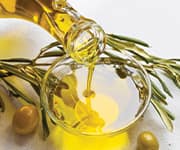
A randomized-controlled trial found improvements in antioxidant status and inflammatory response in overweight men and women with prediabetes who were given hydroxytyrosol, a compound that occurs in olive oil.*
The trial evaluated 49 overweight prediabetic people who received 15 mg of hydroxytyrosol or a placebo for 16 weeks.
At the beginning and end of the trial, the researchers measured:
- Oxidized LDL,
- Total antioxidant status,
- Glutathione peroxidase (antioxidant enzyme),
- Interleukin-6 (inflammatory marker), and
- Protein carbonyls and 8-OHdG (markers of oxidative stress).
Compared to the placebo group, people who received hydroxytyrosol had significant reductions in oxidized LDL, protein carbonyls, and 8-OHdG. They maintained their total antioxidant status and glutathione peroxidase activity, but had lower interleukin-6 levels, which indicated reduced inflammation.
Editor’s Note: The Mediterranean diet’s health benefits have been attributed in part to a high intake of olive oil. “Olive oil polyphenols have attracted significant scientific interest, particularly after the European Food Safety Authority approved the claim that ‘olive oil polyphenols contribute to the protection of low-density lipoproteins (LDL) from oxidative damage,’ an effect linked to their antioxidant capacity,” the authors wrote.
Hydroxytyrosol is included in certain supplements designed to mimic some of the beneficial effects of olive oil and the Mediterranean diet.
* Clin Nutr. 2025 Sep:52:17-26.


Wellness
Specialists
1-800-226-2370 - This service is FREE
7:30 AM - 12 AM (ET) Mon-Fri | 9 AM - 12 AM (ET) Sat-Sun