


Life Extension Magazine.

Oral Plant Extracts Protect Against Photoaging
A clinical trial found that an oral fern extract protected the skin from photoaging and decreased UV-induced DNA mutations.
By Michael Downey.
Chronic exposure to sunlight damages the skin in several ways,
"Collectively contributing to a prematurely aged appearance that exceeds the skin's chronological age."1
Topical sunscreens are widely used to protect against ultraviolet radiation,2 but many people apply an insufficient amount, and don't reapply often enough.3-5
Although sunscreens help prevent sunburn, they may not fully protect against UV-related damage and immune suppression.6
Fortunately, certain oral nutrients may provide adjunctive support as part of your skincare routine.
Preclinical studies suggest that an oral extract of the fern Polypodium leucotomos may help support the skin's defenses against UV-related damage from within.7-10
Two additional oral compounds, Sicilian red orange extract11 and nicotinamide,12 have shown additional protective effects in separate clinical studies against damage from the sun's harmful rays.
While it's still important to use a safe, high‑SPF sunscreen and wear protective clothing, these nutrients may offer adjunctive oral photoprotection support.
How Sunlight Contributes to Skin Aging

The glow of sunlight on your skin may feel good. But those ultraviolet (UV) rays penetrate beneath the surface, causing your skin to age faster while also increasing the risk of skin cancers.13-15 Preclinical studies have shown that, left unchecked, this solar onslaught:
- Damages DNA directly or indirectly through free radical formation, which can lead to skin cancer,15,16
- Causes mitochondrial damage and dysfunction,15,16
- Promotes cellular senescence (dysfunctional, growth-arrested cells) in skin cells,15
- Degrades collagen and contributes to the loss of skin elasticity,15-17 and
- Triggers inflammation and exacerbates chronic inflammation.16
Skin damage from ultraviolet (UV) radiation begins at an early age and accumulates over time, with effects such as premature aging becoming apparent later in life. That's why early defense is advised.
Why Sunscreen Alone is Not Enough for UV Protection
Apart from sun avoidance, sunscreen provides the best alternative protection.18 It's important to wear sunscreen or sunblock.2 However, topical products have certain limitations because they:
- May block UVB (responsible for sunburn) more effectively than UVA (which contributes to DNA damage and skin aging), so hidden skin damage can still occur even without visible sunburn.19
- May leave commonly missed areas—such as the ears, scalp, neck, and tops of the feet—under-protected if not applied carefully, and must be reapplied after swimming or sweating to maintain effectiveness.18
- Are often applied in insufficient amounts,4 and not reapplied as recommended,18
- May be labeled incorrectly and have lower actual SPF and UVA protection than "labeled values."6
- Some clothing allows UV rays to pass through depending on fabric, color, and environmental conditions.20
- Can degrade with sun exposure,21,22 and
- May contain chemicals that can irritate sensitive skin.18
Researchers have evaluated adjunctive oral photoprotective compounds.
Novel Oral Plant Extract Provides Photoprotection
Scientists identified an extract from the fern Polypodium leucotomos, which may complement topical sunscreens as an adjunctive photoprotection strategy.
Evidence from preclinical studies suggests that extracts from Polypodium leucotomos protect skin cells against sunlight-induced DNA damage and may help modulate inflammatory responses.8,9,23
Lab Data: Polypodium Tested in Skin Cells
Researchers conducted lab tests in which Polypodium leucotomos was applied to skin cells to study its general anti-aging effects on skin elasticity and structure. In these lab tests, researchers found that the Polypodium extract:7
- Directly inhibited enzymes that break down collagen, and proteins required for skin's structural framework, helping to maintain a youthful appearance, and
- Protected the extracellular matrix and collagen that make up the structural framework of skin tissue.
These laboratory findings suggest that Polypodium leucotomos may influence mechanisms associated with skin aging.
Animal Studies: Polypodium Protected DNA
Next, scientists gave oral Polypodium leucotomos to hairless mice, which were then exposed to UV radiation. The extract was associated with reduced inflammation, enhanced DNA repair, and reduced mutagenesis (DNA changes).8 Remarkably, Polypodium was associated with decreased skin DNA damage, not only during—but also before—UV exposure. Other preclinical data showed that Polypodium leucotomos extract may:
- Defend against harmful UV-generated oxidative stress,9 and
- Research in experimental models suggests it may help modulate immune responses, including the beneficial activation of NK and T lymphocyte immune cells.10,24,25
What You Need To Know
Protect Against Photoaging
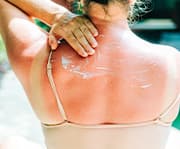
- The sun's ultraviolet (UV) rays damage DNA, accelerating photoaging of the skin and increasing skin cancer risk.
- Taken orally, an extract of the fern Polypodium leucotomos has shown potential to help protect DNA and skin structure in preclinical studies.
- Nicotinamide and red orange extract may provide additional sun protection support.
- These ingredients can be taken orally to provide adjunctive systemic support against UV exposure, but they do not replace topical sunscreen, protective clothing, shade, or sun avoidance.
- In addition to these adjunctive oral nutrients, a high-quality topical sunscreen should be used for prolonged sun exposure.
Additional Protection: Nicotinamide
Nicotinamide, a form of vitamin B, was shown in preclinical studies to protect the skin against UV-induced damage by:
- Promoting DNA repair,26-28
- Inhibiting UV-induced immune suppression in the skin,26,27,29
- Boosting skin barrier function (which keeps skin hydrated and protected),28,30
- Preventing cellular energy depletion and restoring energy levels after UV exposure,28,31 and
- Supporting genomic stability and DNA-repair pathways after UV exposure.32
In a phase 3 randomized trial in adults at high risk for non-melanoma skin cancer—defined as having at least two non-melanoma skin cancers in the previous five years—500 mg of nicotinamide twice daily for 12 months was associated with a 23% lower rate of new non-melanoma skin cancer versus placebo during the intervention period.12
Even Further Defense: Red Orange
Sicilian red orange contains anthocyanins, flavonoids, and other free radical scavenger constituents, which have been associated with protection of cells against inflammation and oxidative stress.33 In an in vitro model of skin photoaging using two human skin cell lines, cells pre-treated with Sicilian red orange extract before UV radiation exposure showed:34
- Reduced UV damage,
- Reduced DNA damage,
- Reduced oxidative stress, and
- Decreased markers related to photoaging and inflammation.
In a clinical study, taking 100 mg of oral red orange extract daily for 15 days was associated with a 40% reduction in UV-induced skin redness and sunburn, along with a decrease in melanin content in age spots from 27% to 7%.11 Over time, reducing UV-induced erythema and oxidative stress may help support skin appearance and defenses against photoaging related changes.
Summary
Ultraviolet rays cause cellular damage that accelerates skin aging, while increasing skin cancer risk.
Polypodium leucotomos, a fern extract, has been shown in preclinical studies to help protect DNA and support against photoaging.
Nicotinamide and Sicilian red orange extract may offer additional sun protection.
Taken orally, these three nutrients may provide adjunctive systemic support against UV-related damage when used with topical sunscreen and other sun-protective measures.
If you have any questions on the scientific content of this article, please call a Life Extension Wellness Specialist at 1-866-864-3027.
References
- Kaltchenko MV, Chien AL. Photoaging: Current Concepts on Molecular Mechanisms, Prevention, and Treatment. Am J Clin Dermatol. 2025 May;26(3):321-44.
- Glaser KS, Tomecki KJ. Sunscreens in the United States: Current Status and Future Outlook. Adv Exp Med Biol. 2020;1268:355-79.
- Gorig T, Schneider S, Seuffert S, et al. Does sunscreen use comply with official recommendations? Results of a nationwide survey in Germany. J Eur Acad Dermatol Venereol. 2020 May;34(5):1112-7.
- Petersen B, Wulf HC. Application of sunscreen--theory and reality. Photodermatol Photoimmunol Photomed. 2014 Apr-Jun;30(2-3):96-101.
- Gonzaga ER. Role of UV light in photodamage, skin aging, and skin cancer: importance of photoprotection. Am J Clin Dermatol. 2009;10 Suppl 1:19-24.
- Andrews DQ, Rauhe K, Burns C, et al. Laboratory testing of sunscreens on the US market finds lower in vitro SPF values than on labels and even less UVA protection. Photodermatol Photoimmunol Photomed. 2022 May;38(3):224-32.
- Philips N, Conte J, Chen YJ, et al. Beneficial regulation of matrixmetalloproteinases and their inhibitors, fibrillar collagens and transforming growth factor-beta by Polypodium leucotomos, directly or in dermal fibroblasts, ultraviolet radiated fibroblasts, and melanoma cells. Arch Dermatol Res. 2009 Aug;301(7):487-95.
- Zattra E, Coleman C, Arad S, et al. Polypodium leucotomos extract decreases UV-induced Cox-2 expression and inflammation, enhances DNA repair, and decreases mutagenesis in hairless mice. Am J Pathol. 2009 Nov;175(5):1952-61.
- Segars K, McCarver V, Miller RA. Dermatologic Applications of Polypodium leucotomos: A Literature Review. J Clin Aesthet Dermatol. 2021 Feb;14(2):50-60.
- Sanchez-Rodriguez C, Peraza Cruces KR, Rodriganez Riesco L, et al. Immunomodulatory effect of Polypodium leucotomos (Anapsos) in child palatine tonsil model. Int J Pediatr Otorhinolaryngol. 2018 Apr;107:56-61.
- Puglia C, Offerta A, Saija A, et al. Protective effect of red orange extract supplementation against UV-induced skin damages: photoaging and solar lentigines. J Cosmet Dermatol. 2014 Jun;13(2):151-7.
- Chen AC, Martin AJ, Choy B, et al. A Phase 3 Randomized Trial of Nicotinamide for Skin-Cancer Chemoprevention. N Engl J Med. 2015 Oct 22;373(17):1618-26.
- Available at: https://www.cancer.org/cancer/risk-prevention/sun-and-uv/uv-radiation.html. Accessed May 8, 2026.
- Available at: https://www.hopkinsmedicine.org/health/conditions-and-diseases/ultraviolet-radiation. Accessed May 8, 2026.
- Yuan X, Li H, Lee JS, et al. Role of Mitochondrial Dysfunction in UV-Induced Photoaging and Skin Cancers. Exp Dermatol. 2025 May;34(5):e70114.
- Ansary TM, Hossain MR, Kamiya K, et al. Inflammatory Molecules Associated with Ultraviolet Radiation-Mediated Skin Aging. Int J Mol Sci. 2021 Apr 12;22(8):3974.
- Liao W, Wang Y, Wang Y, et al. Interplay of Skin Aging: Mitochondrial Stress and Ultraviolet Exposure. Photodermatol Photoimmunol Photomed. 2026 May;42(3):e70089.
- Ugoh GA, Lim HW. Sun Protection 101-Your Guide to Sunscreen. JAMA Dermatol. 2026 Apr 8.
- Paul SP. Ensuring the Safety of Sunscreens, and Their Efficacy in Preventing Skin Cancers: Challenges and Controversies for Clinicians, Formulators, and Regulators. Front Med (Lausanne). 2019;6:195.
- Liu J, Zhang W. The influence of the environment and clothing on human exposure to ultraviolet light. PLoS One. 2015;10(4):e0124758.
- Naik MS, Polad RJ, Joshi MM, et al. Global Trends of Sunscreen Research Literature: A Bibliometric Analysis over the Period of 2010-2020. J Cutan Aesthet Surg. 2022 Apr-Jun;15(2):161-7.
- Safian MT, Raja PB, Muniandy K, et al. The dual challenge of FDA-evaluated non-GRASE UV filters: Photostability and systemic absorption - A path toward safer and more effective sunscreens. Int J Pharm. 2025 Jul 25;680:125790.
- Choudhry SZ, Bhatia N, Ceilley R, et al. Role of oral Polypodium leucotomos extract in dermatologic diseases: a review of the literature. J Drugs Dermatol. 2014 Feb;13(2):148-53.
- Solivellas BM, Martin TC. Polypodium leucotomos Extract use to prevent and reduce the risk of infectious diseases in high performance athletes. Infect Drug Resist. 2012;5:149-53.
- Sempere-Ortells JM, Campos A, Velasco I, et al. Anapsos (Polypodium leucotomos) modulates lymphoid cells and the expression of adhesion molecules. Pharmacol Res. 2002 Aug;46(2):185-90.
- Damian DL. Nicotinamide for skin cancer chemoprevention. Australas J Dermatol. 2017 Aug;58(3):174-80.
- Minocha R, Damian DL, Halliday GM. Melanoma and nonmelanoma skin cancer chemoprevention: A role for nicotinamide? Photodermatol Photoimmunol Photomed. 2018 Jan;34(1):5-12.
- Snaidr VA, Damian DL, Halliday GM. Nicotinamide for photoprotection and skin cancer chemoprevention: A review of efficacy and safety. Exp Dermatol. 2019 Feb;28 Suppl 1(S1):15-22.
- Yiasemides E, Sivapirabu G, Halliday GM, et al. Oral nicotinamide protects against ultraviolet radiation-induced immunosuppression in humans. Carcinogenesis. 2009 Jan;30(1):101-5.
- Tanno O, Ota Y, Kitamura N, et al. Nicotinamide increases biosynthesis of ceramides as well as other stratum corneum lipids to improve the epidermal permeability barrier. Br J Dermatol. 2000 Sep;143(3):524-31.
- Boo YC. Mechanistic Basis and Clinical Evidence for the Applications of Nicotinamide (Niacinamide) to Control Skin Aging and Pigmentation. Antioxidants (Basel). 2021 Aug 21;10(8):1315.
- Fania L, Mazzanti C, Campione E, et al. Role of Nicotinamide in Genomic Stability and Skin Cancer Chemoprevention. Int J Mol Sci. 2019 Nov 26;20(23).
- Grosso G, Galvano F, Mistretta A, et al. Red orange: experimental models and epidemiological evidence of its benefits on human health. Oxid Med Cell Longev. 2013;2013:157240.
- Tomasello B, Malfa GA, Acquaviva R, et al. Phytocomplex of a Standardized Extract from Red Orange (Citrus sinensis L. Osbeck) against Photoaging. Cells. 2022 Apr 25;11(9).


Wellness
Specialists
1-800-226-2370 - This service is FREE
7:30 AM - 12 AM (ET) Mon-Fri | 9 AM - 12 AM (ET) Sat-Sun