



Life Extension Magazine®

Multiple Systems Affected by Blueberries
Clinical results reveal that blueberries improved cardiovascular health, metabolic status, blood sugar, and brain function. Another human study found they may protect aging bones.
Scientifically reviewed by: Gary Gonzalez, MD, in August 2025. Written by: Marsha McCulloch, MS, RD.
Blueberries have gained a reputation as a "superfruit" because of research into their anthocyanins and the powerful benefits they provide.1
In clinical trials published over the last several years, blueberries:
- Boosted brain processing speed,2
- Reduced blood pressure3 and improved blood lipids,4 and
- Stabilized blood sugar and insulin levels.5,6
Preclinical research and a human trial have also shown that blueberries could help bolster bone health.7
Daily intake of blueberry extract is a convenient way to get the full benefits of this remarkable fruit.
Health-Promoting Properties
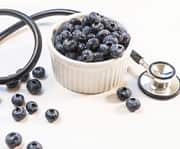
Blueberries are one of the richest sources of plant compounds called anthocyanins, which give the fruit its color.1
Anthocyanins are the key bioactive compounds associated with reduced risk of cardiovascular disease, metabolic syndrome, and cognitive decline, as supported by both epidemiological and clinical evidence.1,5,8
Wild blueberries have higher total anthocyanins than regular, cultivated blueberries.1,9
Some of the likely mechanisms behind the benefits of anthocyanins include:
- Mitigating inflammation and oxidative stress, drivers of aging and most chronic diseases,1,10,11
- Shifting the gut microbiome to include more beneficial bacteria,11,12 and
- Fueling the production of beneficial byproducts from gut bacteria.13
Studies show that a range of blueberry forms, including fresh berries, freeze-dried powder, and extracts, all have health benefits.1,3,5,10
Energizing the Brain
Brain processing speed refers to how quickly your brain takes in, understands, and responds to information. It impacts memory, task completion, and other areas of cognitive function.2
Processing speed typically slows with age, beginning at midlife.14
In a trial of 86 older adults with mild cognitive decline, they took either an amount of wild blueberry powder equal to about 1.5 cups of whole blueberries or a placebo daily.2
After six months, cognitive testing and brain imaging showed that the blueberry group’s information processing speed was faster than the placebo group’s. Remarkably, their speed had increased to match a comparison group of older adults without cognitive issues.2
Blueberries may improve cognitive function by promoting healthy blood vessel function and increasing blood flow to the brain.15,16
Lowering Blood Pressure
Optimal blood vessel function also promotes healthy blood pressure.
In a trial, 61 healthy older adults took wild blueberry powder equal to one cup of blueberries or a placebo daily for three months.3
According to 24-hour ambulatory blood pressure monitoring (the gold standard for evaluating blood pressure), the extract group had a 3.6 mmHg drop in systolic blood pressure compared to the placebo.3,17
This level of reduction translates to a 7% lower risk of major cardiovascular events like heart attacks and strokes.3
It is not, however, enough for most people with hypertension who seek to target blood pressure below 120/80. Achieving this target either requires lifestyle modifications such as diet management, aggressive weight loss (in overweight individuals) or use of a prescribed anti-hypertension drug(s).18
Metabolic Benefits
Blueberries may have immediate benefits for people with metabolic syndrome, a cluster of cardiovascular risk factors including high blood sugar, insulin resistance, and abnormal blood lipids.5
In a study, adults with metabolic syndrome were given a high-fat, high-sugar milkshake as a meal. The milkshake had 969 calories and was roughly equivalent to eating a large burger and fries and drinking a cola.5
Half the subjects received freeze-dried blueberry powder equal to one cup of blueberries with the milkshake, while the others received a placebo powder.
The blueberry group had a better metabolic response than the placebo group, including:
- Lower blood sugar three hours later (77 mg/dL vs. 92 mg/dL for placebo), and
- Lower insulin three hours later (3.4 µIU/mL vs. 7.6 µIU/mL for placebo).
Lower insulin blood levels indicate better glucose control in metabolic syndrome patients. Lower insulin indicate less cellular "insulin resistance."
In this study, the blueberries offset some of the harmful metabolic effects of the high-fat/high-sugar milkshake.
What You Need To Know

Boost Health with Blueberry Extract
- Blueberries are rich in anthocyanins that help reduce inflammation, provide antioxidant defense, and interact with gut microbes to promote health.
- In clinical trials, blueberry intake boosts brain function, improves markers of cardiovascular health, and promotes blood sugar control.
- Additional research, including a human trial, suggests blueberries may help reduce age-related bone loss.
- Many forms of blueberry have shown health benefits. Blueberry extracts are particularly convenient and affordable.
In a longer trial, 52 older men with type 2 diabetes were given freeze-dried blueberries (equal to about a cup) or a placebo in a split dose with their usual morning and evening meals.19
After two months, the blueberry group had significantly lower hemoglobin A1c (a marker of blood sugar over two to three months) and fructosamine (which indicates blood sugar over the past two to three weeks).
In addition, the blueberry group had about 10% lower triglycerides than the placebo group.19
Bolstering Bone Health
Bolstering Bone Health Preclinical studies indicate that blueberries could help support bone health.20-22 This prompted scientists to conduct a human trial.7
Researchers recruited 13 healthy women without osteoporosis who were at least four years into menopause, past the most rapid phase of menopausal bone loss.7
At the start of the study, the women were given calcium with a "tracer" to help monitor bone breakdown.
Next, they took wild blueberry powder for six weeks, alternating with six-week periods of no treatment.
When the women took the blueberry powder daily (equal to about 2/3 cup of whole blueberries), they retained 6% more calcium in their bones, compared to no treatment.7
Taking daily blueberry extract can help provide a wide range of benefits that are instrumental to healthy aging.
Summary
Clinical trials show that blueberry interventions may improve brain function, cardiovascular health, and metabolic status, including blood sugar levels.
Research also suggests this superfruit could help protect bone health in aging.
Blueberry extract provides these benefits in a convenient, affordable form.
If you have any questions on the scientific content of this article, please call a Life Extension Wellness Specialist at 1-866-864-3027.
References
- Kalt W, Cassidy A, Howard LR, et al. Recent Research on the Health Benefits of Blueberries and Their Anthocyanins. Adv Nutr. 2020 Mar 1;11(2):224-36.
- Cheatham CL, Canipe LG, 3rd, Millsap G, et al. Six-month intervention with wild blueberries improved speed of processing in mild cognitive decline: a double-blind, placebo-controlled, randomized clinical trial. Nutr Neurosci. 2023 Oct;26(10):1019-33.
- Wood E, Hein S, Mesnage R, et al. Wild blueberry (poly)phenols can improve vascular function and cognitive performance in healthy older individuals: a double-blind randomized controlled trial. Am J Clin Nutr. 2023 Jun;117(6):1306-19.
- Curtis PJ, Berends L, van der Velpen V, et al. Blueberry anthocyanin intake attenuates the postprandial cardiometabolic effect of an energy-dense food challenge: Results from a double blind, randomized controlled trial in metabolic syndrome participants. Clin Nutr. 2022 Jan;41(1):165-76.
- Azari H, Morovati A, Pourghassem Gargari B, et al. Beneficial effects of blueberry supplementation on the components of metabolic syndrome: a systematic review and meta-analysis. Food Funct. 2022 May 10;13(9):4875-900.
- Palma X, Thomas-Valdés S, Cruz G. Acute Consumption of Blueberries and Short-Term Blueberry Supplementation Improve Glucose Management and Insulin Levels in Sedentary Subjects. Nutrients. 2021 Apr 25;13(5).
- Hodges JK, Maiz M, Cao S, et al. Moderate consumption of freeze-dried blueberry powder increased net bone calcium retention compared with no treatment in healthy postmenopausal women: a randomized crossover trial. Am J Clin Nutr. 2023 Aug;118(2):382-90.
- Ma L, Sun Z, Zeng Y, et al. Molecular Mechanism and Health Role of Functional Ingredients in Blueberry for Chronic Disease in Human Beings. Int J Mol Sci. 2018 Sep 16;19(9).
- Wu X, Beecher GR, Holden JM, et al. Concentrations of anthocyanins in common foods in the United States and estimation of normal consumption. J Agric Food Chem. 2006 May 31;54(11): 4069-75.
- Krishna P, Pandey G, Thomas R, et al. Improving Blueberry Fruit Nutritional Quality through Physiological and Genetic Interventions: A Review of Current Research and Future Directions. Antioxidants (Basel). 2023 Mar 26;12(4).
- Panchal SK, John OD, Mathai ML, et al. Anthocyanins in Chronic Diseases: The Power of Purple. Nutrients. 2022 May 23;14(10).
- Stull AJ, Cassidy A, Djousse L, et al. The state of the science on the health benefits of blueberries: a perspective. Front Nutr. 2024;11:1415737.
- Della Lucia CM, Oliveira LA, Dias KA, et al. Scientific Evidence for the Beneficial Effects of Dietary Blueberries on Gut Health: A Systematic Review. Mol Nutr Food Res. 2023 Aug;67(15): e2300096.
- Ticha Z, Georgi H, Schmand B, et al. Processing speed predicts SuperAging years later. BMC Psychol. 2023 Feb 2;11(1):34.
- Akazawa N, Kumagai H, Yoshikawa T, et al. Cerebral blood flow velocity is associated with endothelial function in men. Journal of Men’s Health. 2021;17(3):41-6.
- Deng B, Lei Y, Zhou R, et al. Effect of blueberry intervention on endothelial function: a systematic review and meta-analysis. Front Physiol. 2024;15:1368892.
- Pena-Hernandez C, Nugent K, Tuncel M. Twenty-Four-Hour Ambulatory Blood Pressure Monitoring. J Prim Care Community Health. 2020 Jan-Dec;11:2150132720940519.
- Whelton PK, Carey RM, Aronow WS, et al. 2017 ACC/AHA/AAPA/ABC/ACPM/AGS/APhA/ASH/ASPC/NMA/PCNA Guideline for the Prevention, Detection, Evaluation, and Management of High Blood Pressure in Adults: A Report of the American College of Cardiology/American Heart Association Task Force on Clinical Practice Guidelines. Hypertension. 2018;71(6):e13-e115.
- Stote KS, Wilson MM, Hallenbeck D, et al. Effect of Blueberry Consumption on Cardiometabolic Health Parameters in Men with Type 2 Diabetes: An 8-Week, Double-Blind, Randomized, Placebo-Controlled Trial. Curr Dev Nutr. 2020 Apr;4(4):nzaa030.
- Cladis DP, Debelo H, Lachcik PJ, et al. Increasing Doses of Blueberry Polyphenols Alters Colonic Metabolism and Calcium Absorption in Ovariectomized Rats. Mol Nutr Food Res. 2020 Jun;64(12):e2000031.
- Devareddy L, Hooshmand S, Collins JK, et al. Blueberry prevents bone loss in ovariectomized rat model of postmenopausal osteoporosis. J Nutr Biochem. 2008 Oct;19(10):694-9.
- Domazetovic V, Marcucci G, Pierucci F, et al. Blueberry juice protects osteocytes and bone precursor cells against oxidative stress partly through SIRT1. FEBS Open Bio. 2019 Jun;9(6): 1082-96.


Wellness
Specialists
1-800-226-2370 - This service is FREE
7:30 AM - 12 AM (ET) Mon-Fri | 9 AM - 12 AM (ET) Sat-Sun