

Life Extension Magazine®
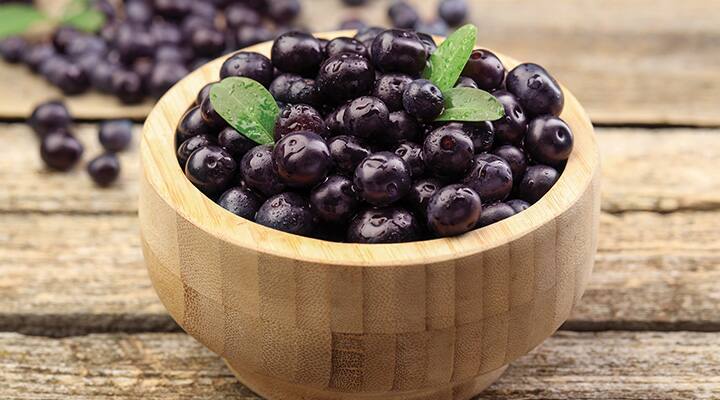
What is Maqui Berry?
Maqui berries have been shown to help relieve dry eyes and reduce blood sugar levels.
Scientifically reviewed by: Gary Gonzalez, MD, in July 2025. Written by: Laurie Mathena.
Maqui berries are the fruit of trees that grow wild in the rainforests of Chile and in some parts of Argentina.1,2
People indigenous to these areas have long consumed the small, purple berries for their health benefits, and the berries have earned a reputation for their free radical scavenging and anti-inflammatory properties.2
Their range of potential benefits includes reducing LDL cholesterol levels,3 reducing free radical damage,4 and more.1
Two key areas in which maqui berries are especially effective include:
- Relieving dry eyes,5,6 and
- Reducing blood sugar levels.3,7,8
Dry Eye Relief

Dry eye occurs when the body either produces too few tears or tears that are of poor quality.9
In the short term, dry eye causes stinging, itching, and light sensitivity.9 Left untreated, it can become severe over time and can even cause permanent eye damage.10
Eye drops are just a temporary solution, because they cannot replicate the complex structure of real tears and need to be reapplied frequently.
However, extracts from maqui berry do what artificial tears cannot: they help the body produce more of its own tears.
A pilot clinical trial tested a standardized maqui berry extract’s effect on dry eyes in 13 adults. Participants took either 30 mg or 60 mg daily for 60 days. Both groups saw a 45% increase in tear production after 30 days.
By day 60, only the 60 mg group maintained these improvements. Quality-of-life scores related to dry eye symptoms also improved more significantly in the 60 mg group, showing a sustained reduction in discomfort. The study suggests that a higher dose of maqui berry extract is more effective for relieving dry eye symptoms and enhancing tear production.11
A placebo-controlled trial of 74 participants investigated the effectiveness of 60 mg standardized maqui berry extract in reducing eye dryness and fatigue. Previous studies have shown that maqui berry’s high anthocyanin content can improve dry eye symptoms and reduce inflammation. After four weeks, the maqui berry group experienced reduced eye dryness compared to the placebo group, as well as improvement in eye fatigue.5
In a similar randomized trial, 20 patients with dry eye symptoms were randomly assigned to receive a standardized maqui berry extract or a placebo for two months. After two months, the maqui berry extract group showed significant improvements in tear production and dry eye symptoms compared to placebo. Molecular analysis revealed that the extract reduced proinflammatory cytokines in tear fluid. These findings suggest that maqui berry extract may be an effective adjunctive therapy for managing dry eye disease by reducing ocular inflammation.6
Blood Sugar Control
Scientists have discovered that different standardization processes of the maqui berry can yield distinct health benefits. In particular, another standardized form, rich in delphinidins, has been increasingly supported by scientific evidence suggesting that, at higher doses, it may help reduce blood glucose spikes after meals.
After-meal glucose spikes are associated with higher rates of cardiovascular disease,12,13 impaired cognitive function,14,15 and other chronic conditions.16,17
In an advanced preclinical analysis of maqui berries’ metabolic effects, scientists discovered that a family of polyphenolic compounds called delphinidins act on multiple targets related to metabolic syndrome.18
Maqui berry extracts are rich in delphinidins. These compounds have been found to reduce post-meal blood glucose levels by stimulating a peptide in the intestines that enhances glucose metabolism.3,19
A study in 36 individuals with non-diabetic high blood sugar found that taking a single dose of standardized maqui berry extract prior to an oral glucose tolerance test was associated with a reduced risk of elevated blood glucose levels in individuals with prediabetes. Participants experienced a lower risk of dysglycemia (abnormal blood sugar levels) across all tested doses, with the most significant effect observed at the highest dose of 180 mg.20
In one study, people who took 200 mg of a maqui berry extract 30 minutes before a meal had 15% lower after-meal glucose levels than those who took a placebo.7
Maqui berry’s ability to reduce long-term glucose levels is also noteworthy.
In a study of 31 individuals with mild prediabetes, 180 mg of maqui berry extract every day for 90 days reduced HbA1c (a measure of glucose over the past three to four months) by 0.3% (from 5.65% to 5.35%). This reduction brought HbA1c levels down into the normal range, which is 5.6% or lower.3
Summary

Maqui berries have been scientifically studied for a range of health benefits. An extract of maqui berries is particularly effective at relieving symptoms of dry eye disease, because it helps the body produce more of its own natural tears.
Maqui berry extract also helps maintain healthy blood sugar levels by reducing after-meal blood sugar spikes and HbA1c levels.
These benefits show that maqui berries can help support health and influence quality of life.
If you have any questions on the scientific content of this article, please call a Life Extension Wellness Specialist at 1-866-864-3027.
References
- Garcia-Milla P, Penalver R, Nieto G. A Review of the Functional Characteristics and Applications of Aristotelia chilensis (Maqui Berry), in the Food Industry. Foods. 2024 Mar 9;13(6).
- Fuentes L, Figueroa CR, Valdenegro M, et al. Patagonian Berries: Healthy Potential and the Path to Becoming Functional Foods. Foods. 2019 Jul 26;8(8).
- Alvarado J, Schoenlau F, Leschot A, et al. Delphinol(R) standardized maqui berry extract significantly lowers blood glucose and improves blood lipid profile in prediabetic individuals in three-month clinical trial. Panminerva Med. 2016 Sep;58(3 Suppl 1):1-6.
- Davinelli S, Bertoglio JC, Zarrelli A, et al. A Randomized Clinical Trial Evaluating the Efficacy of an Anthocyanin-Maqui Berry Extract (Delphinol(R)) on Oxidative Stress Biomarkers. J Am Coll Nutr. 2015;34 Suppl 1:28-33.
- Yamashita SI, Suzuki N, Yamamoto K, et al. Effects of MaquiBright((R)) on improving eye dryness and fatigue in humans: A randomized, double-blind, placebo-controlled trial. J Tradit Complement Med. 2019 Jul;9(3):172-8.
- Kundu G, Shetty R, D’Souza S, et al. Effect of maqui-berry extract in dry eye disease - A clinical and molecular analysis. Indian J Ophthalmol. 2023 Apr;71(4):1613-8.
- Hidalgo J, Flores C, Hidalgo MA, et al. Delphinol(R) standardized maqui berry extract reduces postprandial blood glucose increase in individuals with impaired glucose regulation by novel mechanism of sodium glucose cotransporter inhibition. Panminerva Med. 2014 Jun;56(2 Suppl 3):1-7.
- Deters B, Saleem M. Hyperinsulinemia, cancer and maqui berry: The promise of nutritional supplementation. Food Science and Human Wellness. 2019 2019/09/01/;8(3):264-7.
- Available at: https://www.aoa.org/healthy-eyes/eye-and-vision-conditions/dry-eye?sso=y. Accessed May 20, 2025.
- Verjee MA, Brissette AR, Starr CE. Dry Eye Disease: Early Recognition with Guidance on Management and Treatment for Primary Care Family Physicians. Ophthalmol Ther. 2020 Dec;9(4):877-88.
- Hitoe S, Tanaka J, Shimoda H. MaquiBright standardized maqui berry extract significantly increases tear fluid production and ameliorates dry eye-related symptoms in a clinical pilot trial. Panminerva Med. 2014 Sep;56(3 Suppl 1):1-6.
- Lin HJ, Lee BC, Ho YL, et al. Postprandial glucose improves the risk prediction of cardiovascular death beyond the metabolic syndrome in the nondiabetic population. Diabetes Care. 2009 Sep;32(9):1721-6.
- Mann BK, Bhandohal JS, Hong J. An Overall Glance of Evidence Supportive of One-Hour and Two-Hour Postload Plasma Glucose Levels as Predictors of Long-Term Cardiovascular Events. Int J Endocrinol. 2019;2019:6048954.
- Abbatecola AM, Rizzo MR, Barbieri M, et al. Postprandial plasma glucose excursions and cognitive functioning in aged type 2 diabetics. Neurology. 2006 Jul 25;67(2):235-40.
- Blaak EE, Antoine JM, Benton D, et al. Impact of postprandial glycaemia on health and prevention of disease. Obes Rev. 2012 Oct;13(10):923-84.
- Barclay AW, Petocz P, McMillan-Price J, et al. Glycemic index, glycemic load, and chronic disease risk--a meta-analysis of observational studies. Am J Clin Nutr. 2008 Mar;87(3):627-37.
- Ceriello A. Postprandial hyperglycemia and diabetes complications: is it time to treat? Diabetes. 2005 Jan;54(1):1-7.
- Castillo-Garcia EL, Cossio-Ramirez AL, Cordoba-Mendez OA, et al. In Silico and In Vivo Evaluation of the Maqui Berry (Aristotelia chilensis (Mol.) Stuntz) on Biochemical Parameters and Oxidative Stress Markers in a Metabolic Syndrome Model. Metabolites. 2023 Dec 7;13(12).
- Kato M, Tani T, Terahara N, et al. The Anthocyanin Delphinidin 3-Rutinoside Stimulates Glucagon-Like Peptide-1 Secretion in Murine GLUTag Cell Line via the Ca2+/Calmodulin-Dependent Kinase II Pathway. PLoS One. 2015;10(5):e0126157.
- Olivera-Nappa A, Contreras S, Tevy MF, et al. Patient-Wise Methodology to Assess Glycemic Health Status: Applications to Quantify the Efficacy and Physiological Targets of Polyphenols on Glycemic Control. Front Nutr. 2022;9:831696.


Wellness
Specialists
1-800-226-2370 - This service is FREE
7:30 AM - 12 AM (ET) Mon-Fri | 9 AM - 12 AM (ET) Sat-Sun