



Life Extension Magazine®

As we see it: The 17-Year Delay
In 2015, the British Journal of Cancer published a finding that could potentially reduce pancreatic cancer risk.
By William Faloon.

Life-saving treatments often face unnecessary delays in being adapted into clinical practice.
An article published in The Journal of the American Medical Association (JAMA) highlights the delays humans face in gaining access to potential lifesaving therapies.1
This JAMA article presents a frequently cited estimate:1
"It takes an average of 17 years from when a biomedical discovery is made to change standard clinical practice and …"
"… Only 1 in 5 of improved interventions end up being routinely prescribed."
In relation to this gap in care, the article quotes an implementation scientist who asked:
"Why aren’t clinicians in the community using evidence-based practices?"
We here at Life Extension know all too well how slow the adoption of potentially helpful treatments can be.
For 48 years we have been advocating for wider adoption of metformin, cimetidine, certain beta-blockers, and other innovative therapies like thymosin alpha-1, to be used off-label in support of better outcomes alongside some conventional cancer treatments.2-12
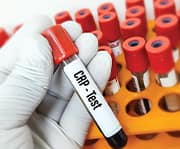
We also suggest blood testing to identify controllable factors that can impede or promote tumor cell propagation.
For example, prolactin is a pituitary hormone that stimulates milk production (lactation) in postpartum women. When elevated, prolactin can also promote prostate cancer cell propagation in men.13,14
Women use a drug called cabergoline to suppress lactation.15,16 It is effective in lowering prolactin levels.17
For prostate cancer patients, cabergoline can help impede propagation of certain tumor cells in advanced prostate cancer.18,19 It is rare that a prostate cancer patient who contacts us has had their prolactin blood levels tested to check if they are elevated.
Ditto for other blood tests that can identify additional treatment options.
In this editorial I describe a finding published in the British Journal of Cancer in 2015 that could potentially reduce pancreatic cancer risk.20 This study garnered a lot of media attention, and we published an in-depth article about it in Life Extension Magazine®.21
Yet here we are 10 years out, pancreatic cancer deaths are increasing,22 and no one is talking about a low-cost method that might spare many of these deaths.
JAMA Medical News April 5, 20231
17 Years for Evidence to Change Practice
"It Takes an Average of 17 Years for Evidence to Change Practice.."
"Even then…only about 1 in 5 interventions end up in routine clinical practice."
A Critical Question:
"Why aren’t clinicians in the community using evidence-based practices?"
This year alone, it is estimated that approximately 67,000 Americans will be diagnosed with pancreatic cancer and about 52,000 will die from it.23 Treatment side effects can be so horrific that some patients choose hospice with a morphine pump to self-medicate at will.24,25
We’ve published numerous articles on ways to reduce pancreatic cancer risk, including keeping blood markers of inflammation and type 2 diabetes in optimal ranges.21,26-29
Practical cancer prevention approaches have long been published, yet there have been no calls-to-action by public health authorities to take measures for sensible prevention strategies.
Protective Role of Magnesium

The December 2016 issue of Life Extension Magazine published an article30 showing a modest increase in magnesium intake from diet and supplements was associated with a profound reduction in pancreatic cancer risk.20,31
What struck me about this study is that it did not require a large amount of additional magnesium to produce a meaningful reduction in pancreatic cancer incidence.20
Researchers found that pancreatic cancer risk increased by 24% for every 100 mg decrease in magnesium intake below the recommended daily allowance (RDA).
For example, compared to a person who ingests 300 mg a day of magnesium, an individual with a daily magnesium intake of 200 mg would be expected to have a 24% increased risk of pancreatic cancer.
Both intakes (200 mg and 300 mg a day of magnesium) are considered deficient even by government standards.
This 2015 published study involved over 66,000 men and women aged 50-76 years who were followed for an eight-year period. The subjects were divided into the following three groups based upon their magnesium intake:
- Optimal Intake - Defined as ingesting greater than or equal to 100% of the government recommended dietary allowance (RDA) for magnesium (420 mg a day for males and 320 mg a day for females).
- Sub-optimal Intake - Daily intake of only 75% to 99% of the government RDA for magnesium.
- Deficient Intake - Less than 75% of the government RDA for magnesium (less than 315 mg a day for males and less than 240 mg a day for females).
Those who ingested between 75%-99% of the government’s RDA for magnesium (sub-optimal intake) had a 42% greater risk of pancreatic cancer incidence compared with those ingesting greater than or equal to 100% of the magnesium RDA.
Those who ingested less than 75% of the government’s RDA for magnesium (deficient intake) had a 76% greater risk of pancreatic cancer incidence compared to those whose intake of magnesium was equal to or greater than the government’s (optimal intake) RDA.
When analyzing those who met or exceeded the government’s RDA for total magnesium intake, only those who took supplements containing magnesium were able to achieve the benefits.
What struck me about these findings is that the amount of added magnesium needed to meet the government’s RDA was exceedingly small.
For most people, taking one low-cost magnesium capsule a day, or obtaining it in a sufficiently potent multi-nutrient formula, is all that may be needed to garner protective effects.
Intolerable Delays

The snail’s pace of progress against malignancies like pancreatic cancer should provoke societal outrage.
When I speak with high-level scientists about delays in Americans gaining access to lifesaving drugs used in other countries (like thymosin alpha 1), I often hear there are even more effective therapies "on the shelf" waiting for a backer to raise enough investor funding to enter the FDA’s multi-$million approval labyrinth.
This terrifies me to think there may be lifesaving therapies already discovered that may never make it into clinical practice.
Critiques are published in respected medical journals, frequently citing the broadly discussed "17-year delay" in advancing discoveries into clinical practice.1,32-35
Yet the public tolerates treatments with harsh side effects that fail to cure over 600,000 Americans who will perish from cancer this year.
By contrast, we at Life Extension view bureaucratic roadblocks that impede delivery of better treatments as intolerable delays that will be ridiculed by future historians.
When something like low-cost magnesium to reduce multiple disease risks does not garner national recognition 10 years after showing robust preventive potential against pancreatic malignancies, what more sophisticated therapies might exist today that we may never learn about?
Sign the Petition
An increasing number of Americans are realizing that radical FDA reforms are needed to speed the delivery of lifesaving therapies.
Life Extension is networking with other organizations that collectively have enough people to persuade Congress to enact amendments to the Food, Drug and Cosmetic Act.
I urge Life Extension® readers to sign this petition by visiting: age-reversal.net/fda/
The petition is an important first step in instituting meaningful changes to excess regulations that stifle biomedical advances.
We can’t continue waiting an average of 17 years for lifesaving discoveries to transition into routine clinical practice!
For longer life,

William Faloon, Co-Founder, Life Extension®

Walking the Tightrope of New Drug Approval
Patients Face Long Delays in Accessing Better Treatments...
References
- Rubin R. It Takes an Average of 17 Years for Evidence to Change Practice-the Burgeoning Field of Implementation Science Seeks to Speed Things Up. JAMA. 2023 Apr 25;329(16):1333-6.
- Available at: https://www.lifeextension.com/magazine/2018/10/fight-cancer-using-off-label-drugs. Accessed May 28, 2025.
- Available at: https://www.lifeextension.com/magazine/2020/5/in-the-news-metformim-ovarian-cancer-and-more. Accessed May 28, 2025.
- Available at: https://www.lifeextension.com/magazine/2012/11/metformin-makes-headline-news. Accessed May 28, 2025.
- Available at: https://www.lifeextension.com/magazine/2012/2/can-diabetes-drug-prevent-cancer-death. Accessed May 28, 2025.
- Available at: https://www.lifeextension.com/magazine/2001/9/report_metformin. Accessed May 28, 2025.
- Available at: https://www.lifeextension.com/magazine/2010/4/so-many-needless-cancer-deaths. Accessed May 28, 2025.
- Available at: https://www.lifeextension.com/magazine/2002/7/cover_cimetidine. Accessed May 28, 2025.
- Available at: https://www.lifeextension.com/magazine/2007/5/report_cimetidine. Accessed June 2, 2025.
- Available at: https://www.lifeextension.com/magazine/2023/8/anti-cancer-effects-beta-blocker-drugs. Accessed June 2, 2025.
- Available at: https://www.lifeextension.com/magazine/1997/7/report97. Accessed May 10, 2025.
- Available at: https://www.lifeextension.com/magazine/2025/3/life-extension-thymosin-alpha-1-1981. Accessed June 10, 2025.
- Sackmann-Sala L, Goffin V. Prolactin-induced prostate tumorigenesis. Adv Exp Med Biol. 2015;846:221-42.
- Yang T, Chi Y, Wang X, et al. PRL-mediated STAT5B/ARRB2 pathway promotes the progression of prostate cancer through the activation of MAPK signaling. Cell Death Dis. 2024 Feb 10;15(2):128.
- 1Boucoiran I, Roy M, Poliquin V, et al. Evaluation of cabergoline for lactation inhibition in women living with HIV. Int J STD AIDS. 2021 Jun;32(7):654-61.
- Dayan-Schwartz A, Yefet E, Massalha M, et al. The efficiency of cabergoline vs pyridoxine for lactation inhibition-a randomized controlled trial. Am J Obstet Gynecol. 2024 May;230(5):561.e1-.e8.
- Available at: https://dailymed.nlm.nih.gov/dailymed/drugInfo.cfm?setid=74b61e8a-7ae9-4996-85ec-df23c56de16f. Accessed June 2, 2025.
- Costello LC. The Suppression of Prolactin is required for the Treatment of Advanced Prostate Cancer. Oncogen (Westerville). 2019;2(3).
- Garifalos F, De AD, Verde N, et al. Prolactin and prostate: an observational case-control study in men with prolactinoma under cabergoline treatment. Endocrine Abstracts. 2019 05/01.
- Dibaba D, Xun P, Yokota K, et al. Magnesium intake and incidence of pancreatic cancer: the VITamins and Lifestyle study. Br J Cancer. 2015 Dec 1;113(11):1615-21.
- Available at: https://www.lifeextension.com/magazine/2021/8/strategies-against-pancreatic-cancer. Accessed June 2, 2025.
- 2Available at: https://seer.cancer.gov/statfacts/html/pancreas.html. Accessed June 3, 2025.
- Available at: https://www.cancer.org/cancer/types/pancreatic-cancer/about/key-statistics.html. Accessed June 2, 2025.
- Nersesyan H, Slavin KV. Current aproach to cancer pain management: Availability and implications of different treatment options. Ther Clin Risk Manag. 2007 Jun;3(3):381-400.
- Coveler AL, Mizrahi J, Eastman B, et al. Pancreas Cancer-Associated Pain Management. Oncologist. 2021 Jun;26(6):e971-e82.
- Available at: https://www.lifeextension.com/magazine/2021/8/what-is-behind-rise-pancreatic-cancer. Accessed June 2, 2025.
- Available at: https://www.lifeextension.com/magazine/2014/7/intolerable-delays. Accessed June 2, 2025.
- Available at: https://www.lifeextension.com/magazine/1996/10/pract. Accessed June 2, 2025.
- Available at: https://www.lifeextension.com/magazine/2009/ss/powerful-advances-in-natural-cancer-prevention. Accessed June 2, 2025.
- Available at: https://www.lifeextension.com/magazine/2016/12/will-magnesium-become-next-vitamin-d. Accessed June 2, 2025.
- Jansen RJ, Robinson DP, Stolzenberg-Solomon RZ, et al. Nutrients from fruit and vegetable consumption reduce the risk of pancreatic cancer. J Gastrointest Cancer. 2013 Jun;44(2):152-61.
- Morris ZS, Wooding S, Grant J. The answer is 17 years, what is the question: understanding time lags in translational research. J R Soc Med. 2011 Dec;104(12):510-20.
- Brownson RC, Kreuter MW, Arrington BA, et al. Translating scientific discoveries into public health action: how can schools of public health move us forward? Public Health Rep. 2006 Jan-Feb;121(1):97-103.
- Hanney SR, Castle-Clarke S, Grant J, et al. How long does biomedical research take? Studying the time taken between biomedical and health research and its translation into products, policy, and practice. Health Research Policy and Systems. 2015 2015/01/01;13(1):1.
- Munro CL, Savel RH. Narrowing the 17-Year Research to Practice Gap. American Journal of Critical Care. 2016;25(3):194-6.


Wellness
Specialists
1-800-226-2370 - This service is FREE
7:30 AM - 12 AM (ET) Mon-Fri | 9 AM - 12 AM (ET) Sat-Sun